
Helmet-Friendly Haircuts for
Cyclists & Riders
Helmet hair is a solvable problem, mostly by choosing a cut that doesn't depend on volume in the first place.
By Jessica Hamilton, Editor · Updated
Quick answer: Helmet-friendly haircuts for cyclists and riders are short and textured styles that don't depend on volume, such as textured crop, Caesar, French crop, buzz or crew cut. They look the same, or just as deliberate, once flattened. Pompadours and quiffs collapse under a helmet. After a ride, wet the roots, rough them up with your fingers and style then.
Style images are AI-generated illustrations.
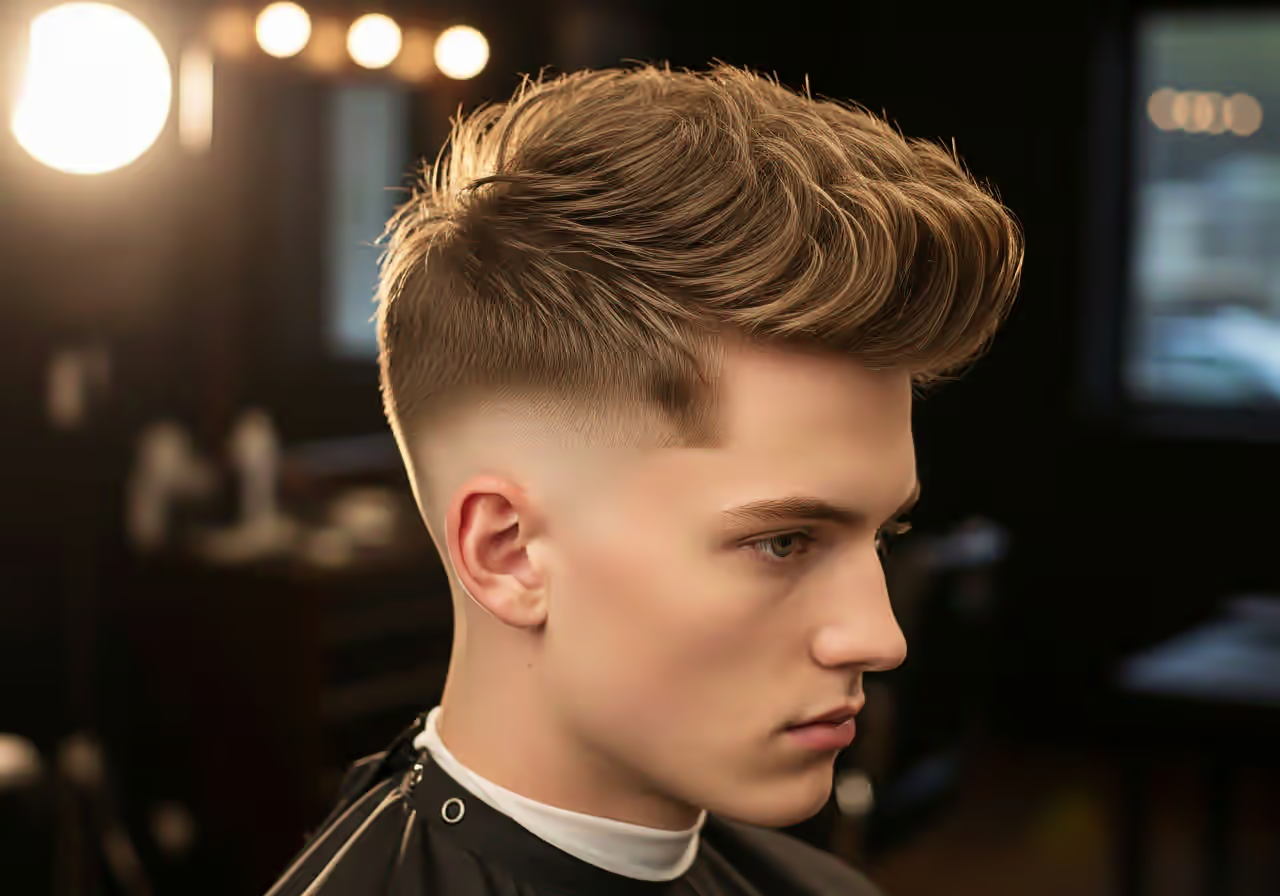
Helmet-friendly haircuts for cyclists and riders start with understanding helmet hair, which has two causes. A helmet compresses volume, and it traps sweat. Together they set your hair flat. Any style built on height loses that fight. A pompadour, a quiff: flattened, both of them, every time you buckle the strap on. Helmet-friendly cuts are the ones that either don't rely on volume, or look fine flattened.
Why Do Some Haircuts Survive a Helmet and Others Don't?
Helmets flatten volume and trap sweat, so a haircut survives a helmet only if it has nowhere to fall. The best helmet-friendly haircuts are short and textured: a buzz cut, crew cut, textured crop, caesar or French crop, with the sides at a #1 to #3 guard and the top under about 2 inches.
Many of these cuts double as hot-weather styles; see our summer haircuts for men for fades, crops and beard pairings built for heat.
For cuts built around a cap and batting helmet, see our gallery of baseball haircuts, from flow to crew cuts.
A helmet flattens whatever is under it and the sweat sets it that way. Styles built on lift (pompadours, quiffs) collapse and look worse than if you'd never styled them. Cuts that are short, textured, or deliberately messy either don't change or look equally intentional flattened. That's the whole trick. Pick a style that has nowhere to fall.
What Are the Best Helmet-Friendly Haircuts?
- Textured crop: short and messy by design, so a helmet can't ruin it.
- Caesar or French crop: worn forward and flat already, so nothing to flatten.
- Buzz cut: completely immune to helmet hair.
- Crew cut: short enough that compression doesn't register.
- Longer hair tied back also works, since it's mid-length volume that suffers most.
How Do Helmet-Friendly Haircuts Compare?
| Cut | Top length | Sides | After the ride |
|---|---|---|---|
| Buzz cut | #1 to #3 all over | Same as top | Nothing to fix |
| Crew cut | About 1 inch | #2 taper | Rough it up with fingers |
| Textured crop | 1 to 2 inches | Low or mid fade | Wet hands, fingers, a little clay |
| Caesar or French crop | 1 to 2 inches, forward | #1 to #2 fade | Push the fringe forward again |
| Long hair tied back | 6 inches or more | Any | Retie it |
A guard is the plastic comb on the clippers that sets the length; a higher number leaves more hair. See our clipper guard numbers chart.
How Do You Fix Helmet Hair After a Ride?
- Rinse or splash the roots with water and re-rough with your fingers, resetting most compression instantly.
- Keep a small comb or a little clay in your bag for a 30-second reset.
- Let the helmet dry between rides. A damp liner makes sweat and odour worse.
- Don't product up before a ride. It gets pressed flat and greasy under the shell, which is worse than doing nothing at all. Style after you arrive.
- A thin liner or cap under the helmet reduces direct compression and sweat contact.
Which Products Help With Helmet Hair?
- Matte clay or paste: restyles a textured top in seconds without looking wet.
- Texture powder: soaks up sweat at the roots and adds lift to flattened hair.
- Dry shampoo: freshens sweaty roots when you cannot wash before work.
- A small comb: resets a caesar fringe or side part fast.
Bring product with you and apply it after the ride, not before. Our pomade vs clay vs wax guide explains which holds best without shine.
How Do You Keep Your Scalp Healthy Under a Helmet?
Regular helmet use traps heat and sweat against the scalp for long stretches, which can leave the scalp itchy or flaky if it is not cleaned properly between rides. Wash your hair more often than you might with a normal routine, and rinse the helmet liner or wipe it down regularly since it holds oil and sweat that transfer straight back onto clean hair on the next ride.
A very short cut, like a buzz or crew, makes this easier to manage because there is less hair to trap moisture against the skin. If you keep length on top, dry it fully before the next ride when possible, since putting a helmet over damp hair is what usually causes the flattest, greasiest result and can also encourage irritation at the hairline.
Which Helmet-Friendly Haircut Suits Daily Commuters vs Occasional Riders?
How often you ride changes which cut makes sense. If you wear a helmet every day for a commute, a very short, low-maintenance style like a buzz cut or crew cut removes the problem entirely, since there is barely enough length to compress in the first place.
Occasional riders who mostly need to look presentable on non-riding days have more room to keep a textured crop or caesar with a little length, since they are not fighting helmet hair daily and can plan a ride around a haircut appointment instead of the other way around. If your job or commute means you go straight from the helmet into meetings, it is worth choosing a cut on the shorter end of this list rather than one that only looks good freshly styled.
How Do You Keep a Beard Neat Under a Helmet Chin Strap?
A chin strap presses directly against beard hair along the jaw, and a longer beard can end up matted or creased in the same way flat hair does. Keeping facial hair on the shorter side where the strap sits reduces this, and a quick comb-through after removing the helmet fixes most of the flattening in seconds.
Riders with a fuller beard sometimes find a slightly wider strap or a helmet with more chin clearance more comfortable over long rides, since a tight strap on thick facial hair can also cause chafing that a shorter or trimmed beard avoids.
What Should You Ask a Barber for a Helmet-Friendly Haircut?
Tell the barber you ride before you describe the cut. It changes how much length they leave on top and how much weight they take out.
What to say in the chair
“I ride most days, so keep it short enough that a helmet cannot flatten it: a #2 on the sides and about an inch and a half on top, cut with texture so it looks fine flat.”
Short cuts stay helmet-proof only while they are short. Plan on a trim every 3 to 4 weeks, as our guide to how often you should get a haircut suggests, at the $25 to $45 most shops charge per our haircut cost guide. More phrasing tips are in how to talk to your barber, and our buzz cut statistics show how popular the shortest option is.
Frequently Asked Questions
Q1: What is the best haircut to avoid helmet hair?+
Q2: Why does my hair look bad after wearing a helmet?+
Q3: How do I fix helmet hair quickly?+
Q4: Should I style my hair before or after a ride?+
Q5: Can I have long hair with a motorcycle helmet?+
Q6: Does wearing a helmet cause hair loss?+
Make us a Preferred Source on Google
See our latest articles first in your Google Search & AI Overviews.