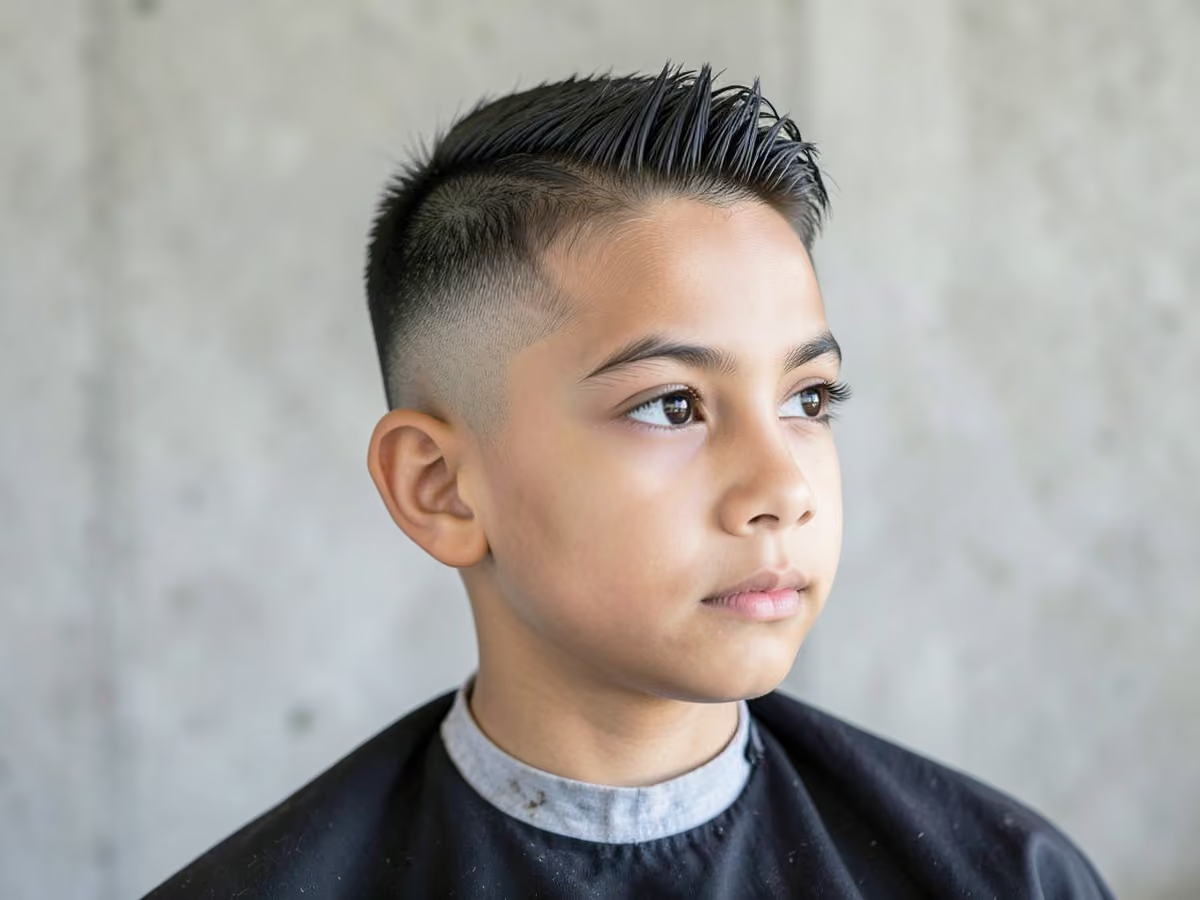
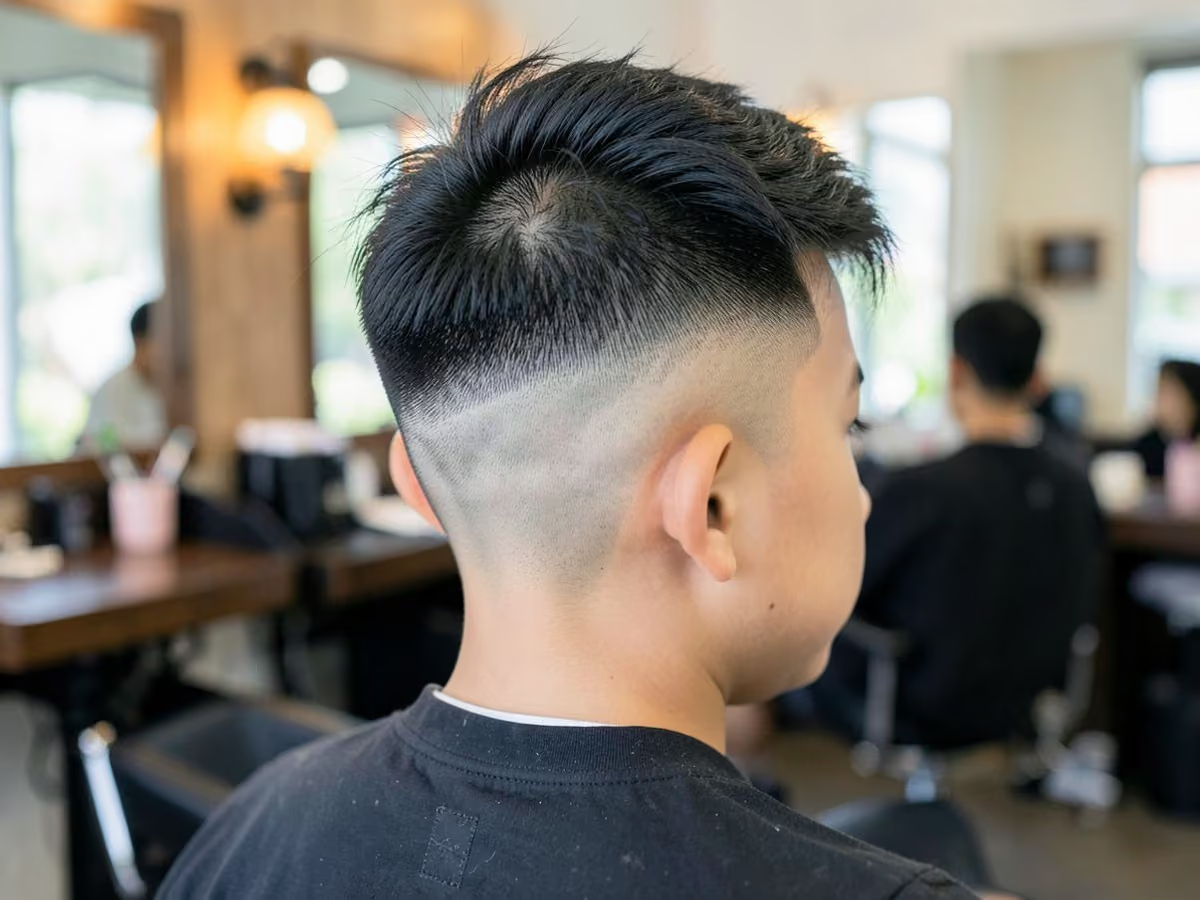
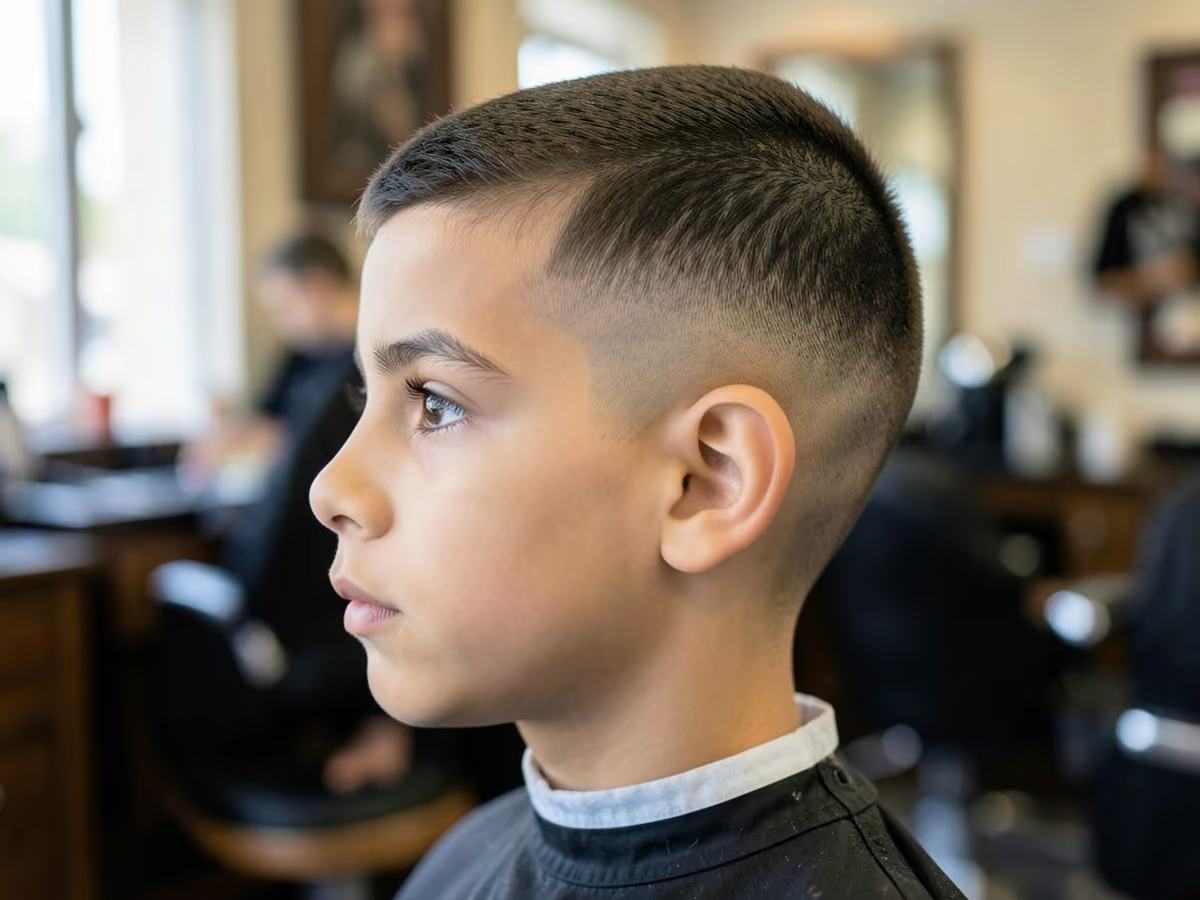
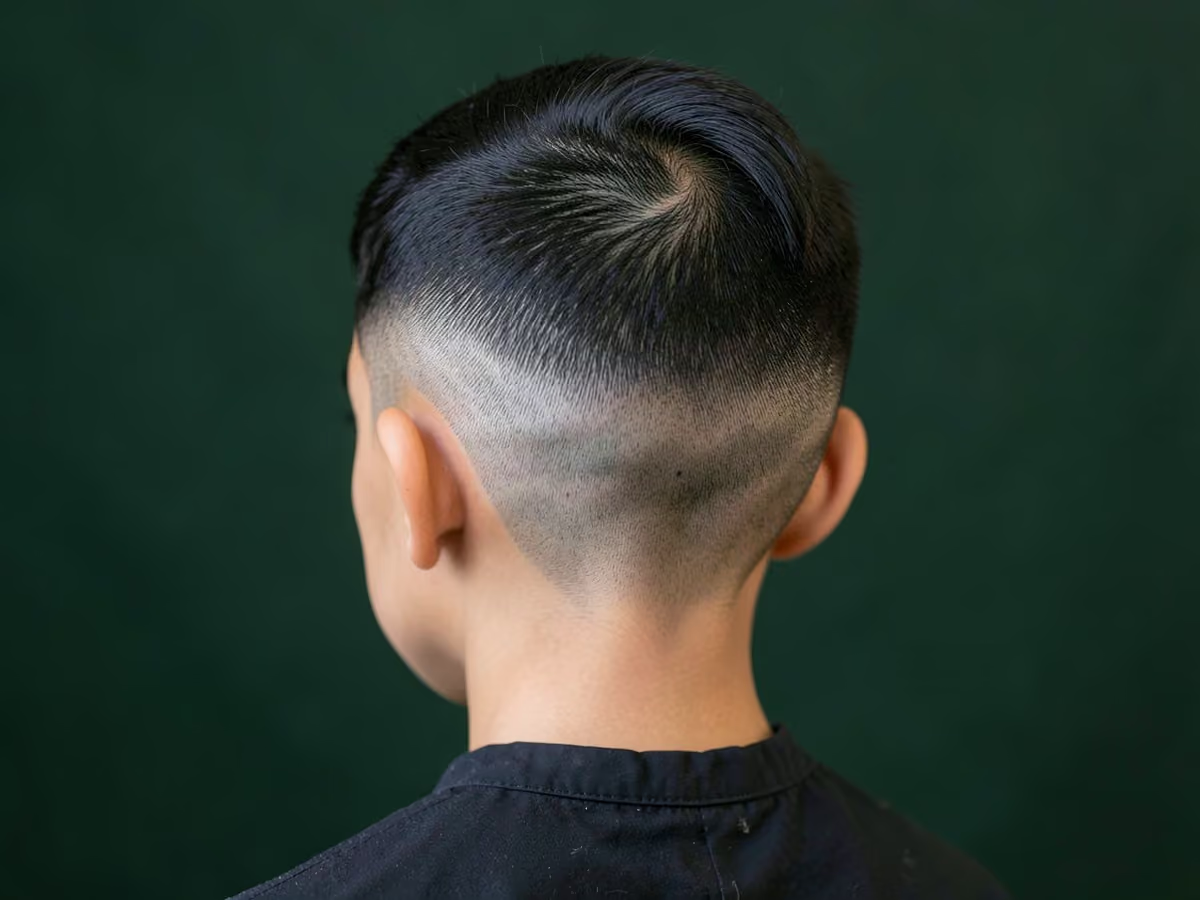
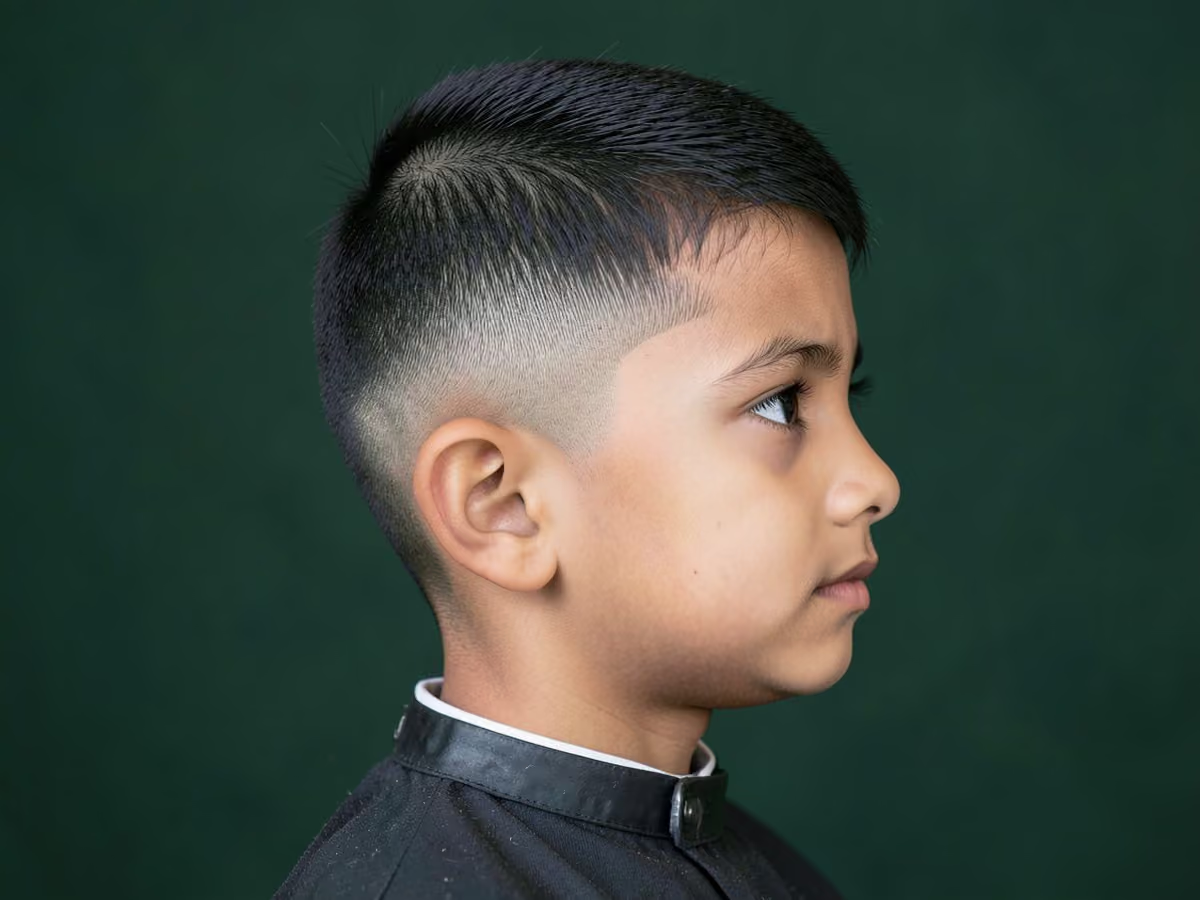
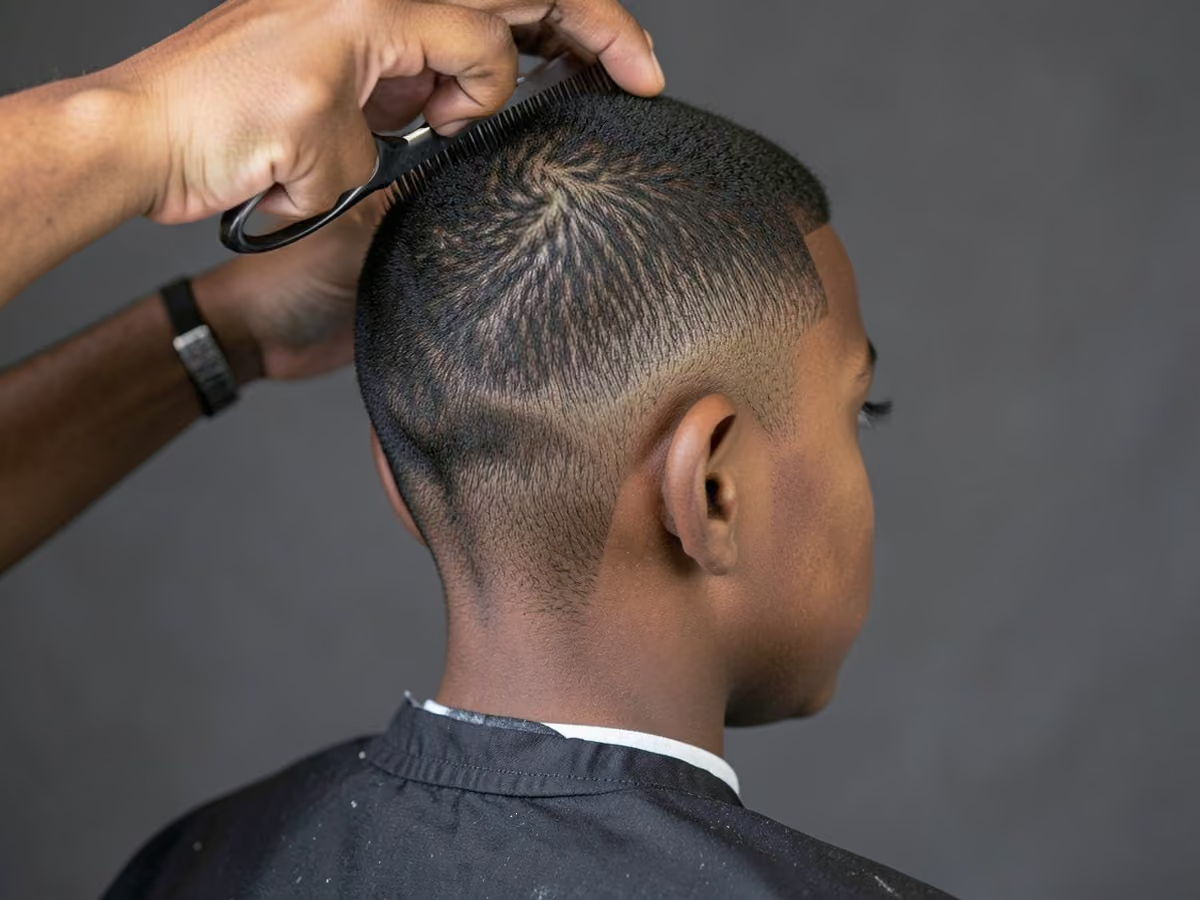
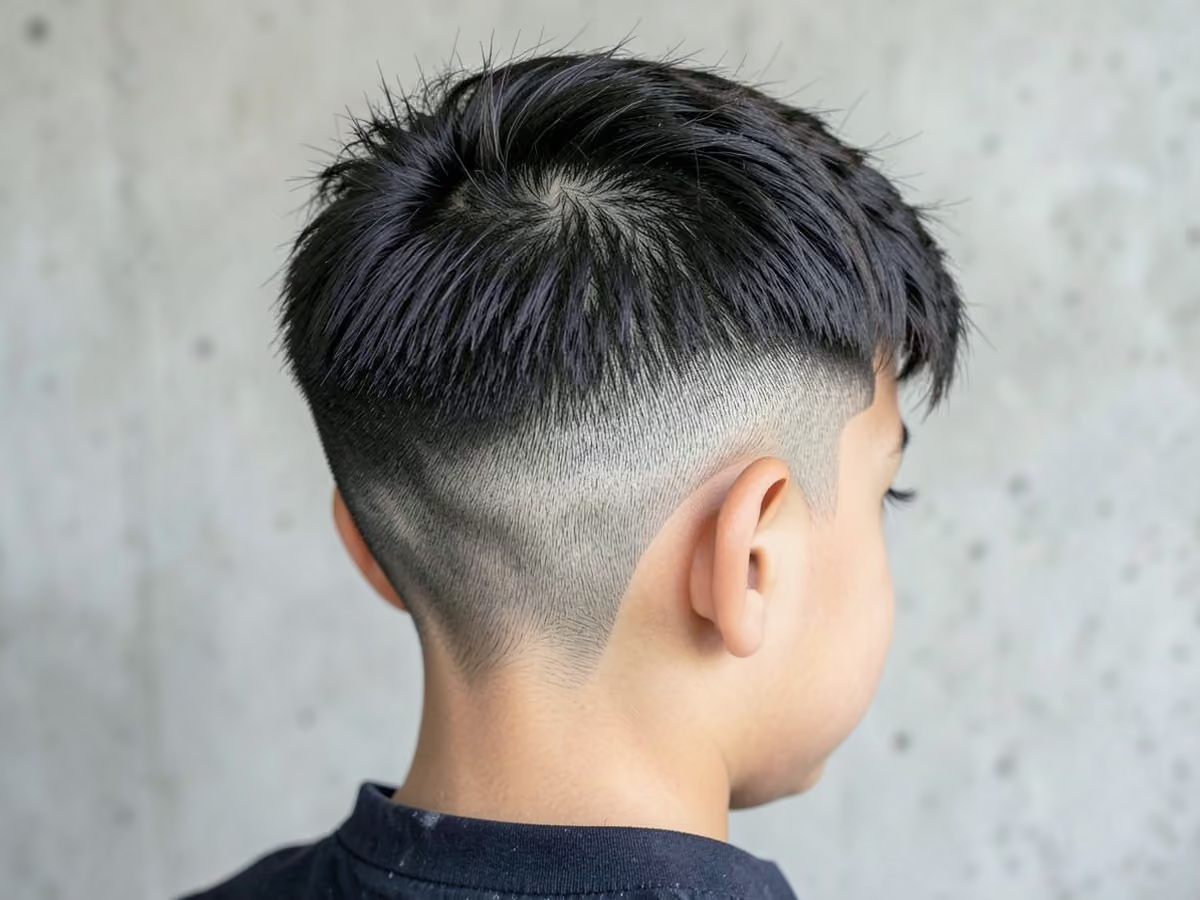
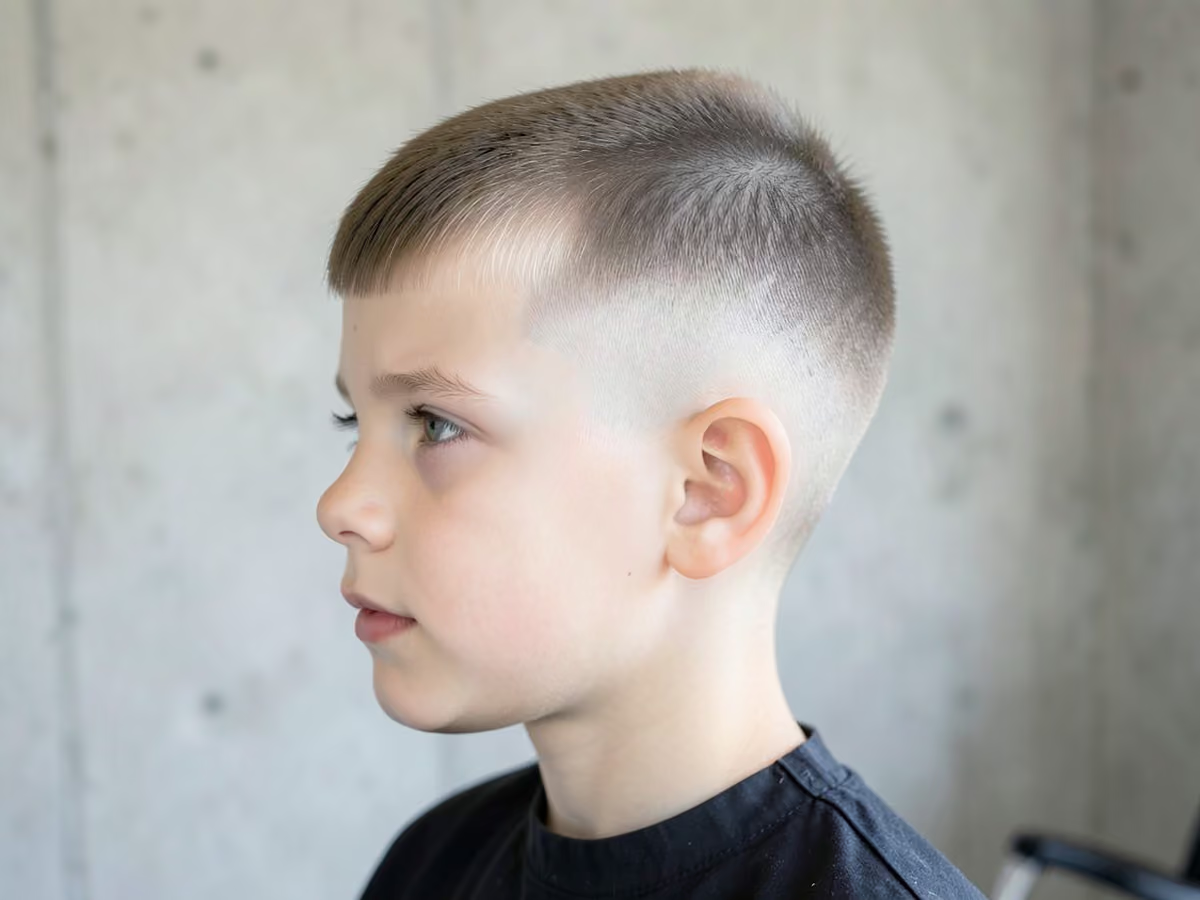
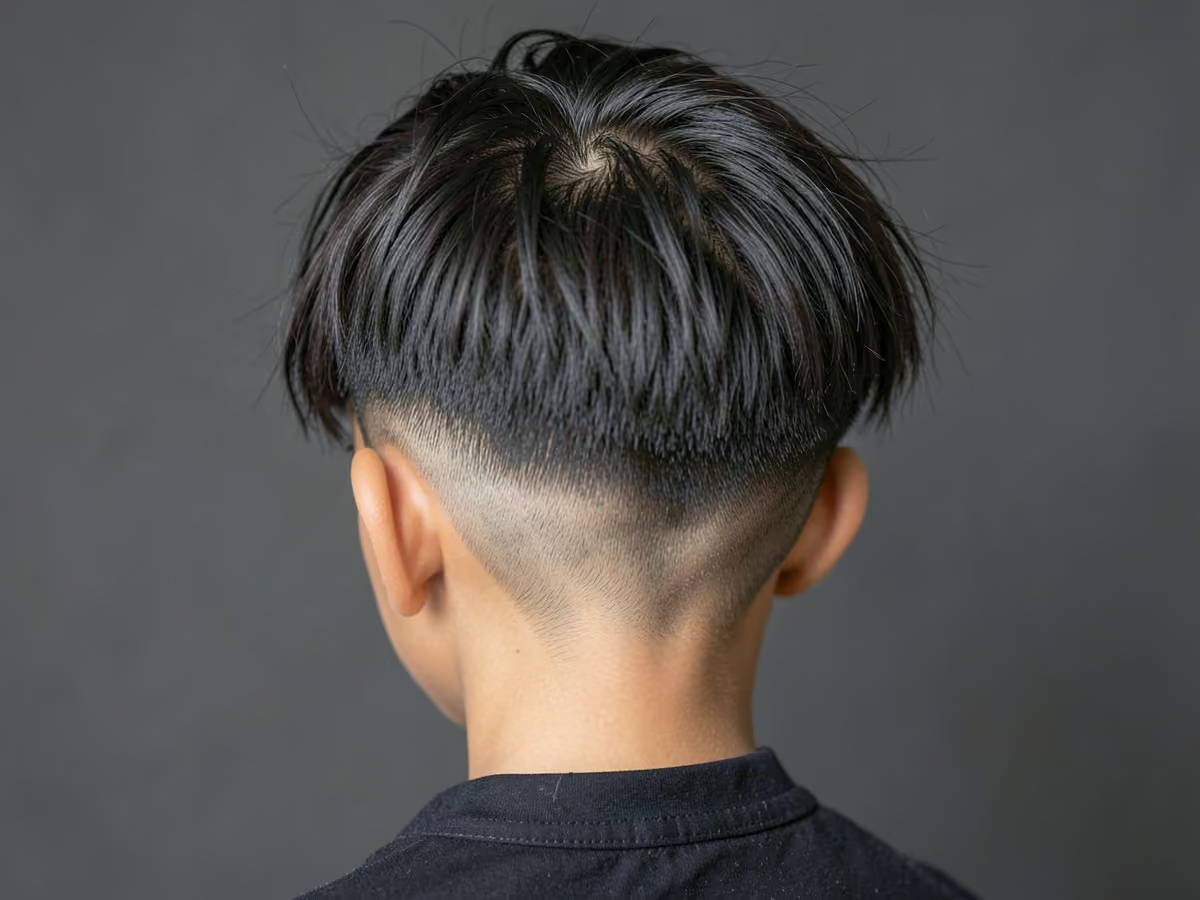
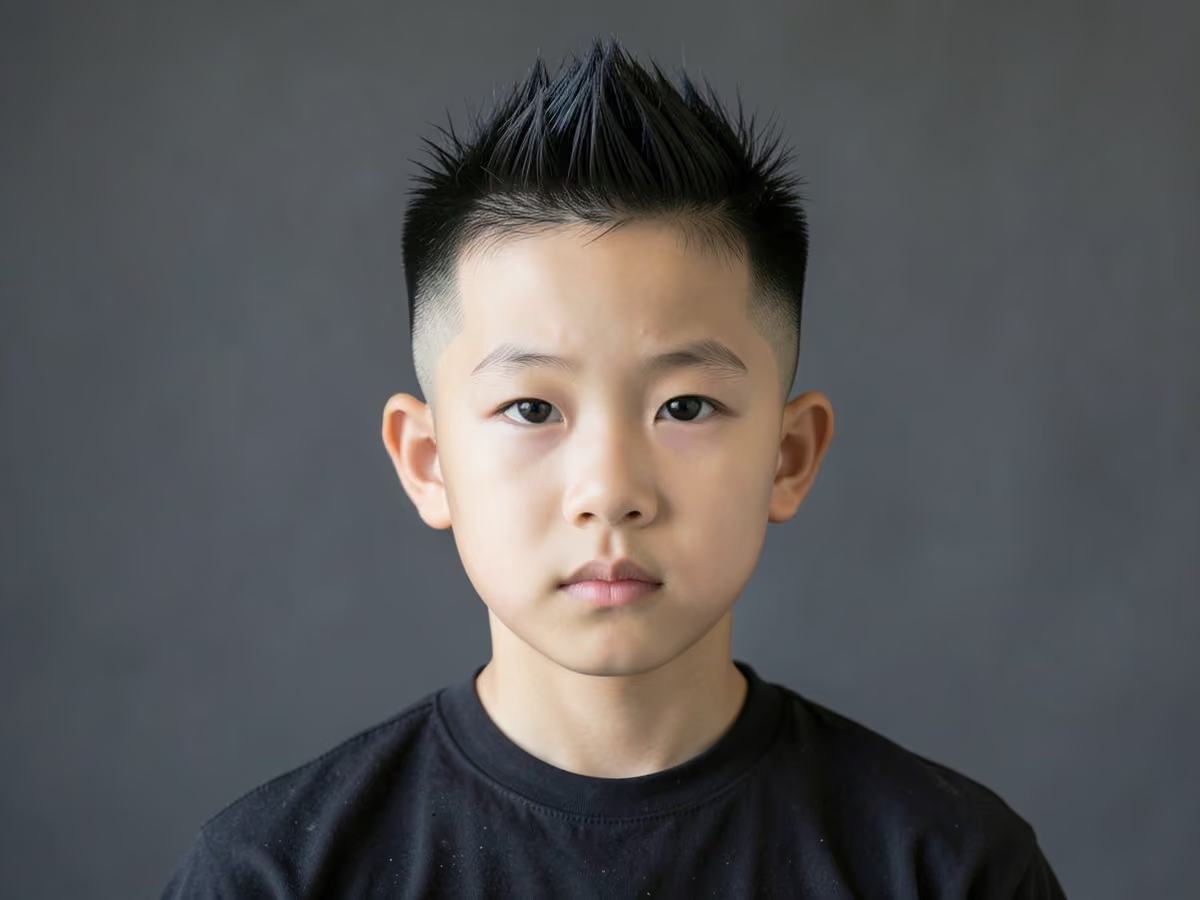
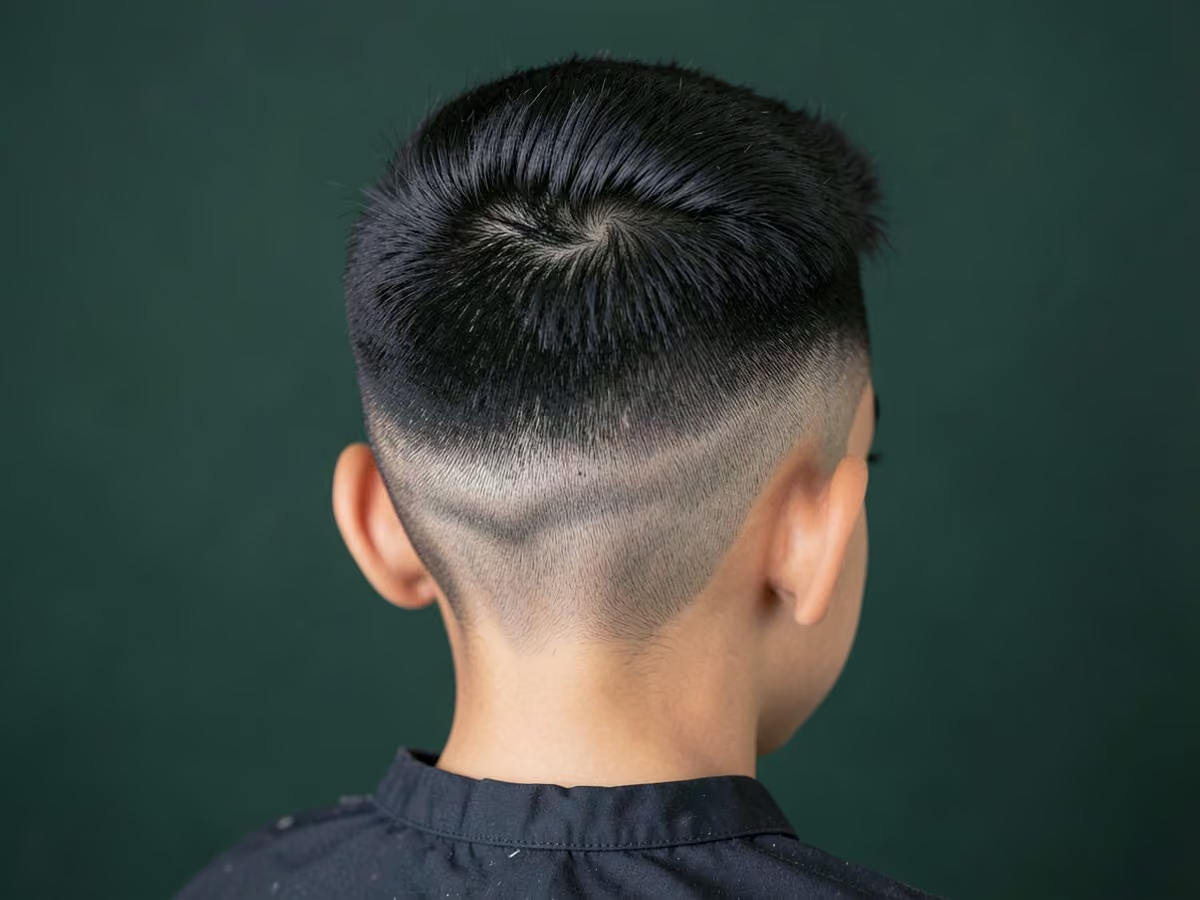
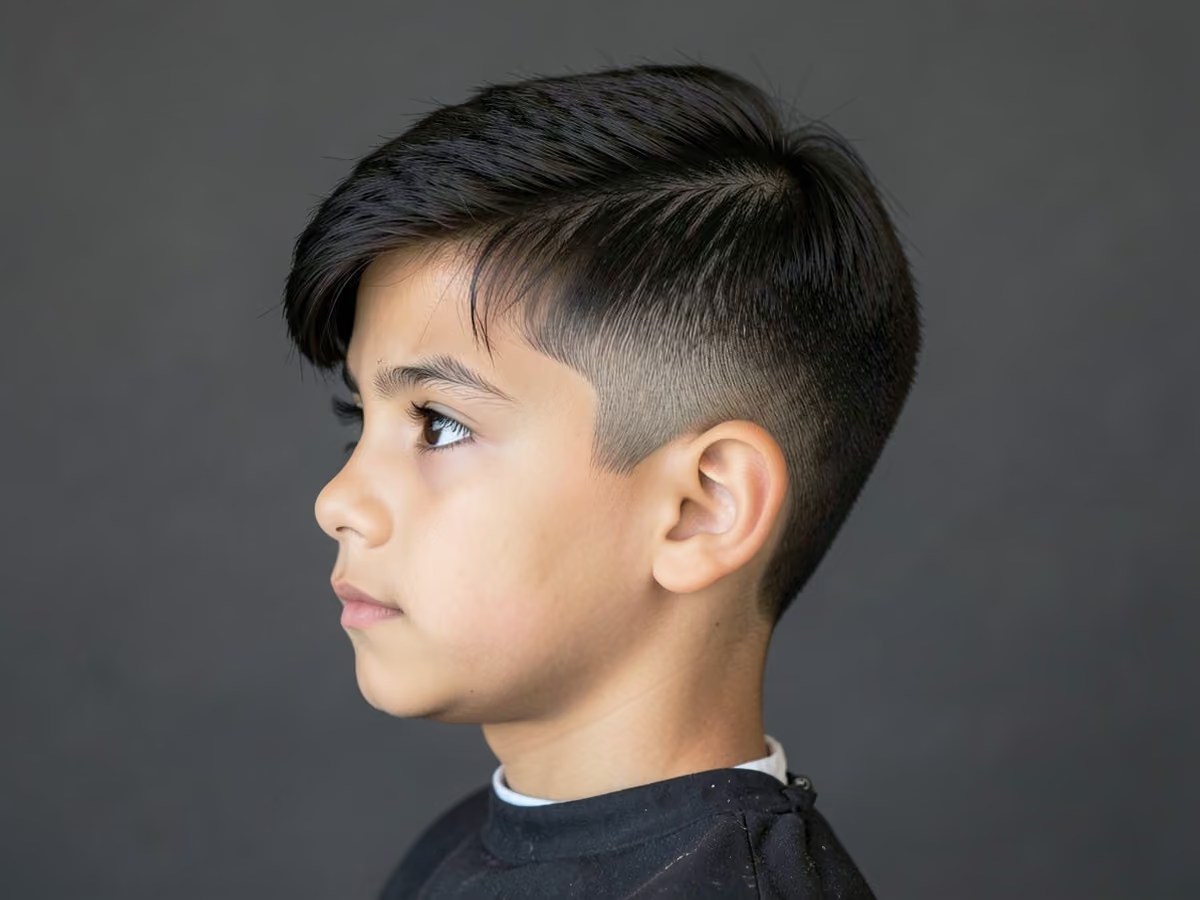
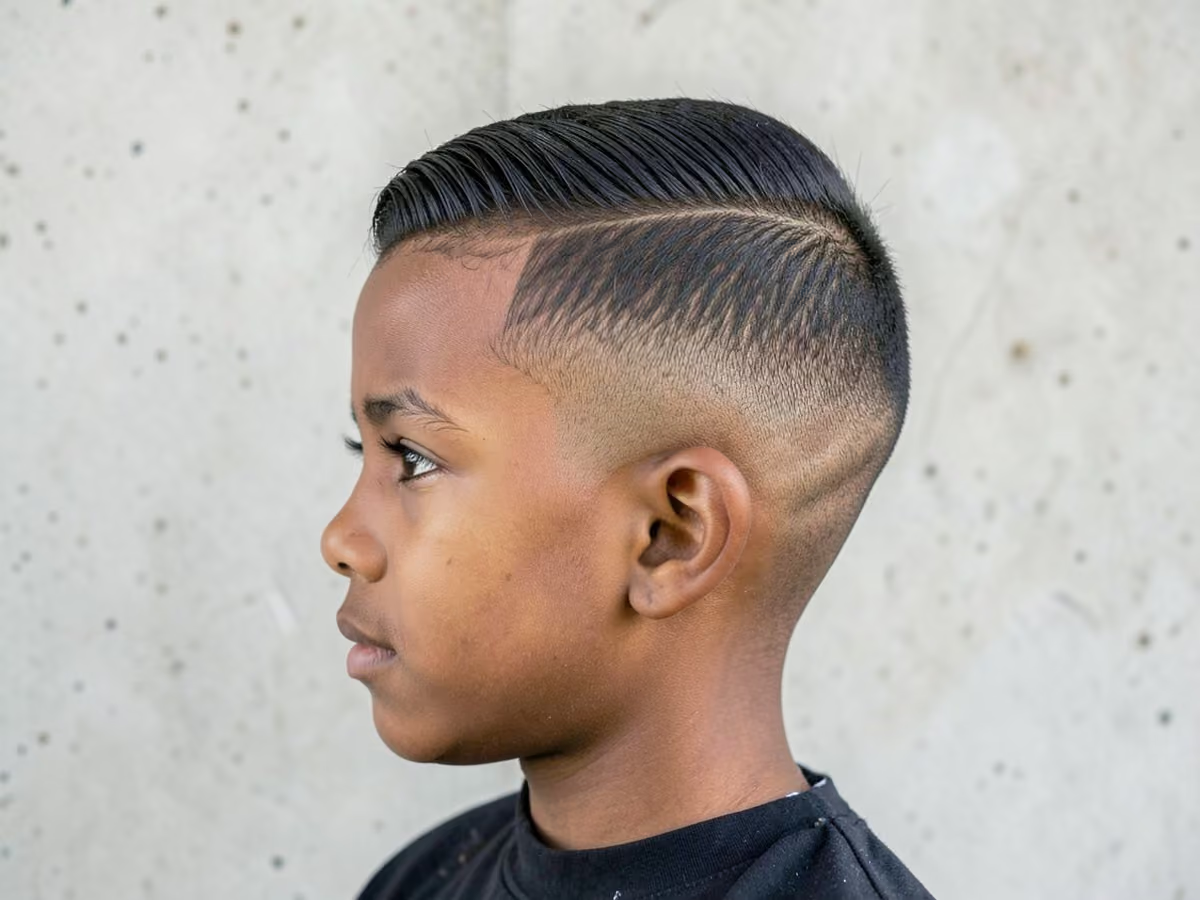
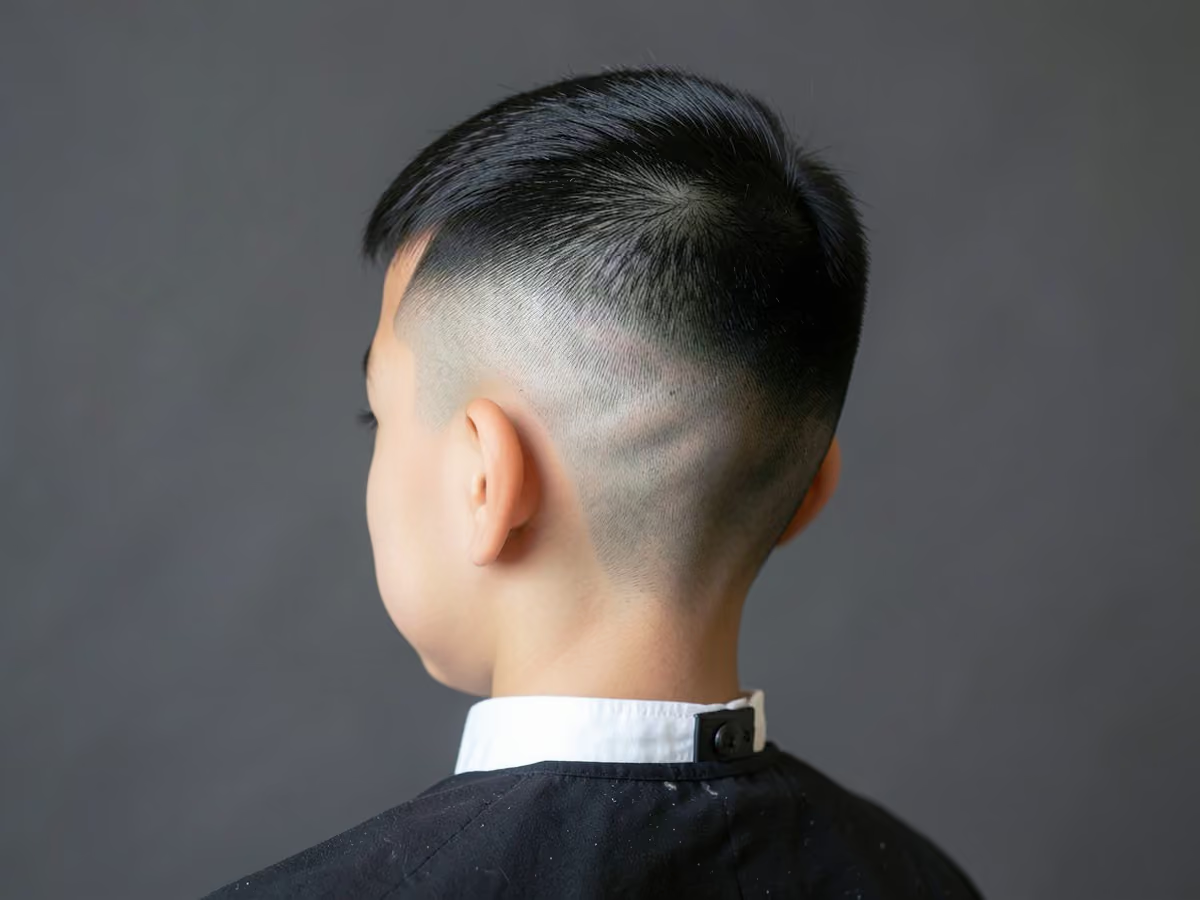
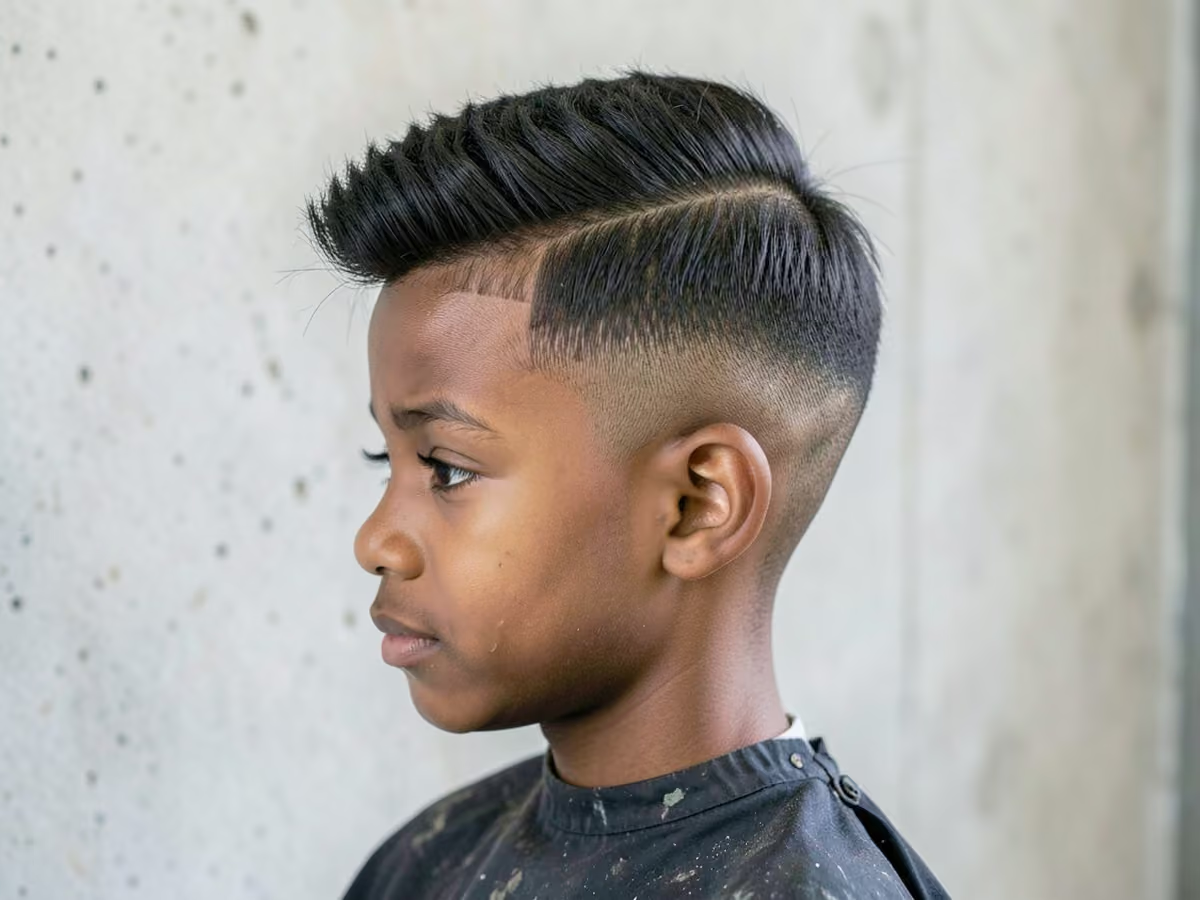
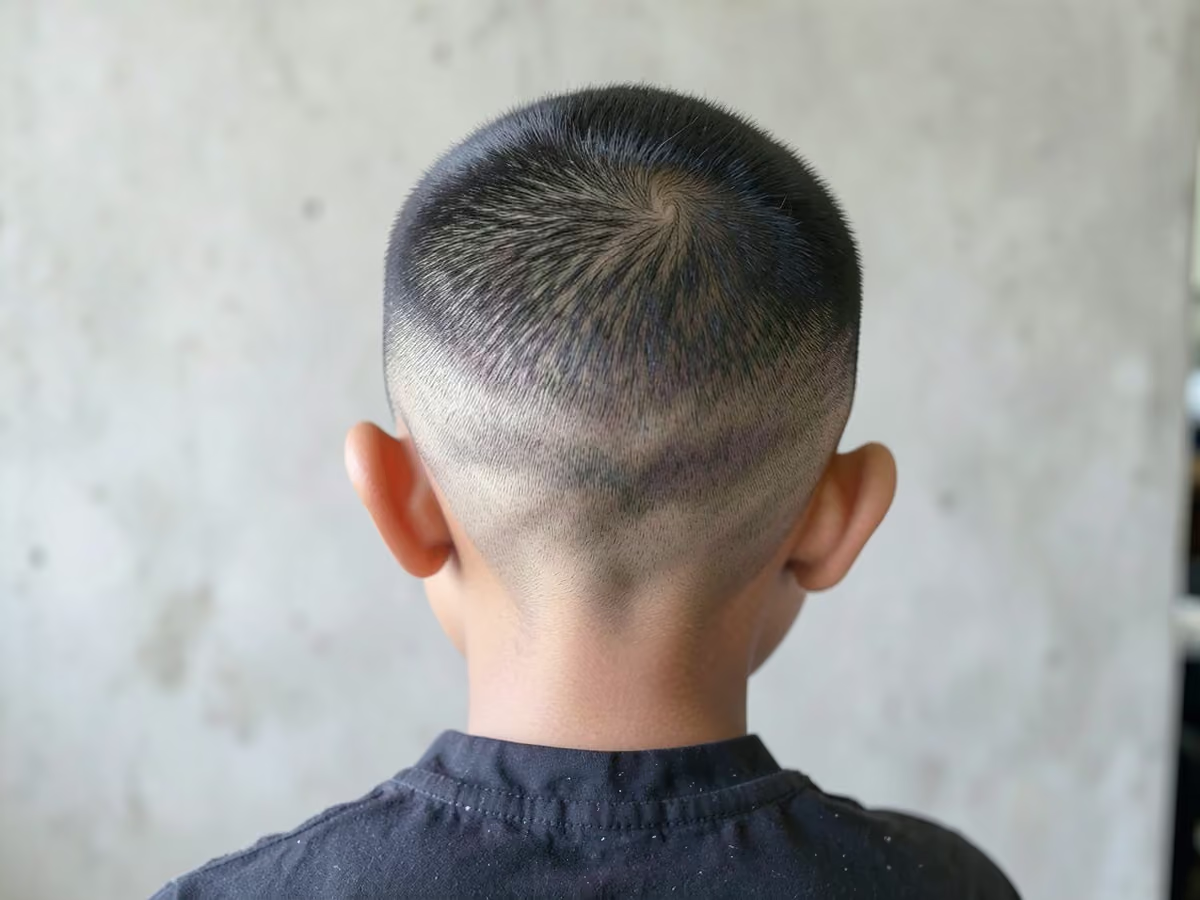
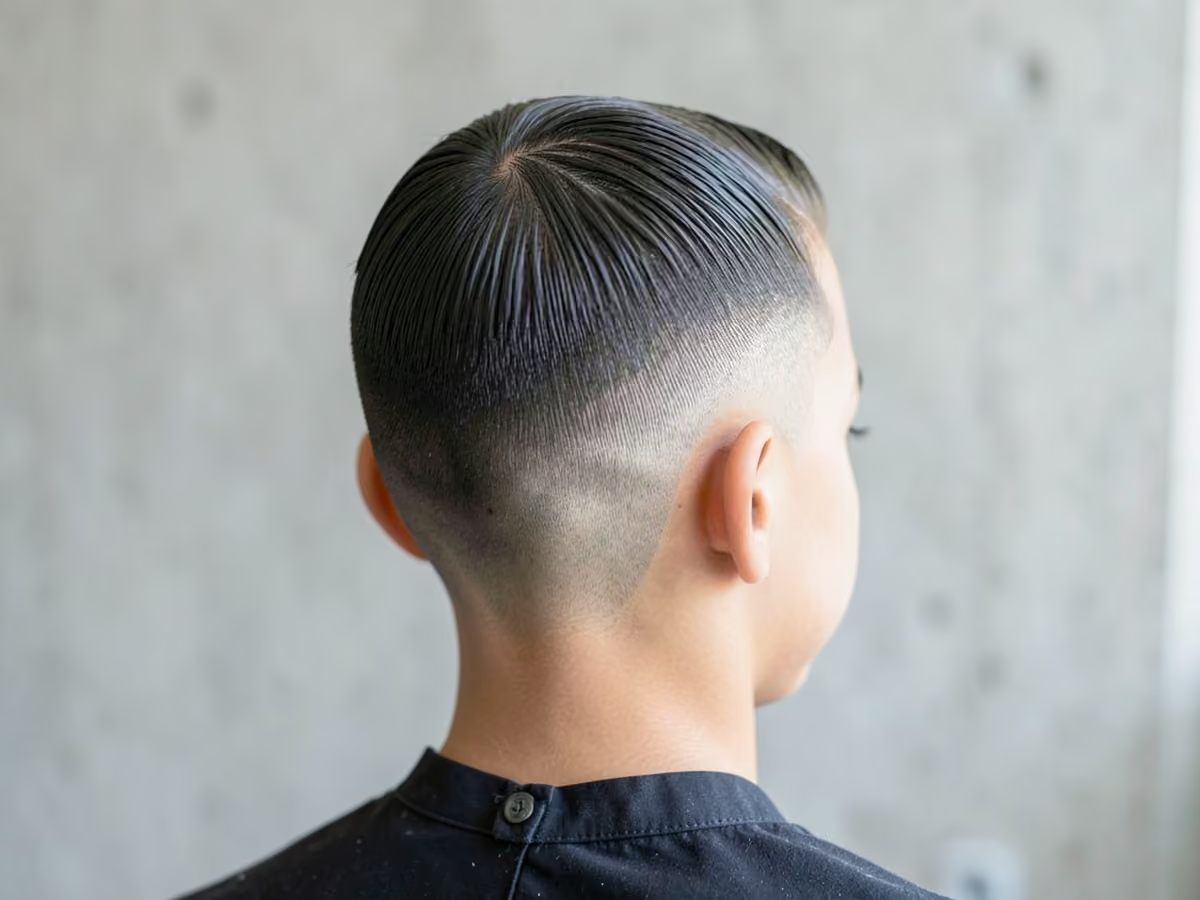
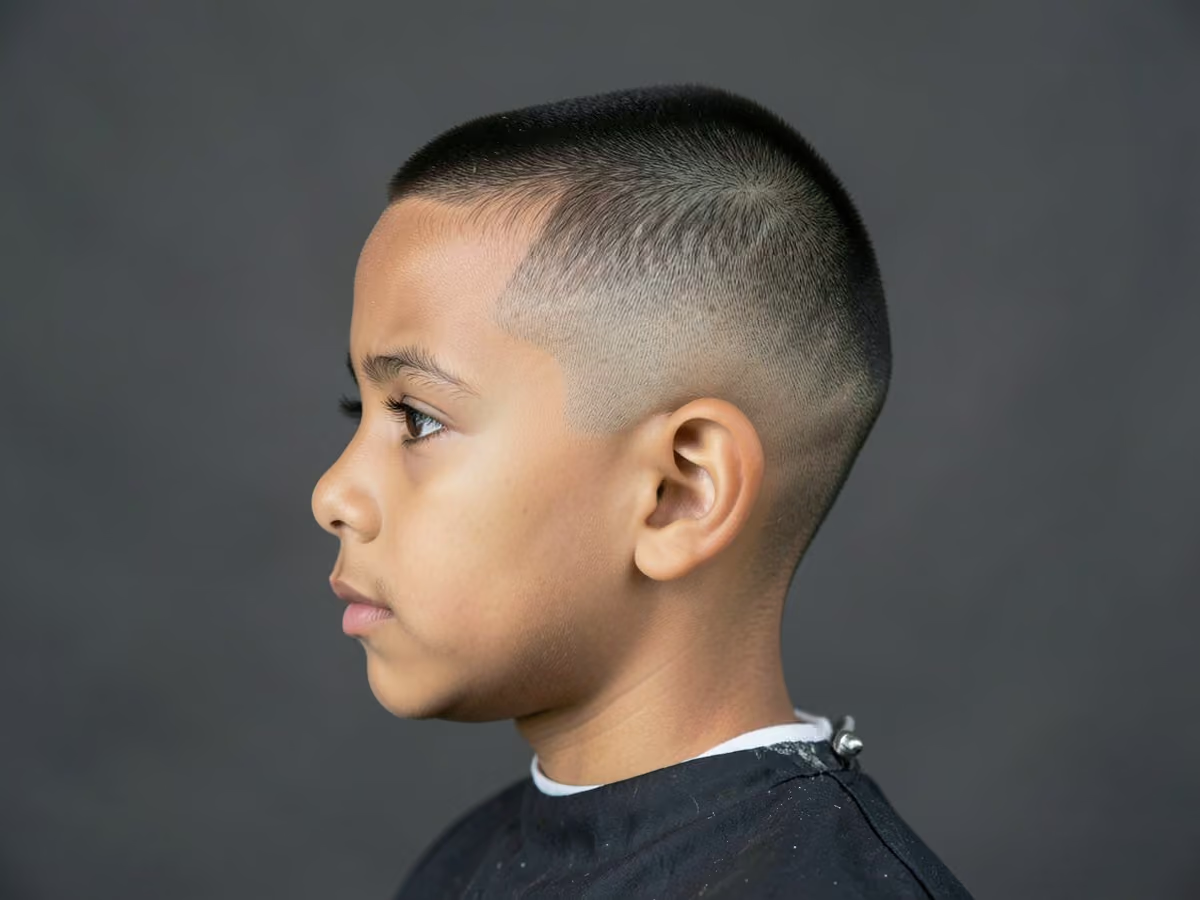
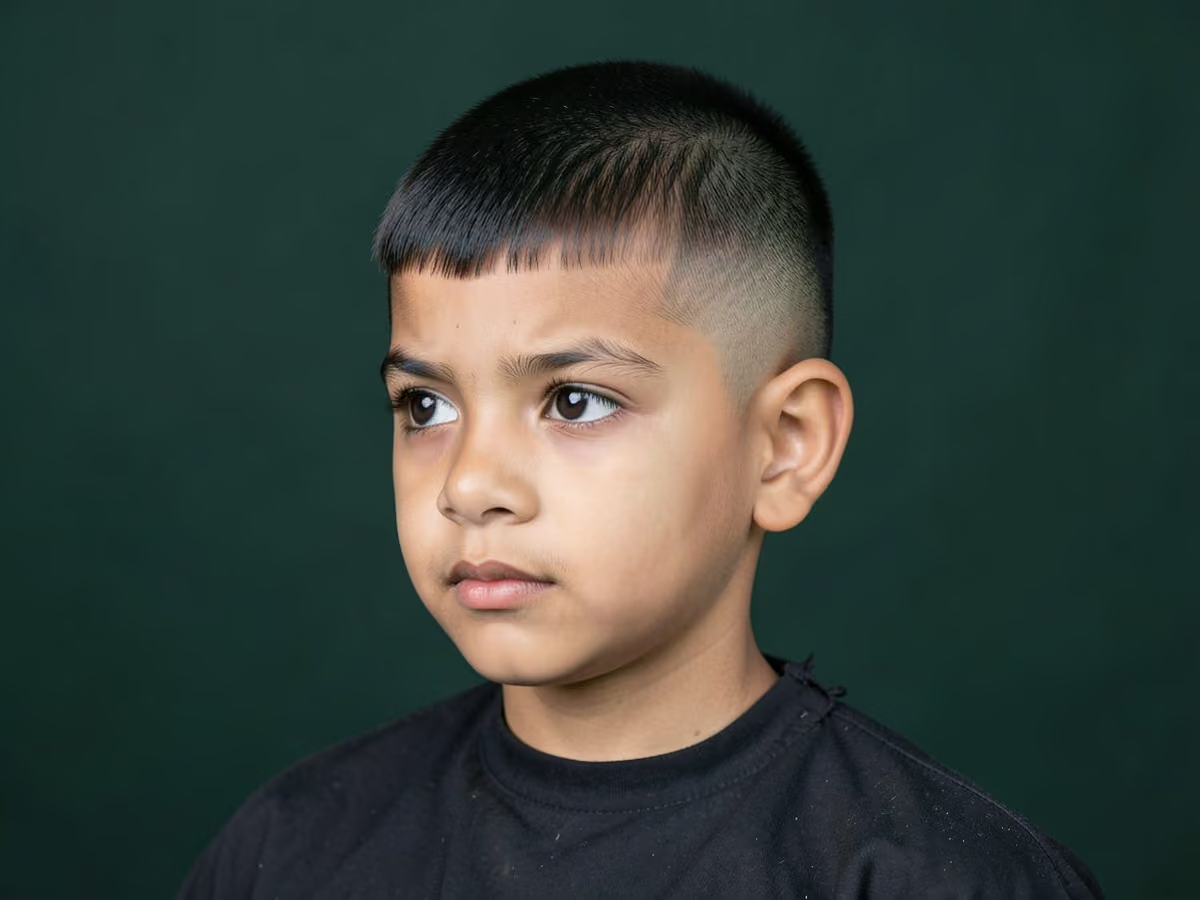
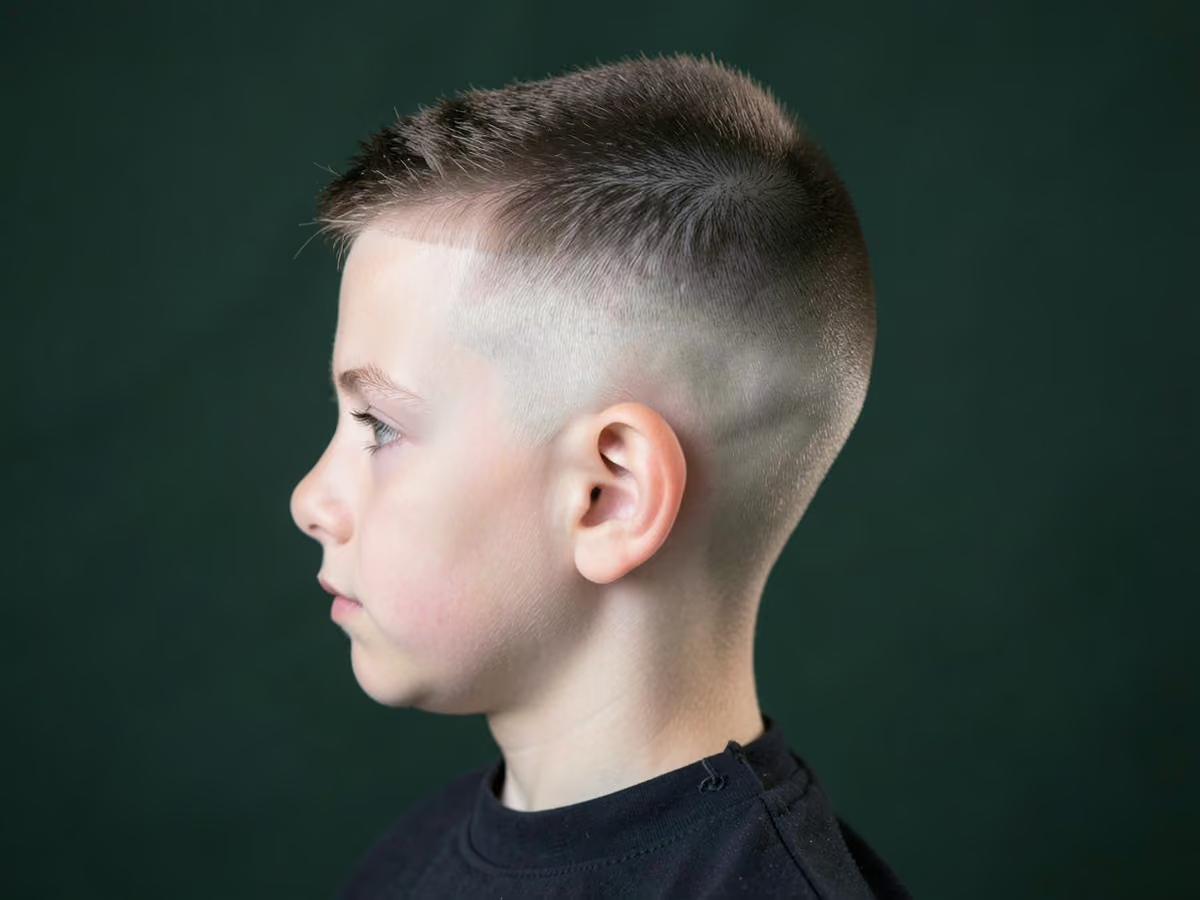
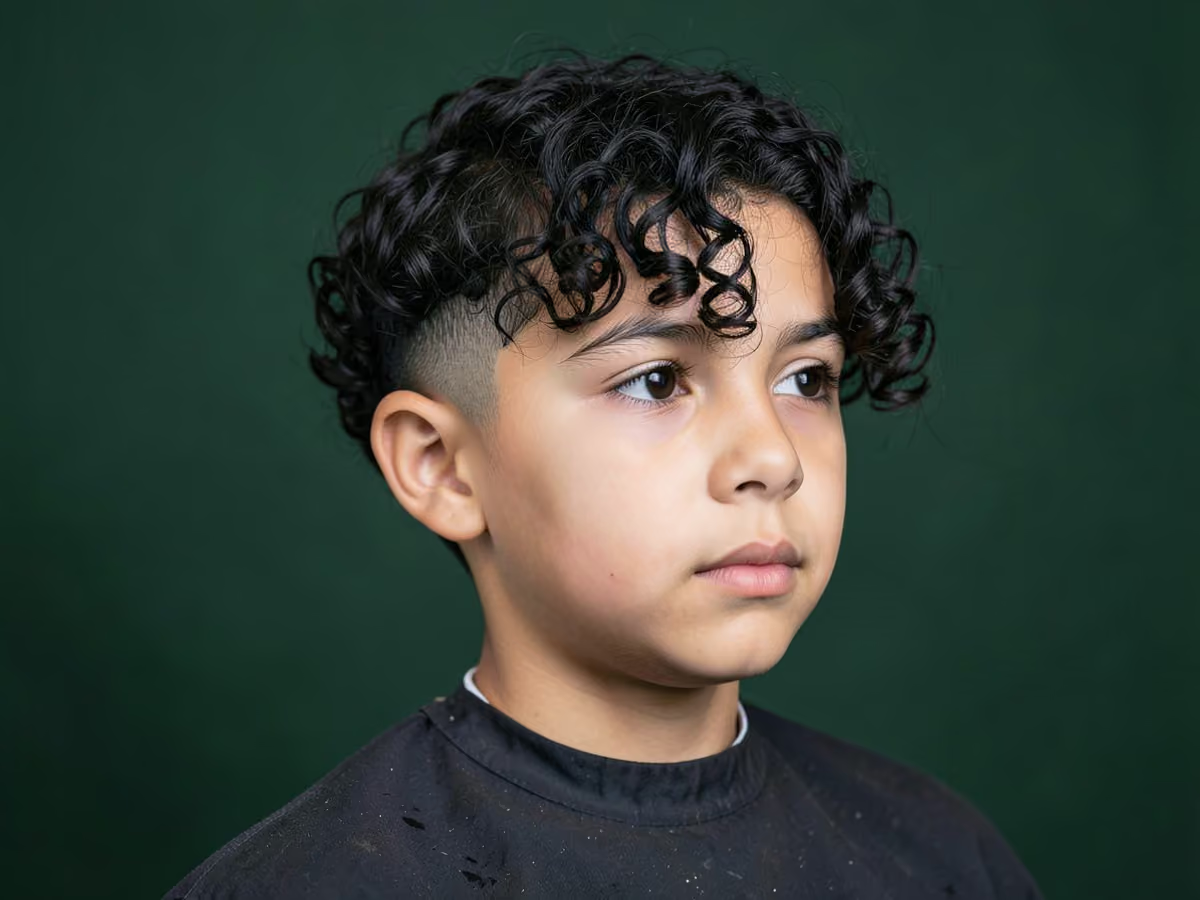
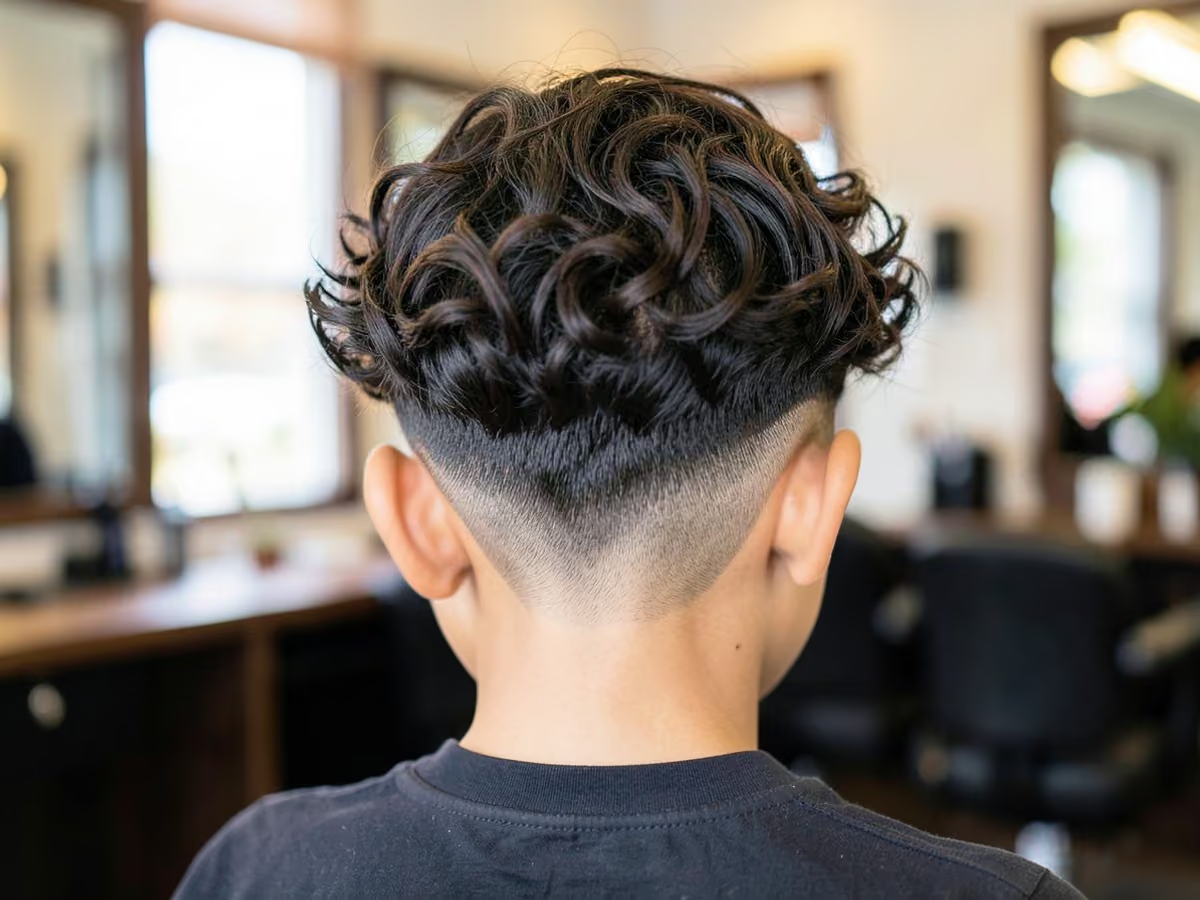
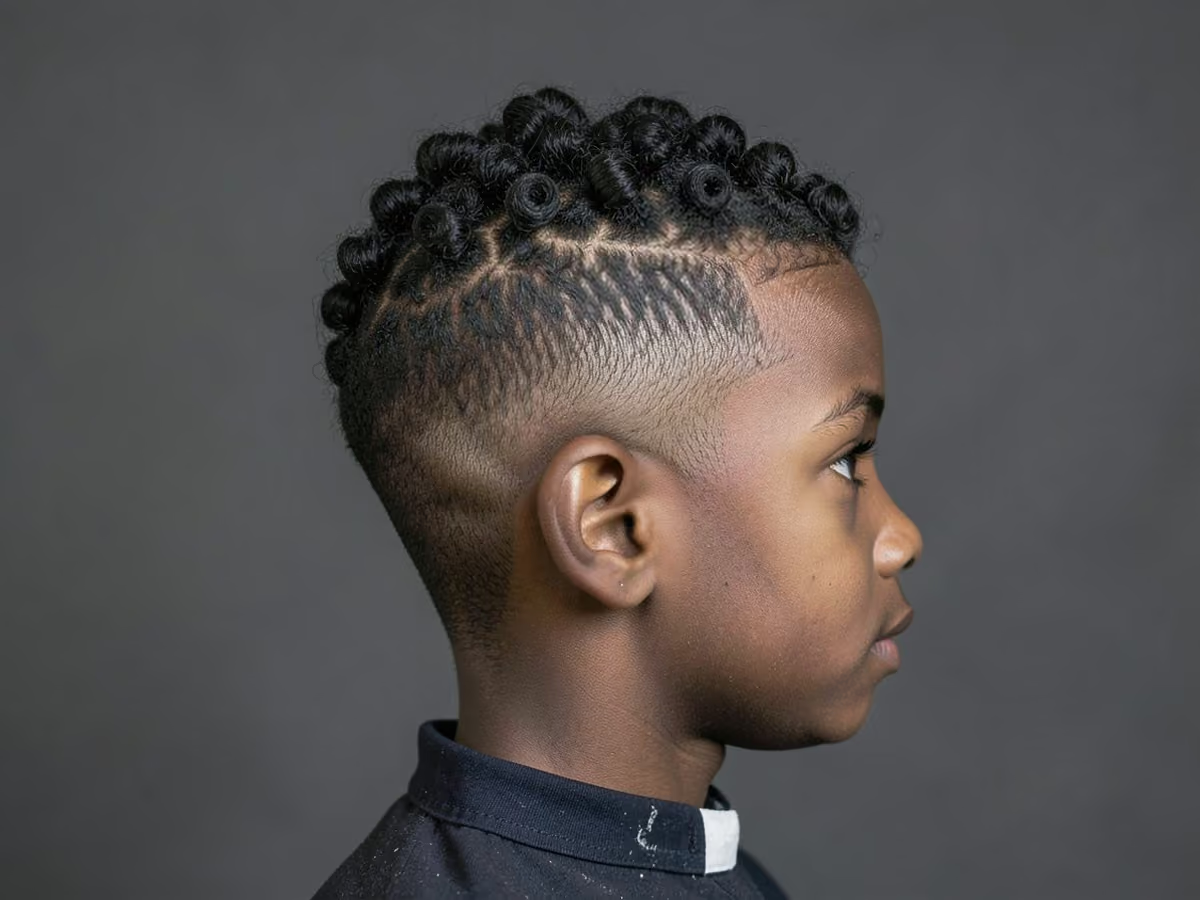
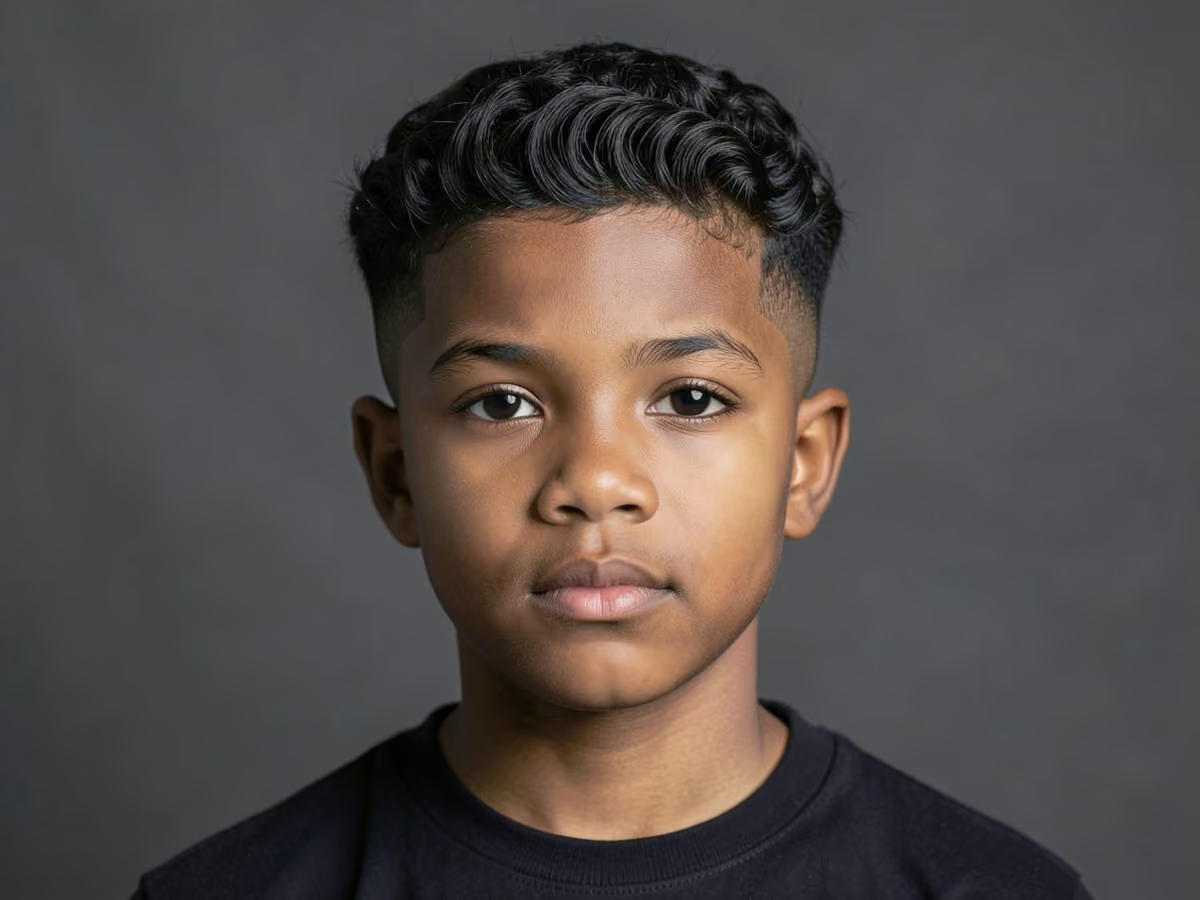
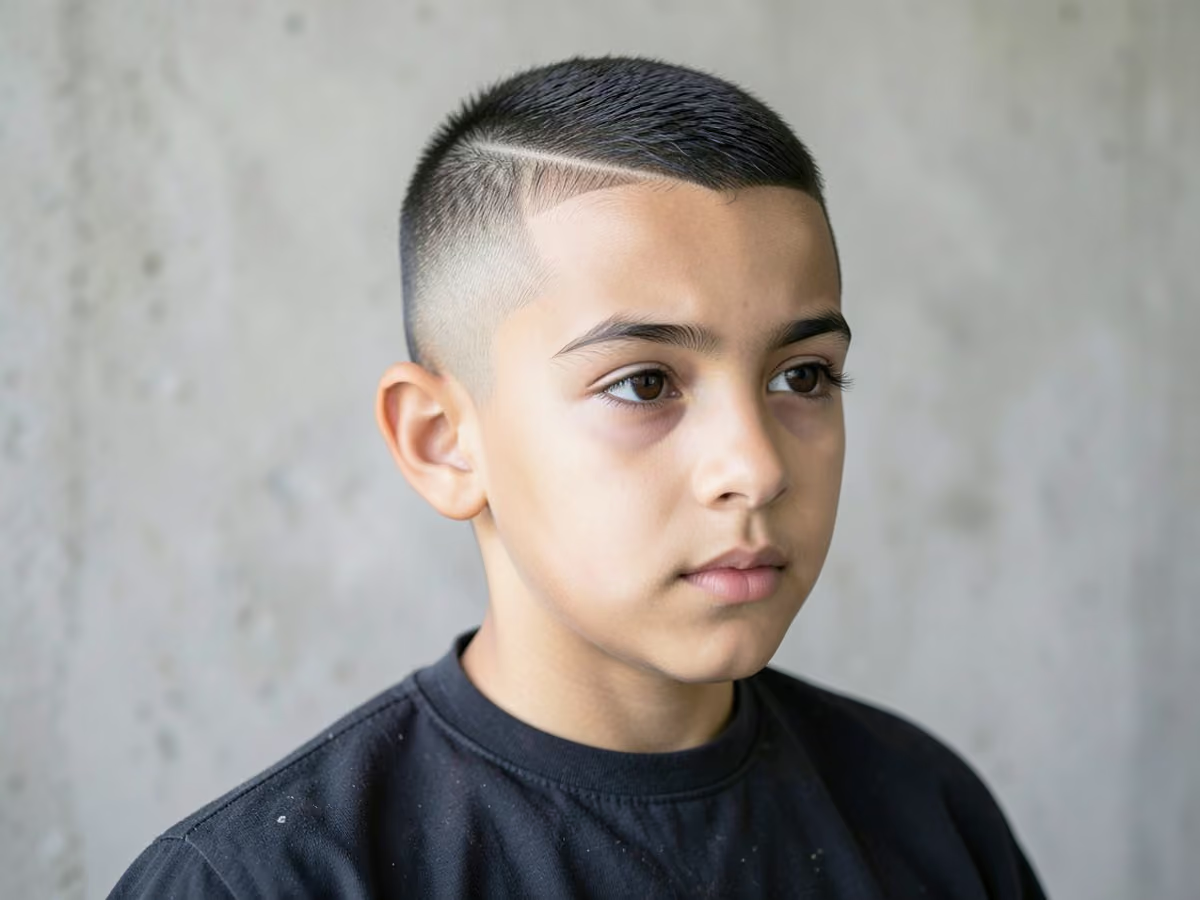
Quick answer: Boys fade haircuts are short-sided cuts where the hair blends from a close guard near the ears and neck to a longer top. For most kids a low taper or mid fade with a #1 at the bottom and one to two inches on top is the easiest start, trimmed every two to four weeks.
Boys Fade Haircut Styles at a Glance
Every style on this page with its clipper guard, top length and trim interval. Tap a name to jump to that card.
Boys fade haircuts give kids short, cool sides and a top that can be left messy, combed neat for school or shaped into spikes, curls or waves. The 30 styles below are grouped by fade height, textured tops, school-ready finishes, sporty short cuts, curly and wavy hair and a few extras, each with guard numbers and what a parent can tell the barber.
What Is a Boys Fade Haircut?
A fade is a cut where the hair on the sides and back gets gradually shorter as it moves down the head, blending from the top length into a close guard or skin near the ears and neckline. On boys the top usually stays one to three inches, long enough to brush or spike. The point where the shortest hair starts sets the fade height: low sits just above the ear, mid at the temple and high at the parietal ridge.
A taper is the gentlest version. It only shortens the sideburns and nape and leaves the rest of the sides at guard length, which is why barbers often recommend it for a child's first clipper cut. Skin fades take the bottom down to bare scalp with a foil shaver or razor and suit older boys. Our fade types guide shows each height side by side, and the low fade page covers the most common starting point.
Which Fade Height Is Right for a Child?
Younger boys tend to do best with a low taper or low fade, since less of the scalp is exposed and regrowth looks soft. Mid fades are the most common request from about age seven, because the blend shows from the front without much upkeep. High and skin fades suit older boys who visit often and can sit still for close clipper or foil work.
Head shape matters too. A higher fade shows bumps, scars and flat spots, so a lower line is kinder if your son has any of those. Hair color plays a part as well: dark, thick hair shows a crisp gradient at any height, while fine blond hair looks fuller with a longer bottom guard. The table below gives a starting point for each height.
Which Fade Height Is Right for a Child?
Fade height
Where it starts
Shortest guard
Typical trim
Good age range
Taper
Sideburns and nape only
#1 or #2
Every 3–4 weeks
Toddlers and up
Low fade
Just above the ear
#0.5 or #1
Every 3 weeks
4 and up
Mid fade
Around the temple
#0.5 or #1
Every 2–3 weeks
6 and up
High fade
At the parietal ridge
#0 or #0.5
Every 1–2 weeks
9 and up
Skin fade
Any height, to bare skin
Foil or razor
Every 1–2 weeks
Older boys who sit still
Are Fades Allowed at School?
Most schools allow tapers and low or mid fades without question, and many allow high fades. The styles most often flagged by dress codes are shaved designs, very short skin fades with a long contrasting top, and mohawks. Rules vary widely between schools and change from year to year, so read the current handbook or ask the office before booking a cut with lines or a dramatic height. Private and uniform schools tend to be stricter.
For picture day, a low or mid fade booked four to six days ahead looks freshest. The blend softens just enough to look natural, and any clipper redness has gone. If your son plays a sport with a helmet or swims several times a week, a shorter top dries faster and keeps sweat off the forehead, so mention his activities to the barber.
Filter the styles
Showing all 30 styles
Fade
Hair
Length
Boys Fades by Height
Height decides how much scalp shows and how fast the cut grows out. Start with a taper or mid fade for younger boys, and save high and bald fades for kids who can visit the shop every week or two.
Trim:Every 3–4 weeks. Only the sideburns and nape grow out.
Best For:Ages 3–10, any face shape + straight or wavy hair.
About This Style
Clippers shorten just the sideburns and the nape, blending a #1 up into a #3 or #4, while the rest of the sides and top keep their length. The outline looks tidy but the cut barely changes shape as it grows. That makes it the gentlest first clipper cut and a good match for kids who dislike the buzzing near their ears. Tops of one to three inches all work.
How to Style at Home
Comb the top in any direction while it is still damp.
Tuck the hair behind the ears with a little water if it sticks out.
Run a comb over the nape so the taper lies flat.
Ask Your Barber
"Taper fade for my son, just the sideburns and the back of the neck with a #1 blending to a #3, leave the top about two inches."
Trim:Every 2–3 weeks. The temple blend softens by week three.
Best For:Ages 6–12, round or oval faces + straight or thick hair.
About This Style
Around the temple is where this fade begins, so the gradient from a #1 to a #3 is clearly visible from the front. Above it, the top stays one and a half to two and a half inches for a messy or brushed style. Round faces look slightly longer because the widest part of the head is short. It is a common kids fade barbers cut from about age seven.
How to Style at Home
Rub a pea-size amount of matte paste between your fingers.
Push the top forward or up with your fingertips.
Leave the sides alone; they need no product.
Ask Your Barber
"Mid fade starting at the temple, #1 at the bottom blending to a #3, two inches on top with some texture, natural neckline."
Trim:Every 1–2 weeks. Short sides show regrowth fast.
Best For:Ages 9–14, round or square faces + thick hair.
About This Style
Most of the sides are taken very short in this cut, with the fade climbing to the parietal ridge where the side of the head turns into the top. A #0.5 at the bottom and a quick blend to the top length give strong contrast. Sporty older boys request it to stay cool. It shows the shape of the head clearly, so check for bumps or scars first.
How to Style at Home
Towel-dry the top and rough it up with your fingers.
Add a little texture powder at the roots for lift.
Apply sunscreen to the short sides on sunny days.
Ask Your Barber
"High fade up to the top of the head, #0.5 at the bottom blending through a #1 and #2, short textured top about an inch and a half."
Trim:Every 2–3 weeks. The curve behind the ear loses definition.
Best For:Ages 7–13, oval or long faces + thick or curly hair.
About This Style
Behind each ear, the fade line dips downward toward the nape, leaving more hair across the crown. The curve gives the back of the head a rounder outline, which helps boys whose heads are flatter at the back. From the front it looks like a low or mid fade. A #1 at the lowest point and a top of two inches is a common request.
How to Style at Home
Brush the back down toward the neck after washing.
Shape the top with damp hands or a little styling cream.
Check the curve behind the ears for stray hairs before photos.
Ask Your Barber
"Drop fade, low at the temple and curving down behind the ear, #1 at the bottom, about two inches on top."
Trim:Every 1–2 weeks. Bare skin looks grown in within a week.
Best For:Ages 10–14, oval or square faces + dark, thick hair.
About This Style
At the bottom, the barber takes the hair down to bare skin with a foil shaver, then blends upward through a #0.5 and #1. Dark, thick hair shows the cleanest gradient. It needs a child who can stay still near the razor, so most shops suggest it for older boys. Expect visible stubble within five to seven days and plan weekly or fortnightly visits.
How to Style at Home
Moisturize the bare sides with a little scalp oil after every wash.
Put sunscreen on the shaved area whenever he plays outdoors.
Style the top with a small amount of matte clay.
Ask Your Barber
"Bald fade at mid height, foil shaved at the bottom, blended through a #0.5 and #1, an inch and a half on top."
Trim:Every 4 weeks. Scissor-cut sides grow out without lines.
Best For:Ages 2–8, any face shape + fine or straight hair.
About This Style
Using scissors over a comb instead of clippers, the barber grades the sides from about half an inch at the ears to the top length. Kids who are frightened of the clipper noise sit through it more easily. The finish is softer than a clipper fade, with no visible line, and fine or light hair looks fuller. It takes longer in the chair, so book a quiet time slot.
How to Style at Home
Comb the hair down after washing to check it lies evenly.
Use a drop of light gel to tame flyaways at the crown.
Brush the sides down with a soft brush.
Ask Your Barber
"Scissor fade for my son, no clippers please, about half an inch at the ears getting longer toward a two-inch top."
Recommended Products
Light Gel
Kids Shampoo
Boys Fades with Textured Tops
These tops look best a little messy, which suits boys who will not spend time in front of the mirror. Most need a damp towel-dry and a fingertip of paste. See the textured crop guide for adult versions.
Trim:Every 3 weeks. The fringe reaches the eyebrows fast.
Best For:Ages 6–13, oval or square faces + thick straight hair.
About This Style
Choppy layers of one to two inches sit on top and fall forward into a short fringe, while a mid fade with a #1 clears the sides. Point cutting breaks up the ends so thick hair does not look like a helmet. Kids with cowlicks at the front benefit because the forward fall hides them. Few cuts are faster to style before school.
How to Style at Home
Towel-dry and work a pea of matte paste through the top.
Pinch small pieces forward with your fingertips to break up the top.
Leave the fringe slightly uneven so it looks natural and textured.
Ask Your Barber
"Textured crop with a mid fade, #1 at the bottom, about two inches on top point cut for texture, short choppy fringe."
Trim:Every 3 weeks. The straight fringe line grows uneven.
Best For:Ages 7–14, oval or long faces + straight or wavy hair.
About This Style
A blunt fringe is cut straight across the forehead, about a finger's width above the eyebrows, with a short textured top behind it and a #1 mid fade underneath. The horizontal line shortens long faces. It is neater than a messy crop but still needs only a quick comb forward in the morning, making it a school favorite.
How to Style at Home
Comb the top forward so the fringe lies straight.
Rub a little matte clay through the top for grip.
Separate the fringe slightly with your fingers so it is not a solid line.
Ask Your Barber
"French crop for my son with a mid fade from a #1, a straight blunt fringe just above the eyebrows and a short textured top."
Trim:Every 3–4 weeks. Fringe length is the first thing to trim.
Best For:Ages 5–12, round or heart faces + wavy or straight hair.
About This Style
Longer pieces of three inches or so fall loosely over the forehead, while a low fade keeps the sides short and tidy. The fringe softens a wide forehead and suits boys who like hair moving around. Wavy hair adds natural shape without product. Ask the barber to keep the fringe above the eyes so it does not bother him in class.
How to Style at Home
Scrunch a little sea salt spray into damp hair.
Let it air-dry or use a dryer on low heat.
Shake the fringe loose with your fingers once the hair is dry.
Ask Your Barber
"Low fade with a #1 on the sides, keep about three inches on top falling forward, messy fringe kept above his eyes."
Trim:Every 3 weeks. Spikes flop once the top passes two inches.
Best For:Ages 5–12, round or oval faces + thick straight hair.
About This Style
Kept at about one to one and a half inches, the top is pulled up into short points, with a mid or high fade below. Thick, straight hair holds spikes best. Younger boys often love styling this one themselves, so choose a light, water-soluble product that washes out easily. Round faces look a little longer with the added height.
How to Style at Home
Rub a small amount of light gel between your palms.
Pull the hair straight up in small sections.
Twist the tips between your fingers to form points.
Ask Your Barber
"Mid fade with a #1, keep an inch and a half on top cut so it can spike up, point cut the ends."
Trim:Every 3 weeks. The front needs length kept even.
Best For:Ages 7–14, round or square faces + straight or thick hair.
About This Style
Brushed straight up and slightly back, the front hair of about two inches creates height without the shape of a full quiff. Below, a taper or low fade trims the sides close. A round brush and a dryer make the lift last longer, and older boys can learn the routine in a week or two. It adds a little length to round faces.
How to Style at Home
Blow-dry the front upward with a round brush.
Work a small amount of matte clay through the roots.
Brush the front up and slightly back to finish.
Ask Your Barber
"Brush up with a low fade from a #1, two inches at the front shortening toward the crown, cut so it stands up."
Trim:Every 4 weeks. The center part needs length to fall well.
Best For:Ages 8–14, oval or diamond faces + straight or wavy hair.
About This Style
Hair of three to four inches is parted in the middle and falls to each side like curtains, framing the eyes, while a low taper keeps the sides from puffing out. Older boys growing their hair out often ask for it. A cowlick at the front often helps the part sit naturally. Straight hair may need a dryer to curve the sides outward.
How to Style at Home
Part damp hair down the center with a comb.
Blow-dry each side down and out away from the face.
Smooth a little styling cream over the ends.
Ask Your Barber
"Curtains with a low taper fade, about four inches at the front parted in the middle, layered so it falls to the sides."
Recommended Products
Styling Cream
Sea Salt Spray
Neat Boys Fades for School and Events
These fades take a comb and a minute in the morning and suit uniforms, picture day and family events. Book them about five days before a formal occasion so the blend has softened and any clipper redness has gone.
Trim:Every 3 weeks. The comb line drifts as the top grows.
Best For:Ages 6–14, round or square faces + straight hair.
About This Style
Two to three inches of top hair is combed across from a side part toward the opposite side, with a low or mid fade below. It looks tidy for church, weddings and school photos but still relaxed enough for daily wear. A light pomade gives some shine and hold. Square faces look softer with the diagonal line across the top.
How to Style at Home
Comb a side part on damp hair above the outer eyebrow.
Work light pomade through the top with your hands.
Comb the hair across and slightly back from the part.
Ask Your Barber
"Comb over with a low fade from a #1, about three inches on top, part on the left, keep it neat for school."
Trim:Every 3–4 weeks. Grows out evenly with a taper below.
Best For:Ages 4–12, oval or long faces + straight or wavy hair.
About This Style
Shorter than a comb over, this side part keeps about an inch and a half on top combed neatly to one side above a taper fade. Younger boys can wear it for formal events without heavy product. The part can be combed in or lightly cut with a trimmer; the combed version is softer and suits picture day. It grows out gracefully over a month.
How to Style at Home
Find his natural part by combing wet hair straight back.
Comb the hair to the side along that part.
Smooth flyaways with a drop of styling cream.
Ask Your Barber
"Side part with a taper fade, an inch and a half on top, combed part on his natural side, no shaved line."
Trim:Every 3 weeks. The front needs enough length for lift.
Best For:Ages 8–14, round or oval faces + thick or wavy hair.
About This Style
Lifted and swept back at the front, this quiff uses about three inches of hair over the forehead that shortens toward the crown, with a mid fade on the sides. It needs a dryer and a little clay, so it suits older boys who enjoy styling. Thick and wavy hair hold the lift longest. The extra height also lengthens a round face.
How to Style at Home
Blow-dry the front up and back using a round brush.
Warm a little matte clay in your palms and work it into the roots.
Shape the front into a soft wave with your fingers.
Ask Your Barber
"Quiff with a mid fade from a #1, three inches at the front shortening toward the crown, keep length so it lifts."
Trim:Every 3–4 weeks. A short top hides regrowth well.
Best For:Ages 4–12, oval or square faces + any hair type.
About This Style
About an inch at the front tapers shorter toward the crown, and the sides are faded from a #1 to a #3. The short top needs no product and looks neat straight out of bed, which suits busy mornings. It is a classic for uniforms and team photos. Almost any hair type works, from fine straight hair to thick waves.
How to Style at Home
Rub the top with a damp towel to settle it.
Push the front up slightly with your fingertips.
Comb the sides down if they stick out after sleeping.
Ask Your Barber
"Crew cut with a low fade from a #1 to a #3, an inch at the front getting shorter toward the crown."
Trim:Every 3–4 weeks. Longer top needs shaping to stay flat.
Best For:Ages 8–14, oval or long faces + straight hair.
About This Style
Combed straight back from the forehead with a light shine, the top of three to four inches sits flat over a low fade. Weddings and holiday events are the usual reason families ask for it. Straight hair lies back most easily; curly hair needs more product. A water-based pomade rinses out with one shampoo, which matters for kids.
How to Style at Home
Apply a small amount of water-based pomade to damp hair.
Comb the hair straight back from the forehead to the crown.
Smooth the sides with your palms once it dries.
Ask Your Barber
"Slick back with a low fade from a #1, keep three to four inches on top, cut so it lies back flat."
Recommended Products
Pomade
Light Gel
Short Boys Fades for Sports and Summer
Short tops dry fast after swimming, fit under helmets and need nothing after practice. They suit summer, sports seasons and boys who refuse to brush. See the crew cut guide for more short options.
Trim:Every 3 weeks. The fade blurs before the top looks long.
Best For:Ages 3–12, oval or square faces + any hair type.
About This Style
The top is buzzed with a #3 or #4, and the sides fade down to a #1 or #0.5 near the ears. The fade gives the buzz a shape so it looks finished rather than shaved. Summer camps, swim seasons and kids with eczema on the scalp are where it shines, since there is nothing to wash or brush. A #4 leaves half an inch.
How to Style at Home
Wash with a gentle kids shampoo two or three times a week.
Apply sunscreen to the scalp on long days outside.
Massage in a drop of scalp oil if the skin looks dry.
Ask Your Barber
"Buzz cut with a #4 on top, low fade on the sides down to a #1, round the back and keep it simple."
Trim:Every 2–3 weeks. The straight front line grows soft.
Best For:Ages 5–13, oval or square faces + thick or wavy hair.
About This Style
An even top of about half an inch is brushed forward to a short, straight fringe, and a mid fade clears the sides. The forward fringe hides a high forehead or cowlick at the front. It looks the same on day one and day ten and needs only a brush. Thick hair keeps the flat forward shape best.
How to Style at Home
Brush the top forward from the crown to the forehead.
Press the fringe flat against the forehead with your fingertips.
Use a drop of styling cream if pieces stick up.
Ask Your Barber
"Caesar fade, about half an inch on top brushed forward with a straight short fringe, mid fade from a #1."
Trim:Every 2 weeks. Very short sides lose their contrast quickly.
Best For:Ages 9–14, square or oval faces + thick hair.
About This Style
Borrowed from the military cut of the same name, the high and tight takes the sides very short up to the top of the head and leaves a small patch of hair, about half an inch, on top. Football and wrestling families often ask for it because it is the coolest cut under a helmet. It shows the head shape, so keep it for boys without visible scars.
How to Style at Home
Rub the top with a towel after showering; no styling needed.
Apply scalp oil to the sides if they feel itchy.
Use sunscreen on the sides during outdoor practice.
Ask Your Barber
"High and tight, sides faded high to a #0.5, about half an inch left on top, flat at the crown."
Trim:Every 3 weeks. Bristly top softens as it grows.
Best For:Ages 5–12, round or oval faces + thick straight hair.
About This Style
Slightly longer than a buzz, the brush cut leaves about three quarters of an inch on top cut to stand up like bristles, with a low or mid fade on the sides. Thick, straight hair stands on its own; finer hair may need a pinch of powder. It looks neat with no combing and holds its shape through sports and swimming.
How to Style at Home
Rub the top backward with a towel so it stands up.
Add a pinch of texture powder if it lies flat.
Brush the sides down to keep them tidy.
Ask Your Barber
"Brush cut, three quarters of an inch on top cut to stand up, low fade on the sides from a #1."
Recommended Products
Texture Powder
Boys Fades for Curly and Wavy Hair
Curls and waves need length on top and moisture rather than strong product. Cut the top dry or ask the barber to account for shrinkage. Coily hair has its own gallery in Black boys haircuts.
Trim:Every 3–4 weeks. Curls at the front reach the eyes first.
Best For:Ages 4–12, round or oval faces + loose curly hair.
About This Style
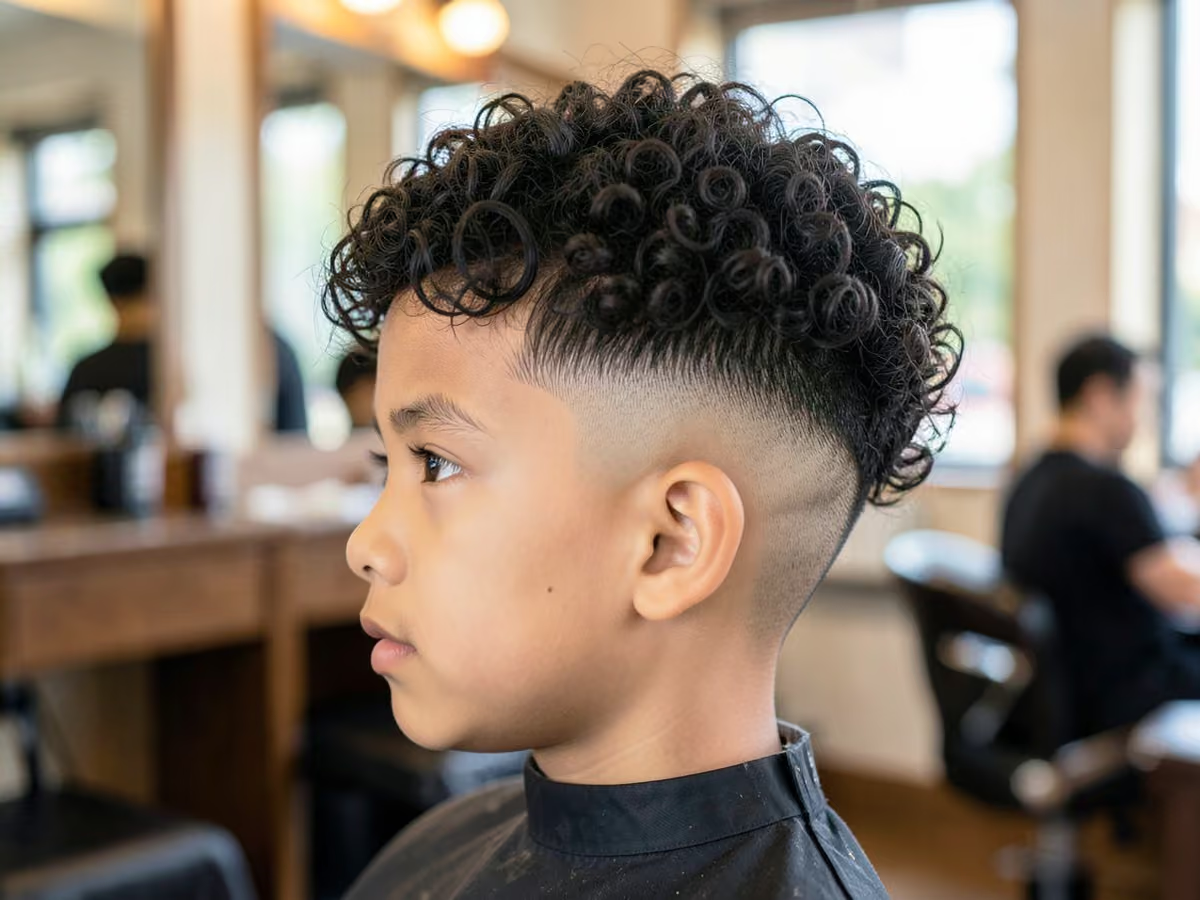
Loose curls of two to three inches are left long at the front so they tumble onto the forehead, and the sides are cleared with a low fade from a #1. Barbers usually cut curly tops dry so each curl falls where it lives. A little curl cream keeps frizz down. Parents of curly-haired boys find it forgiving, since it looks fine even when brushing gets skipped.
How to Style at Home
Apply curl cream to soaking wet hair after washing.
Scrunch the curls upward with your hands to build shape.
Let it air-dry and avoid touching it until dry.
Ask Your Barber
"Keep his curls about three inches on top falling forward, cut dry, low fade with a #1 on the sides."
Trim:Every 3–4 weeks. Waves get heavy past three inches.
Best For:Ages 6–14, oval or heart faces + wavy hair.
About This Style
Wavy hair of two to three inches is layered so the waves have room to bend, and a mid taper fade tidies the sides. Without layers, wavy hair can look triangular as it grows. Sea salt spray helps the waves form without crunch. It suits boys who want a slightly longer, surfer-like top but still need tidy sides for school.
How to Style at Home
Mist sea salt spray evenly into towel-dried hair.
Twist small sections around your finger to define waves.
Let the hair air-dry, or use a diffuser on low heat.
Ask Your Barber
"Layered top about three inches to keep the waves, mid taper fade from a #1, do not thin it out too much."
Trim:Every 3 weeks. Fade outgrows the twists first.
Best For:Ages 7–14, oval or round faces + coily or tight curly hair.
About This Style
Tight curls of one and a half to two inches are rubbed with a twist sponge into small coils, above a high or mid fade. The coils give the top definition while the sides stay sharp. Older boys can sponge it themselves in five minutes. Keeping curls moisturized stops the coils from looking dull or breaking.
How to Style at Home
Wet the top and apply a light curl cream.
Rub a twist sponge in small circles across the top.
Shape the edges of the top with your fingertips.
Ask Your Barber
"Leave about two inches on top for sponge twists, mid fade from a #0.5, round the shape at the back."
Trim:Every 2–3 weeks. The fade and waves both need upkeep.
Best For:Ages 9–14, oval or round faces + coily hair.
About This Style
Wave patterns sit on an even top of a #1.5 or #2, and a low fade keeps the sides close to the waves rather than cutting them off. Daily brushing and a durag at night build the ripples over a few weeks. A low fade suits boys whose school does not allow strong lines, since the blend stays subtle.
How to Style at Home
Brush from the crown outward several times a day.
Use a small amount of wave pomade on damp hair.
Wear a durag at night to hold the pattern.
Ask Your Barber
"Waves cut with the grain at a #2 on top, low fade with a #1, natural line-up without pushing it back."
Trim:Every 3 weeks. The rounded top loses its puff.
Best For:Ages 10–14, oval or long faces + curly or permed hair.
About This Style
A round mass of curls about three inches long sits on top, and a high or mid fade below it makes the curls look fuller. The name comes from the shape, which looks like a broccoli floret. Naturally curly boys get it without a perm; families should be cautious about perms on young hair and ask a stylist first. Curl cream keeps the shape soft.
How to Style at Home
Apply curl cream to wet curls and scrunch upward.
Diffuse on low heat if you want extra volume on top.
Fluff the top gently with your fingers once dry.
Ask Your Barber
"Broccoli cut, keep about three inches of curls on top shaped round, mid fade from a #0.5 on the sides."
Recommended Products
Curl Cream
Leave-In
Boys Fades with Mullets, Mohawks and Designs
These fades add a longer back, a center strip or a shaved line. Check the school dress code before booking. The hair designs gallery has more shapes a barber can cut into a fade.
Trim:Every 3–4 weeks. The back needs shaping as it lengthens.
Best For:Ages 8–14, oval or heart faces + wavy or curly hair.
About This Style
Half-circles of short hair wrap around each ear while the back is left two to four inches long, with a textured top. The burst keeps the sides clean and makes the longer back look deliberate. It is a popular sports-season cut for older boys. Wavy and curly hair give the back natural movement; straight hair may need texture spray.
How to Style at Home
Scrunch sea salt spray into the back and top.
Push the top forward or up with your fingertips.
Flip the ends at the nape outward with a little product.
Ask Your Barber
"Burst fade mullet for my son, half-circle fade around the ears from a #1, leave three inches at the back and a textured top."
Trim:Every 2–3 weeks. Sides need fading to keep the strip clear.
Best For:Ages 6–12, oval or round faces + thick straight or curly hair.
About This Style
A two-inch strip runs from the forehead to the crown, while the sides are faded down to a #1 so the strip stands apart. It is softer than a shaved mohawk and grows back into a regular cut in a few weeks. Kids often ask for it for birthdays or summer. Light gel holds the strip up without stiffness.
How to Style at Home
Work a small amount of light gel into the center strip.
Pinch the strip upward into a ridge from front to back.
Brush the short sides down and flat with a soft brush.
Ask Your Barber
"Fade mohawk for my son, a two-inch strip down the middle, sides faded to a #1, keep it soft rather than shaved."
Trim:Every 2 weeks. Lines fill in after about ten days.
Best For:Ages 6–14, any face shape + dark or thick hair.
About This Style
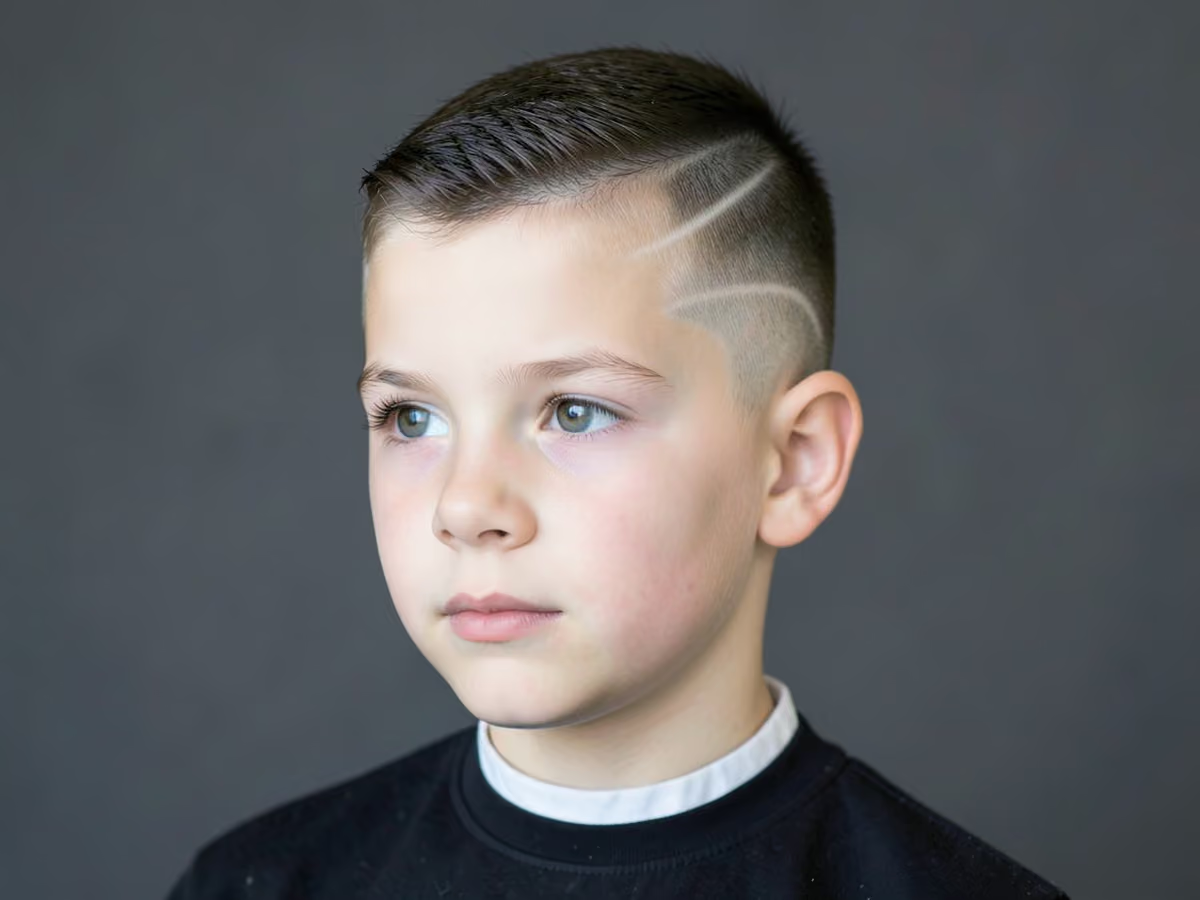
Two or three thin parallel lines are shaved into the side of a mid fade, usually above and behind the ear. Lines show clearly on dark, thick hair and are hard to see on light blond hair. The design grows out in about two weeks. Ask for trimmer work rather than a razor to keep the skin calm.
How to Style at Home
Keep the area dry and clean for the first day.
Brush the hair around the lines flat each morning.
Rub a drop of scalp oil into the lines if they itch.
Ask Your Barber
"Mid fade from a #1 with two thin lines above the left ear going back toward the crown, trimmer only and no razor."
Trim:Every 2–3 weeks. The cut part fills in quickly.
Best For:Ages 8–14, oval or square faces + straight or thick hair.
About This Style
With a single shaved line where a side part would fall, this look separates a combed top from a low or mid fade. It looks neater than a design and is often accepted where other lines are not, but check the dress code. The top is usually two to three inches combed across. Expect the part to fade within ten days.
How to Style at Home
Comb the top away from the shaved part line.
Apply a little light pomade to the top for a neat finish.
Avoid product directly on the part so it stays clean.
Ask Your Barber
"Low fade from a #1 with a hard part on the left, about two and a half inches on top combed across."
Recommended Products
Light Pomade
Styling Cream
How Do You Ask the Barber for a Boys Fade?
Say three things: the fade height, the shortest guard and the top length. For example, a mid fade starting at the temple, a #1 at the bottom, and about two inches on top left messy. Mention if you want a line-up, a part or any design, and say no razor if your son has sensitive skin. A photo from the side helps more than any term, because barbers draw the height lines differently. For a nervous child, ask whether the barber can start with scissors and bring in the clippers once he settles, and choose a quiet weekday slot.
Tell the barber about cowlicks or a double crown before cutting, since leaving those areas a little longer stops them sticking up. Our clipper guard numbers chart translates each number into inches, and how to ask for a fade without knowing terminology covers what to say if you forget the words. If your son has straight hair that sticks out above the ears, ask the barber to blend that spot a guard shorter so it lies flat as it grows.
Clipper Guards Used in Boys Fade Haircut Styles
A clipper guard is the plastic comb that clips onto the blade and sets how much hair is left: a #1 leaves 3 mm (1/8 inch), each step up adds about 3 mm. The right column lists the cards on this page that call for each guard. See the full clipper guard numbers guide for the complete chart.
Fades grow out from the bottom up, so the shortest part is the first to look fuzzy. A skin fade looks grown in within a week, a #1 fade lasts about two weeks and a taper can go three or four. Plan visits around that rhythm rather than waiting for the top to look long. Short sides also show dry or flaky scalp, so a light oil after bath time helps, and sunscreen on the sides prevents burn lines in summer. A pillowcase change once a week cuts down on itchy spots on freshly clipped skin.
At home, most fades need only water and a comb, or a pea-size amount of matte paste for older boys. Wash with a mild kids shampoo two or three times a week; daily washing can leave short hair dry and staticky. See how often you should get a haircut for a schedule. Between visits, a parent can tidy the neckline with a small trimmer, but leave the blend itself to the barber.
What Fade Mistakes Should Parents Avoid?
Choosing a skin fade for a child who visits once a month is the most common mismatch, since it will look grown out for three of those four weeks. Another is asking for a fade on very fine, light-colored hair without warning the barber; scalp shows through the short guards and the blend can look patchy, so a taper or longer bottom guard often works better.
Pushing back the line-up to sharpen the front is a habit worth avoiding on kids, as it slowly raises the natural hairline. Finally, a fade that starts too high on a boy with a flat back or a scar makes those features easier to see. If a fade comes out uneven, how to fix an uneven fade explains what a barber can do.
Which Boys Fade Haircut Is Right for You?
Pick your hair type and how much upkeep you will put in. The matches below come from the Best For and Maintenance notes on each card. Upkeep follows the Maintenance badge: low means a cut every 3 to 6 weeks and almost no daily styling, high means weekly line-ups or daily product.
A low taper or low fade is the usual starting point for little boys. It keeps most of the sides at a #2 or #3, shortens only the edges, and grows out softly over three to four weeks. It also needs no razor or foil, which keeps the first few clipper cuts calm.
Q2: How often does a boys fade need a trim?+
Tapers can go three to four weeks, low and mid fades about two to three weeks, and high or skin fades every one to two weeks. The shortest part of the fade grows out first, so book by how the sides look rather than how long the top has become.
Q3: What guard number should I ask for on a boys fade?+
Most boys fades start with a #0.5 or #1 at the bottom and blend through a #2 into a #3 or #4 where the sides meet the top. A #1 leaves 1/8 inch and a #2 leaves 1/4 inch. Ask for nothing below a #1 if your son has sensitive skin or a lighter hair color.
Q4: At what age can a boy get a skin fade?+
There is no set age, but a skin fade needs a child to sit still while a foil shaver or razor works close to the scalp. Many barbers suggest waiting until about seven or eight. Until then, a shadow fade that stops at a #0.5 gives a similar look with less risk of irritation.
Q5: Can a boy with fine or blond hair get a fade?+
Yes, but keep the bottom guard a little longer, around a #1 or #1.5, and choose a low or mid height. Fine, light hair lets more scalp show, which can make close blends look patchy. A taper or scissor fade often looks fuller and grows out more evenly.
Q6: What is the difference between a taper and a fade for boys?+
A taper only shortens the sideburns and the hair at the nape, leaving the rest of the sides at guard length. A fade wraps around the whole head and blends down to a close guard or skin. Tapers are softer and last longer between visits; fades look sharper but need more frequent trims.