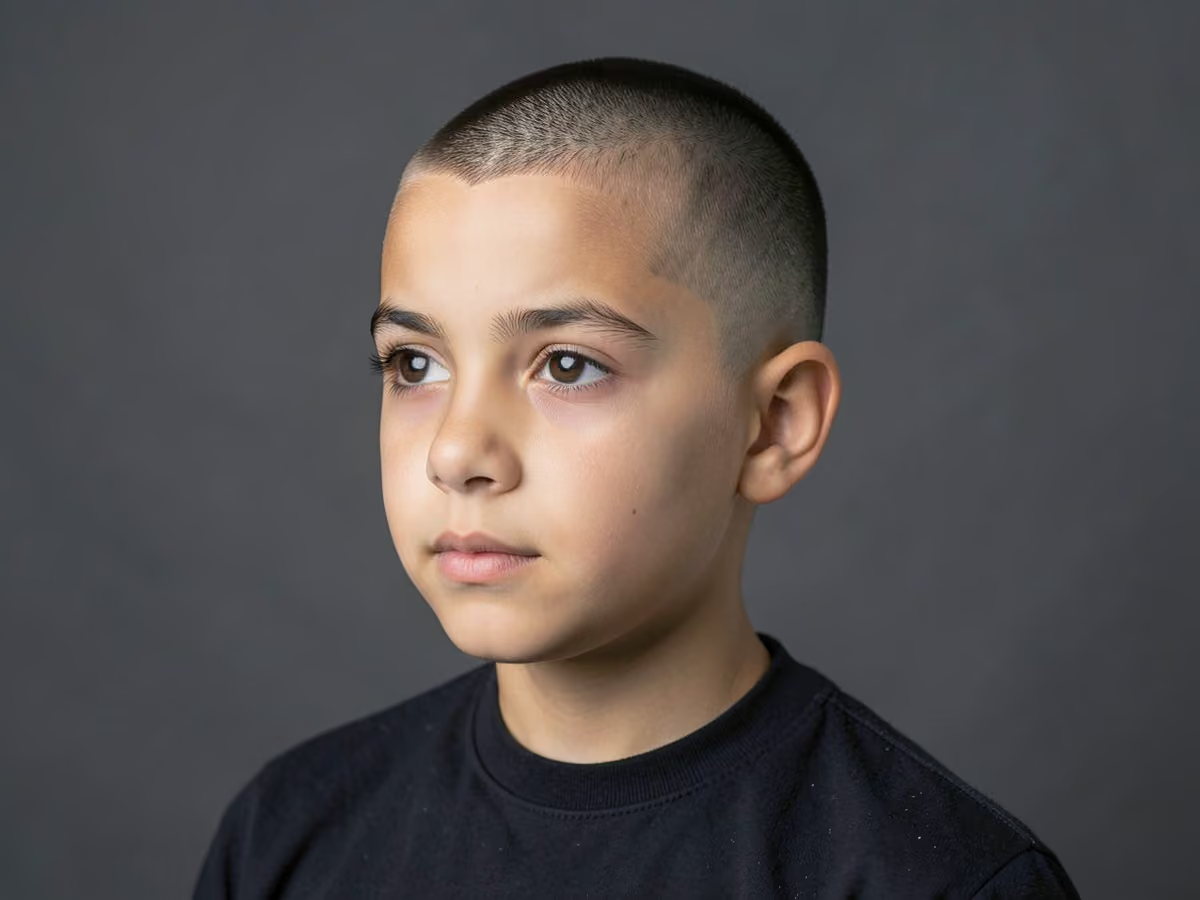
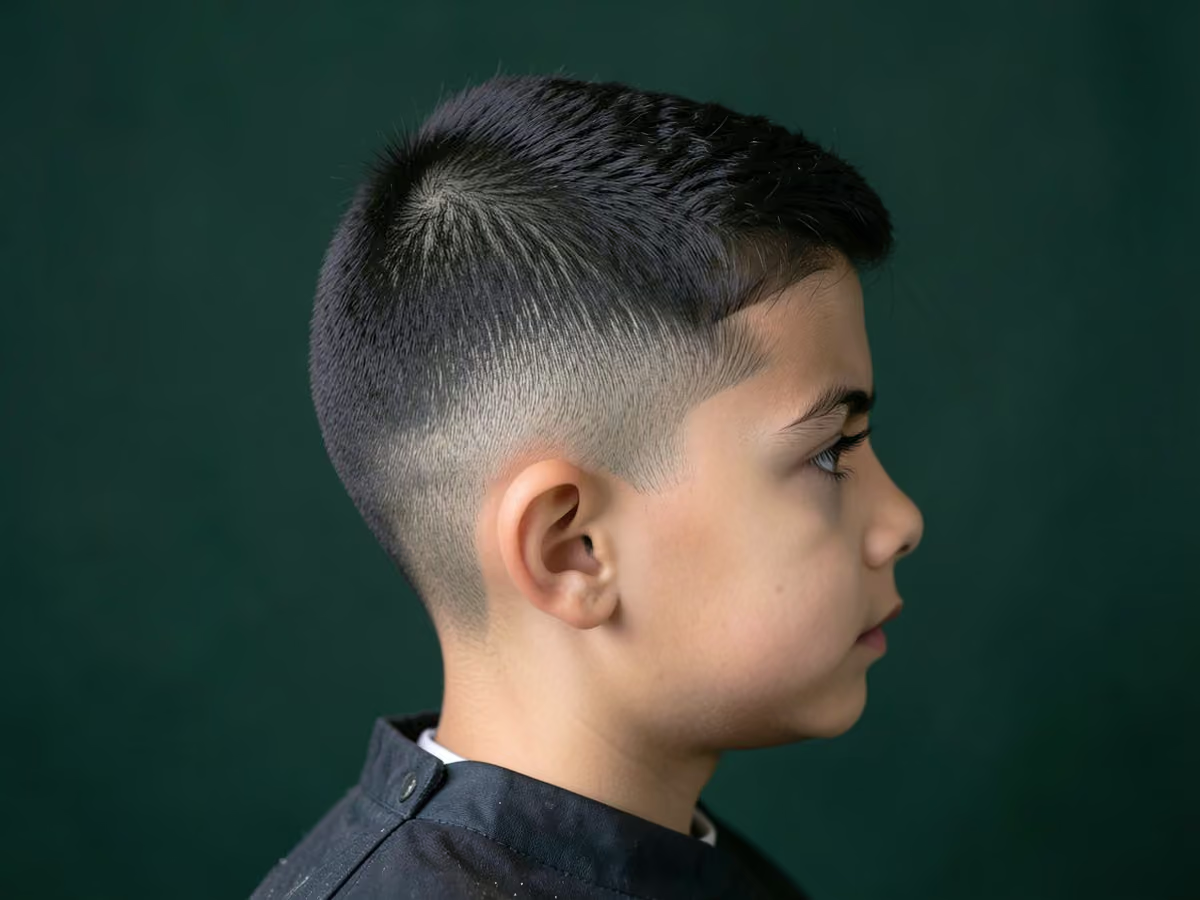
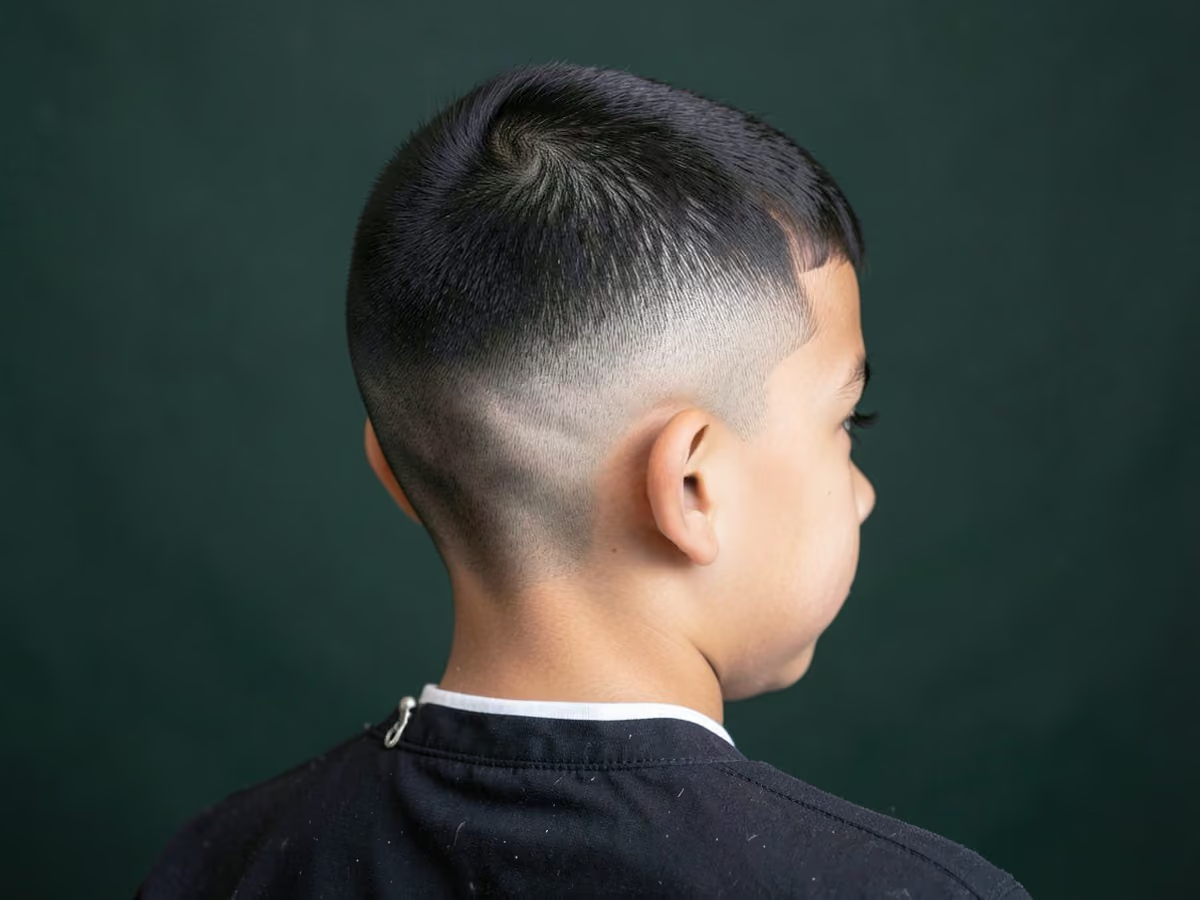
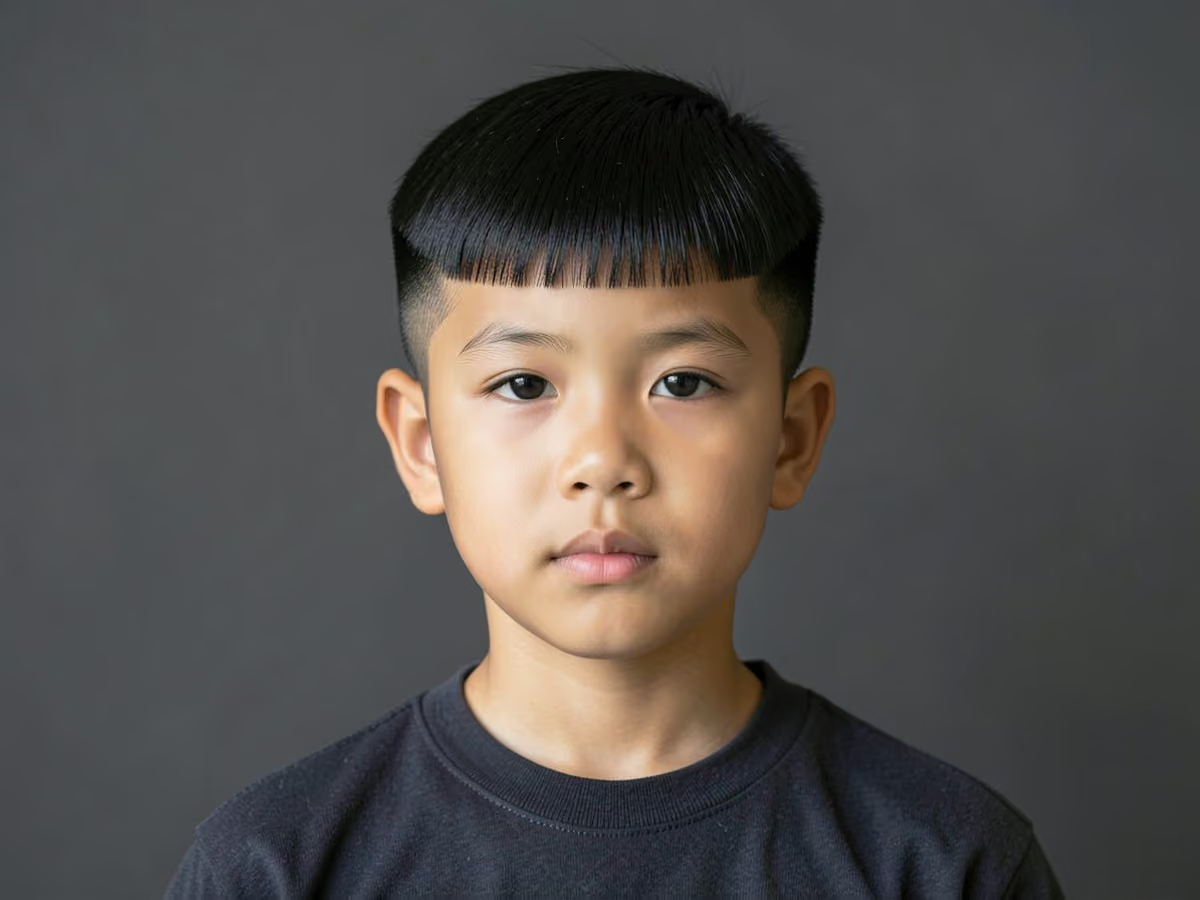
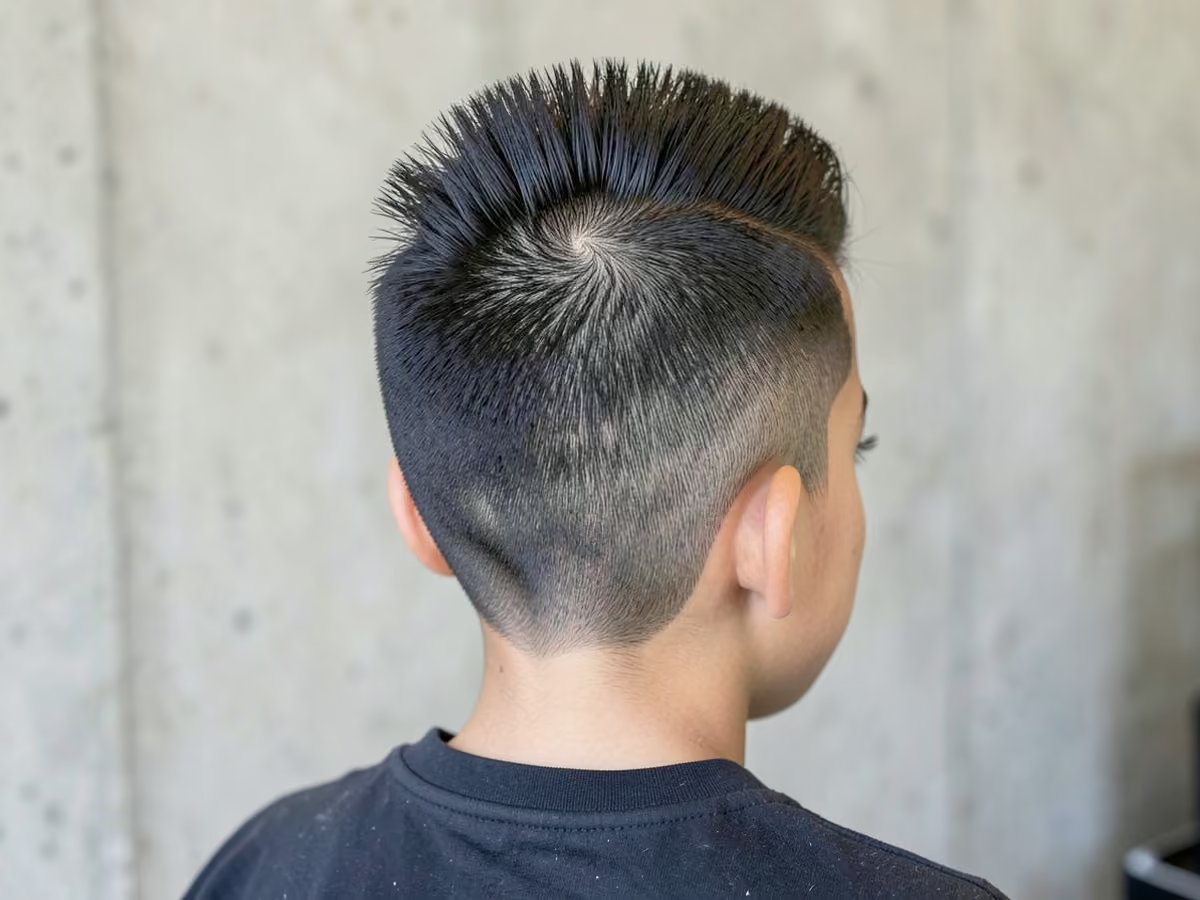
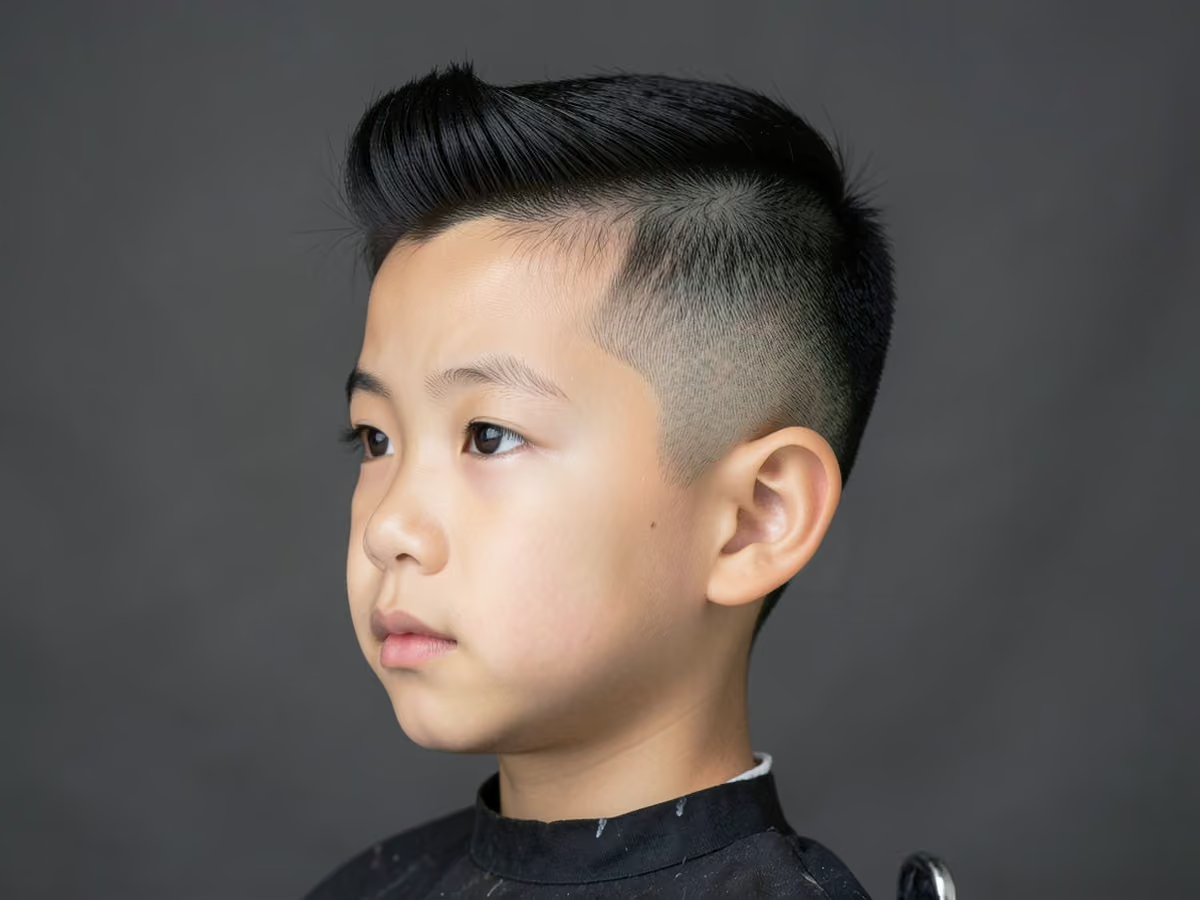
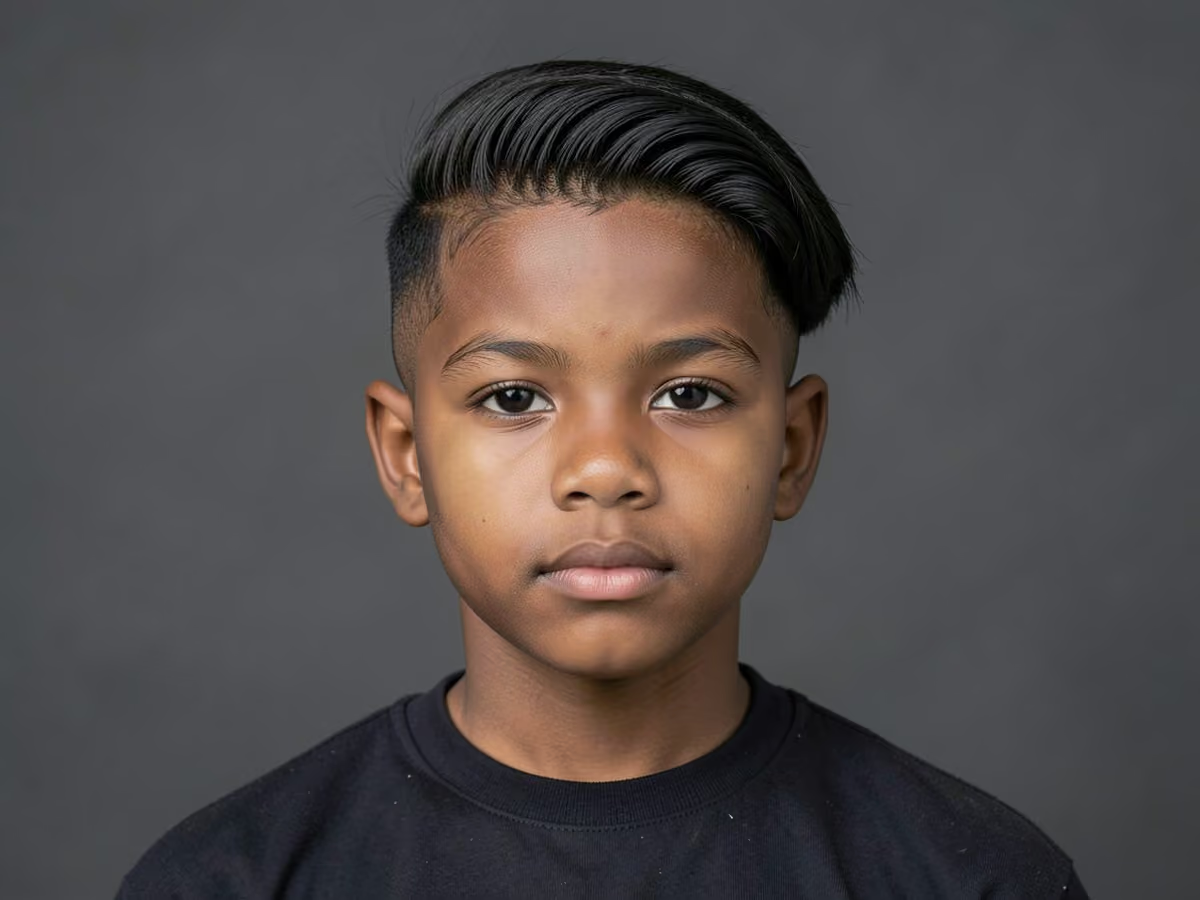
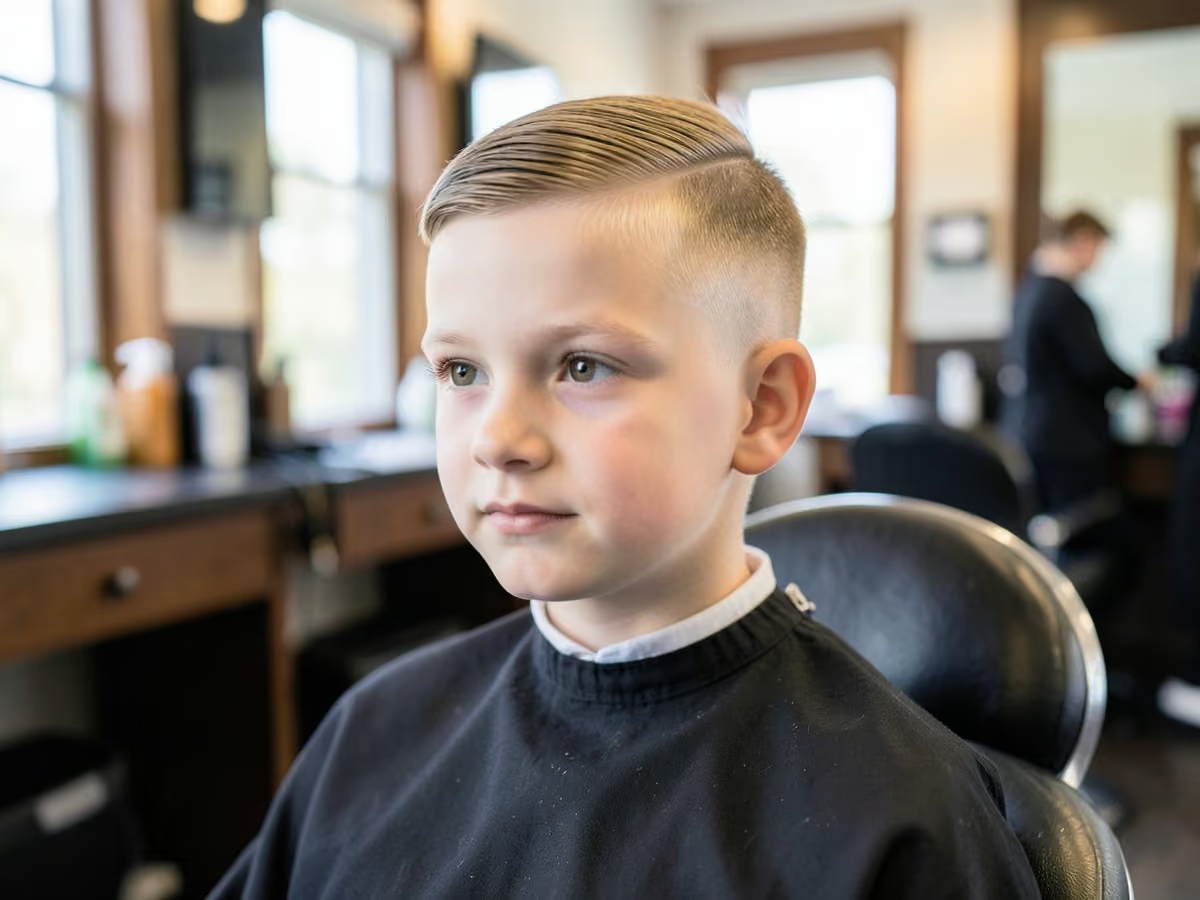
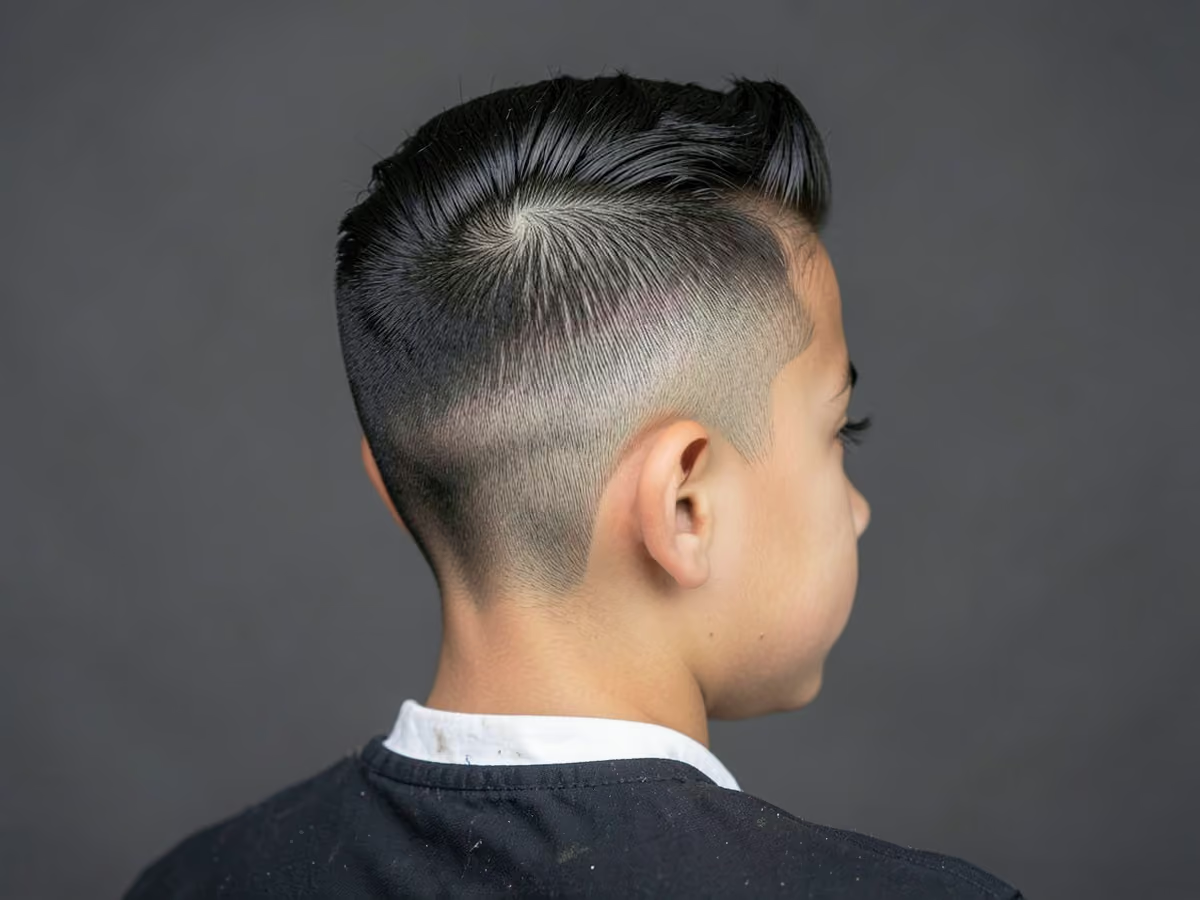
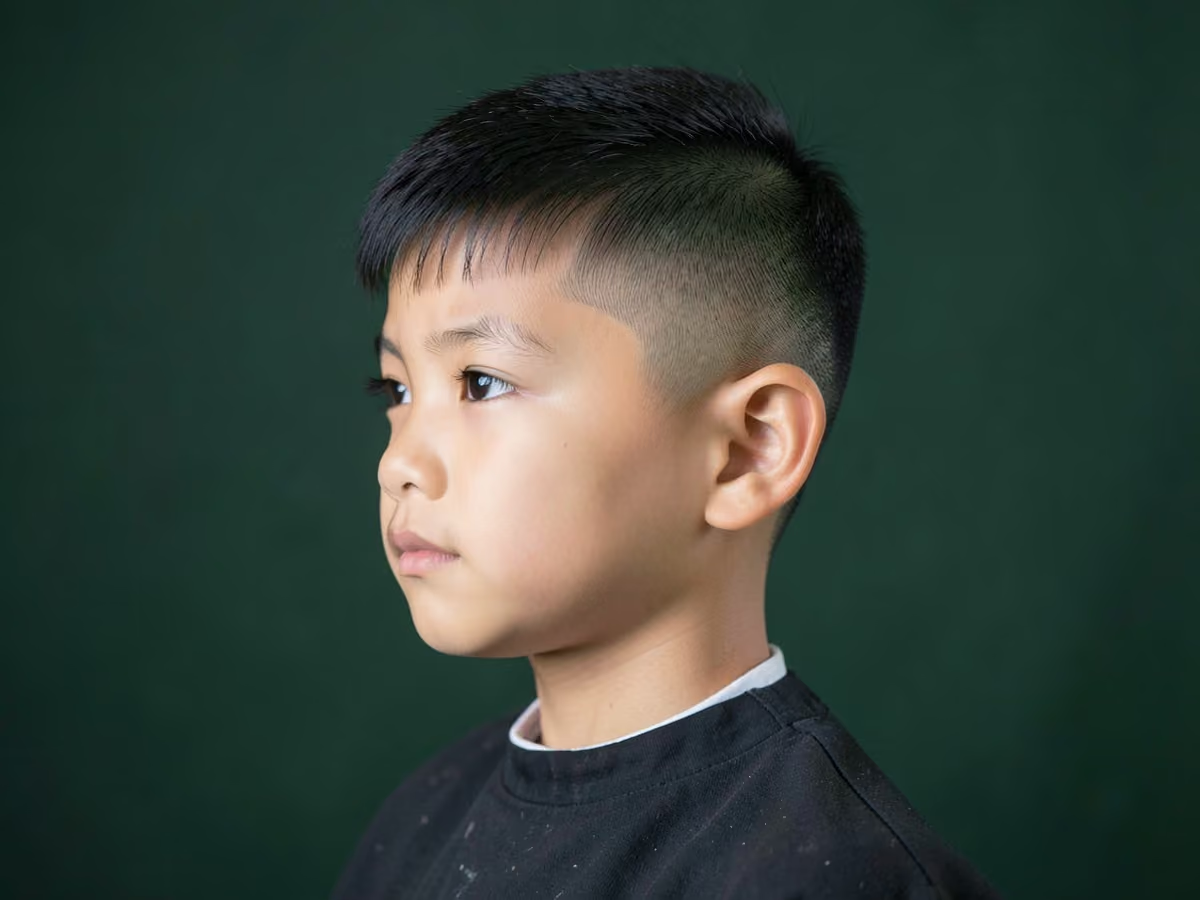
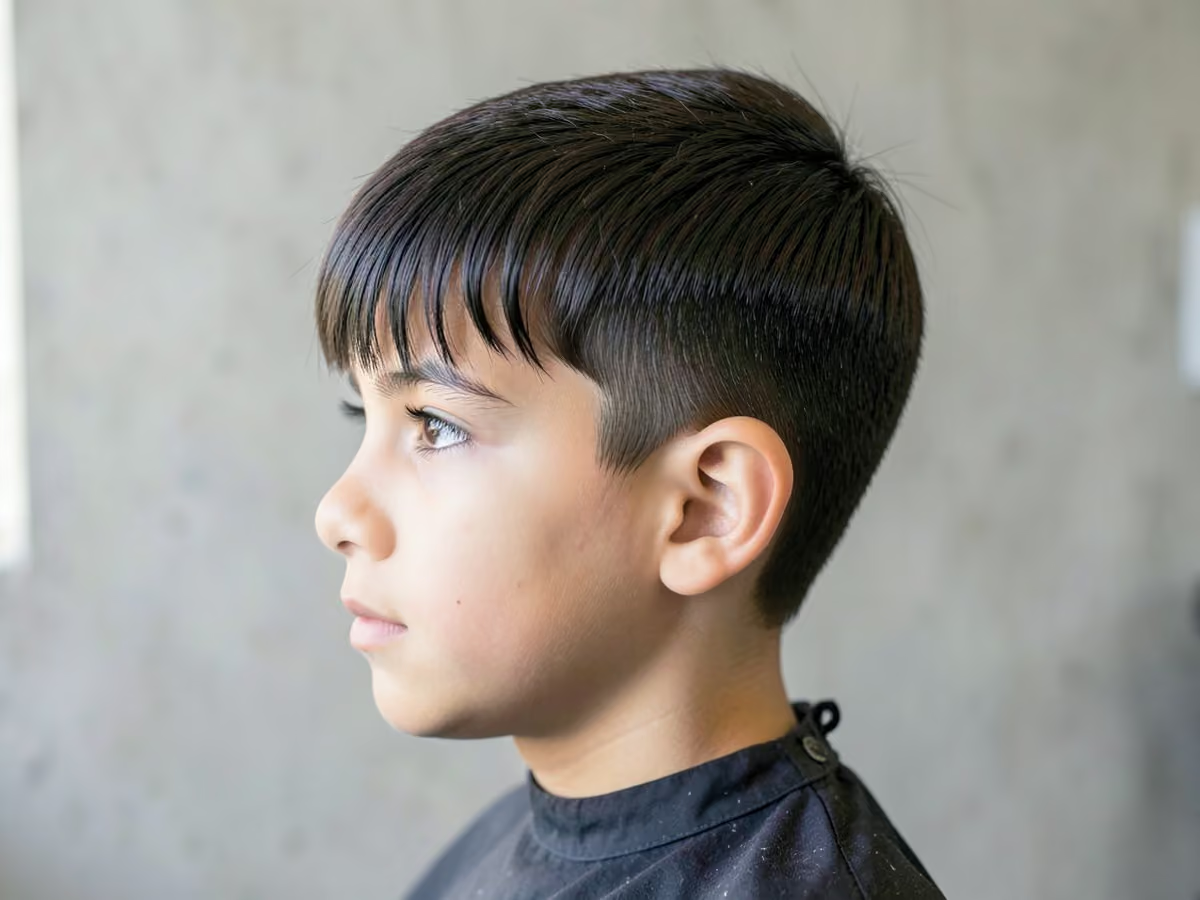
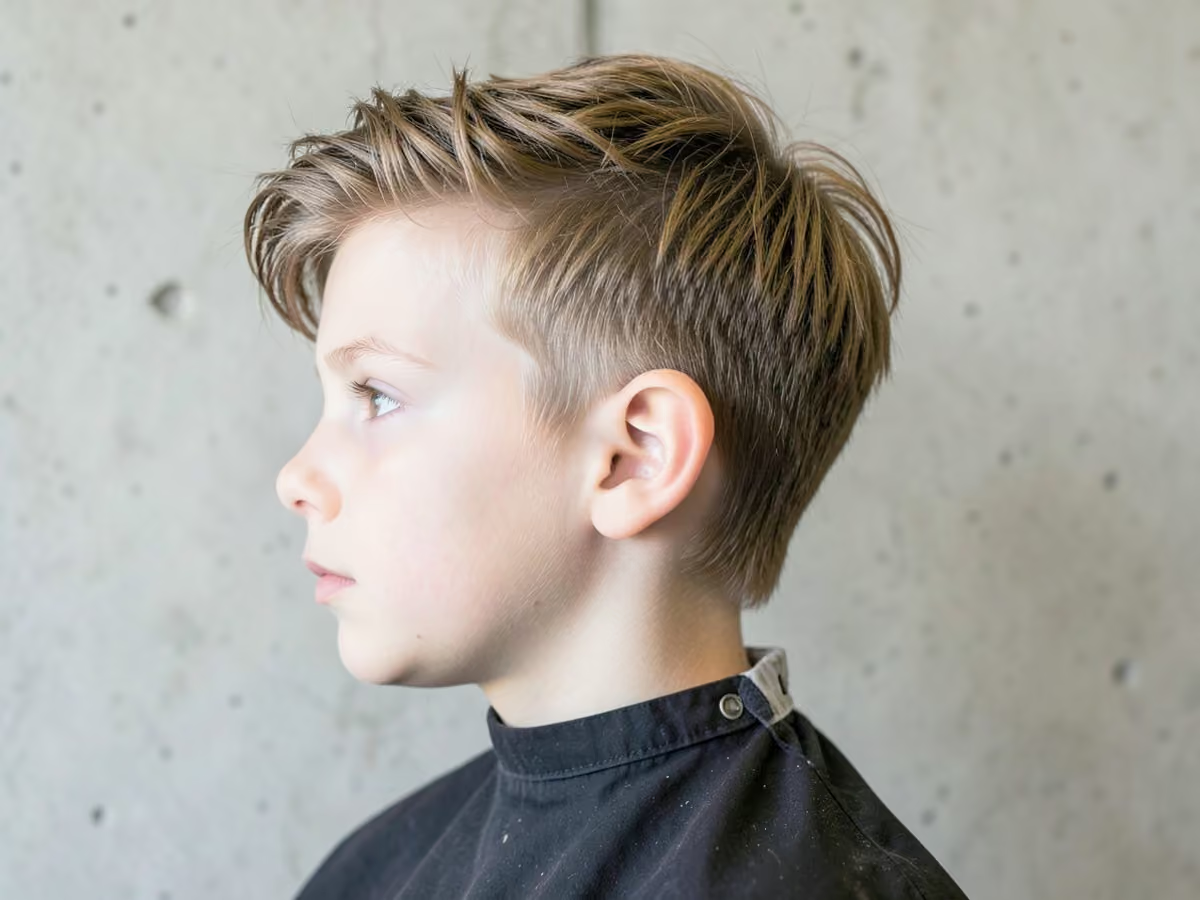
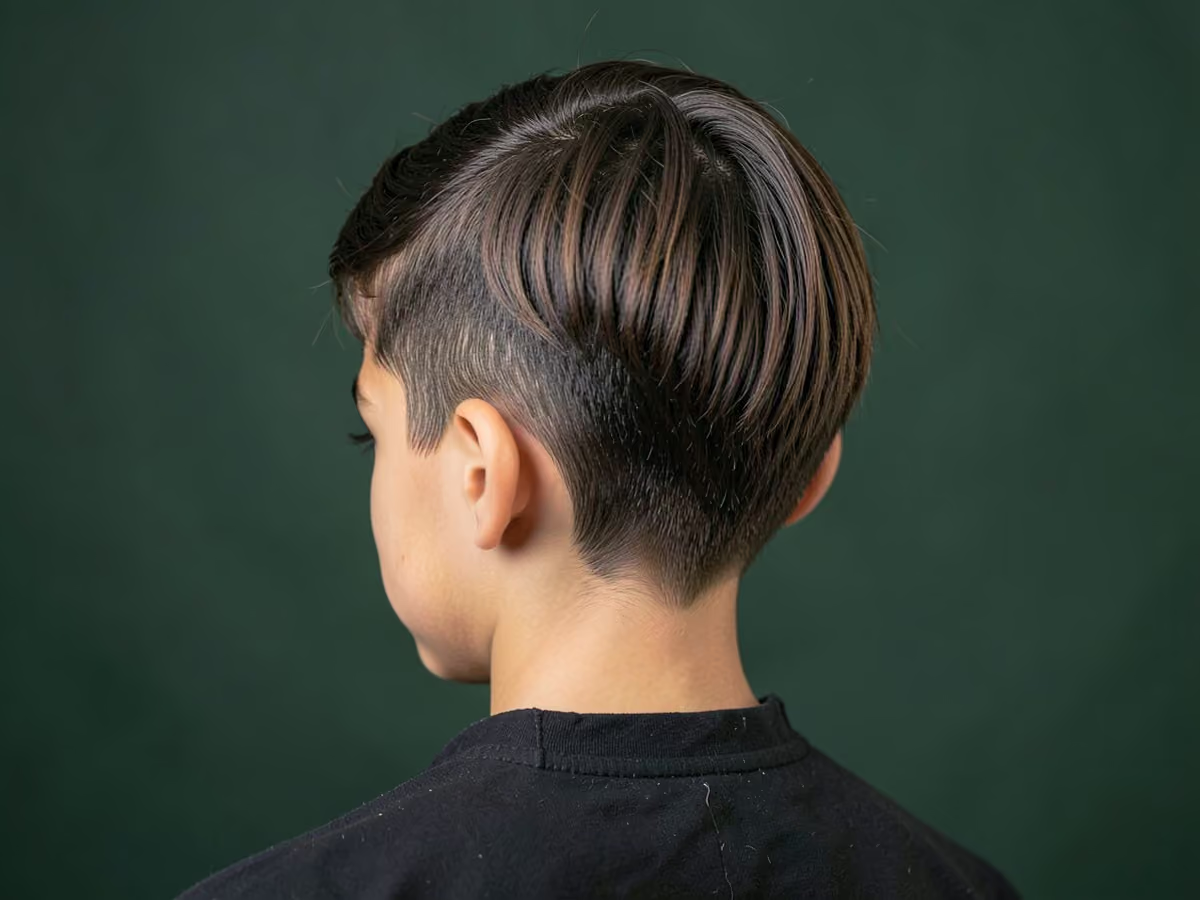
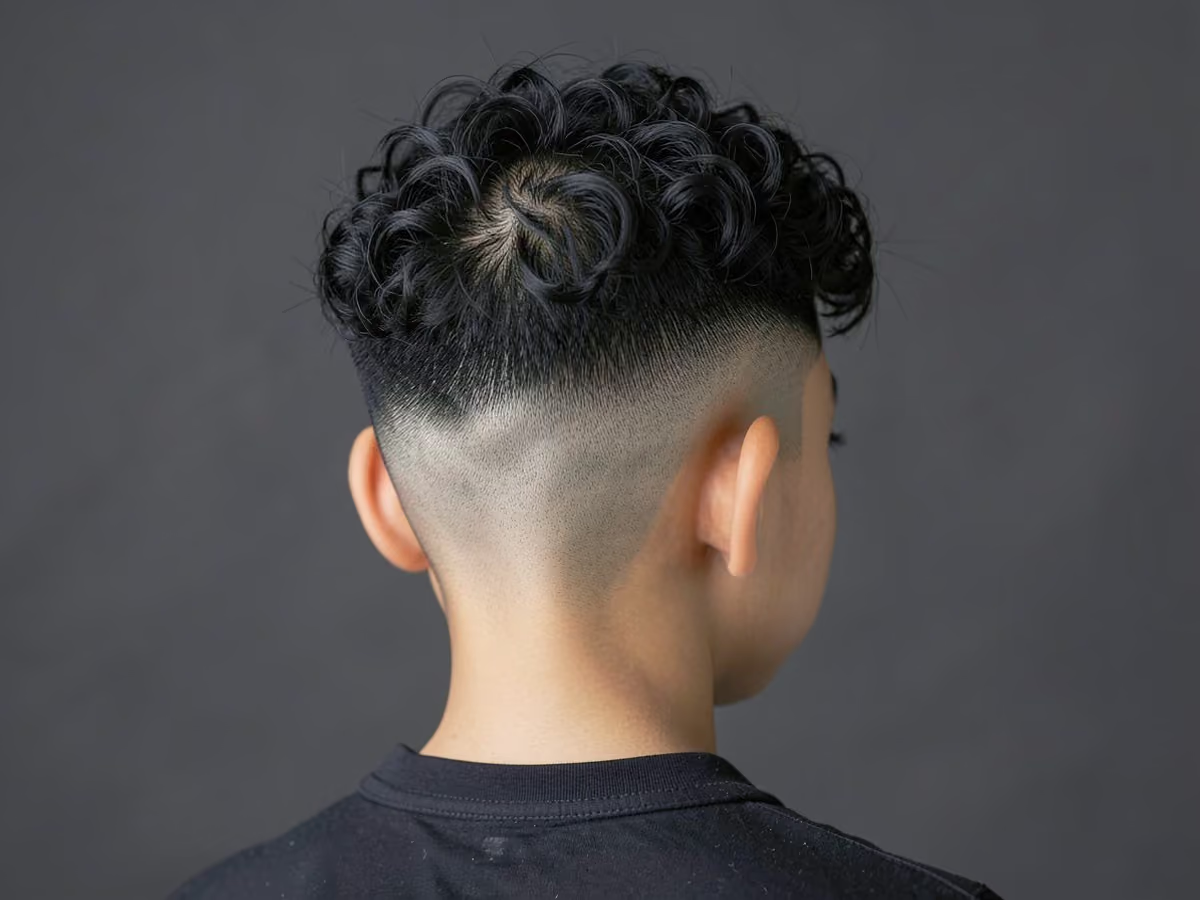
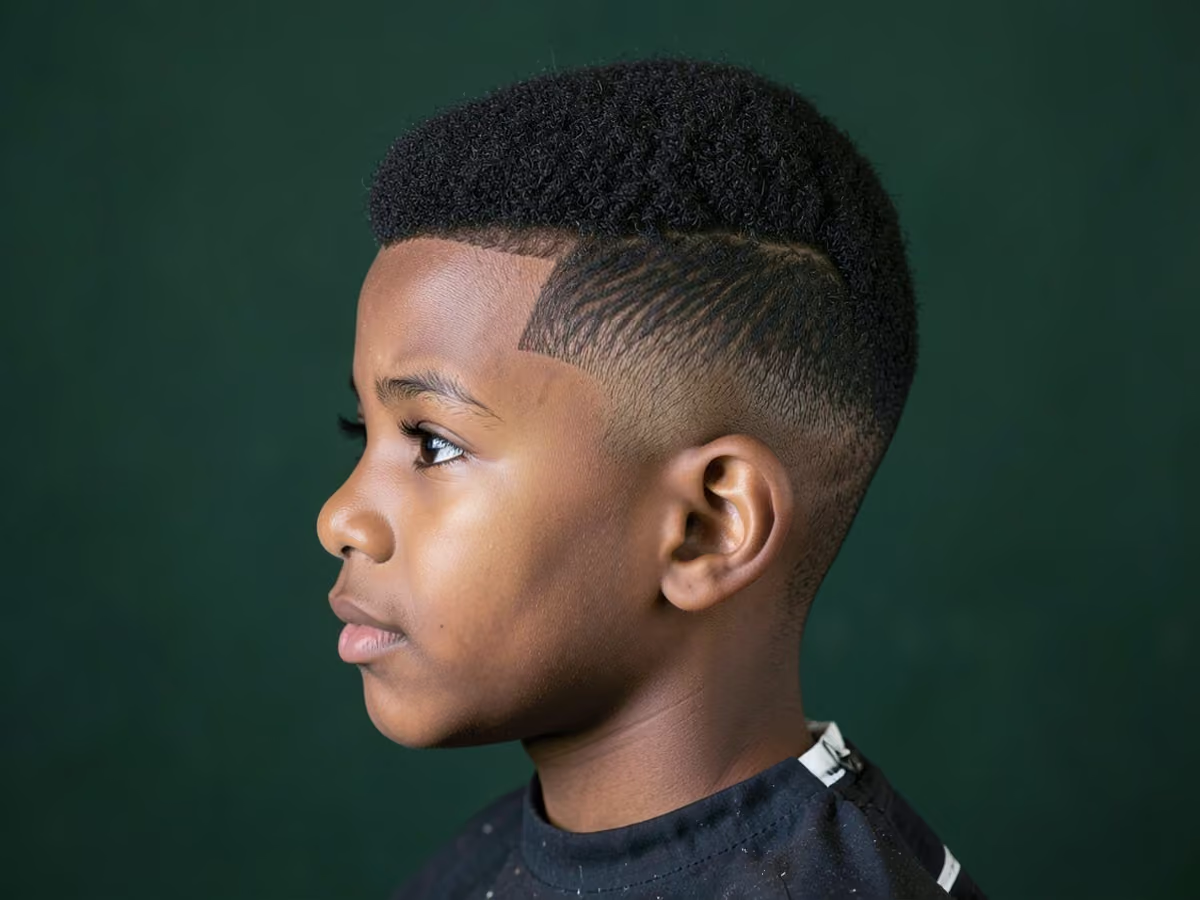
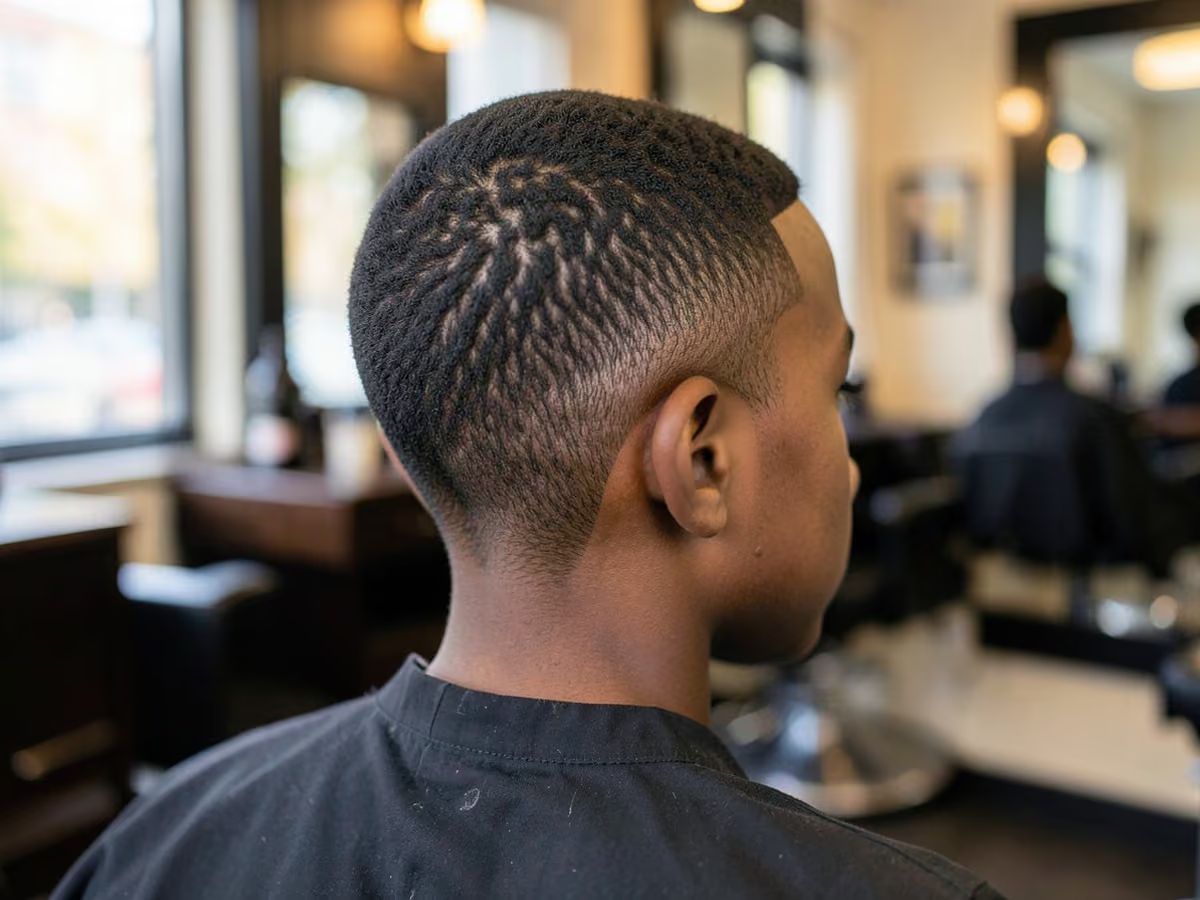
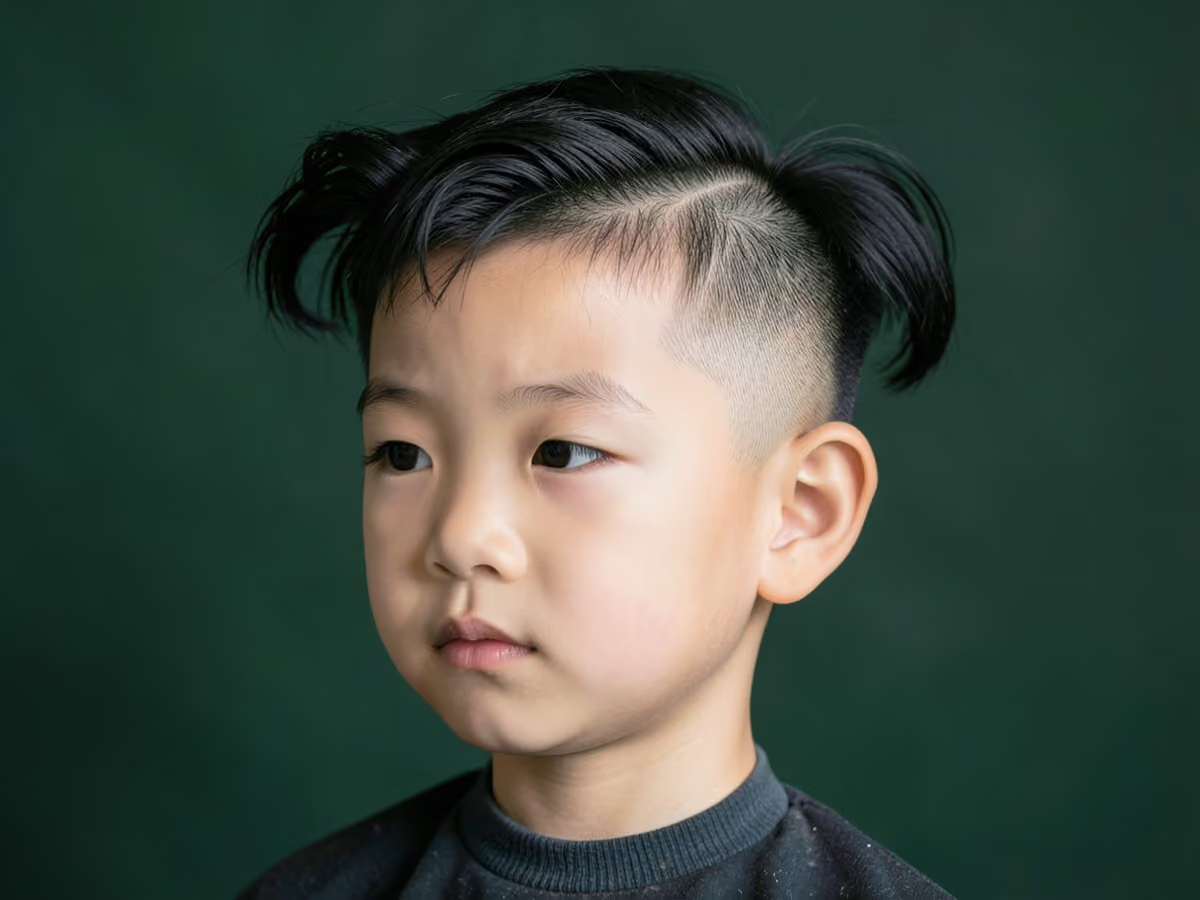
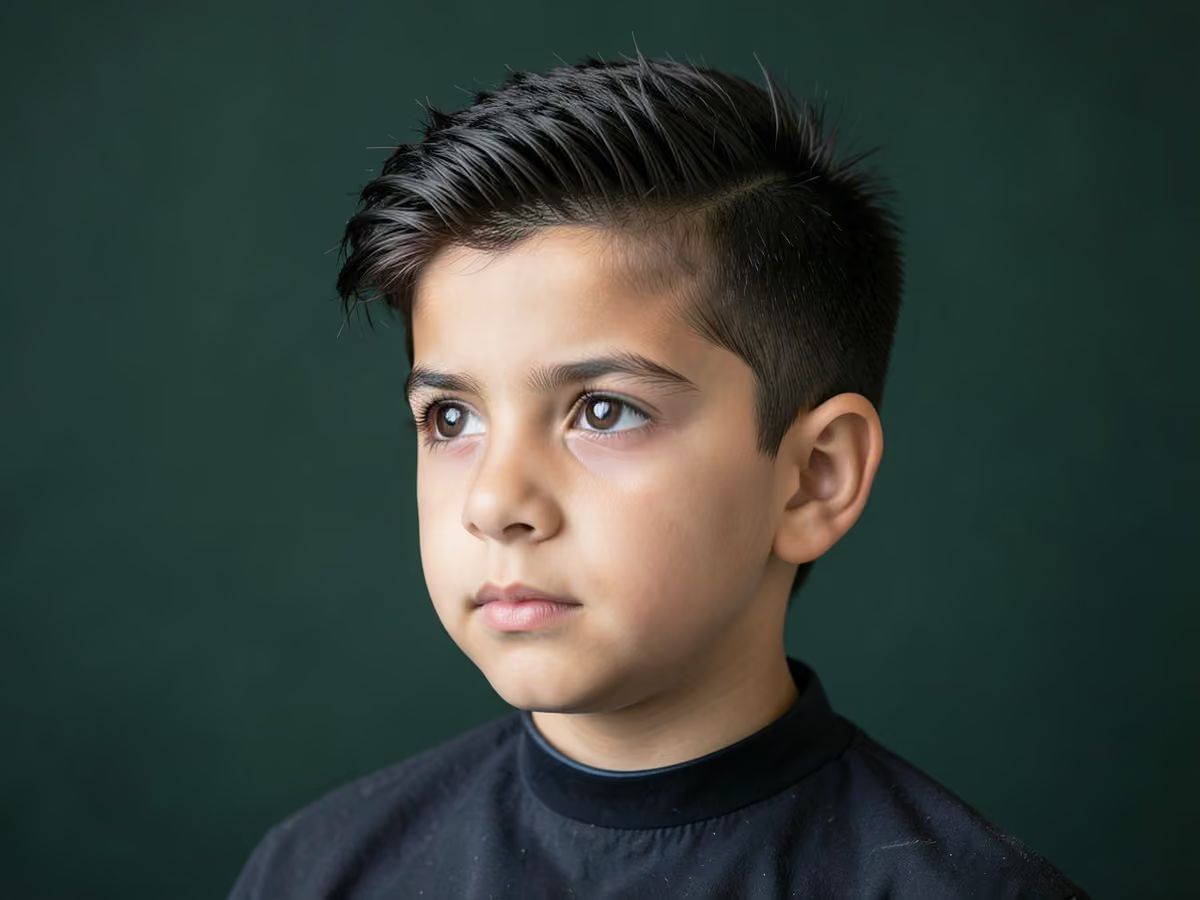
Quick answer: The best haircuts for boys ages 5–10 are a crew cut or a short textured crop. Both look tidy for school with no styling and grow out neatly. A short taper suits boys who want something more current, and a buzz is the lowest-effort option. Most short cuts need redoing every 6–8 weeks.
Best Haircuts for Boys Styles at a Glance
Every style on this page with its clipper guard, top length and trim interval. Tap a name to jump to that card.
The best haircuts for boys ages 5–10 have a different brief than an adult's cut: it needs to survive playgrounds and PE, look tidy for school with zero styling effort, grow out gracefully between visits, and (most importantly) not require him to sit still for forty minutes. These cuts tick all four.
What Are the Best Haircuts for Boys Ages 5 to 10?
The best haircuts for boys ages 5 to 10 are a crew cut, a textured crop, a short taper with some length on top, a French crop and a buzz cut. All need no styling, survive sports and look tidy for school. Most last 6 to 8 weeks between visits.
If your son wants to grow his hair, our long haircuts for boys gallery covers shaggy cuts, curtains, curls and ponytails with care tips.
If you want to keep one of these cuts tidy between barber visits, our guide on how to cut boys' hair at home covers clippers, scissors and safety.
If your son wants short sides, our boys fade haircuts gallery sorts 30 kids fades by height, top style and hair type.
For coily hair, waves and twists, the Black boys haircuts gallery covers 72 styles with guard numbers and care tips for young scalps.
Crew cut: the classic. Short, tidy, zero styling, grows out neatly.
Textured crop: a bit more style, still no effort; the fringe hides awkward growth.
Short taper with a bit of length on top: tidy sides, enough top to look current.
French crop: very forgiving and always looks deliberate.
Buzz cut: the summer/sports option. Lowest effort of all.
A taper means the hair gets gradually shorter around the ears and neckline, which grows out more softly than a hard line. A guard is the clip-on comb that sets clipper length: a #3 leaves about 10 mm and a #4 about 13 mm. The clipper guard numbers chart has every size.
Filter the styles
Showing all 30 styles
Fade
Hair
Length
Short, Easy Boys Haircuts
These are the fastest cuts in the chair and the easiest to live with at home. None needs product, all survive PE and sports, and most grow out tidily over 4 to 8 weeks. See the crew cut guide for adult versions.
Trim:Every 3–4 weeks. Short all over, so regrowth shows evenly.
Best For:Ages 5–10, summer and sports + any hair type.
About This Style
One guard runs over the whole head, usually a #3 (3/8 inch) or #4 (1/2 inch) for a boy, since anything shorter can look harsh on a young face and shows every bump on the scalp. The barber squares or rounds the neckline and cleans around the ears. It dries in minutes after swimming and needs no brushing, which is why many parents pick it for summer break.
How to Style at Home
Wash with a mild kids shampoo and towel dry, nothing else needed.
Check the scalp for sunburn on hot days, since there is little hair covering it.
Run a #4 guard over it at home only if he sits still.
Ask Your Barber
"Please buzz it all over with a #4, round off the neckline so it grows out softly, and clean around his ears. No fade, just one even length."
Trim:Every 4–6 weeks. The longer front hides early regrowth.
Best For:Ages 5–10, oval or round faces + straight or wavy hair.
About This Style
A crew cut keeps the sides at a #2 or #3 and leaves the top around an inch, a little longer at the front hairline so it can be brushed up or to the side. Short sides make it tidy for school photos and sports, while the extra front length stops it looking like a buzz. As it grows, the top simply gets fuller, so a six week gap still looks fine.
How to Style at Home
Towel dry, then push the front up or sideways with your fingers.
Brush the sides down flat with a soft brush if they stick out.
Skip product; the short top falls into place on its own.
Ask Your Barber
"Classic crew cut, a #3 on the sides and back, about an inch on top with the front slightly longer. Taper the neckline and keep it product free."
Trim:Every 4–6 weeks. Tapered edges soften instead of looking fuzzy.
Best For:Ages 5–10, school uniform rules + straight or wavy hair.
About This Style
Only the sideburns and nape get short here: the barber blends from a #1 at the edges up to a #3 or #4, leaving most of the sides at normal length. Up top, an inch and a half falls forward without help. Because the bulk of the side hair stays, the taper grows out gently and is the cut many schools with grooming rules quietly prefer.
How to Style at Home
Comb the top forward while damp so it dries in place.
Leave the sides alone; the taper keeps them tidy.
Check the nape at week four and book a quick neckline tidy if needed.
Ask Your Barber
"Short taper, a #1 just at the sideburns and neck blending into a #3 on the sides, about an inch and a half on top falling forward. No product, please."
Trim:Every 3–4 weeks. Fade lines blur fast on kids.
Best For:Ages 7–10, oval or square faces + thick or wavy hair.
About This Style
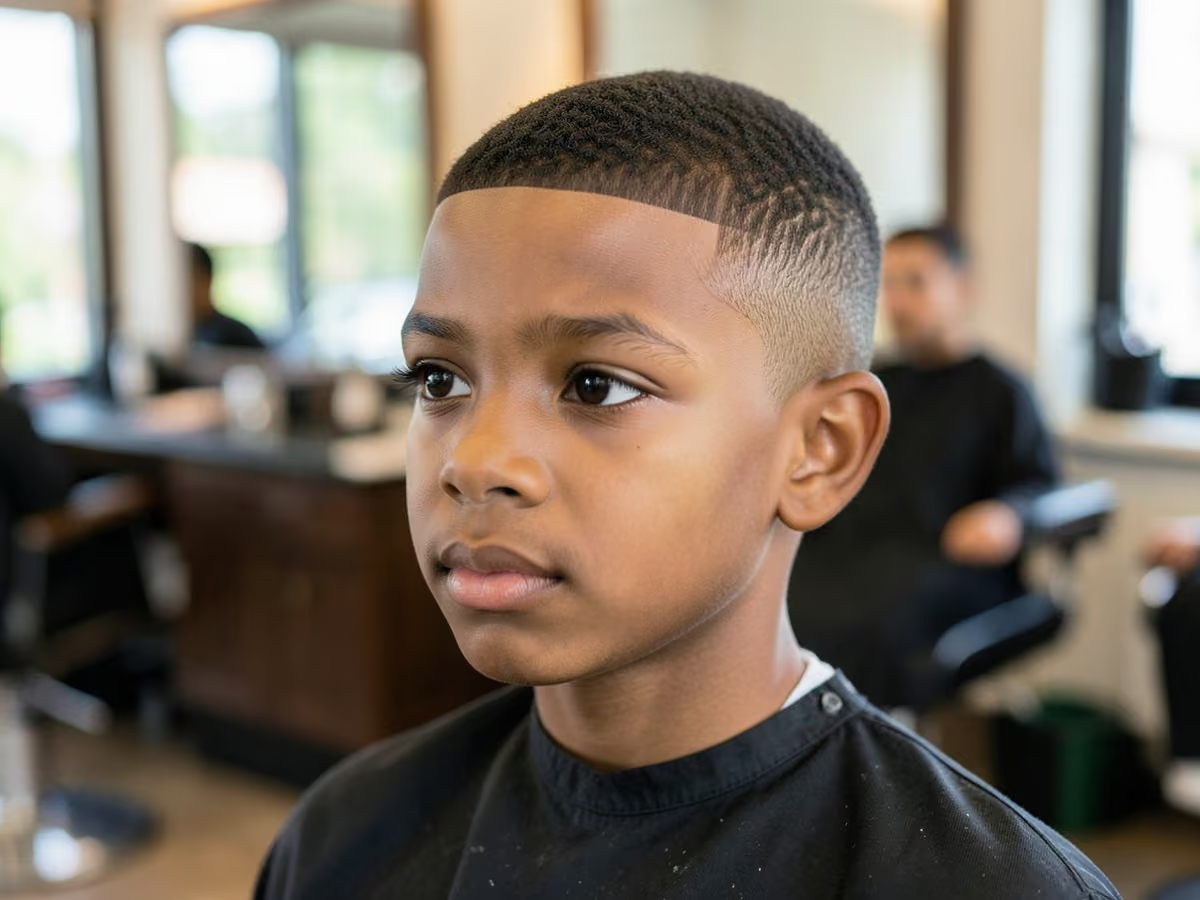
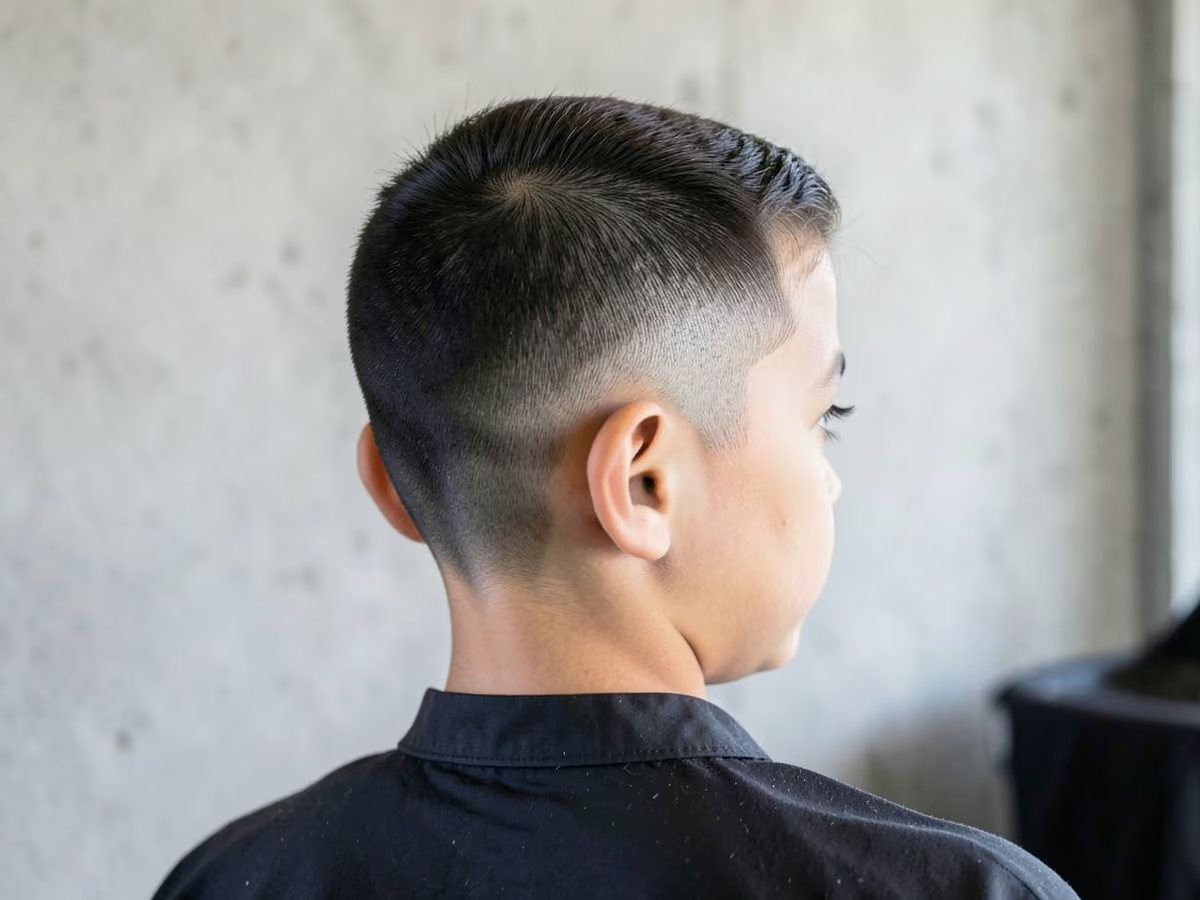
Starting just above the ear, the fade runs from a #1 up to a #3 around the side, so there is a clean blend without shaving most of the head. A low fade is the gentlest fade for a child: it looks current, it keeps hair covering most of the sides, and it suits boys who want to look like older brothers. Expect a visible regrowth line by week three.
How to Style at Home
Push the top forward or to the side with damp fingers.
Use a pea of matte paste for older boys who want some shape.
Rinse sweat out after sport so the faded skin stays clear.
Ask Your Barber
"Low fade starting just above his ear, a #1 at the bottom up to a #3, and about two inches on top that he can push forward. Nothing too short near the ear, please."
Trim:Every 4–5 weeks. The straight fringe needs the most attention.
Best For:Ages 5–10, oval or long faces + straight or coarse hair.
About This Style
Short horizontal bangs define the Caesar: the top is cut to about an inch and combed forward, with the fringe snipped straight across mid-forehead. Sides sit at a #2 or #3 and blend into the top. For boys whose hair naturally falls forward it is very easy, because the cut works with the direction of growth instead of fighting it. Coarse straight hair holds the line best.
How to Style at Home
Comb everything forward from the crown while hair is damp.
Press the fringe flat with your palm for a few seconds.
Trim nothing at home; the straight line is easy to wreck.
Ask Your Barber
"Caesar cut, a #3 on the sides blended into an inch on top, fringe cut straight across halfway down his forehead. Keep it soft, not a blunt line."
Trim:Every 3–4 weeks. Short enough to stay out of helmets and eyes.
Best For:Ages 6–10, football, swim or hockey + thick or straight hair.
About This Style
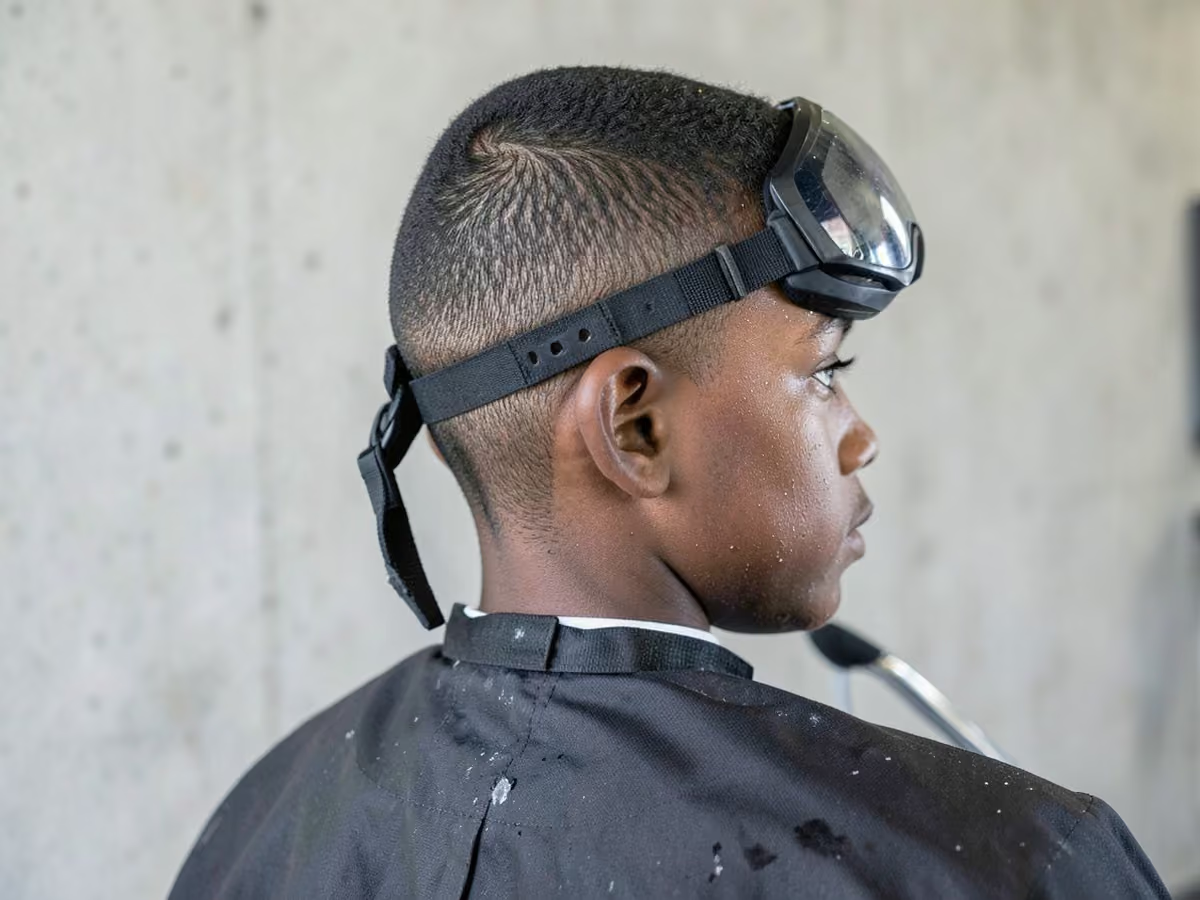
Built around helmets, goggles and sweat, this sports cut keeps the sides at a #2, the top under an inch and nothing touching the eyebrows or the back of the collar. The barber clears hair away from the ears so a helmet sits cleanly. It air dries in minutes after a game and does not mat down into a flat shape under a cap, which makes it common during football and swim seasons.
How to Style at Home
Rinse with water after every practice to clear sweat and chlorine.
Towel dry hard and let it air dry; no brushing needed.
Book trims around the season start so it is short for the first game.
Ask Your Barber
"Sports cut for helmets, a #2 on the sides, under an inch on top, nothing on his eyebrows and clean around the ears and neck. Keep it simple."
Recommended Products
Kids Shampoo
Boys Haircuts with Textured Tops
For boys who want some style but will not spend time on it, these cuts put the interest on top and keep the sides short. Most look right towel dried, and older boys can add a pea of paste. See the textured crop guide.
Trim:Every 5–6 weeks. The choppy fringe hides growth well.
Best For:Ages 6–10, round or oval faces + thick or straight hair.
About This Style
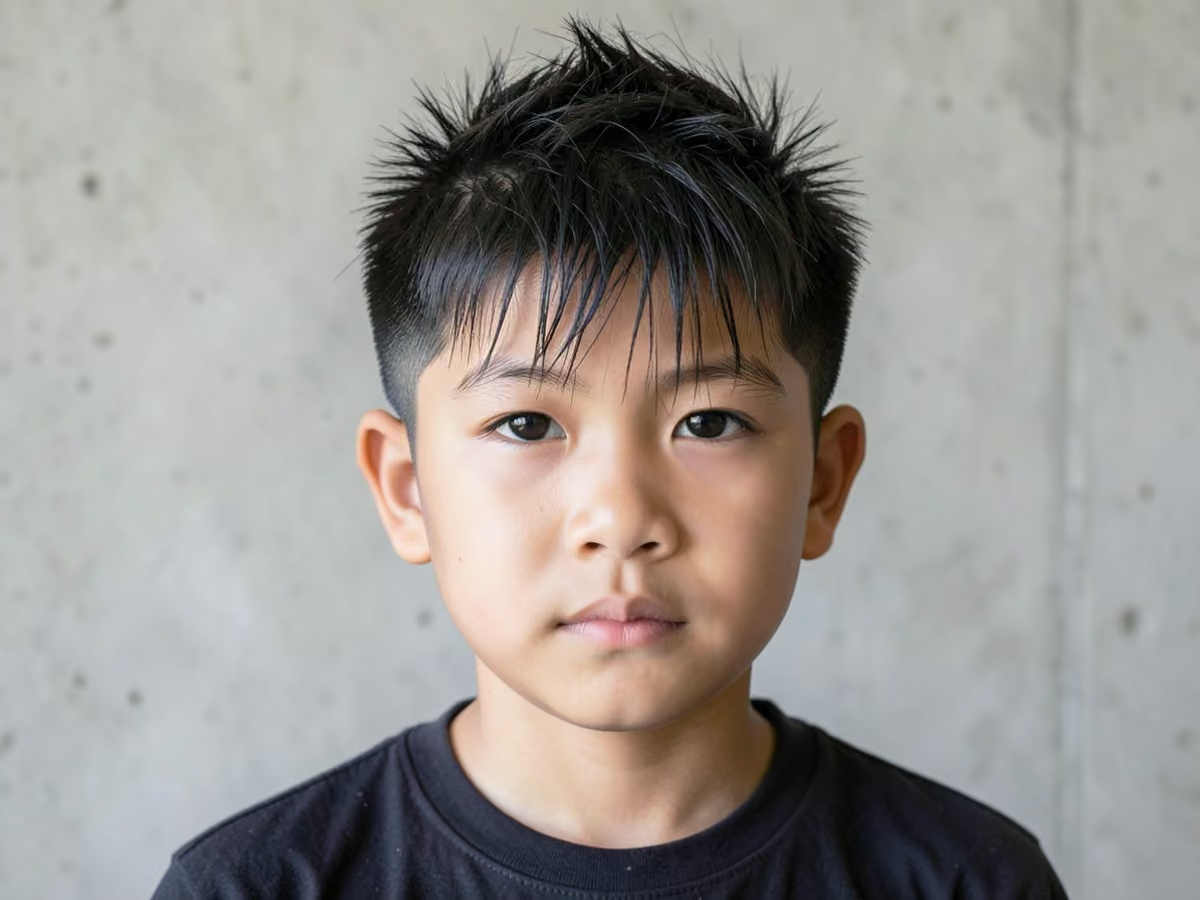
Point cutting breaks the top into short, choppy pieces about an inch and a half long, with a messy fringe resting a little above the eyebrows. Sides are a #2 or #3, often with a low taper at the edges. Thick hair loses bulk and no longer puffs out, and the uneven texture means growth reads as part of the style rather than as a cut that needs fixing.
How to Style at Home
Rough dry with a towel and push the fringe forward.
Twist a few pieces with your fingertips for extra texture.
Add a tiny dab of matte paste only on picture or party days.
Ask Your Barber
"Textured crop, a #3 on the sides with a low taper, about an inch and a half on top point cut for texture, fringe sitting above his eyebrows."
Trim:Every 5–6 weeks. The short blunt fringe grows down slowly.
Best For:Ages 5–10, oval or heart faces + straight or wavy hair.
About This Style
Compared with the textured crop, a French crop keeps a neater, blunter fringe cut straight across near the top of the forehead, with the rest of the top around an inch. Sides go to a #2 or a short taper. It always looks deliberate even when slightly overdue, and it hides a high hairline or an uneven front. Wavy hair gives it a softer edge without extra work.
How to Style at Home
Comb the top forward and let the fringe drop naturally.
Dry with a towel only; a blow dryer can push it sideways.
Ask for a fringe snip at week four if it reaches his brows.
Ask Your Barber
"French crop, a #2 on the sides tapered at the neck, about an inch on top with a short straight fringe across his forehead. Keep it neat, not choppy."
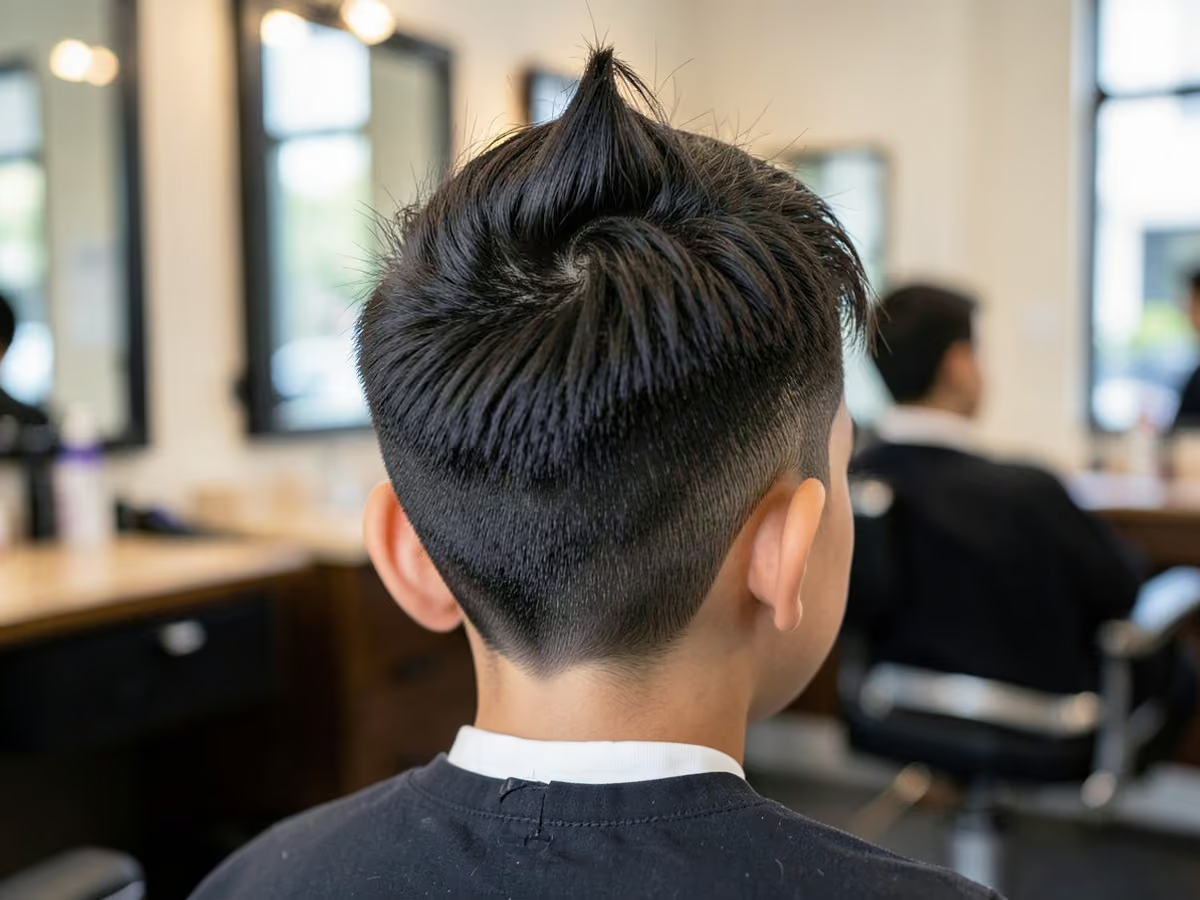
Trim:Every 4–5 weeks. Spikes flop once the top passes two inches.
Best For:Ages 6–10, round or square faces + thick or coarse hair.
About This Style
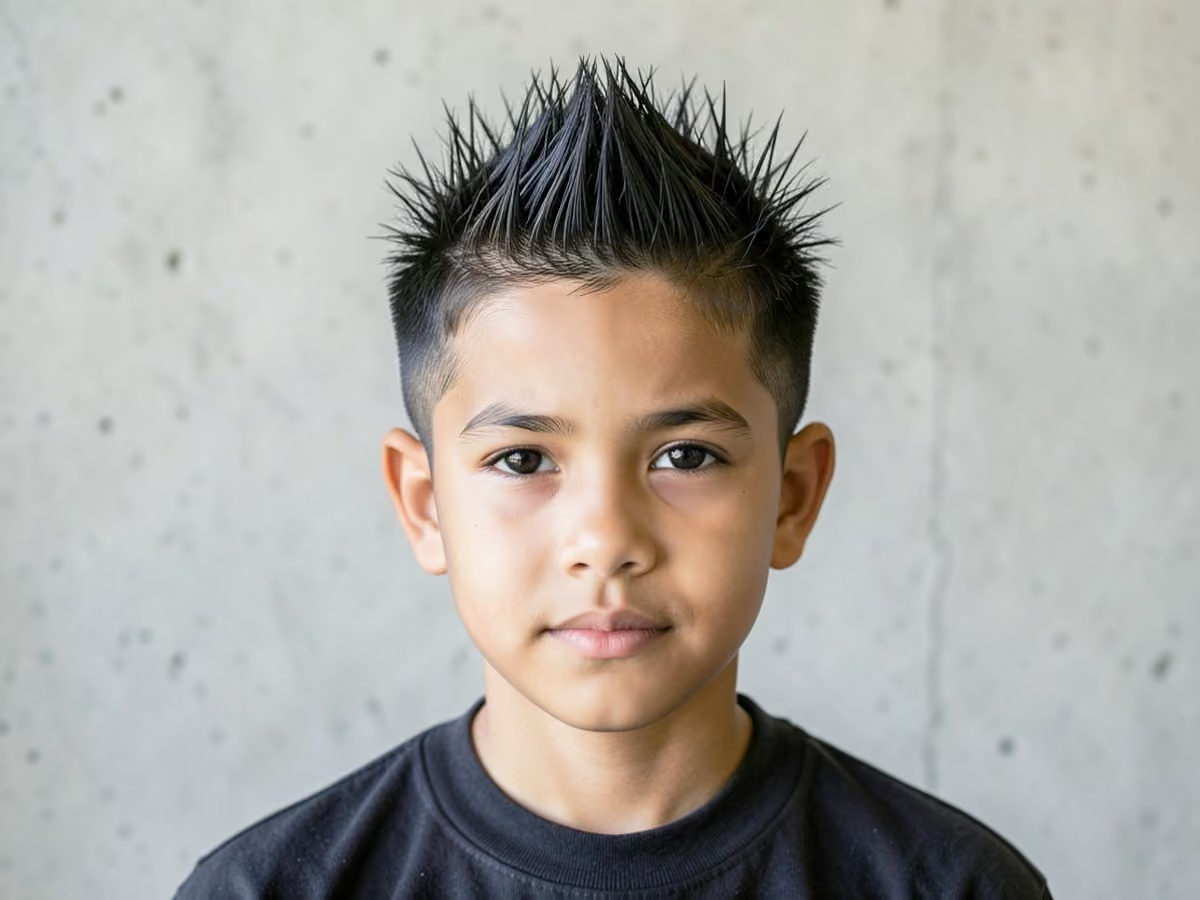
Short, stiff hair is what makes spikes stand, so the barber leaves about an inch to an inch and a half on top and texturizes it, with the sides at a #2. Coarse or thick hair spikes up almost unaided, while fine hair needs a little product. It is a fun weekend look that also passes for a plain short cut on school days if you skip the styling.
How to Style at Home
Work a pea of light gel into dry hair from the roots up.
Pinch small sections between your fingers and pull them upward.
Wash it out at night so the gel does not dry the scalp.
Ask Your Barber
"Short spiky cut, a #2 on the sides, an inch to an inch and a half on top, textured so it stands up with a little gel. Low taper on the neck."
Trim:Every 3–4 weeks. The faded sides make the shape.
Best For:Ages 6–10, round or oval faces + straight or thick hair.
About This Style
Unlike a real mohawk, a faux hawk keeps hair on the sides, just shorter: a #2 or #1 with a low or mid fade, while a two inch strip down the middle is longer and pushed toward the center. On school days it can be brushed forward like a crop. It suits boys who want something fun without a shaved head, and it grows back into a regular cut.
How to Style at Home
Rub a small amount of matte paste between your palms.
Push both sides of the top toward the middle and lift.
Leave it messy; a stiff ridge looks too grown up for a child.
Ask Your Barber
"Faux hawk for a kid, a #2 low fade on the sides, about two inches through the middle of the top so we can push it up or brush it forward."
Trim:Every 4–5 weeks. The front loses lift as it gets heavy.
Best For:Ages 8–10, oval or long faces + thick or wavy hair.
About This Style
Here the front is left longest, about two to three inches, and brushed up and back, with the rest of the top shorter and the sides at a #2 or #3. It needs a minute of styling with a pea of product, so it suits an older boy who wants to do his own hair. Thick hair holds the lift best; on a lazy day it simply falls forward like a fringe.
How to Style at Home
Blow dry the front upward on low heat while it is damp.
Rub a pea of light pomade through the front and push it back.
Let him finish it himself; the shape can be loose.
Ask Your Barber
"Short boys quiff, a #3 on the sides with a taper, about two and a half inches at the front graduating shorter toward the crown. Not too high."
Trim:Every 5–6 weeks. Only the sides really need cutting.
Best For:Ages 7–10, oval or square faces + straight or wavy hair.
About This Style
The sides are clipped short, a #2 or #3, and the top is kept three inches or more so it can be swept to one side, pushed back or left falling forward. The contrast is the point. Parents like it because the long top hides uneven growth, and only the sides need a barber every month or so. Straight and wavy hair both work, though very fine hair can go flat.
How to Style at Home
Comb the top the way it wants to fall after a wash.
Use a pea of styling cream to keep loose strands down.
Tuck long pieces behind the ears on days without product.
Ask Your Barber
"Short sides with a #3 and a soft taper, leave about three inches on top so he can sweep it sideways. Blend it, no hard line between top and sides."
Recommended Products
Styling Cream
Light Pomade
Neat Boys Haircuts for School
These tidy cuts suit uniforms, family events and picture day. A side part or comb over looks dressy with a single comb stroke, and a slightly longer top keeps the shape for weeks. Book about a week before photos so it settles.
Trim:Every 4–6 weeks. The part holds even as the top grows.
Best For:Ages 5–10, oval or round faces + straight or fine hair.
About This Style
Sitting at a #3 with a soft taper, the sides lead up to an inch and a half or two inches on top, combed across from a natural part above one eyebrow. No razor line is shaved in, so it suits younger boys and schools with grooming rules. Straight and fine hair comb flat easily; the part stays in place with water alone on most days.
How to Style at Home
Find his natural part by combing wet hair straight back first.
Comb the larger side across and the smaller side down.
Use water only, or a drop of light pomade for events.
Ask Your Barber
"Classic boys side part, a #3 on the sides with a taper, about two inches on top, part on his natural side. No shaved line, please."
Trim:Every 4–5 weeks. The faded sides show growth first.
Best For:Ages 7–10, square or oval faces + straight or thick hair.
About This Style
Where a side part sits close to the head, a comb over adds lift: two to three inches on top swept across and slightly up, with the sides faded low from a #1 to a #3. The fade makes it look more current than a plain part. It needs a comb and a little product each morning, so it suits a boy who likes looking smart.
How to Style at Home
Blow dry the top across toward the part on low heat.
Work in a pea of light pomade from the back of the hand.
Comb it over and press the ends down at the side.
Ask Your Barber
"Comb over with a low fade, a #1 up to a #3 on the sides, two to three inches on top swept across. A natural part, not a shaved one."
Trim:Every 5–6 weeks. A longer crew that tolerates late trims.
Best For:Ages 7–10, oval or long faces + straight or wavy hair.
About This Style
Think of the Ivy League as a crew cut with enough length at the front to part: about two inches there, tapering to an inch at the crown, and a #3 or #4 on the sides. It reads as a grown-up, conservative cut but needs only a quick comb. Because the sides are not very short, it skips the fuzzy stage at week three that faded cuts go through.
How to Style at Home
Comb a light side part while the hair is damp.
Push the front slightly up and across with your fingers.
Let it air dry so it keeps a soft, natural finish.
Ask Your Barber
"Ivy League for a boy, a #4 on the sides tapered at the neck, two inches at the front graduating to an inch at the crown, long enough to part."
Trim:Every 5–6 weeks. Book 5 to 7 days before photo day.
Best For:Ages 5–10, picture day + straight, wavy or curly hair.
About This Style
For photos, ask for his usual shape with nothing extreme: a soft taper with a #3 or #4 instead of skin, an inch and a half to two inches on top, and the fringe kept just above the brows so his eyes show. A cut five to seven days ahead lets harsh edges soften and any small nicks heal. On the morning, a damp comb is usually all it takes.
How to Style at Home
Comb his hair damp on picture morning and let it dry in place.
Smooth a cowlick with a drop of water and your palm.
Pack a small comb in his bag for after recess.
Ask Your Barber
"School photos next week, so keep his usual cut, a soft #3 or #4 taper, inch and a half on top, fringe just above his eyebrows. Nothing too short."
Recommended Products
Styling Cream
Light Pomade
Longer Boys Haircuts
Longer cuts suit boys who hate the clippers or want to grow their hair. They need more washing and brushing, but fewer barber visits, often every 6 to 10 weeks. Ask for scissor work around the ears to keep them out of his eyes.
Trim:Every 4–6 weeks. The fringe reaches his eyes before the rest grows.
Best For:Ages 5–10, long or heart faces + straight or wavy hair.
About This Style
The whole cut revolves around a full fringe: it leaves two to three inches on top falling forward to just above the eyebrows, with scissor-cut sides covering the tops of the ears. It softens a long face and hides a high forehead. The fringe needs a trim between full haircuts, which many barbers do in a few minutes. Avoid it if a cowlick sits at the front hairline.
How to Style at Home
Brush the fringe forward while damp and let it dry down.
Clip it back for sport so sweat does not sit on his forehead.
Book a quick fringe-only trim around week four.
Ask Your Barber
"Fringe cut, scissors all over, two to three inches on top falling just above his eyebrows, sides covering the tops of his ears. Thin the fringe a little."
Trim:Every 5–6 weeks. The rounded shape collapses as it grows.
Best For:Ages 5–9, oval or heart faces + thick, straight hair.
About This Style
Named for its rounded cap shape, this updated bowl cut falls evenly from the crown. The top is about three inches, the fringe sits at the brows and the underneath is tapered short with a #2 or #3 so the shape does not get bulky. Thick, straight hair holds the dome; on curly hair it puffs out. A light thinning underneath keeps it from looking heavy.
How to Style at Home
Brush everything down and forward from the crown after washing.
Blow dry on low heat, aiming the air down the hair shaft.
Shake it with your fingers so it looks soft, not helmet-like.
Ask Your Barber
"Mushroom cut, about three inches on top falling round from the crown, fringe at his eyebrows, sides tapered underneath with a #3 so it is not bulky."
Best For:Ages 5–10, oval or square faces + wavy or straight hair.
About This Style
Scissors do all the work on this shaggy, beach style cut: four to five inches on top, layered sides that cover the ears and a back that reaches the collar. Natural wave gives it the tousled look without effort. It needs daily brushing and a detangler after swimming, but barber visits drop to every two months. Not a choice for schools that require hair off the collar.
How to Style at Home
Spray detangler on wet hair and comb from the ends up.
Scrunch a little sea salt spray in for wave on weekends.
Let it air dry; heat makes the layers frizz.
Ask Your Barber
"Surfer cut with scissors, about four inches on top, layered sides over his ears, back to the collar. Thin out bulk so it is not heavy."
Trim:Every 5–7 weeks. The sides need shortening before the back.
Best For:Ages 6–10, oval or round faces + wavy or curly hair.
About This Style
Kids versions of the mullet stay gentle: short sides at a #3 or #4 with a low taper, a textured top around two inches, and the back left only an inch or two longer than the rest, ending at the nape. That soft back is what parents can live with. Wavy and curly hair makes the length look intentional. Check school rules before going longer at the neck.
How to Style at Home
Scrunch damp hair with a pea of curl cream for wave.
Push the top forward and let the back fall naturally.
Keep the back brushed so it does not tangle.
Ask Your Barber
"Soft kids mullet, a #4 on the sides with a low taper, two inches textured on top, back just an inch or two longer, ending at the nape."
Recommended Products
Curl Cream
Sea Salt Spray
Boys Haircuts for Curly and Coily Hair
Curly and coily hair shrinks as it dries, so these cuts keep length on top and taper the edges. Moisture matters more than product. A taper for coily hair keeps the shape clean between visits.
Trim:Every 3–4 weeks. Curls grow outward and the fade blurs.
Best For:Ages 5–10, round or oval faces + loose or medium curls.
About This Style
Curls stay on top, about two to three inches stretched, and the sides drop away in a low or mid fade from a #1 to a #3. The contrast stops curly hair growing into a wide triangle shape, a common problem for boys. Ask the barber to cut the top dry so the length is judged as it really sits. A leave-in after washing keeps curls defined.
How to Style at Home
Smooth leave-in through wet curls with your fingers.
Scrunch upward and let it air dry without touching.
Refresh day-two curls with a spray of water.
Ask Your Barber
"Curly top with a low fade, a #1 up to a #3 on the sides, keep two to three inches of curl on top and cut it dry so it does not end up short."
Trim:Every 3–4 weeks. Coils at the edges grow out soft.
Best For:Ages 5–10, round or oval faces + coily or 4C hair.
About This Style
A rounded afro of about one to two inches on top is shaped with clippers, then tapered at the temples and nape only, from a #1 to the natural length. The rest of the sides stay full, so it looks soft and works well for younger boys who dislike skin fades. Keeping coils moisturized and picked out evenly every few days holds the round shape between visits.
How to Style at Home
Spray water and leave-in on dry coils each morning.
Lift the top gently with an afro pick to even out the shape.
Sleep on a satin pillowcase to cut down on flat spots.
Ask Your Barber
"Afro taper for my son, shape the top round at about an inch and a half, taper just the temples and neck with a #1, no skin and no line-up."
Trim:Every 2–3 weeks. Waves need a short, even length.
Best For:Ages 8–10, any face shape + coily or 4C hair.
About This Style
Waves need a short, even top, usually cut with a #1 or #2 with the grain, and a low taper at the edges. The pattern itself comes from daily brushing and wearing a durag, so this works only for an older boy who will brush most days. Expect several weeks before the pattern shows. A soft brush and a light wave pomade are the basic kit.
How to Style at Home
Brush from the crown outward in the direction of growth.
Apply a small amount of wave pomade before brushing.
Wear a durag at night to keep the pattern laid down.
Ask Your Barber
"Waves cut for my son, a #2 on top cut with the grain, low taper on the sides and neck, keep everything even so his waves can come through."
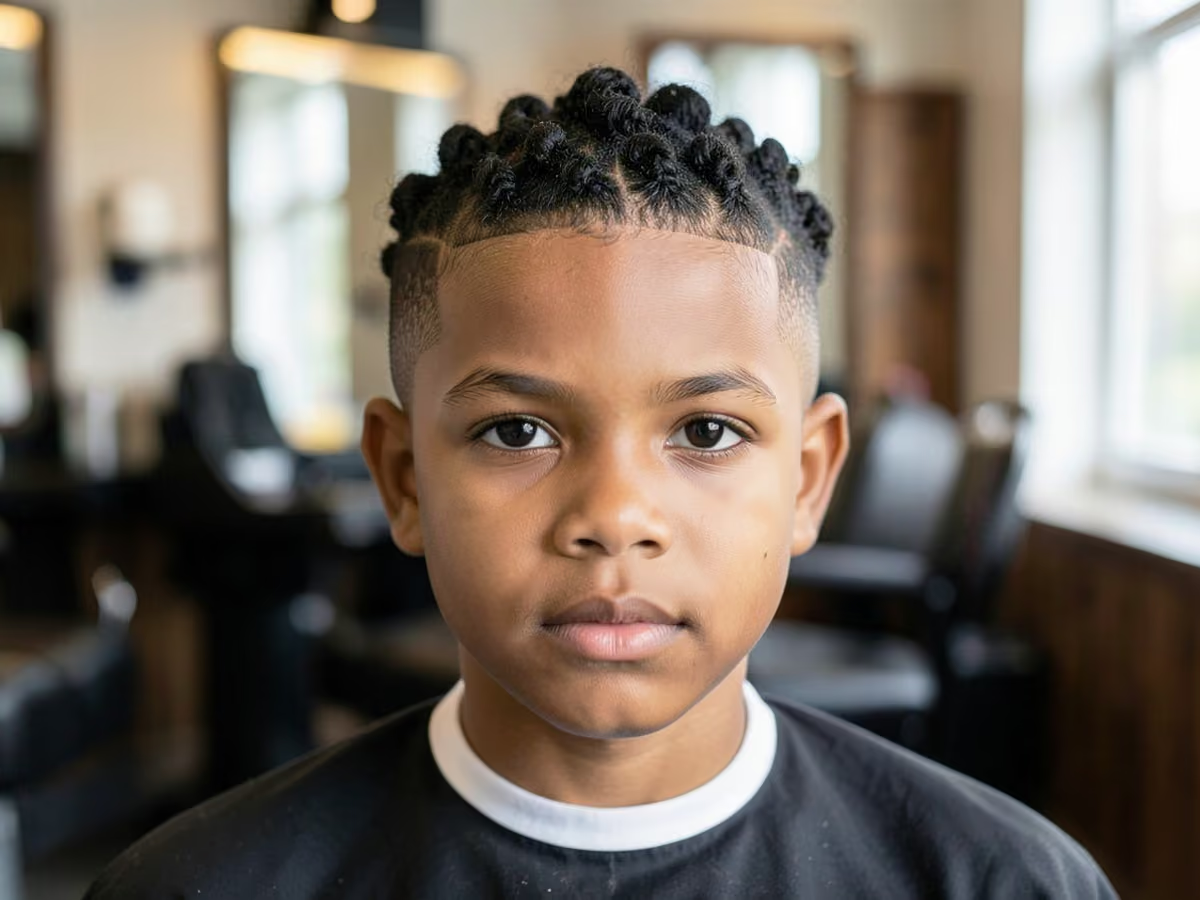
Trim:Every 4–6 weeks. Retwist the roots and refresh the taper.
Best For:Ages 6–10, oval or long faces + coily or 4C hair.
About This Style
Two to three inches of top hair is twisted with a sponge or by hand into small coils, and the sides and nape get a low taper from a #1. Twists keep coily hair tidy for days with very little daily work, though they need gentle washing and roots retwisted every few weeks. Short twists suit a younger child; longer ones need more care around sport.
How to Style at Home
Rub a curl sponge in small circles over the top.
Spray water and leave-in on the twists every couple of days.
Cover with a satin cap at night so they stay neat.
Ask Your Barber
"Low taper on his sides and neck with a #1, keep the top about two inches and sponge it into twists. No hard line-up for now, please."
Trim:Every 2–3 weeks. The sharp edge blurs within days.
Best For:Ages 7–10, round or square faces + coily or 4C hair.
About This Style
A line up squares the front hairline and the temples with a trimmer so the edges look crisp, usually on top of a short cut or a low taper. On children, ask the barber to follow the natural hairline rather than pushing it back, since a line cut too far back takes months to grow in. Edges soften within a week, so line ups mean more frequent visits.
How to Style at Home
Brush the edges down lightly with a soft edge brush.
Moisturize the scalp along the hairline after washing.
Do not touch up the line at home with a razor.
Ask Your Barber
"Low taper with a line up, keep it on his natural hairline and do not push it back. A #1 at the edges and an even inch on top."
Trim:Every 2 weeks. Shaved designs fade fast as hair grows.
Best For:Ages 6–10, birthdays and events + short, thick hair.
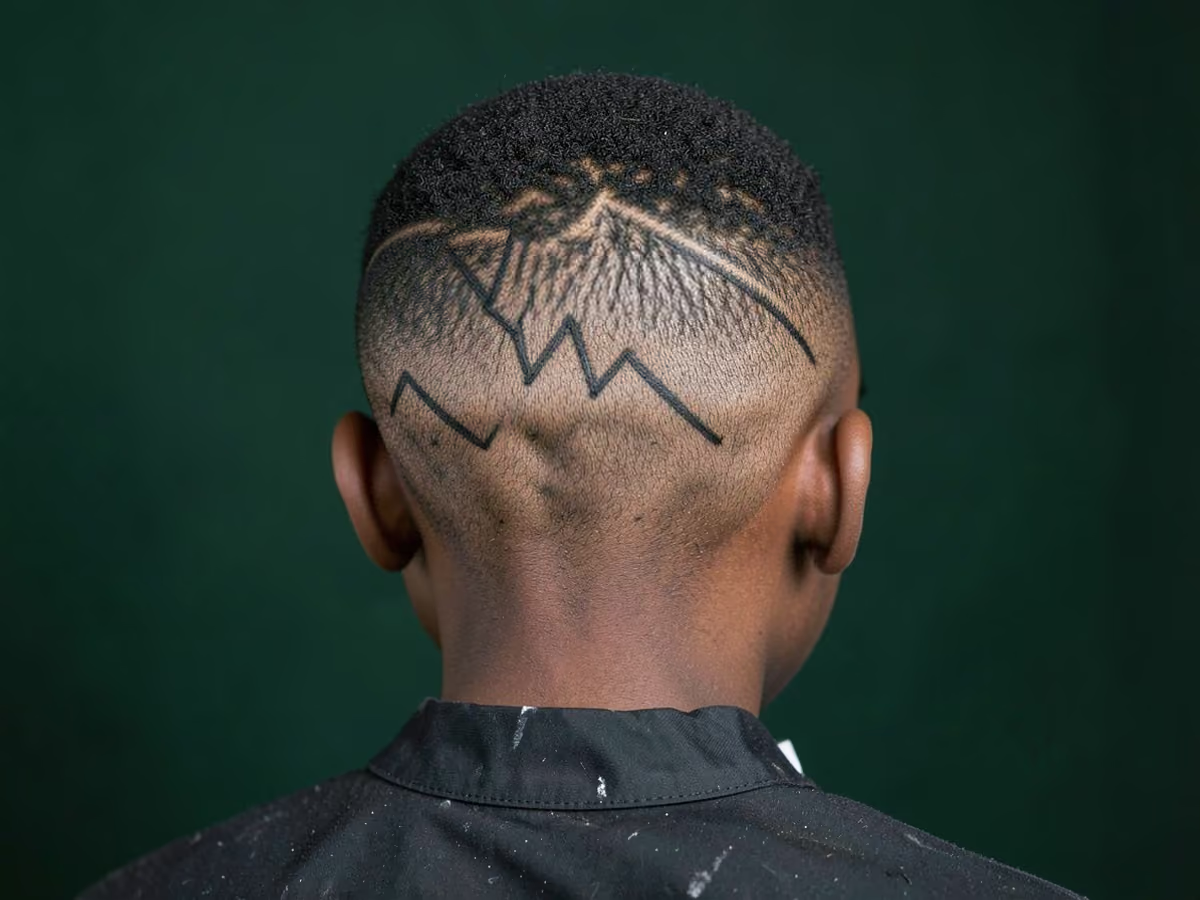
About This Style
A simple design, such as one or two curved lines, a lightning bolt or a zigzag, is etched with a trimmer into the side above a low fade or short #1 to #2 side. Simple shapes read better on a small head and grow out without looking messy. Expect it to vanish in about two weeks. Check school policy before booking.
How to Style at Home
Keep the design clean with gentle washing; avoid scrubbing it.
Moisturize the scalp along the lines if it feels dry.
Plan the cut a day or two before the event.
Ask Your Barber
"Low fade with a #1 on the sides and one simple design above his ear, like two curved lines. Nothing complicated, just something that grows out clean."
Recommended Products
Scalp Oil
Boys Haircuts for Tricky Hair
Cowlicks, double crowns, very thick hair and fine hair each change which cut works. Tell the barber about the problem first, then the style. Our cowlicks and double crowns guide explains why some lengths stand up.
Trim:Every 5–6 weeks. Extra weight over the swirl keeps it down.
Best For:Ages 5–10, front or crown cowlicks + straight hair.
About This Style
A cowlick stands straight up when cut short, so this cut leaves extra weight, about two inches, over the swirl and lets the hair fall in the direction it naturally grows. The sides can be a #3 taper. If the cowlick is at the front hairline, a side-swept fringe works with it instead of a straight one. Trying to flatten it with gel usually fails.
How to Style at Home
Wet the cowlick fully and comb it the way it wants to go.
Blow dry it flat in that direction on low heat.
Press with your palm while it cools to set it.
Ask Your Barber
"He has a cowlick at the front, so please leave about two inches there and cut it to fall with the swirl. A #3 taper on the sides is fine."
Trim:Every 4–6 weeks. Crown swirls lift once the length gets awkward.
Best For:Ages 5–10, two crown swirls + thick or straight hair.
About This Style
Two swirls at the back of the head push hair in opposite directions, so the trick is length: either keep the crown around two inches so its weight lies flat, or go short enough, a #3 or #4, that nothing can stick up. The in-between length of about an inch is what causes the tufts. Tell the barber where both swirls are before the cut begins.
How to Style at Home
Point out both swirls to the barber with the hair wet.
Brush the crown down with water each morning.
Book on time; the crown sticks up first as it grows.
Ask Your Barber
"He has a double crown, so please keep about two inches at the back of his head so it lies flat. Taper the sides with a #3."
Trim:Every 4–5 weeks. Bulk builds up around the ears first.
Best For:Ages 5–10, round or oval faces + thick, dense hair.
About This Style
Dense hair puffs out at the sides and looks wider every week, so this cut removes bulk with a #2 or #3 on the sides and texturizes an inch and a half on top using point cutting. That stops the triangle shape and makes washing and drying faster. It suits boys who come home sweaty and want hair that dries before bedtime. A textured crop is the usual result.
How to Style at Home
Towel dry well; thick hair holds water for a long time.
Push the top forward or to the side with your fingers.
Use a pea of matte paste only if it puffs up.
Ask Your Barber
"His hair is really thick, so please take out bulk with a #3 on the sides and texturize the top, leaving about an inch and a half."
Trim:Every 5–6 weeks. Blunt ends keep fine hair looking full.
Best For:Ages 5–10, oval or long faces + fine, straight hair.
About This Style
Thin, soft hair looks fuller when the ends are cut blunt rather than thinned, so ask for scissors over thinning shears and an inch to an inch and a half on top. Keep the sides at a #3 or #4 because shorter sides can show the scalp through fine hair. A short crop or side part suits it best, and long layers tend to look stringy.
How to Style at Home
Use a gentle kids shampoo and skip heavy conditioner.
Towel dry gently and comb it into place in one direction.
Add a light spray of thickening spray for special days.
Ask Your Barber
"His hair is fine, so no thinning shears, please. Blunt ends with scissors, about an inch and a half on top, and a #4 on the sides."
Recommended Products
Kids Shampoo
Thickening Spray
Which Boys' Haircut Suits His Hair and Routine?
Which boys' haircut to choose by hair type and routine
If he…
Go with
Hates sitting still
Buzz or crew cut: fastest in the chair
Has thick, unruly hair
Textured crop or short taper to remove bulk
Has curly hair
Keep some length on top, taper the sides
Plays a lot of sport
Buzz or crew: sweat-proof and quick to dry
Wants 'cool' hair
Taper with textured top: current without being high-maintenance
Has a cowlick
Shorter and textured; long fringes fight a cowlick
How Do You Make a Barber Visit Easy for a Boy?
Book early in the day when he's freshest and the shop is quieter.
Find a barber who's good with kids. It makes far more difference than the cut itself.
Bring a photo so there's no long discussion while he's losing patience.
Let him have some say in the style: buy-in means less fidgeting.
Keep it short enough to last 6–8 weeks so visits are infrequent.
What to say in the chair
"Short taper on the sides with a #3, about an inch and a half on top so it falls forward on its own. No product, please, and keep a bit more length over the crown so it doesn't stick up."
Saying this up front keeps the chair time short. See how to talk to your barber for more examples. Kids' prices vary by shop, so ask when you book; adult price tiers are in our 2026 haircut cost guide.
How Do You Stretch the Time Between Boys' Haircuts?
Kids' hair tends to look scruffy first at the ears, the neckline and the fringe, long before the overall length is a problem. Knowing that lets you stretch the time between full haircuts.
Ask about a fringe trim. Many barbers will quickly trim a fringe that is getting in his eyes between full appointments.
Keep the neckline tidy. A tapered neckline grows out more softly than a blocked one, which gets a fuzzy line quickly.
Leave slightly more on top. A crop or taper with a little extra length on top can still look deliberate as it grows.
Watch the crown. Many boys have a strong swirl at the crown that sticks up once it gets long. Keeping that area a touch longer helps it lie flat.
Hair grows about half an inch a month, so a short cut changes shape quickly:
Boys' haircut grow-out timeline from fresh cut to next visit
Choosing an adult cut that needs styling. A sharp quiff or slick back looks great on the day and becomes a daily argument. Pick something that looks fine straight out of the towel.
Going very short before school photos. A fresh, very short cut can look harsh. A cut a week or so earlier gives it time to settle.
Cutting a cowlick too short. Short hair over a cowlick stands straight up. Leaving a bit more weight there usually calms it.
Trying a home fade on a wriggly child. Clippers and sudden movement do not mix, and a gouge near the ear is hard to hide. Stick to single-guard buzzes at home, if anything.
How Should a Boy's Haircut Change as He Gets Older?
Around the pre-teen years, many boys start caring about their hair and wanting a say in the style. That is a good time to teach basic habits: rinsing out sweat after sport, using a small amount of a light product rather than a handful of gel, and noticing when the cut has lost its shape.
A textured crop or short taper with a longer top gives him room to experiment without committing to anything drastic. If he wants something bolder, like a longer fringe or a design shaved into the side, it is usually easier to agree to a version that grows out cleanly than to refuse outright.
Which products are fine for older boys?
Light matte paste: soft texture for a crop, washes out easily.
Water-based pomade: a neat side part without stiffness.
Leave-in conditioner: keeps curly hair soft and less frizzy.
Pick your hair type and how much upkeep you will put in. The matches below come from the Best For and Maintenance notes on each card. Upkeep follows the Maintenance badge: low means a cut every 3 to 6 weeks and almost no daily styling, high means weekly line-ups or daily product.
Clipper Guards Used in Best Haircuts for Boys Styles
A clipper guard is the plastic comb that clips onto the blade and sets how much hair is left: a #1 leaves 3 mm (1/8 inch), each step up adds about 3 mm. The right column lists the cards on this page that call for each guard. See the full clipper guard numbers guide for the complete chart.
Clipper guard sizes for best haircuts for boys styles
Q1: What is the best haircut for a boy aged 5-10?+
A crew cut or short textured crop. Both are tidy, school-appropriate, need no styling, and grow out neatly. A short taper with a little length on top works if he wants something more current, and a buzz cut is the lowest-effort option for very active kids.
Q2: What haircut is easiest to maintain for a boy?+
A buzz or crew cut: no styling at all, quick to dry, and they grow out evenly. A textured crop is the easiest of the slightly longer options because the fringe hides awkward growth stages.
Q3: How often do boys need haircuts?+
Every 6-8 weeks for most short cuts, which keeps visits infrequent. Very short cuts like buzzes look fresh longer in terms of shape but may need tidying sooner if you want the edges sharp.
Q4: How do I make a haircut easier for a fidgety child?+
Book early in the day when he's freshest, choose a barber who's genuinely good with kids, bring a reference photo so there's no long discussion, and let him have some say in the style so he's invested. Shorter cuts also mean less time in the chair.
Q5: What haircut works for a boy with thick unruly hair?+
A textured crop or short taper. Both remove bulk so the hair doesn't puff out, and the texture makes any unruliness look intentional. Avoid leaving too much length on top, which is where thick hair gets hardest to manage.
Q6: What guard number is good for a boy's buzz cut?+
A #3 or #4 (about 10 to 13 mm) is the usual choice. It looks neat, covers the scalp from the sun and grows out evenly. Shorter guards show every bump and need redoing sooner.