
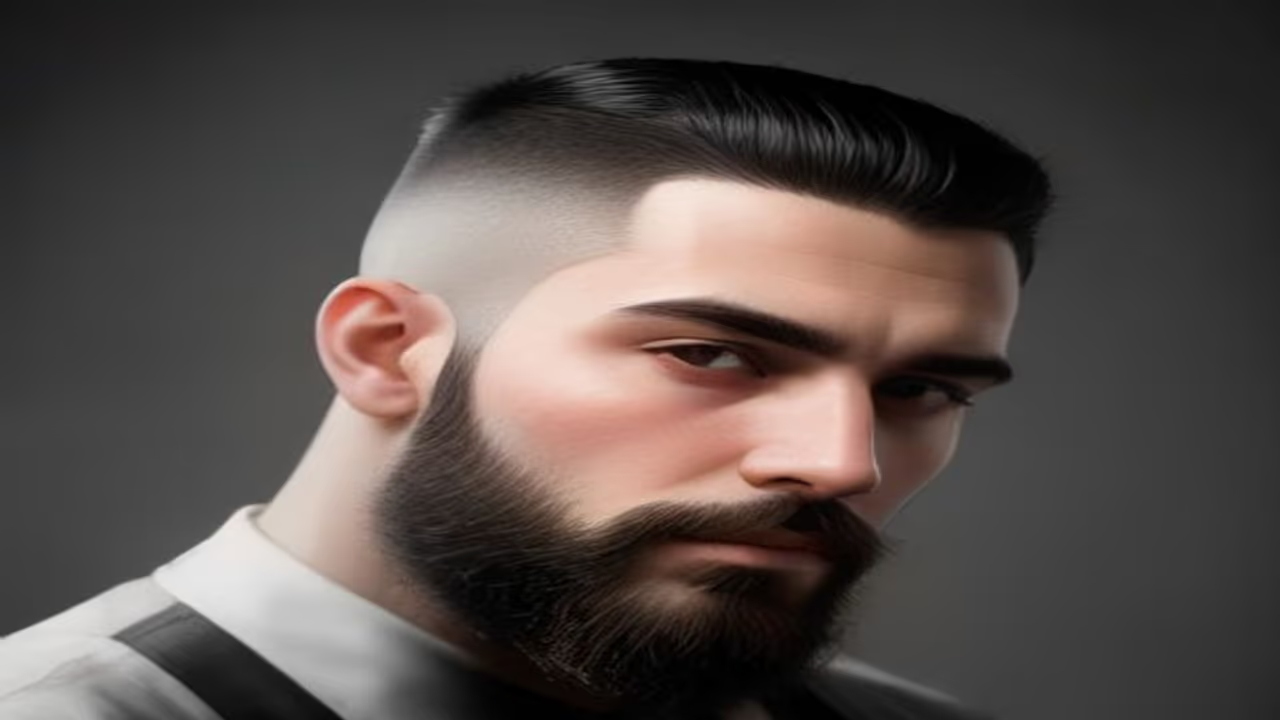
Best Beard Styles to Pair
With a Skin Fade
The fade-to-beard connection is the defining modern men's look. Here's how to get the pairing right.
By Jessica Hamilton — Master Stylist & Creative Director
A skin fade running into a beard is the signature modern barbershop look, and getting it right is mostly about one decision: connected or disconnected. Connected means the fade blends seamlessly into the beard with no visible break; disconnected means a deliberate clean gap between the two.
Connected vs Disconnected
Neither is more 'correct'. Tell your barber which you want, because they'll default to one otherwise.
| Connected | Disconnected | |
|---|---|---|
| Look | Seamless, one continuous line | Deliberate gap, high contrast |
| Reads as | Modern, sharp, cohesive | Classic, bold, defined |
| Needs | Decent cheek/sideburn growth to blend | Works even with patchier cheek growth |
| Upkeep | Every 1-2 weeks (the blend blurs) | Every 1-2 weeks (the gap fills in) |
| Best with | Fuller beards | Shorter beards and goatee-type styles |
Which Beards Pair Best
- Short boxed beard + skin fade: the cleanest, most professional combination.
- Medium full beard + skin fade: maximum contrast, the classic modern barbershop look.
- Stubble + skin fade: sharp and low-maintenance; the fade does the work.
- Van Dyke or goatee + skin fade: deliberately disconnected, high impact.
- Avoid a long, unshaped beard with a very sharp skin fade: the mismatch in precision looks unintentional.
Getting the Blend Right
- Tell your barber up front: 'connect it' or 'keep them separate.'
- The blend happens at the sideburn, in front of and above the ear, where fade meets beard.
- Keep the beard neckline correct regardless of the fade.
- Match the maintenance schedule: get the beard shaped the same day as the fade, every 1–2 weeks.
- Beard length should relate to fade height, since a very high fade with a very long beard can look top-heavy.
Matching the Beard to Your Face Shape
The fade shapes the top half of the head, but the beard does the work on the jaw, so it is worth choosing the beard with your face shape in mind.
- Round face: keep the cheeks tighter and let more length sit at the chin. A boxed beard with a slightly pointed or squared bottom adds length to the face.
- Long or oblong face: keep the chin shorter and leave a little more fullness at the sides so the face does not look even longer. Avoid a very high fade combined with a long pointed beard.
- Square face: most styles work. A rounded bottom softens a strong jaw, while a boxed shape emphasises it.
- Weak or receding chin: extra length at the chin projects it forward. A goatee or short full beard with a squared bottom is a good pairing with a skin fade.
Beard Growth Problems and Workarounds
Patchy cheeks are the main thing that decides how the fade and beard can meet. A connected blend needs hair to run from the sideburn down to the jaw; if that area is thin, the transition looks broken.
- Patchy cheeks: a disconnected style or a goatee avoids the problem entirely, and a skin fade makes the choice look deliberate.
- Sparse sideburns: ask the barber to start the beard blend slightly lower, so the fade reaches skin before the thin area rather than through it.
- Different colour or texture in the beard: a short, even beard next to the fade reduces the contrast, while a long beard exaggerates it.
- New beard: let it grow for several weeks before judging which pairing suits you. Early growth is often uneven and fills in with time.
Keeping It Sharp Between Visits
The fade is the part to leave to the barber, but the beard edges are manageable at home. Trim the neckline and cheek line lightly once or twice a week, following the lines the barber set rather than creating new ones. Use a trimmer without a guard only on the neck below the line. Brush the beard daily so it lies in one direction, and apply a small amount of beard oil to keep the skin under it from flaking, which shows easily next to a freshly faded side.
Frequently Asked Questions
Q1: Should my beard connect to my fade?+
Q2: What beard goes best with a skin fade?+
Q3: Where does a fade blend into a beard?+
Q4: How often do I need to maintain a fade and beard combo?+
Q5: Can I have a skin fade with a patchy beard?+
Make us a Preferred Source on Google
See our latest articles first in your Google Search & AI Overviews.