
What Does "Blend" Mean
at the Barbershop?
You hear it constantly, but what is a "blend" actually? Understanding it is the key to asking for fades and tapers that look right.
By Jessica Hamilton, Editor · Updated
Quick answer: At the barbershop, a blend is a smooth transition between two hair lengths, usually the shorter sides and longer top, with no visible line where they meet. A fade is a blend that continues down to very short hair or bare skin. A taper is a gentler blend kept to the neckline and sideburns.
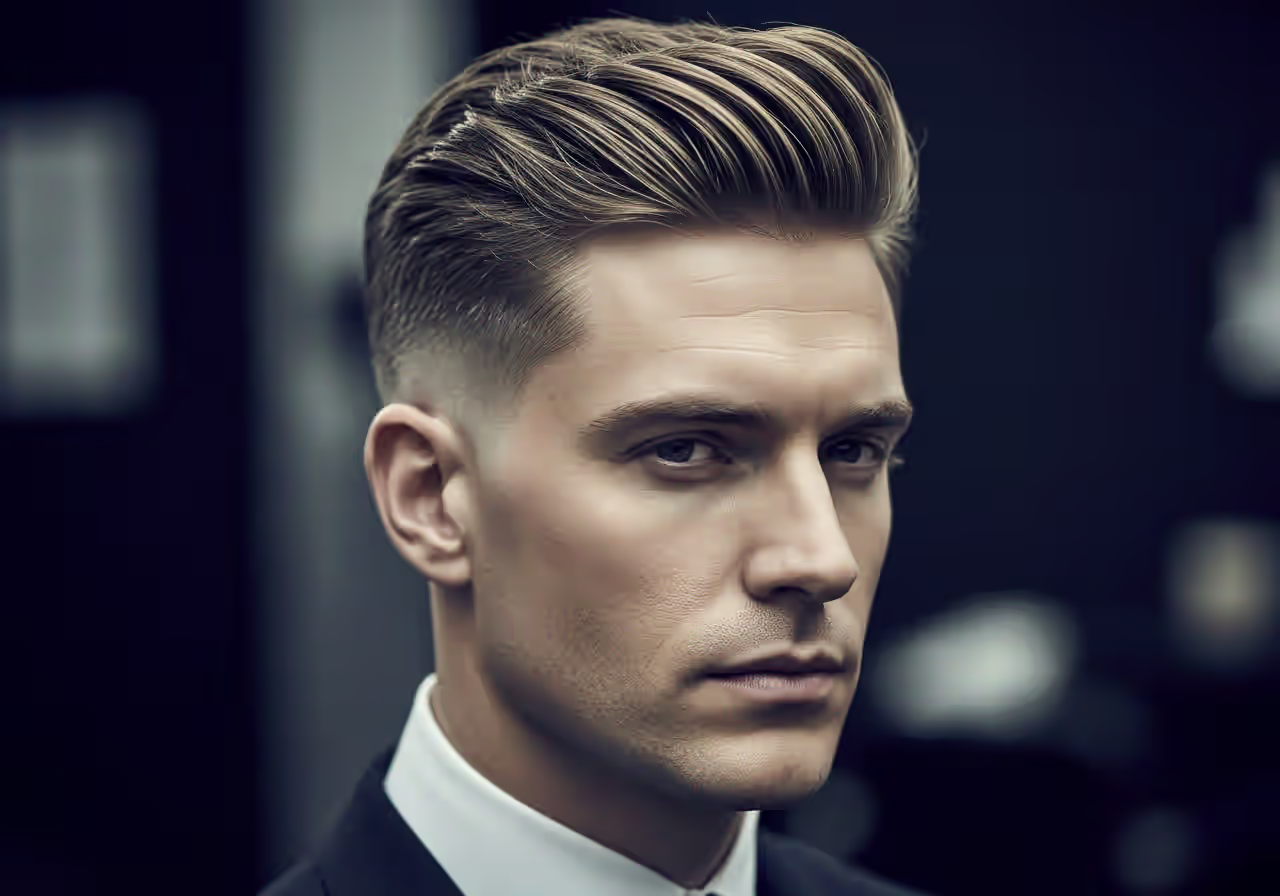
Style images are AI-generated illustrations.
📚 Part of our Fades & Tapers guide hub collects every related guide.
"Blend" is one of those barbershop words everyone uses and few explain. At its simplest, a blend is the smooth transition between two lengths of hair, with no visible line where one stops and the other starts. It's the skill behind every good fade and taper, and knowing the word lets you describe exactly how sharp or gradual you want that transition.
What Exactly Is a Blend?
When hair goes from short (sides) to long (top), there's a transition zone. A good blend makes that zone a smooth gradient, the eye can't find a line. A bad blend leaves a visible step or shelf. "Blend it out" means "make that transition smooth." It's not a style itself; it's the quality of the transition within a style.
What's the Difference Between a Blend, a Fade and a Taper?
These get used loosely, but here's the distinction:
| Term | What it is |
|---|---|
| Blend | The smooth transition between lengths (a quality, not a style) |
| Fade | A blend that goes all the way down to very short or bare skin |
| Taper | A gentler, shorter blend usually just at the edges (neckline, sideburns) |
| "Disconnected" | The opposite of a blend, a deliberate hard line between lengths |
Which Guards Go Into a Blend?
A barber builds a blend by stepping through guard lengths, then smoothing each joint. A typical blend from a #1 on the lower sides to a #3 above looks like this (see our clipper guard numbers chart):
| Zone | Guard | Length left |
|---|---|---|
| Bottom | #1 | 1/8 inch |
| Lower blend | #1.5 | 3/16 inch |
| Middle | #2 | 1/4 inch |
| Upper blend | #2.5 | 5/16 inch |
| Sides above the blend | #3 | 3/8 inch |
The half guards and the lever on the clipper do most of the smoothing. Skipping them is what leaves a visible line.
How Do You Ask for the Blend You Want?
- "Nice and blended" / "smooth"; you want no visible line, a smooth gradient.
- "Keep it tight", a sharper, more compressed transition.
- "Disconnected". You actually want a hard line, no blend (as in a disconnected undercut).
- If a previous cut had a visible line, say "last time there was a hard line here, I want it blended out this time."
What to say in the chair
"Blend the sides from a #1 at the bottom up to a #3, nice and smooth with no visible line, and keep the top separate at about two inches."
A smooth blend is part of any fade or taper, so it costs the same as the cut, usually $25 to $45 at a neighborhood shop. See our haircut cost guide.
Why Is a Good Blend So Hard to Do?
A blend looks simple once it is done well, which is exactly why it takes years to master. The barber has to remove hair gradually across dozens of overlapping passes, each one slightly longer than the last moving up the head, without ever leaving a step where two passes meet.
Clipper angle, pressure, and the speed of the hand all change how gradual that transition reads, and small inconsistencies show up immediately under bright light even if they are invisible in a dim mirror. Curly and thick hair make this harder still, since the hair springs back after cutting and can hide a rough transition until it dries and settles, by which point the client has already left the chair.
This is also why a rushed cut is the most common cause of a bad blend: the technique needs patience more than any special tool.
How can you check a blend before you leave?
- Ask for the hand mirror and look at both sides and the back under the brightest light in the shop.
- Look for any band where the color of the hair changes sharply. That is a step, not a blend.
- Compare where the blend starts above each ear. It should be level.
- If anything looks off, say so now. A fix in the chair takes a few minutes.
How Long Does a Blend Stay Clean?
A blend is at its cleanest on the day it is cut and gradually softens as every section grows at a similar rate, which usually keeps the transition looking reasonable for a week or two before it starts to look shaggy rather than sharp. A tighter, more compressed blend near the skin grows out faster than a longer, gentler one higher on the head, since the shorter hair reaches a noticeable length sooner relative to its starting point.
If you want a blend that survives longer between visits, ask for a slightly less aggressive transition rather than the tightest possible version, since a small amount of extra length in the shortest section buys you several more days before the line becomes visible again.
| Time | Tight blend near the skin | Longer, gentle blend |
|---|---|---|
| Days 1 to 3 | Smooth and sharp | Smooth |
| Week 1 | Short areas grow 1/8 inch; still clean | Looks the same |
| Week 2 | Blend softens; edges look fuzzy | Still tidy |
| Week 3 to 4 | Looks grown out | Starts to need a cleanup |
What Makes a Blend Look Bad?
- A visible band or shelf: a guard step was skipped. See how to fix an uneven fade.
- Patches where scalp shows: a dull blade or uneven density. See why does my fade look patchy.
- One side blended higher: the start line was set differently on each side.
- Blend looks fine wet, rough dry: curly or thick hair sprang back after the cut.
Frequently Asked Questions
Q1: What does 'blend' mean in a haircut?+
Q2: What's the difference between a blend and a fade?+
Q3: Is a blend the same as a taper?+
Q4: Why does a good blend matter?+
Q5: How do I ask a barber for a blended haircut?+
Q6: Can a barber blend a fade into a beard?+
Make us a Preferred Source on Google
See our latest articles first in your Google Search & AI Overviews.