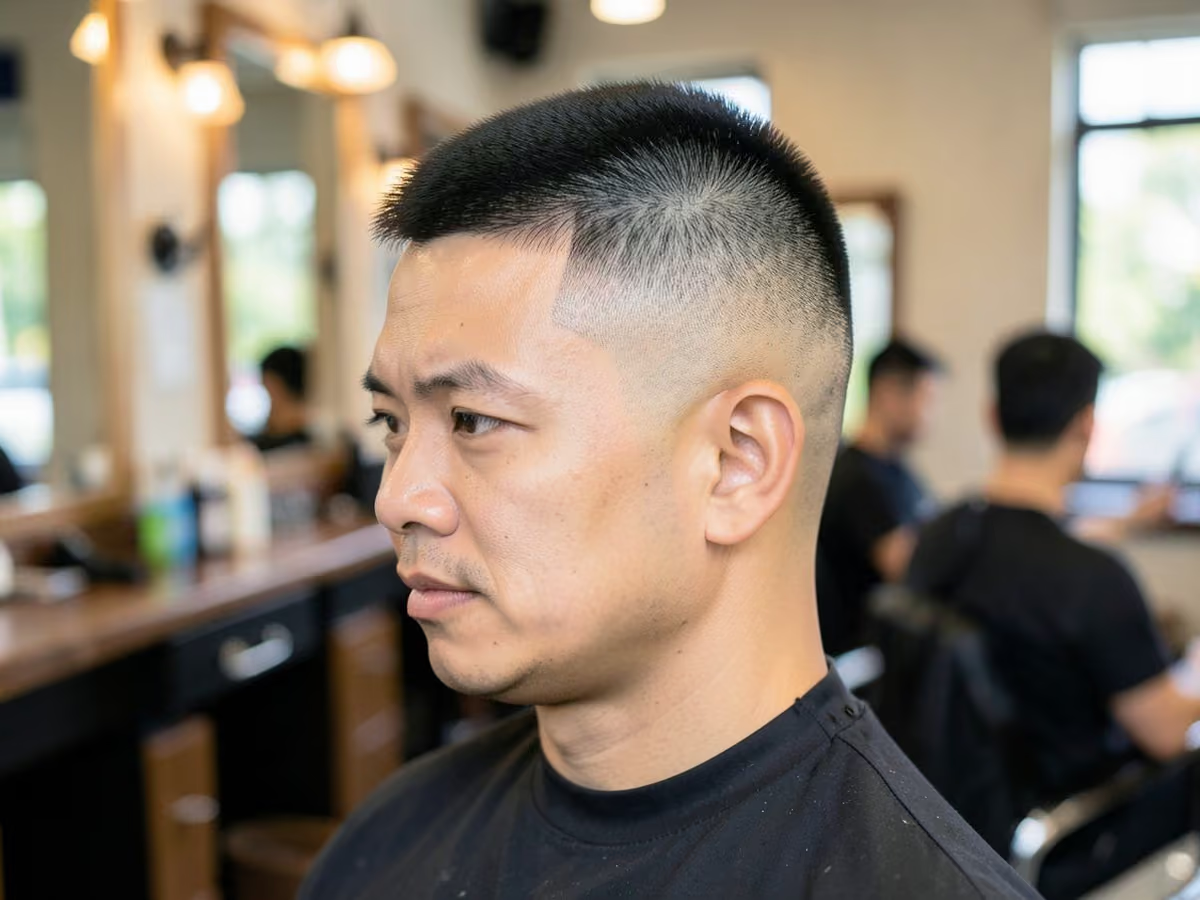
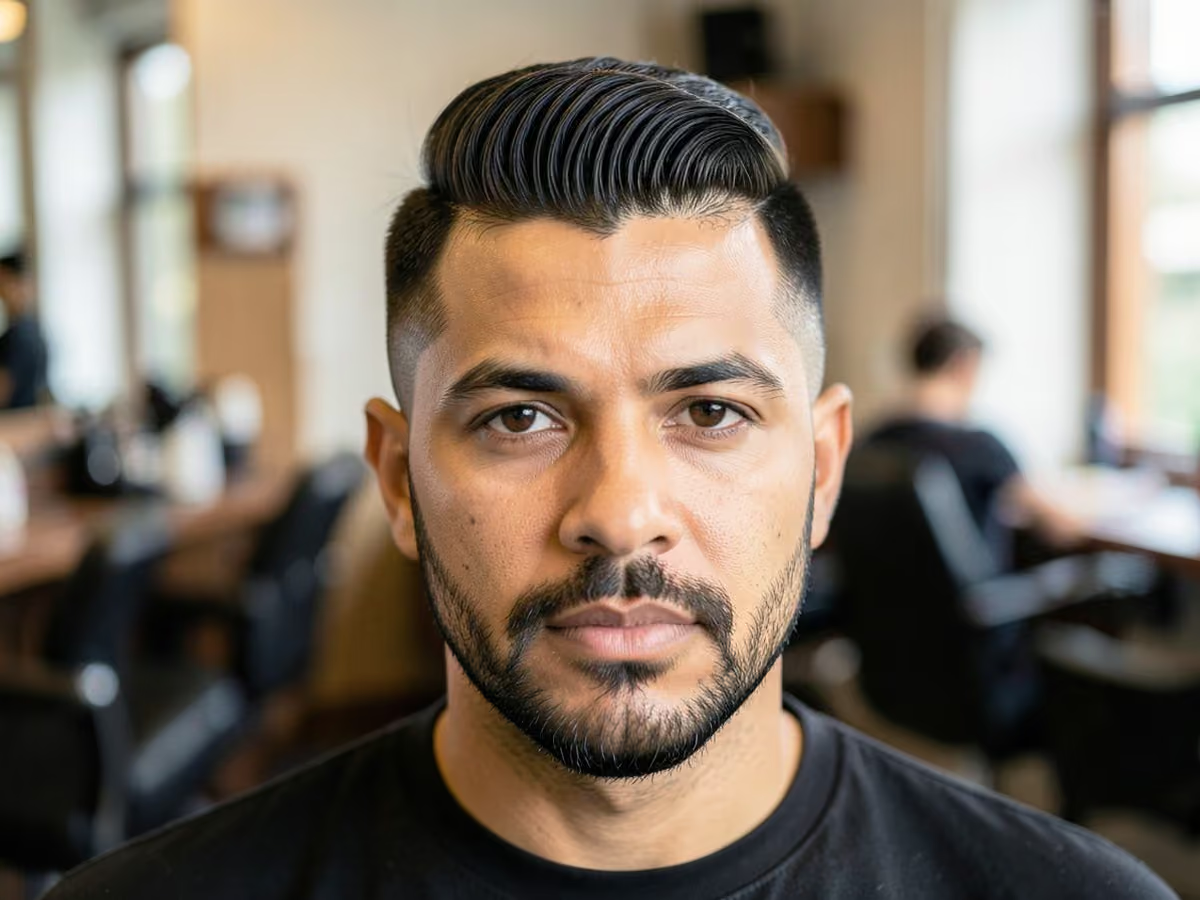
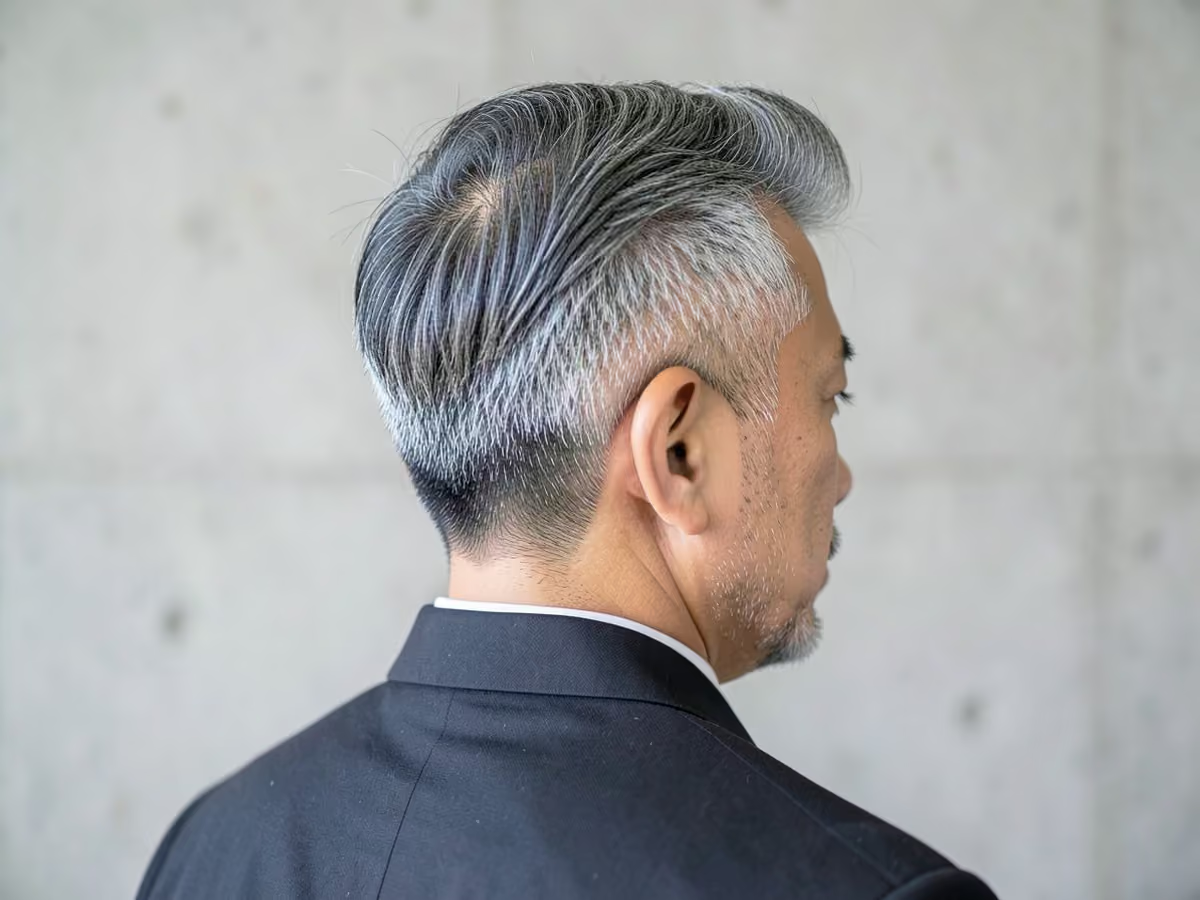
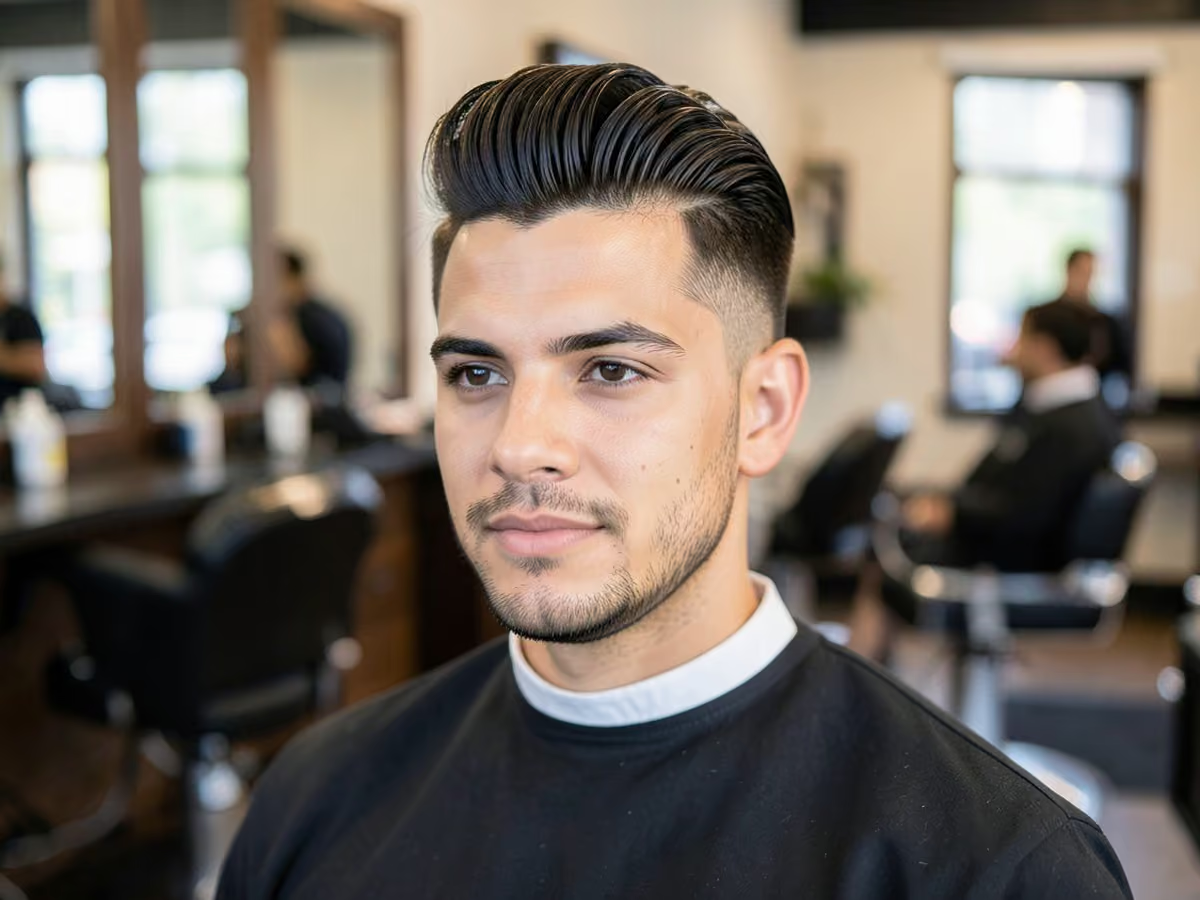
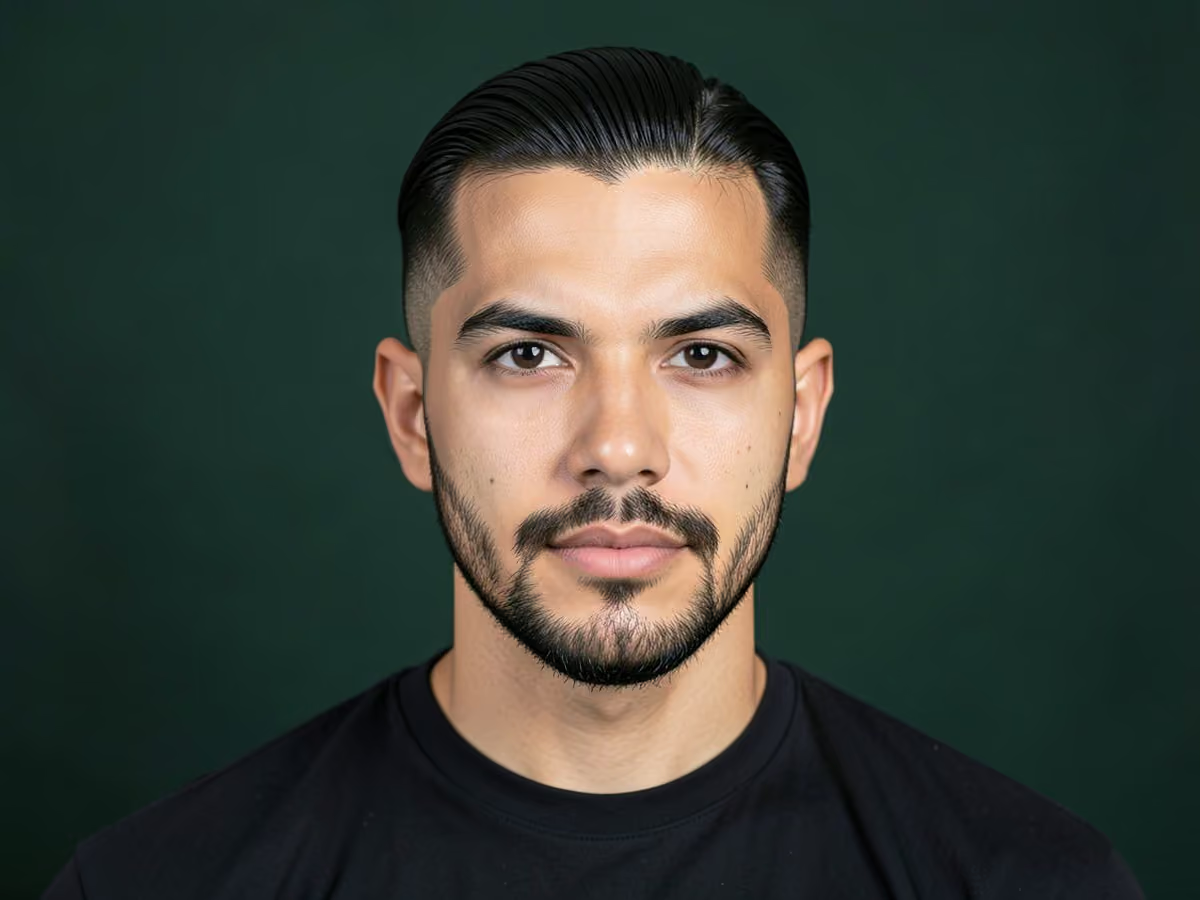
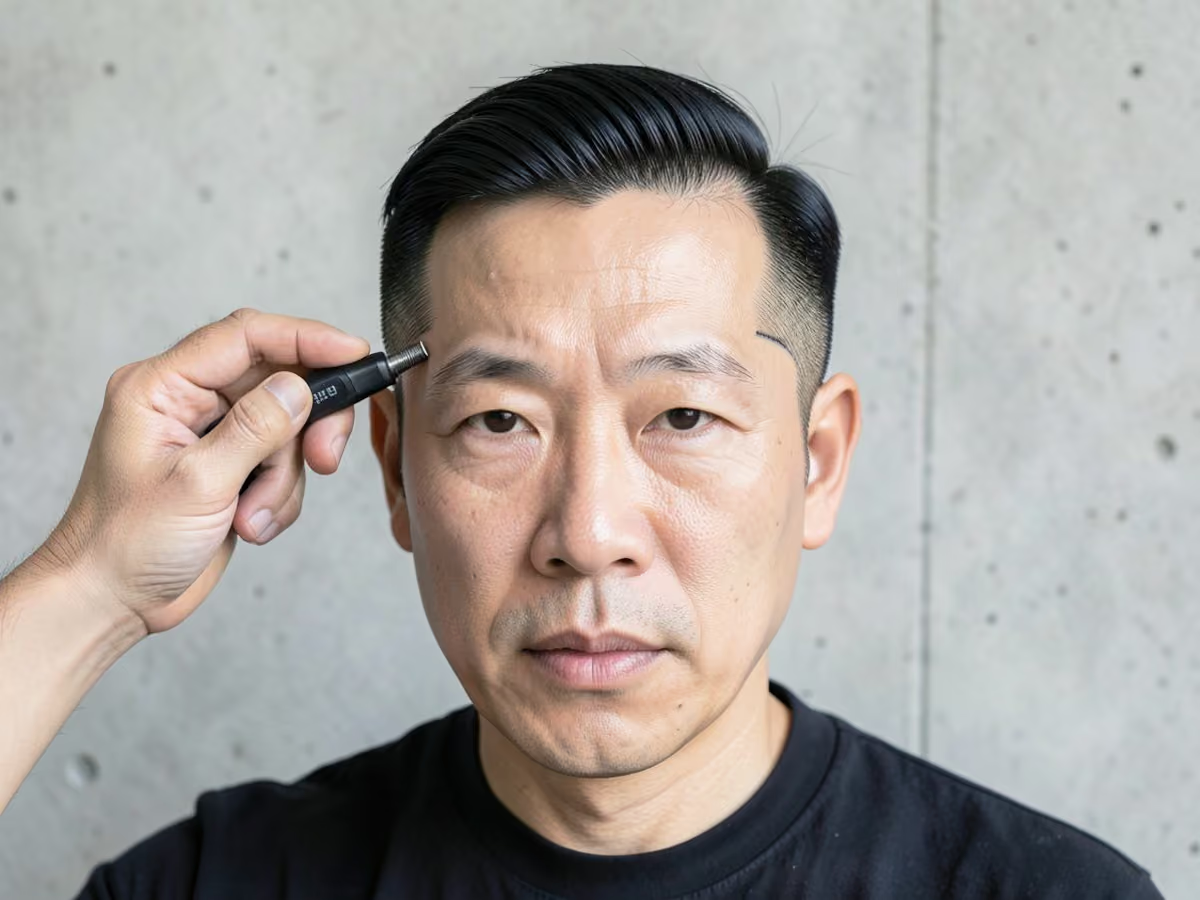
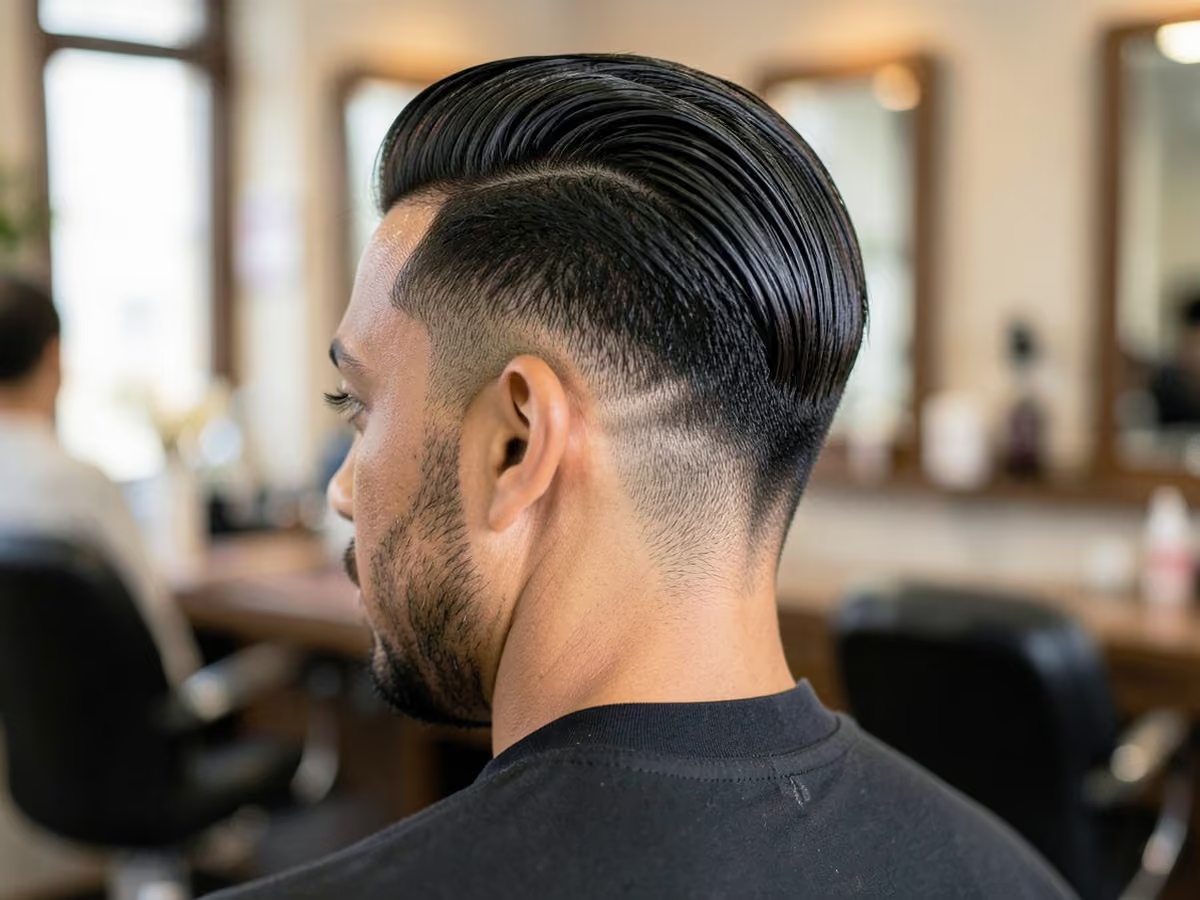
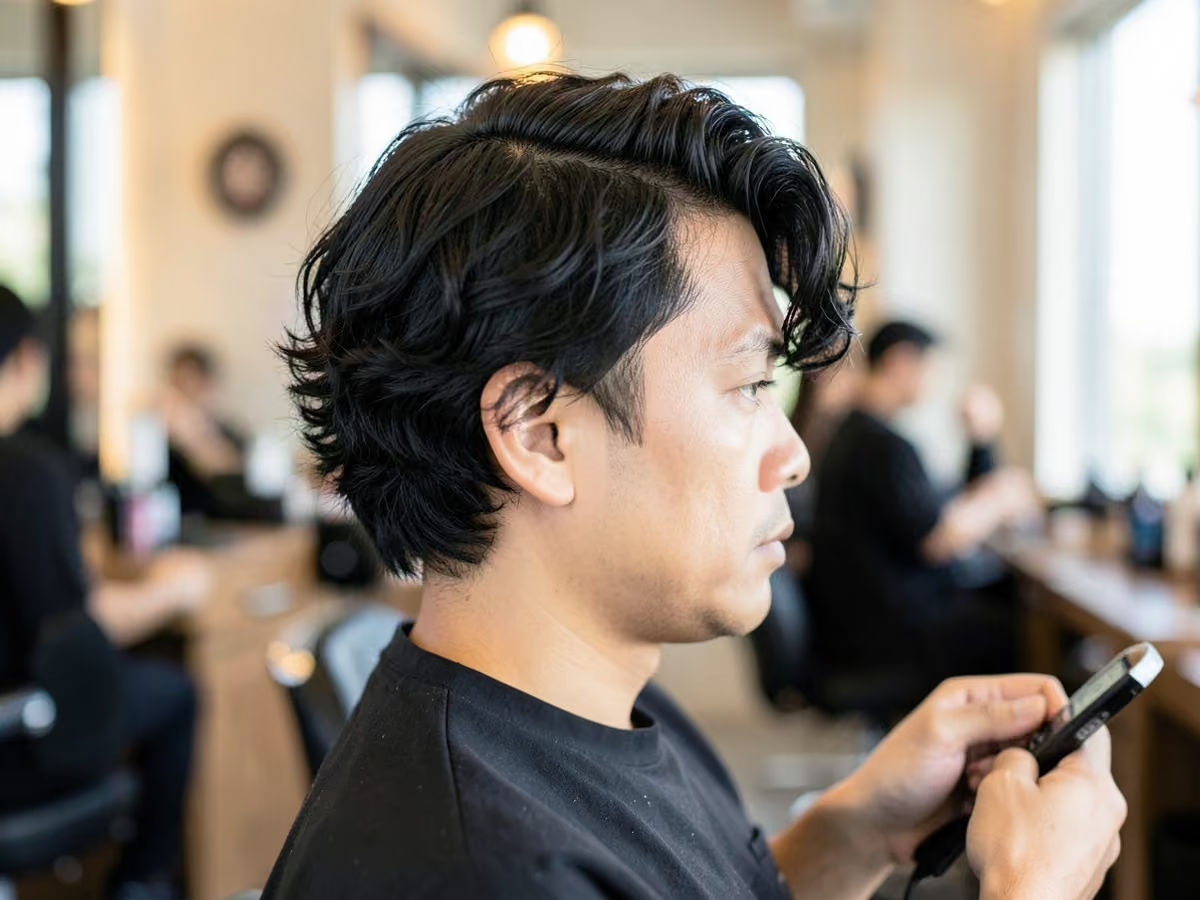
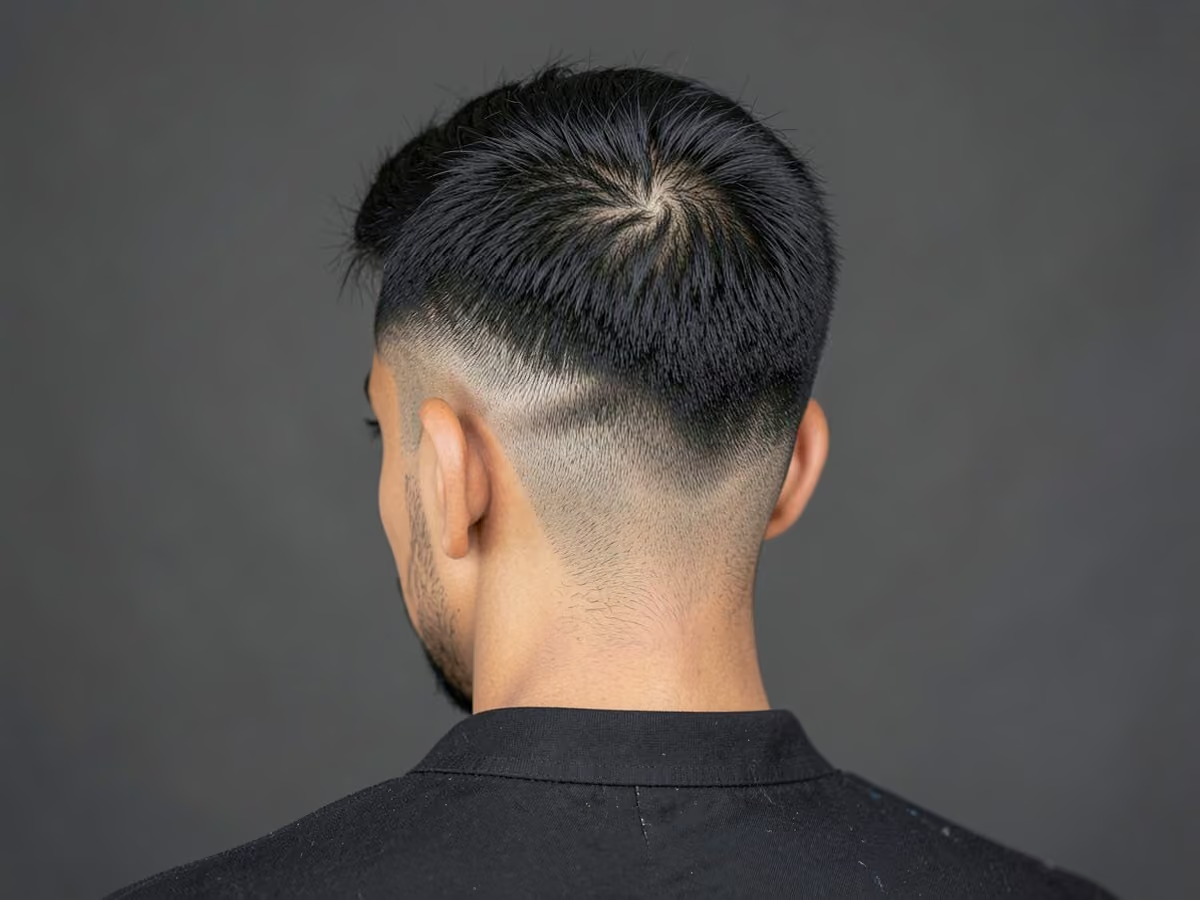
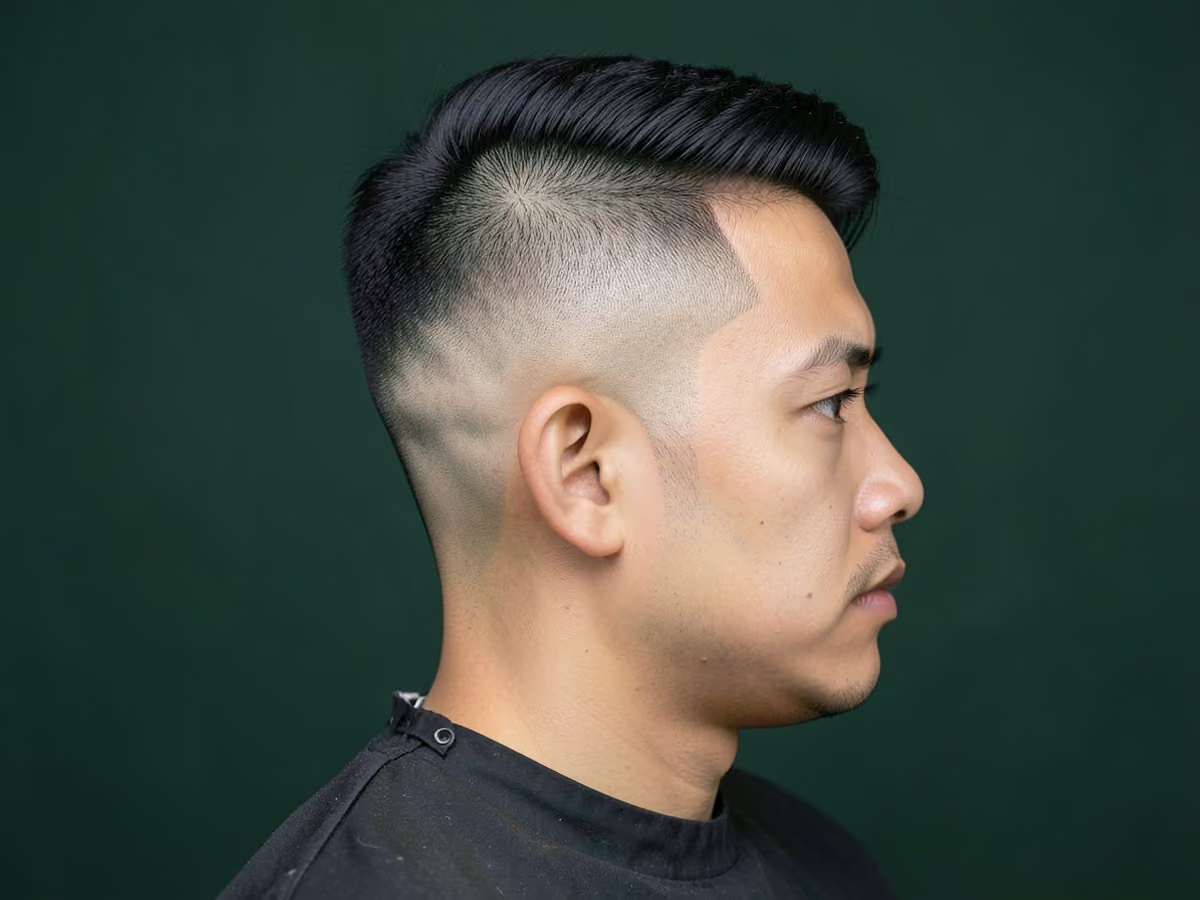
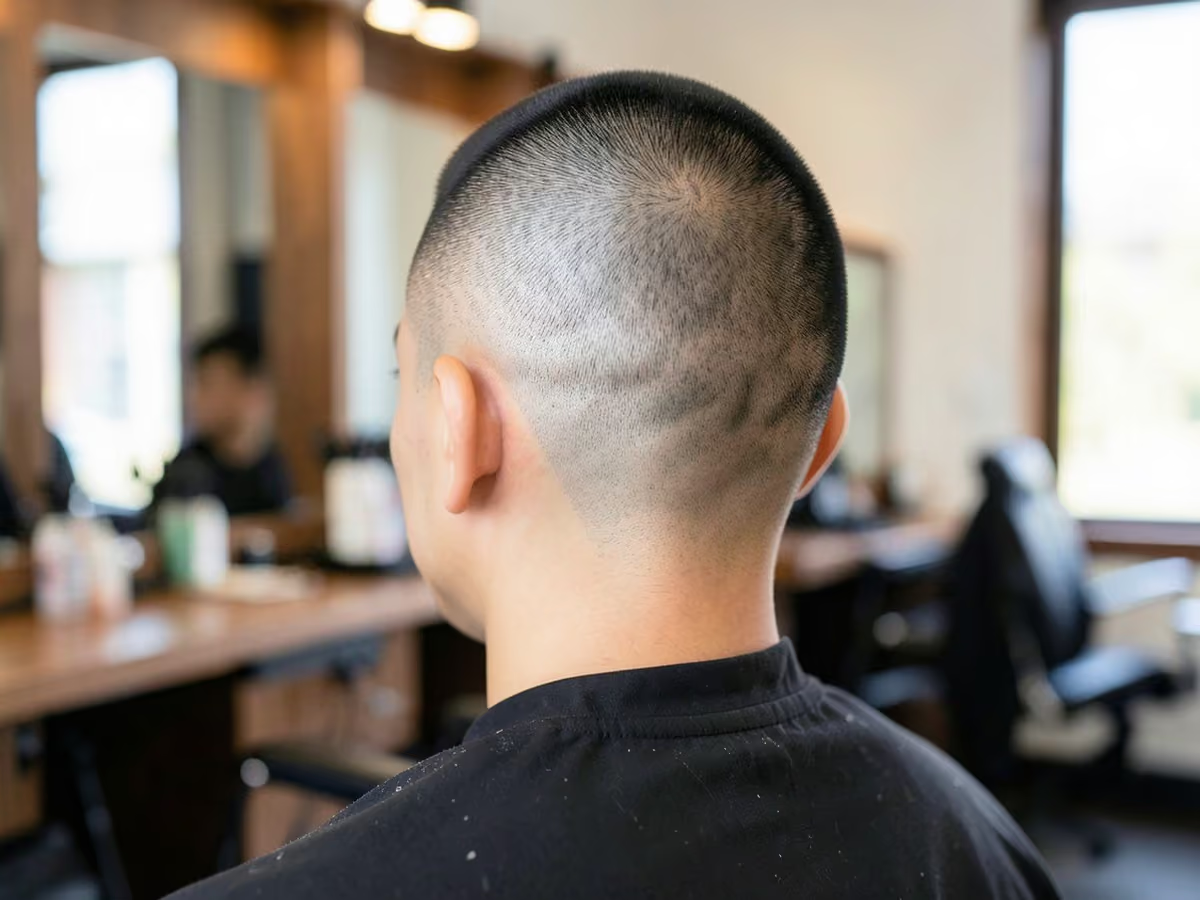
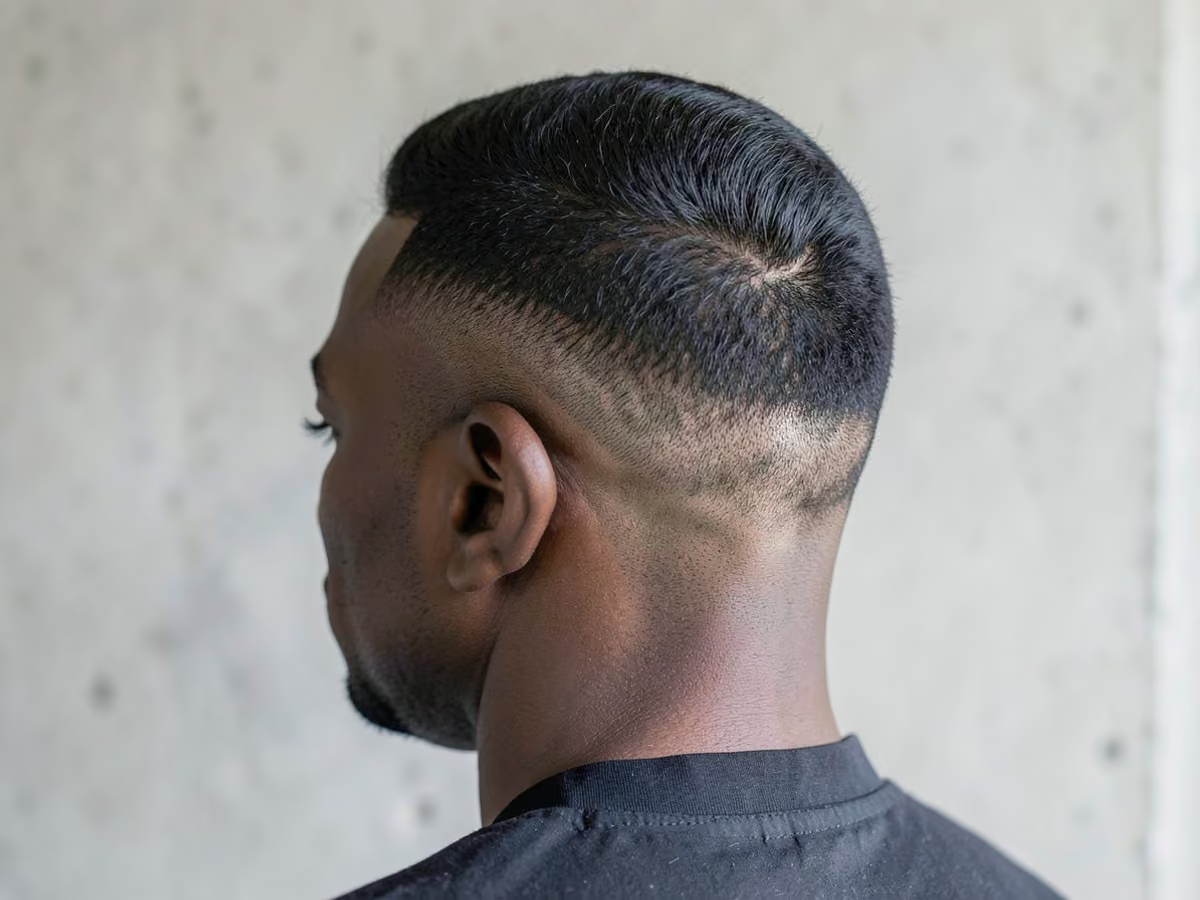
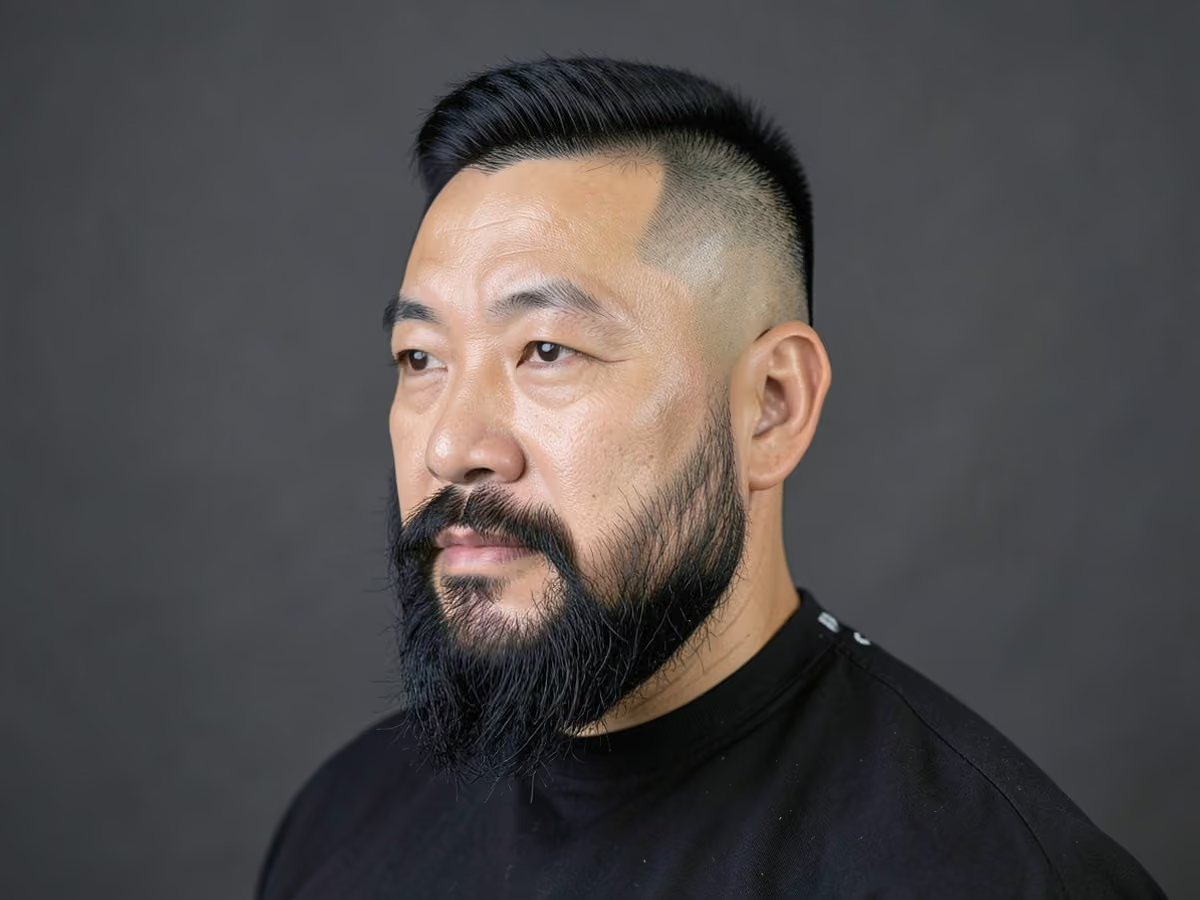
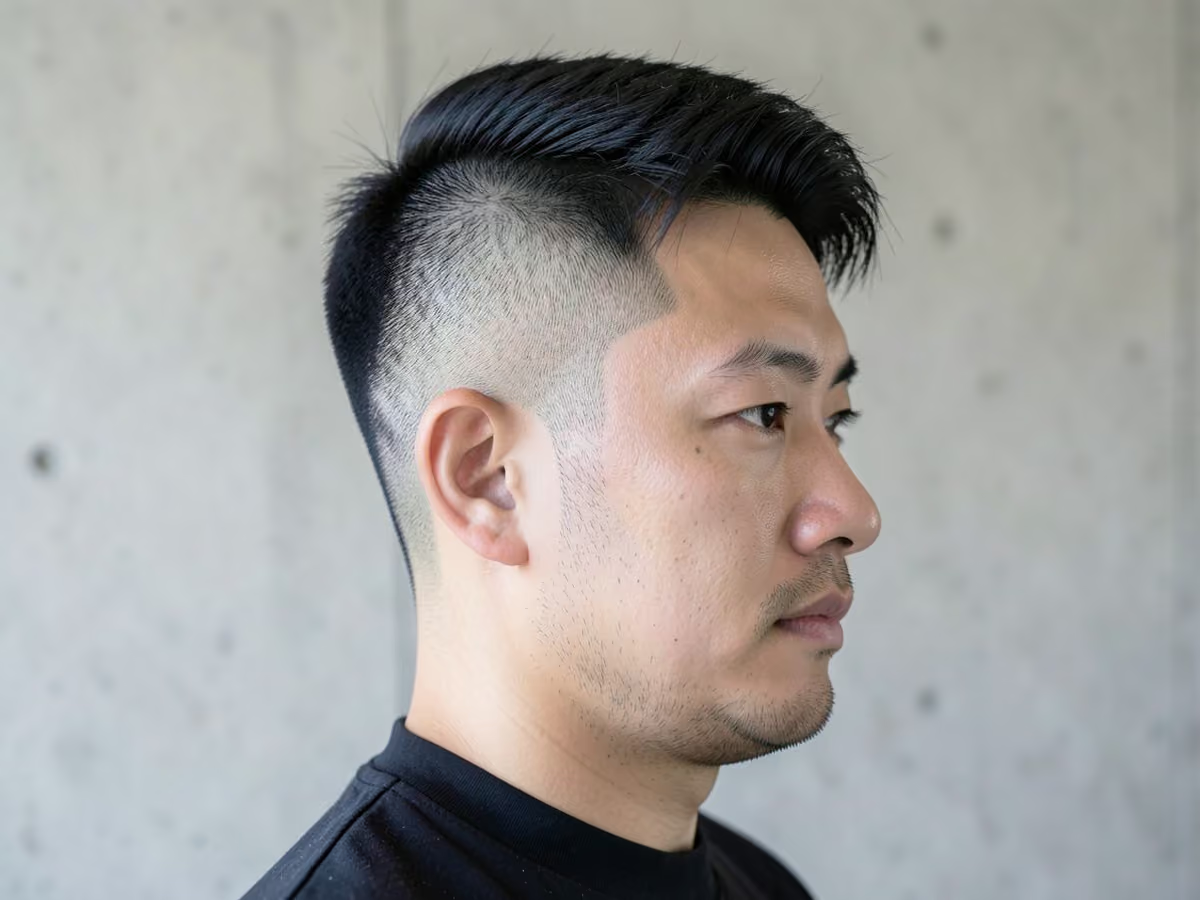
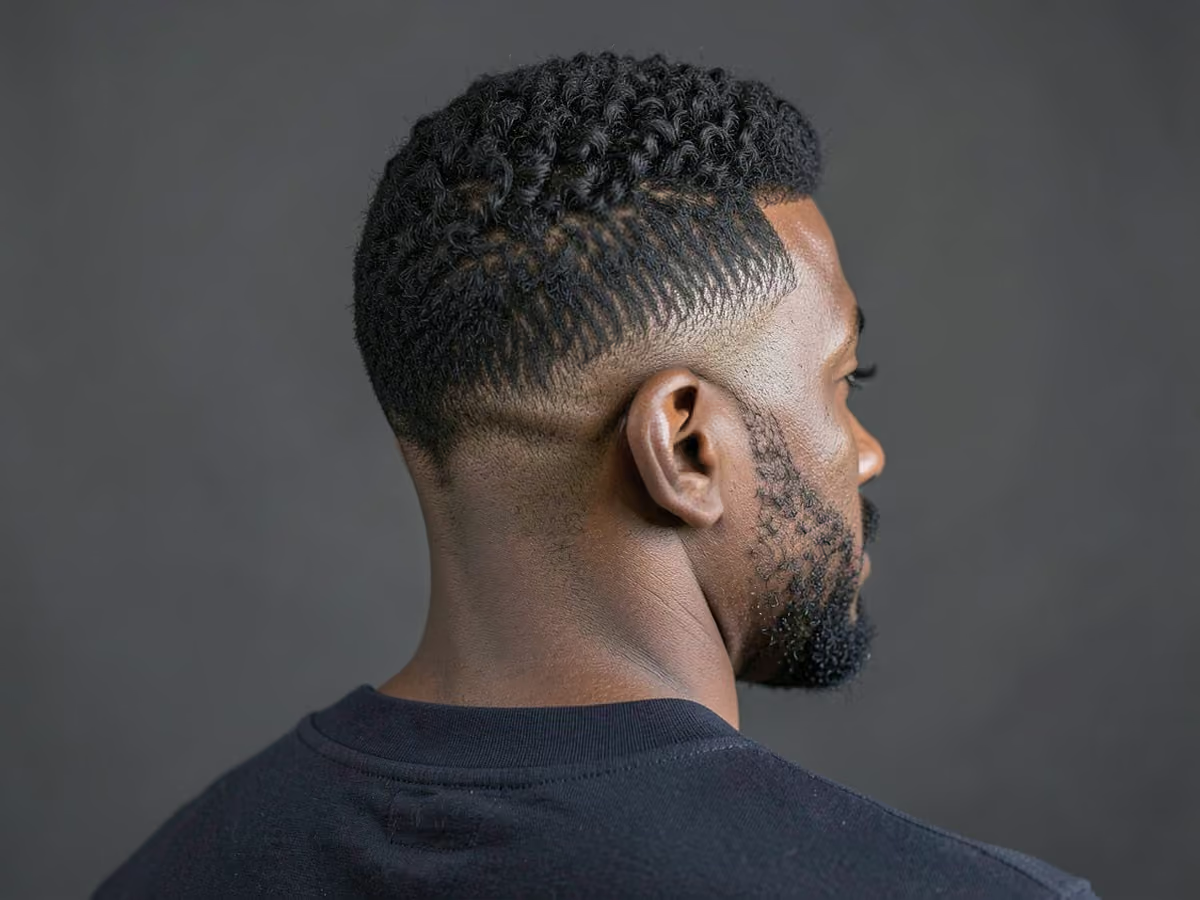
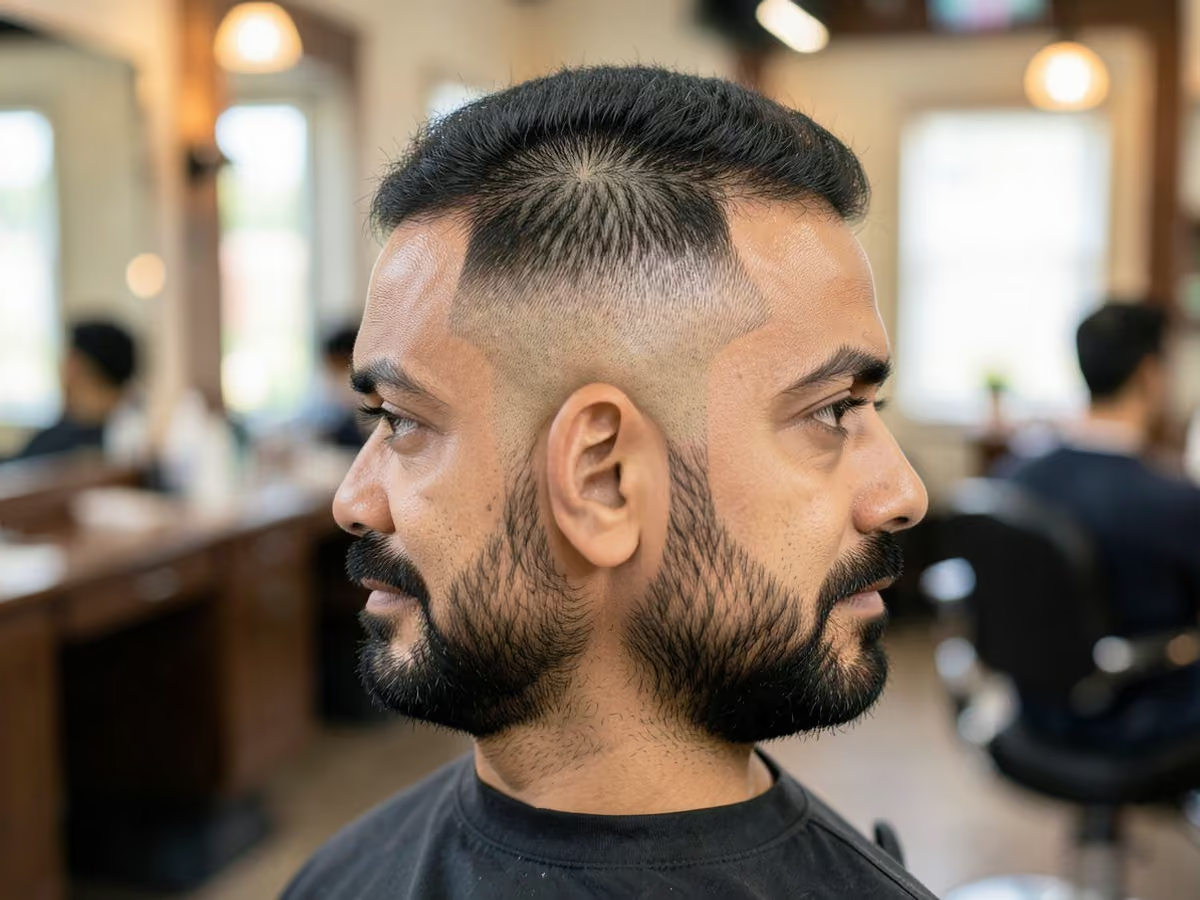
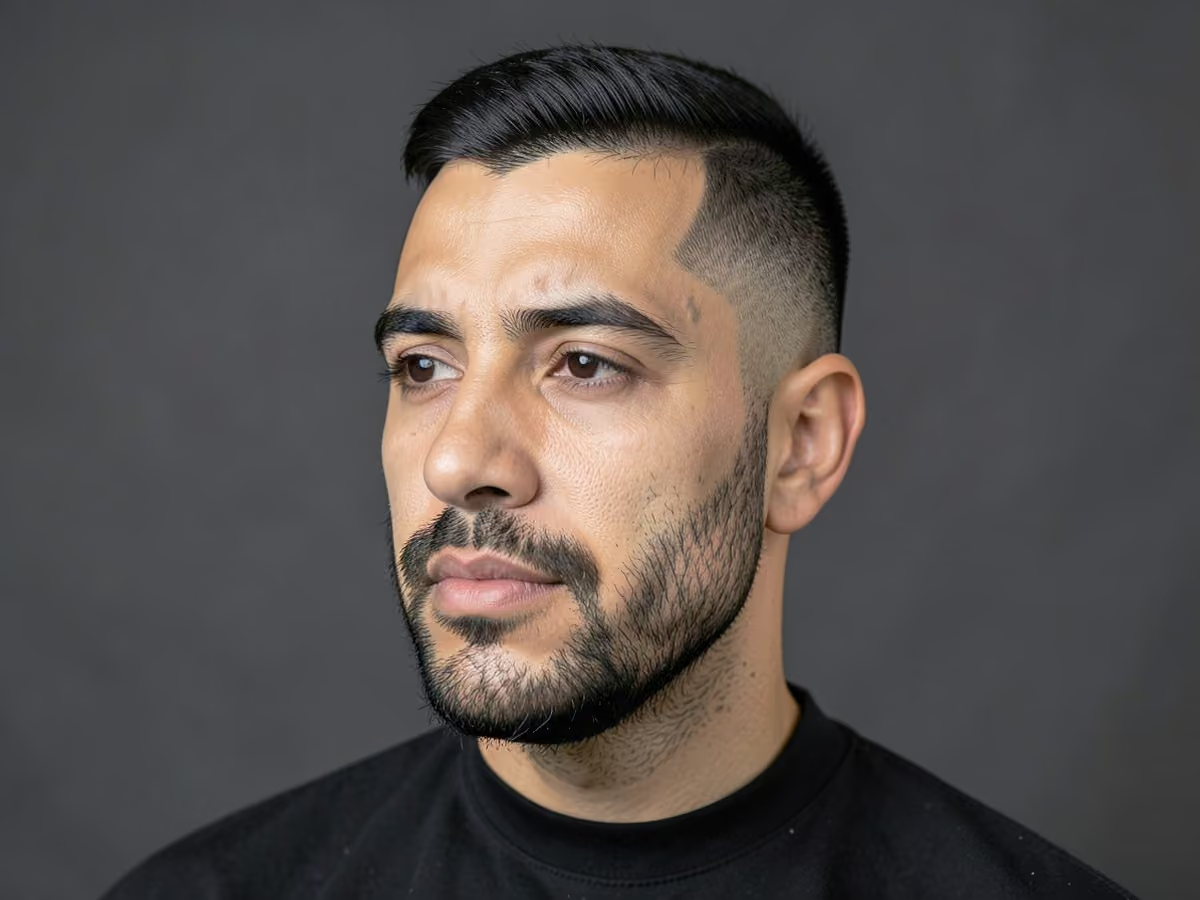
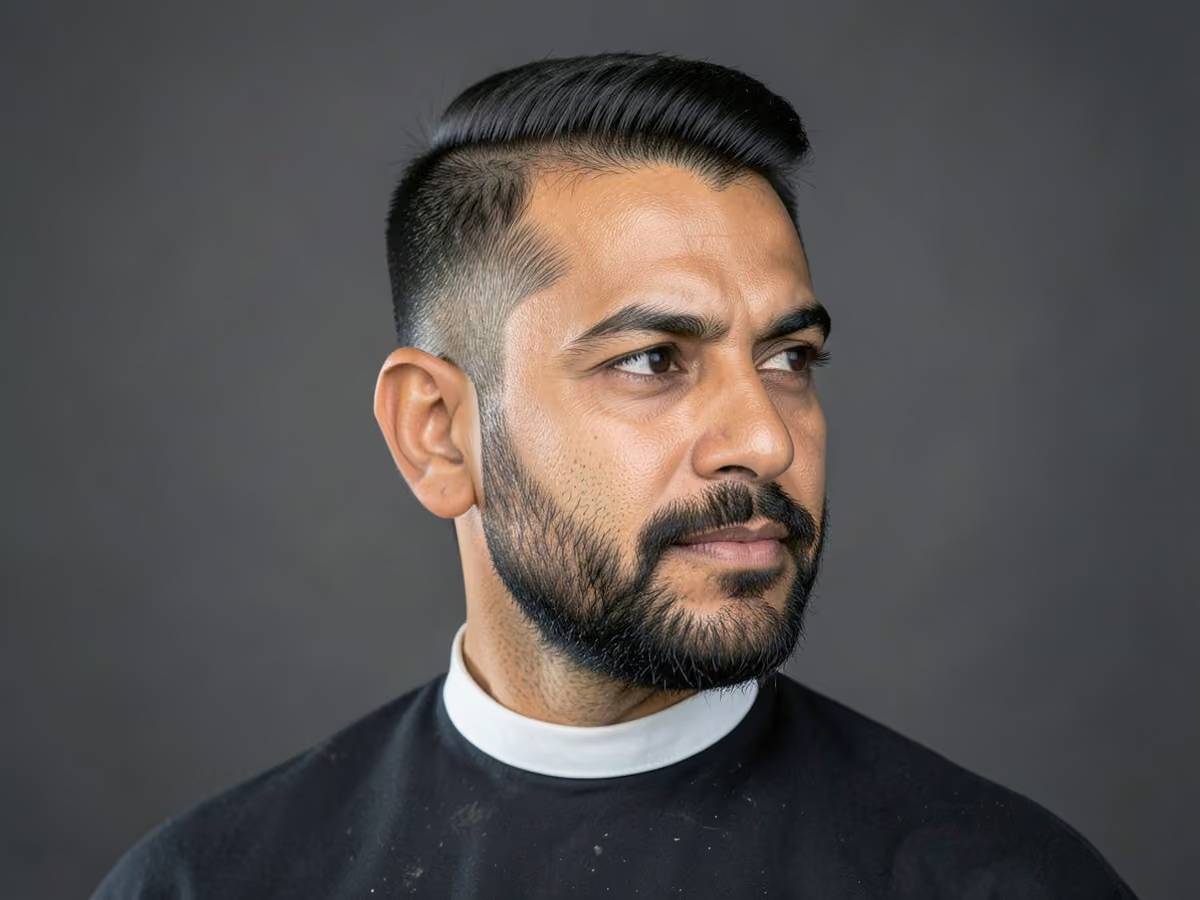
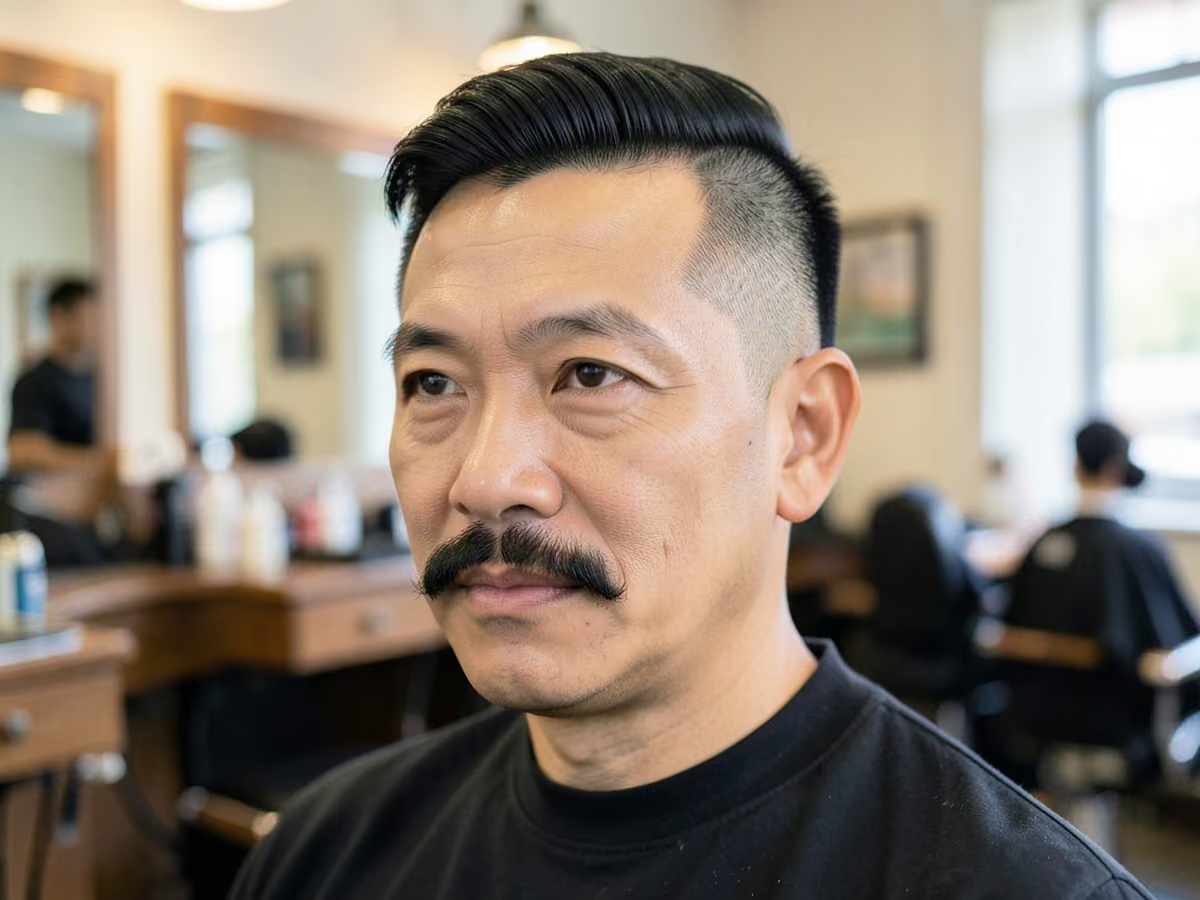
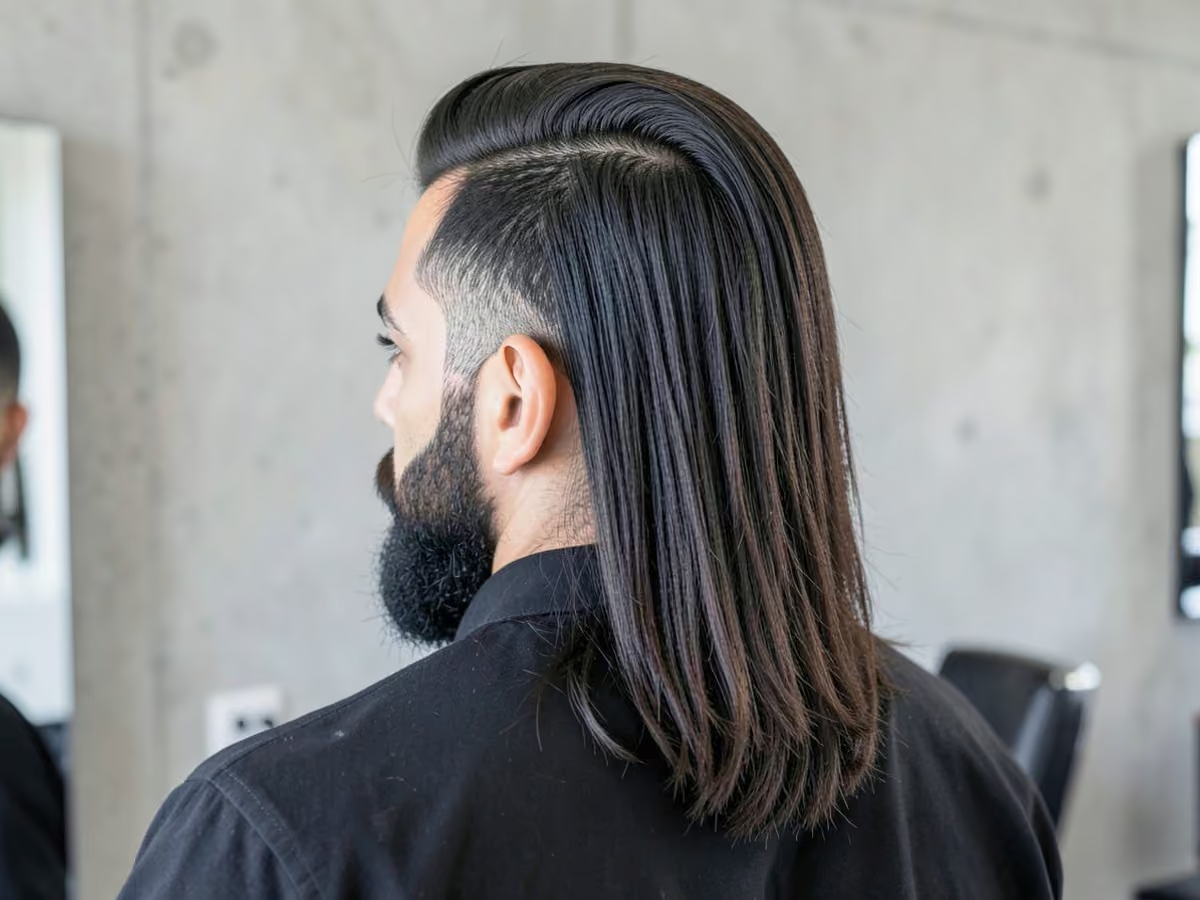
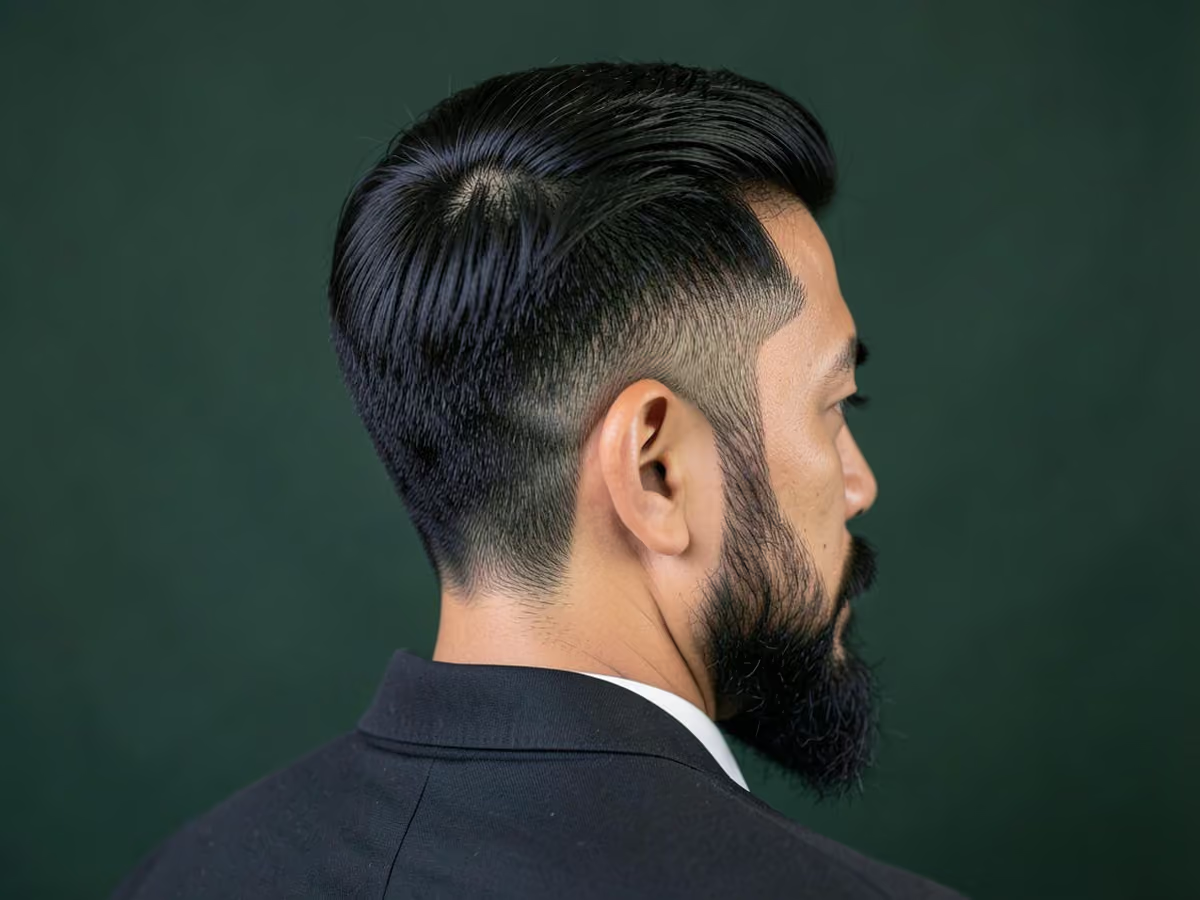
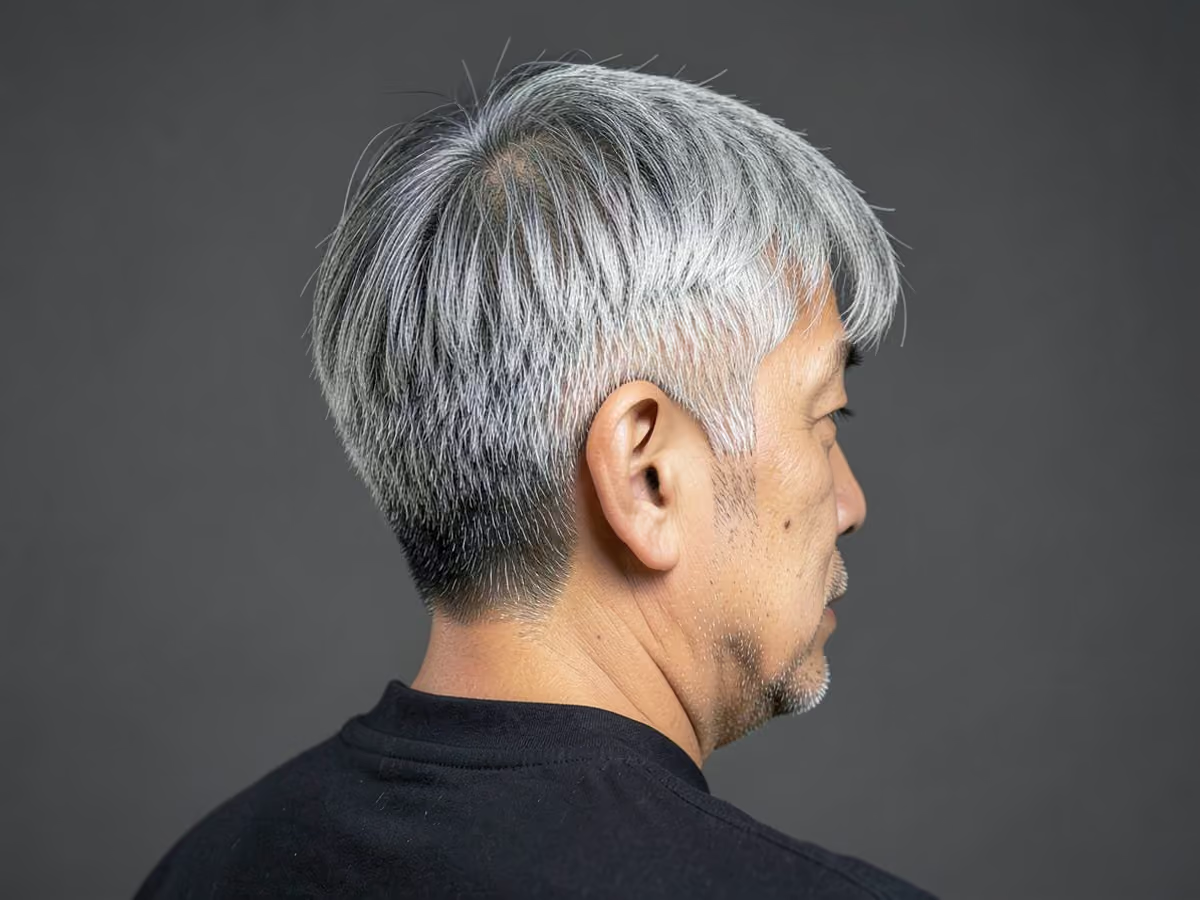
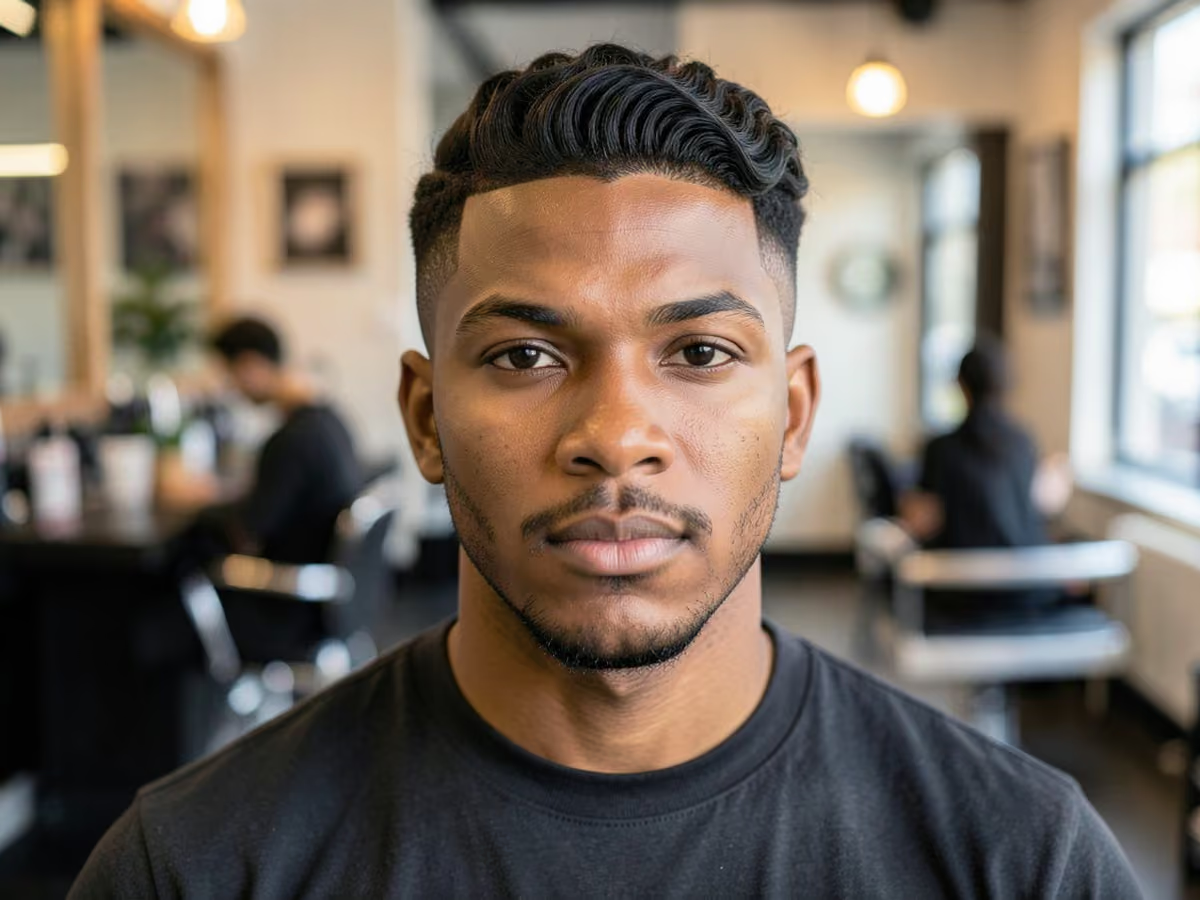
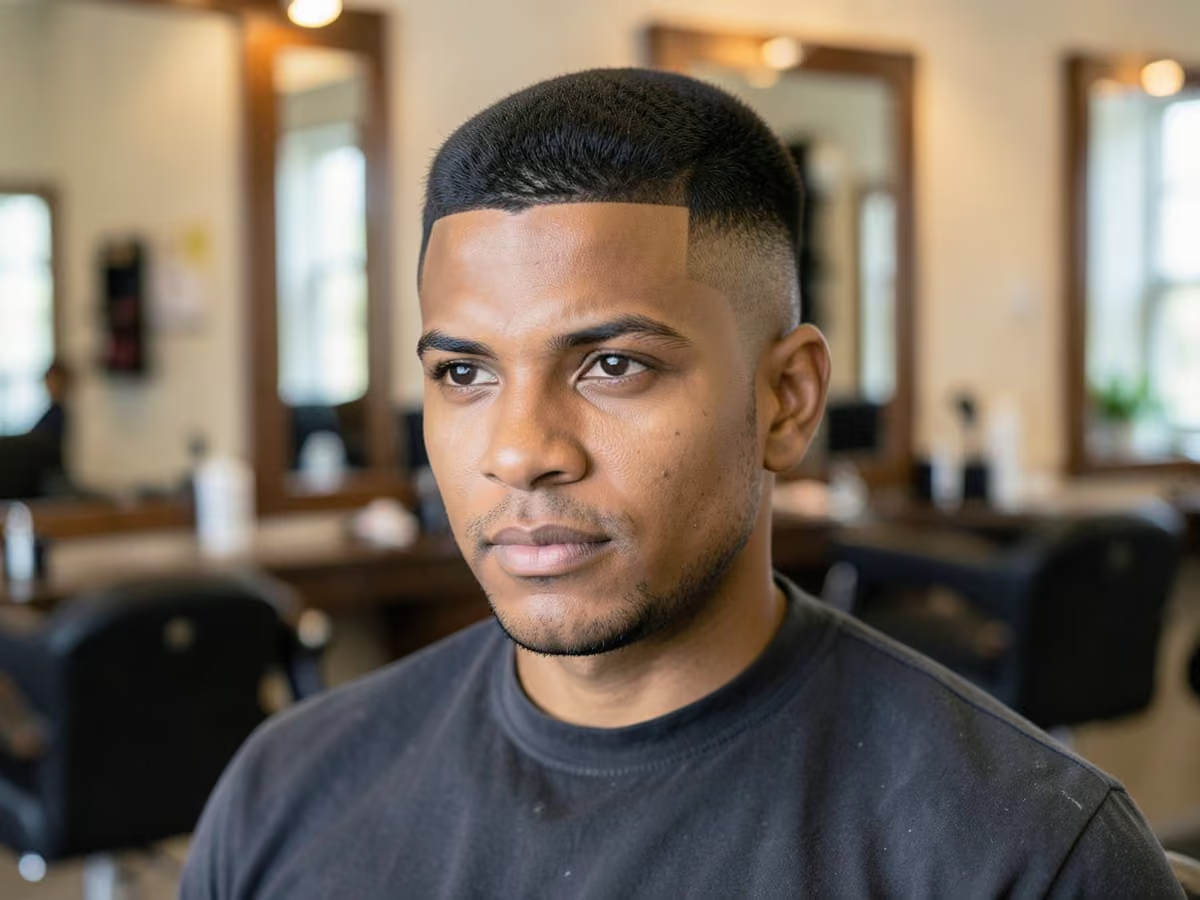
Quick answer: Frat haircuts are the clean, preppy cuts associated with US college fraternities: short tapered sides with a longer top worn in a side part, swoop, crew cut or Ivy League, plus longer flows that reach the collar. There is no single frat cut; the common thread is a neat, classic shape that needs little product.
Frat Haircut Styles at a Glance
Every style on this page with its clipper guard, top length and trim interval. Tap a name to jump to that card.
Frat haircuts are less a single style than a family of preppy, collegiate cuts: tidy sides, a top long enough to sweep or part, and a look that works at a formal event and a weekend game alike. Below are 39 versions grouped into short classics, longer flows, faded cuts, options by hair type and beard, and throwback trends, each with what to say in the chair.
What Is a Frat Haircut?
Frat haircut is an informal name for the preppy styles popular on US college campuses, particularly among fraternity members. Most versions combine short or tapered sides with a top of two to five inches that is swept to one side, parted, pushed back or left to flow. The look borrows from older collegiate cuts such as the Ivy League and the side part, and from sports culture, where lacrosse and hockey players often grow their hair to the collar.
Because the term is slang, barbers interpret it differently. One shop may hear frat and think of a short side part with a low taper; another may picture a longer swoop or a collar-length flow. Regional habits matter too, since campus styles in the Northeast lean toward classic parts while sunnier campuses favor longer, looser hair. Naming the top length, the side length and how you style it each morning will get you closer than naming the category.
How Does a Frat Haircut Differ from an Ivy League or Bro Flow?
The Ivy League is one specific cut: short tapered sides, a top of one to two inches that is longer at the front and parted to one side. Many frat cuts are Ivy League variations, but the frat label also covers longer tops. The bro flow is the long end of the family, with hair swept back from the face and grown to the ears or collar, and it needs months of growth rather than one visit.
In between sit the swoop and the curtains, which keep the sides tidy and the top long enough to sweep across or part in the middle. These middle lengths are the most flexible, since they can be cut shorter into a side part or left to grow toward a flow. The table below compares the main options by top length, side length and the time each one takes to style in the morning.
How Does a Frat Haircut Differ from an Ivy League or Bro Flow?
Most of these cuts suit oval, square and oblong faces because they add a little height or sweep at the front without width at the sides. Round faces do best with shorter sides and some lift, such as a quiff or swoop. Long faces suit a side part or curtains that bring hair across the forehead. Straight and wavy hair are the easiest textures for the longer flows, while curly and coily hair suit tighter versions with a defined top.
Students and recent graduates like these cuts because they move between class, interviews and events without restyling, and most need only one product. If you need a cut for a first job, see our guide to haircuts for job interviews, which overlaps closely with the shorter styles below. Athletes who wear helmets should lean toward the shorter cuts, or toward a flow long enough to tuck under the helmet.
Filter the styles
Showing all 39 styles
Fade
Hair
Length
Classic Short Frat Haircuts
These eight short cuts are the preppy basics: tidy sides, a top of one to three inches and a neat finish that takes a few minutes. Several build on cuts with their own guides, such as the crew cut and comb over.
Trim:Every 3–4 weeks. The taper keeps the shape for a month.
Best For:Oval, oblong faces + straight or wavy hair.
About This Style
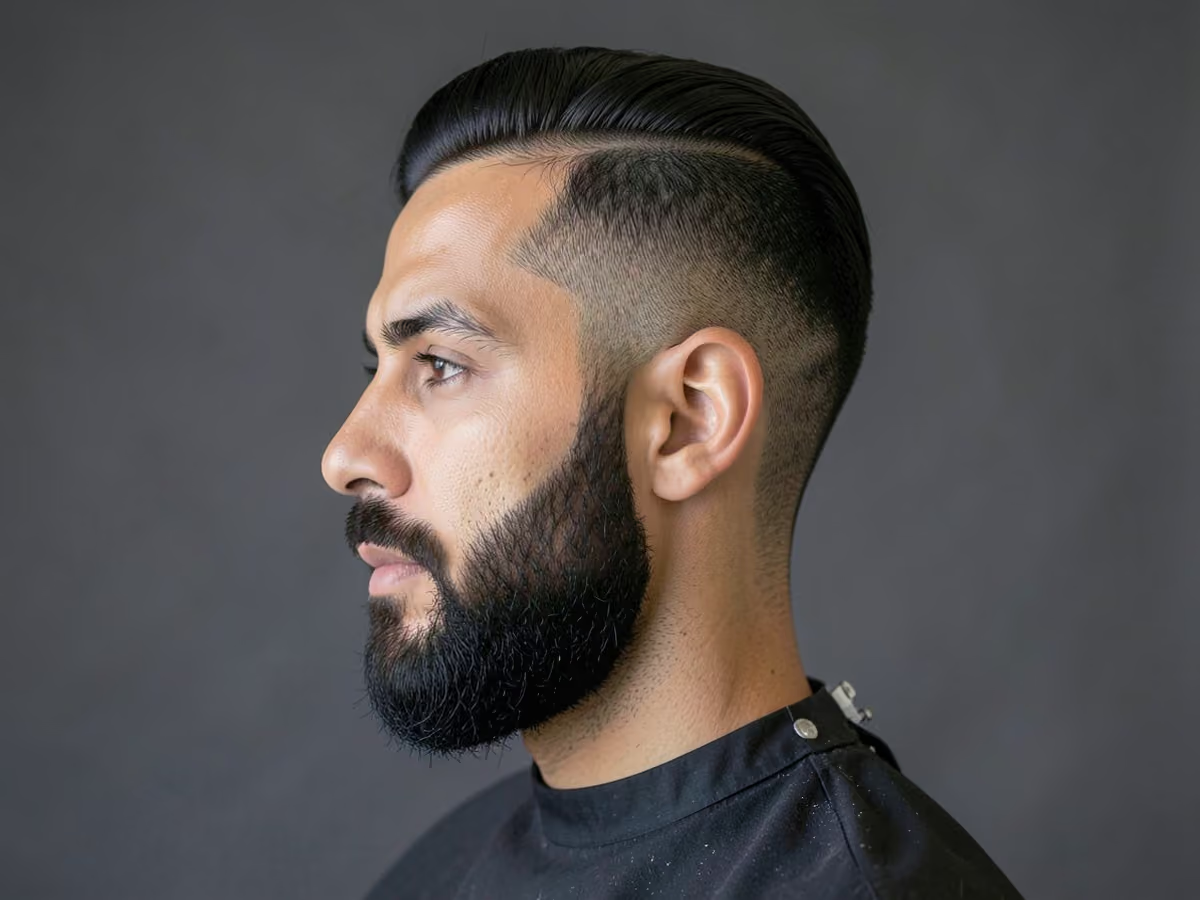
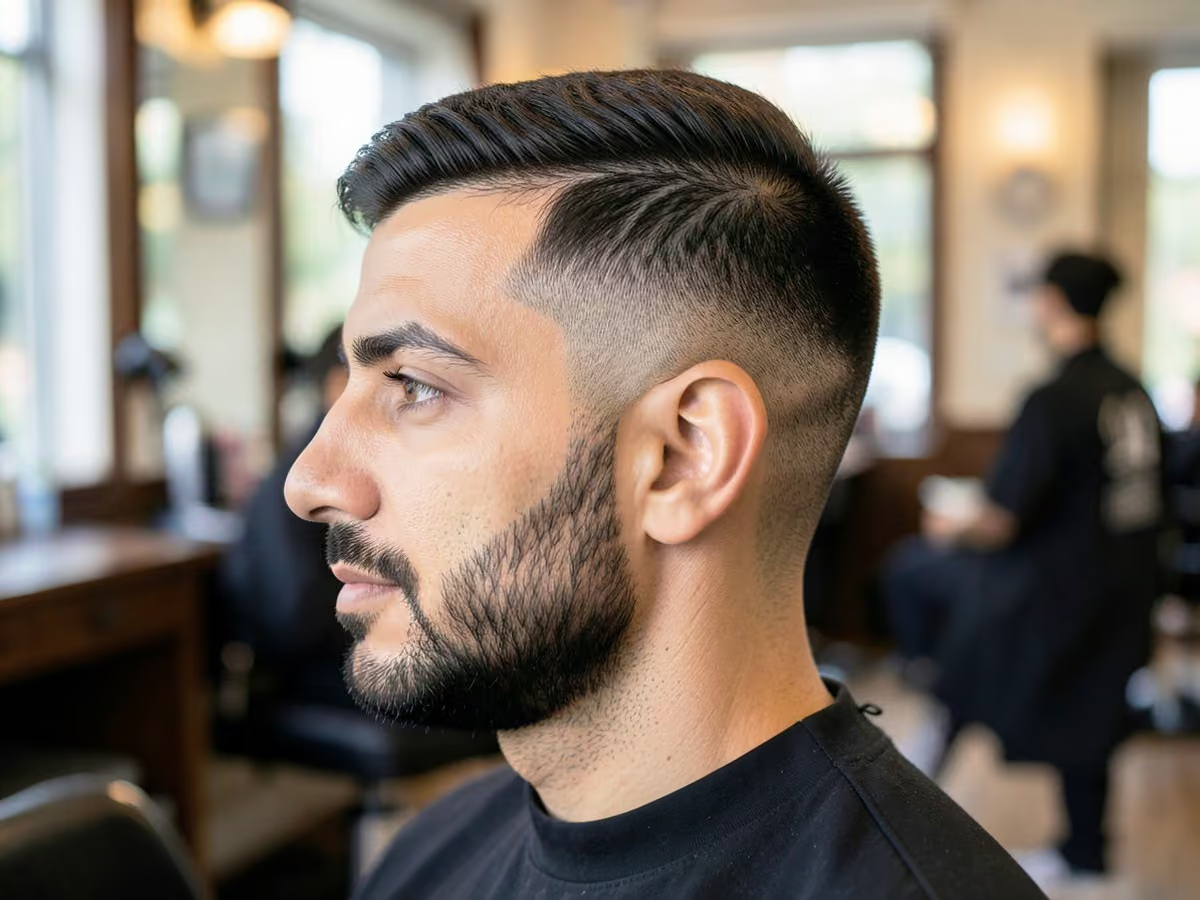
A top of two to three inches, combed to one side from a natural part, sits over a low taper that starts with a #2. The part is soft rather than shaved, so it looks natural from day one to week four. It is the default preppy cut for formal events and interviews, and it suits straight hair that lies flat with a little light pomade.
How to Style at Home
Comb the top to one side from your natural part while it is damp.
Work a pea-size amount of light pomade through for soft hold.
Smooth the sides down with your palm to finish.
Ask Your Barber
"Side part with a low taper from a #2 on the sides. Leave about two and a half inches on top, natural part on the left, no shaved line."
Trim:Every 3–4 weeks. Short all over, so it grows out evenly.
Best For:Oval, square faces + straight, thick or coarse hair.
About This Style
A crew cut keeps about an inch at the front, grading shorter toward the crown, with the sides at a #2 or #3. The front can be brushed up or to the side in seconds. It is the low-effort choice for athletes and anyone who rolls out of bed and into class. Square faces suit it best because the short length shows the jawline.
How to Style at Home
Rub a pinch of texture powder into dry hair at the front.
Push the front up or slightly sideways with your fingertips.
Leave the rest unstyled; the length holds its shape.
Ask Your Barber
"Crew cut with a #3 on the sides tapered to a #2, about an inch at the front grading shorter toward the crown."
Trim:Every 3 weeks. The top gets heavy and falls forward.
Best For:Round, oval faces + thick straight hair.
About This Style
Three to four inches on top, combed over to one side with a little lift at the front, gives more volume than the side part. The sides drop to a #1 with a low fade, which sharpens the contrast. Round faces benefit from the lift at the front. Expect to use a comb and a blow-dryer for a couple of minutes each morning.
How to Style at Home
Blow-dry the front up and over to one side using a comb.
Work a small amount of pomade through for hold with light shine.
Comb the top into place and leave the front slightly lifted.
Ask Your Barber
"Comb over with a low fade from a #1 on the sides. Leave three and a half inches on top, longer at the front for lift, combed to the right."
Trim:Every 3–4 weeks. Short length keeps its shape well.
Best For:Oval, square faces + straight, wavy or fine hair.
About This Style
Adapted from the classic campus cut, this version keeps roughly one and a half inches at the front, shorter toward the crown, with a soft part and tapered sides. The front can be pushed to one side or slightly up. Fine hair works well at this length because there is not enough weight to collapse. For the full history and variations, see our Ivy League guide.
How to Style at Home
Apply a small amount of matte cream to towel-dried hair.
Push the front to the side with your fingers, keeping it loose.
Tidy the part with a comb if you want a neater finish.
Ask Your Barber
"Ivy League cut, tapered sides from a #2 to a #3, about an inch and a half at the front, shorter at the crown, soft part on the left."
Trim:Every 3 weeks. The front loses lift as it grows heavy.
Best For:Round, square faces + thick straight or wavy hair.
About This Style
Three inches at the front, lifted up and back, gives height that lengthens round and square faces, while short tapered sides keep the look tidy. It reads a little dressier than the crew cut and a little more relaxed than a pompadour. Thick hair holds the lift without much product. A short blow-dry each morning sets the shape. See our quiff styles for more.
How to Style at Home
Blow-dry the front upward with a round brush.
Lift through the roots with a little matte clay.
Push the front back with your fingers, leaving some texture.
Ask Your Barber
"Quiff with a low taper on the sides from a #2. Leave three inches at the front, tapering shorter toward the crown."
Trim:Every 3–4 weeks. The front loses height as the sides grow.
Best For:Round, oval faces + thick straight or wavy hair.
About This Style
Four inches at the front, blow-dried up and rolled back, give this cut more height than the quiff. Sides are scissor-cut or clipped with a #3 so they stay soft rather than faded, which keeps it on the preppy side of a rockabilly pompadour. Expect five minutes with a dryer most mornings. On a round face, the height at the front adds length and narrows the outline.
How to Style at Home
Blow-dry the front up and back with a round brush.
Warm a little pomade in your palms and smooth it through.
Comb the sides back to meet the roll at the crown.
Ask Your Barber
"Pompadour with four inches at the front tapering to two at the crown, sides at a #3 or scissor-cut, no fade and no hard part."
Trim:Every 4 weeks. Longer sides begin to puff out over the ears.
Best For:Oval, square faces + straight or slightly wavy hair.
About This Style
Combed straight back with a soft shine, three to four inches on top meet sides kept at a #3 or #4, so the shape reads like a formal-event cut rather than a gangster look. Most guys wear it for chapter formals and graduation photos, then let it fall forward on weekends. Straight hair takes the comb lines best; wavy hair gives a looser, more relaxed finish.
How to Style at Home
Apply light pomade to damp hair from roots to ends.
Comb everything straight back with a wide-tooth comb.
Leave it to air-dry so the comb lines stay visible.
Ask Your Barber
"Three to four inches on top for a slick back, sides at a #3 tapered at the neck, and keep the weight even so it lies flat when combed back."
Trim:Every 2–3 weeks. The shaved line blurs after ten days.
Best For:Oval, oblong faces + straight or thick hair.
About This Style
Adding a shaved line along the natural part turns a frat side part into something sharper. The barber trims a thin line with a trimmer, usually on the left, with two to three inches on top combed away from it and a low taper below. It photographs well at events, but the line blurs within ten days, so it needs more visits than a soft part.
How to Style at Home
Comb the top away from the shaved line while damp.
Use a matte cream so the hair does not slip over the part.
Brush the sides flat toward the taper.
Ask Your Barber
"Hard part on my natural parting, a thin trimmer line, two to three inches on top combed over, and a low taper from a #2 on the sides."
Recommended Products
Matte Cream
Longer Frat Flows and Swoops
Longer frat styles keep hair at three inches or more and let it sweep, part or flow. These eight range from a blow-dried swoop to a collar-length flow; the bro flow guide covers growing out the longest version.
Trim:Every 6–8 weeks. Only the neckline and ears need shaping.
Best For:Oval, square faces + thick straight or wavy hair.
About This Style
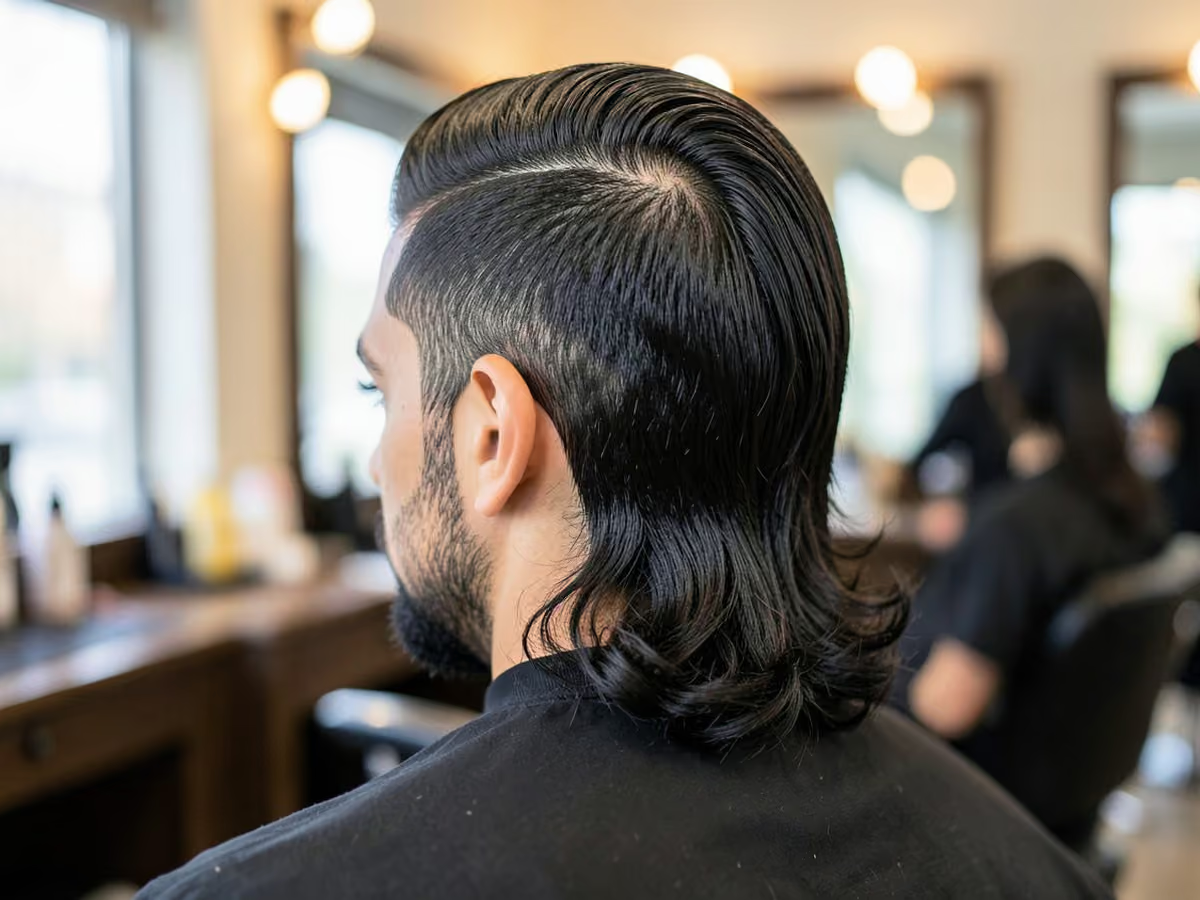
Hair grown to the ears and collar, swept back from the face, with the ends left to flip or wave, defines the cut. The barber removes bulk and shapes around the ears so it does not look shaggy. Growing it takes six months or more from a short cut. Once grown, it needs only a little cream after washing and a trim every couple of months.
How to Style at Home
Apply a small amount of styling cream to damp hair.
Push the hair back from your face with your fingers.
Let it air-dry so the ends flip naturally.
Ask Your Barber
"Keep my length. Clean up the neckline and around the ears, remove some bulk so it lies back, and leave the ends textured, not blunt."
Trim:Every 4 weeks. The sweep loses its curve as it lengthens.
Best For:Oval, round faces + straight or wavy hair.
About This Style
Four to five inches at the front, blow-dried across and slightly up in one smooth curve, falls toward one temple. The sides are tapered short to keep focus on the sweep. Round faces benefit from the diagonal line, which breaks up width. Barbers describe it as a commonly requested preppy looks and takes about five minutes to style with a dryer.
How to Style at Home
Blow-dry the front across to one side with a round brush.
Work light pomade or cream through to hold the curve.
Finish by sweeping the front with your fingers for a softer edge.
Ask Your Barber
"Short taper on the sides, leave five inches at the front and four at the crown so I can sweep it across to the left in one curve."
Trim:Every 4–6 weeks. The middle part needs reshaping.
Best For:Oval, long faces + straight or wavy hair.
About This Style
Parted in the center with the front falling to each side like drawn curtains, this cut frames the face and shortens a long forehead. The sides are kept at medium length or lightly tapered rather than faded. Straight and wavy hair fall into place best. It recalls the 1990s version of the cut, though most current takes are softer and textured. Our curtains haircut guide has more variations.
How to Style at Home
Part the hair in the middle while it is damp.
Blow-dry each side away from the part with a round brush.
Add a little sea salt spray for texture if it falls flat.
Ask Your Barber
"Curtains with a middle part, front about five inches so it falls to each side, light taper on the sides, keep weight at the temples."
Trim:Every 6–8 weeks. Trim the ends to keep the flip.
Best For:Oval, square faces + thick wavy or straight hair.
About This Style
Popular with lacrosse players, this flow is grown long enough to curl out from under a helmet at the back, often to the collar or just past it. The front is pushed back and the sides left long behind the ears. Thick wavy hair gives the signature flip at the ends. It can look scruffy without the occasional trim to the ends and around the ears.
How to Style at Home
Spray sea salt into damp hair to add grip.
Rough-dry by hand, pushing the hair back away from your face.
Tuck the sides behind your ears and let the back flip out.
Ask Your Barber
"Keep the length to the collar, trim the ends so the back flips out, tidy around the ears and remove bulk on top."
Best For:Oval, oblong faces + naturally wavy hair.
About This Style
Natural waves at ear length do most of the work, with the barber cutting layers so the waves sit evenly instead of bunching at the sides. The front is swept back or to one side. It is an easy option for men with wavy hair who want a preppy look without daily heat styling. Moisture keeps the waves defined. See our wavy hair styles for more.
How to Style at Home
Apply a light leave-in to damp hair and scrunch gently.
Let the waves air-dry fully without brushing or touching them.
Push the front back with a little styling cream once dry.
Ask Your Barber
"Ear-length wavy cut with layers so the waves sit evenly. Keep the front long enough to sweep back and clean up the neckline."
Trim:Every 8 weeks. Only the ends and the neck get tidied.
Best For:Oval, square faces + thick wavy or straight hair.
About This Style
Pushed straight back and left to curl out under a helmet or cap, hockey flow is longer at the back than a regular frat flow, reaching past the collar into curled wings behind the ears. The top is kept at four to five inches. Little product is needed, since the shape comes from growth and the natural kick of thick hair. Wavy hair forms the wings on its own.
How to Style at Home
Run sea salt spray through damp hair.
Push it straight back with your fingers and let it dry.
Tuck a cap on loosely so the back flips out.
Ask Your Barber
"Growing out a hockey flow. Keep four to five inches on top, take a little weight from the sides, and leave the back long past my collar so it can flip."
Trim:Every 6–8 weeks. Ends are dusted to keep them light.
Best For:Oblong, oval faces + medium straight or wavy hair.
About This Style
Medium hair brushed back from the face sits closer to the head than a hockey flow, ending at the ears and nape rather than flipping out. Lengths run four to five inches on top and about three at the sides. A blow-dry with a brush gives it lift at the roots, then a matte cream holds it without shine. It keeps a longer frat look tidy enough for an office internship.
How to Style at Home
Blow-dry back from the forehead with a round brush.
Rub matte cream between palms and smooth it through.
Tuck the sides behind your ears if they fall forward.
Ask Your Barber
"Four to five inches on top, three at the sides, all brushed back. Thin the bulk over the ears so it lies close, and keep the nape soft."
Trim:Every 6–8 weeks. Choppy layers need refreshing to keep movement.
Best For:Oval, heart faces + thick wavy hair.
About This Style
Choppy layers cut through ear-length hair give this flow a messier, beach-house finish than the brushed-back version. The barber point-cuts the ends and removes weight through the crown so the layers move on their own. It is a common late-summer look after a few months without a cut. Thick wavy hair holds the texture best; straight hair may need texture spray to avoid lying flat.
How to Style at Home
Spray texture spray or sea salt spray into damp hair.
Scrunch and twist a few pieces as it air-dries.
Finish by running fingers through, no comb.
Ask Your Barber
"Ear-length shaggy flow with choppy point-cut layers through the top and sides, take weight off the crown, and keep the back just over my collar."
Recommended Products
Sea Salt Spray
Texture Powder
Frat Haircuts with a Fade or Taper
A fade or taper makes a preppy top look sharper and easier to keep tidy. These eight pair short tops with different side lengths; read our low taper fade and mid fade guides for the base cuts.
Trim:Every 3–4 weeks. Only the sideburns and nape need work.
Best For:All face shapes + straight, wavy or curly hair.
About This Style
Tapering only the sideburns and nape from a #1 into a #3 gives a clean outline that works under almost any top, from a side part to a swoop. Most of the side hair keeps its length, so it never looks severe. This is a common request among students who want a tidy finish that lasts a month between visits.
How to Style at Home
Style the top as usual with your preferred product.
Trim stray hairs below the neckline between visits.
Brush the sides down so the taper sits flat.
Ask Your Barber
"Low taper at the sideburns and nape from a #1 into a #3 on the sides. Keep three inches on top for a side sweep."
Trim:Every 3–4 weeks. The fringe needs reshaping each month.
Best For:Round, oval faces + thick straight or wavy hair.
About This Style
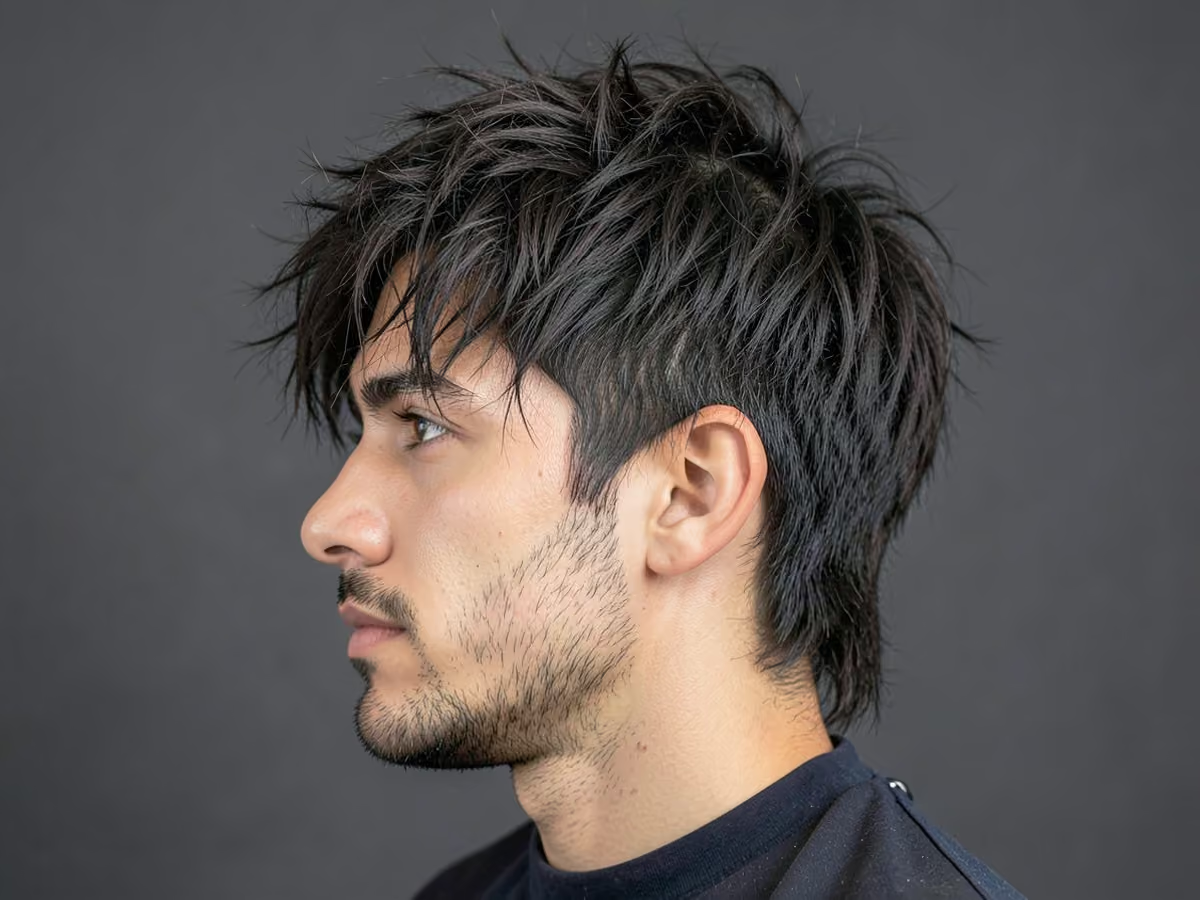
One and a half to two inches of point-cut texture pushed forward into a short fringe sits over a low fade. The choppy finish hides cowlicks and a slightly high hairline, and it takes a minute to style. It is a more current take on preppy, popular with students who want something neat without a part. Our textured crop guide covers the full range.
How to Style at Home
Spray sea salt into damp hair and rough-dry it forward.
Twist small sections with a pinch of matte clay.
Break up the fringe with your fingertips so it looks choppy, not straight.
Ask Your Barber
"Textured crop with a low fade from a #1. Point cut two inches on top and leave a short, choppy fringe."
Trim:Every 2–3 weeks. The temple blend softens quickly.
Best For:Round, square faces + thick or coarse hair.
About This Style
A mid fade from a #0.5 at the temple makes the sides noticeably shorter, so a three inch top styled up or to the side looks fuller. The higher contrast reads sharper than the taper versions and suits round faces. It needs a trim every two to three weeks to keep the blend clean, more often than a taper or scissor cut.
How to Style at Home
Blow-dry the top up and to one side.
Apply matte paste through the top for hold without shine.
Rub a drop of scalp oil on the faded sides if they feel dry.
Ask Your Barber
"Mid fade from a #0.5 at the temple blended into a #3. Leave three inches on top, styled up and to the right."
Trim:Every 2–3 weeks. Short hair shows growth quickly.
Best For:Oval, square faces + any hair type, active lifestyle.
About This Style
Nothing is needed after washing with a #3 on top and a low fade on the sides, a clean, athletic buzz. It is a practical choice for intramural sports, summer and anyone who wants no styling at all. The fade keeps it from looking like a plain clipper job. Square and oval faces show it off best. Read our buzz cut styles for other lengths.
How to Style at Home
Wash with a mild shampoo and towel-dry; no styling is needed.
Apply sunscreen to the scalp on long days outdoors.
Moisturize the scalp with a few drops of oil if it gets flaky.
Ask Your Barber
"Buzz cut with a #3 on top and a low fade on the sides from a #1. Square the neckline."
Trim:Every 3–4 weeks. The straight fringe needs squaring.
Best For:Oval, long faces + straight, wavy or thinning hair.
About This Style
Brushed forward into a blunt, straight fringe, a top of about an inch and a half sits above a low skin fade. The forward fringe shortens long faces and covers a receding hairline. It looks neat with minimal effort and suits men whose hair is starting to thin at the temples. Our French crop guide covers the fringe options in detail.
How to Style at Home
Brush the top forward toward the fringe while damp.
Rub a pinch of texture powder into the roots for grip.
Leave the fringe straight across, not pushed up.
Ask Your Barber
"French crop with a low skin fade. Leave an inch and a half on top brushed forward, with a straight fringe just above the eyebrows."
Trim:Every 3 weeks. The curve behind the ear softens quickly.
Best For:Oval, round faces + straight or wavy hair.
About This Style
Curving down behind the ear toward the nape, a drop fade keeps more hair at the back of the head than a straight mid fade. On a frat cut it sits under a combed-over or swept top of three inches, so the profile looks clean without the bare look of a high fade. It starts from a #1 just above the ear and blends into a #3 near the crown.
How to Style at Home
Towel-dry and sweep the top to one side.
Work matte clay into the roots for lift.
Smooth the surface with a comb for a tidy finish.
Ask Your Barber
"Drop fade from a #1 above the ear, curving down behind it to the nape, blended into a #3. Leave three inches on top to sweep to the side."
Trim:Every 2 weeks. Short sides grow out within a fortnight.
Best For:Square, oval faces + any hair type.
About This Style
Borrowed from military barbering, this version takes the sides to a #1 or skin up past the parietal ridge and leaves just an inch on top, slightly longer at the front. Many ROTC members and athletes in Greek life wear it. It needs no product, but the shape relies on frequent visits, since short sides lose their crisp edge within two weeks.
How to Style at Home
Wash and towel-dry; no styling needed.
Brush the front up lightly with your fingers.
Rub a little scalp oil in if the skin feels dry.
Ask Your Barber
"High and tight, sides at a #1 up to the top of the head, one inch on top a little longer at the front, and a squared-off neckline."
Trim:Every 2 weeks. The temple corners lose their shape first.
Best For:Oval, oblong faces + curly or coily hair.
About This Style
Only the temples and sideburns are faded here, with the rest of the sides left fuller. It is often called a Brooklyn fade or temp fade. Paired with a short curly or wavy top and a lined-up front, it gives a preppy outline to textured hair without a full fade. The faded corners sharpen the forehead line, which helps on longer faces.
How to Style at Home
Apply curl cream to the top while damp.
Brush the edges with an edge brush.
Let the curls dry without touching.
Ask Your Barber
"Temple fade from skin at the sideburns blended into a #2, keep the back and the rest of the sides fuller, and a crisp line-up at the front."
Recommended Products
Curl Cream
Edge Brush
Frat Haircuts by Hair Type and Beard
Preppy cuts are not limited to straight hair. These eight adapt the look for curly and coily hair and fine hair, and pair it with stubble or a short beard; our curly hairstyles guide has more options.
Best For:Oval, round faces + loose or medium curls.
About This Style
Two to three inches of defined curls on top, cut dry and shaped round, sit over a low taper. The curls give height without blow-drying, and the taper keeps the look neat enough for class and events. Moisture is the main job each morning. It suits curly-haired men who want the preppy outline without fighting their natural texture.
How to Style at Home
Apply curl cream to soaking wet hair and scrunch upward.
Air-dry or diffuse on low heat without touching the curls.
Refresh day-two curls with a spray of leave-in.
Ask Your Barber
"Low taper on the sides from a #1. Cut my curls dry, leaving about three inches on top in a rounded shape."
Trim:Every 2–3 weeks. The edges need regular cleanup.
Best For:Oval, square faces + coily, kinky or 4C hair.
About This Style
On coily hair the preppy look usually means a short, even top of about an inch, brushed or sponged, a low taper, and a soft hard part or line-up. The result reads tidy and collegiate in the same way a side part does on straight hair. A shaved part on one side adds the classic preppy detail. Moisture keeps the coils soft and even.
How to Style at Home
Brush the top with a soft brush in one direction.
Apply a light layer of wave pomade or curl cream.
Keep the part sharp with a quick touch-up every two weeks.
Ask Your Barber
"Low taper from a #1, about an inch on top brushed even, soft hard part on the left and a line-up that follows my hairline."
Trim:Every 3–4 weeks. Shorter length keeps fine hair full.
Best For:Oval, oblong faces + fine or thinning straight hair.
About This Style
Fine hair loses volume when it is long and heavy, so this version keeps the top to about two inches with texture cut in and the sides tapered close. A matte product adds grip without shine, which can show scalp. Pushing the front slightly forward or to the side covers thin temples. It keeps the preppy shape while making the hair look denser.
How to Style at Home
Spray thickening spray into the roots of damp hair.
Blow-dry the top up and to the side for lift.
Finish with a small amount of matte paste.
Ask Your Barber
"Short taper on the sides, two inches on top with texture cut in for volume, front pushed slightly to the side. Do not thin the top."
Trim:Every 3–4 weeks. Trim stubble every two to three days.
Best For:Oval, round faces + straight or wavy hair.
About This Style
Short, even stubble kept at about an eighth of an inch adds definition to the jaw and makes a side part or swoop look a little older. The sideburns are tapered to match the stubble so the two blend. Round faces benefit from the added shadow along the jawline. A trimmer with a short guard keeps it consistent between shaves.
How to Style at Home
Trim the stubble with a short guard every two or three days.
Shave the neck below the jawline for a clean edge.
Style the top with light pomade into a side part.
Ask Your Barber
"Side part with a low taper from a #2, sideburns tapered down to match my stubble. Leave three inches on top, combed to the left."
Best For:Round, oblong faces + thick hair and full beard growth.
About This Style
Pairing a short boxed beard, about a quarter to half an inch, with a crew cut or quiff gives a slightly more mature preppy look. The sideburns fade into the beard so hair and face connect. Clean cheek and neck lines keep it from looking unkempt. Oblong faces benefit from the added width at the jaw that a short beard provides.
How to Style at Home
Trim the beard evenly with a guarded trimmer.
Shave above the cheek line and below the neck line.
Rub a little beard balm through to tame flyaways.
Ask Your Barber
"Quiff with a low taper, sideburns faded into my short beard. Keep the beard at a quarter inch and line up the cheeks and neck."
Trim:Every 3–4 weeks. Thick hair widens at the sides fast.
Best For:Round, square faces + very thick straight or wavy hair.
About This Style
Dense hair tends to puff out above the ears and refuses to lie flat, so this frat cut removes weight first. The barber thins the top with texturizing shears and keeps the sides at a #2 or #3 so they do not push outward. Three inches remain on top, swept back or to the side. Expect the cut to look heavier by week four as the bulk returns.
How to Style at Home
Blow-dry the hair in the direction you want it to sit.
Use matte paste to hold thick strands in place.
Comb the sides flat while the product is warm.
Ask Your Barber
"Three inches on top swept to the side, thin out the bulk with texturizing shears, and sides at a #3 so they lie flat without a fade."
Trim:Every 3–4 weeks. Straight Asian hair sticks out at the sides.
Best For:Round, oval faces + thick straight Asian hair.
About This Style
Coarse, straight hair that grows outward needs a slightly different frat cut. Sides are kept shorter, around a #2 tapered, and the top is texturized so it can be swept to the side instead of standing up. A light perm or down perm is sometimes added. Three inches at the front, falling into a soft swoop, gives the preppy look without a stiff, spiky shape.
How to Style at Home
Blow-dry the front down and to the side.
Add a little matte clay through the ends.
Push the swoop across with fingertips.
Ask Your Barber
"Tapered sides from a #2, three inches at the front swept to one side, and texture the top so it lies down instead of sticking up."
Trim:Every 3 weeks. Haircut and mustache are trimmed together.
Best For:Oval, oblong faces + straight or wavy hair.
About This Style
Paired with a clean-shaven jaw and a thick chevron mustache, a classic side part or swept top takes on a 1970s campus look. The mustache is trimmed to the lip line and kept fairly full, while the cheeks and chin are shaved. Two to three inches on top, sides at a #3, keep the haircut simple so the mustache does the talking.
How to Style at Home
Comb the top to the side from your part.
Brush the mustache down and trim any hairs over the lip.
Apply a drop of beard oil to soften the mustache.
Ask Your Barber
"Classic side part with two to three inches on top, sides at a #3, and trim my mustache to the lip line with clean corners."
Recommended Products
Light Pomade
Beard Oil
Throwback and Trend Frat Haircuts
These seven cuts borrow from earlier decades or current trends: a mullet, frosted tips, the old money look, a mop top, spikes, waves and a flat top. For more color ideas see our frosted tips guide.
Trim:Every 4–5 weeks. Sides and top need cutting back.
Best For:Oval, square faces + wavy or straight hair.
About This Style
Short at the front and sides, long at the back: the mullet came back on campuses as a party cut and stuck around. The frat version keeps the front at about two inches, scissor-cut sides above the ears and an inch or two of extra length falling over the collar. It stays softer than a fade mullet, since nothing is taken to skin.
How to Style at Home
Rub sea salt spray into the back for texture.
Push the front forward or to the side with fingers.
Let the back curl out as it dries.
Ask Your Barber
"Soft mullet, two inches at the front and top, scissor-cut sides above the ears, no fade, and leave the back long over my collar."
Trim:Every 4 weeks. Dark roots push the frosted ends upward.
Best For:Oval, round faces + thick straight hair.
About This Style
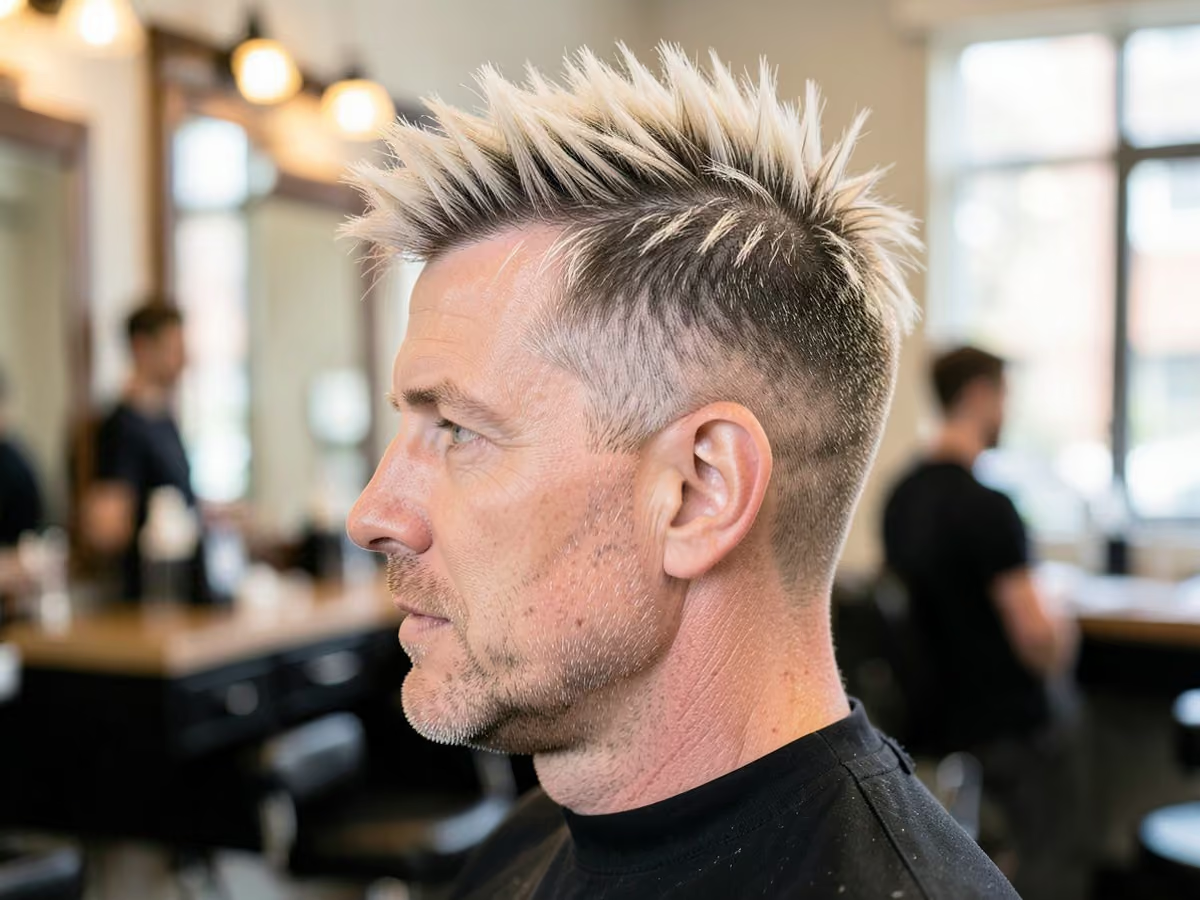
Spiky, bleached tips over dark roots were a 2000s fraternity staple and are back as a nostalgia look. One to two inches on top are lightened only at the ends, then textured up with clay. Sides are kept short with a low taper. Bleaching the tips needs a stylist and toner, and the ends dry out, so a leave-in conditioner helps between washes.
How to Style at Home
Use a leave-in on the bleached ends after washing.
Twist small pieces of the top upward with texture clay.
Keep heat low on the tips when blow-drying.
Ask Your Barber
"One to two inches on top cut with texture for spikes, low taper on the sides, and leave the ends long enough for frosting."
Trim:Every 4 weeks. The scissor shape holds for a month.
Best For:Oval, oblong faces + straight or wavy hair.
About This Style
Old money refers to the quiet, expensive-looking cuts associated with yacht clubs and East Coast schools. Here the hair is scissor-cut throughout: four inches on top swept back with a loose side part, sides left long enough to cover the top of the ears, and no visible fade. The finish is matte and slightly tousled, as if it dried in the wind.
How to Style at Home
Blow-dry back and slightly to the side.
Rub a small amount of styling cream through with fingers.
Leave a few strands loose at the front.
Ask Your Barber
"All scissors, four inches on top swept back with a soft side part, sides covering the top of the ears, no fade and no clippers on the neckline."
Trim:Every 5–6 weeks. The fringe reaches the eyes.
Best For:Oblong, heart faces + straight or wavy hair.
About This Style
With a rounded shape and a fringe brushed forward to the eyebrows, the mop top gives the frat look a 1960s indie edge. Hair is cut to three or four inches all over with soft layers, and the ears are partly covered. It needs little styling beyond a shake. Fine hair may collapse into a helmet shape, so thick or wavy hair is a better match.
How to Style at Home
Towel-dry and shake the hair forward.
Mist texture spray through the top.
Push the fringe slightly to one side.
Ask Your Barber
"Mop top with three to four inches all over, soft layers, fringe at my eyebrows, and the sides half covering my ears. Scissors only."
Trim:Every 3 weeks. Spikes lose shape as the top grows.
Best For:Round, oval faces + thick straight hair.
About This Style
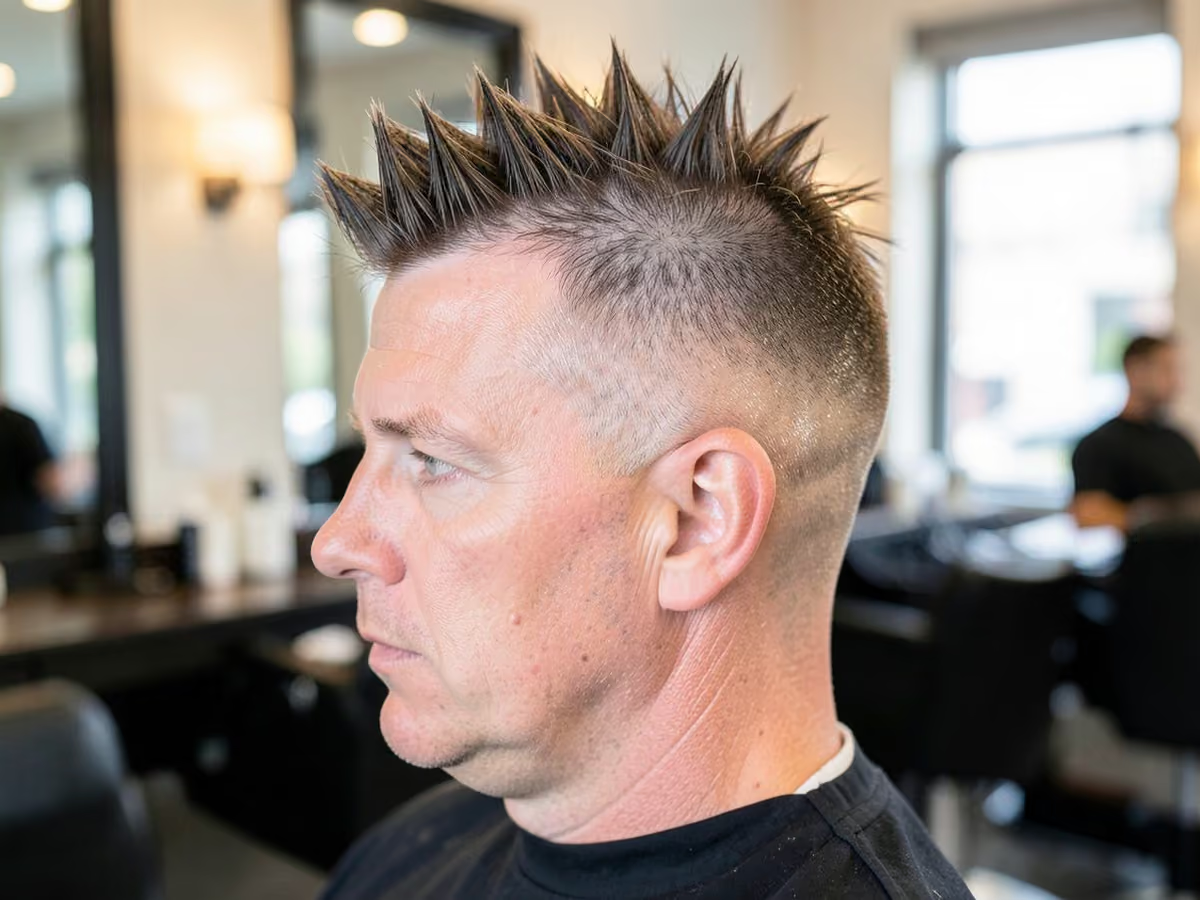
Point-cut spikes of an inch and a half to two inches over a low fade recall the early 2000s campus look. The top is cut choppy so each section can be pinched into a point with clay or a light gel. Thick straight hair holds spikes all day, while fine hair needs a stronger product and still drops by evening.
How to Style at Home
Work texture clay into dry hair from roots up.
Pinch small sections into points with fingertips.
Set with a quick blast of cool air.
Ask Your Barber
"Low fade from a #1, an inch and a half to two inches on top cut choppy so I can spike it, and a clean neckline."
Trim:Every 2 weeks. Taper and line-up need regular cleaning.
Best For:Oval, round faces + coily 4A to 4C hair.
About This Style
Brushed 360 waves cut to a #1 or #2 with a low taper and a clean line-up give coily hair a neat, preppy profile without length. Daily brushing and a durag at night build the wave pattern over weeks. Many Black fraternity members wear this cut because it looks tidy in a suit and needs only brushing in the morning.
How to Style at Home
Brush the hair from the crown outward in the wave direction.
Apply a little wave pomade before brushing.
Wear a durag overnight to lay the pattern.
Ask Your Barber
"Caesar for waves at a #1 with the grain on top, low taper at the sideburns and nape, and a soft line-up at the forehead."
Trim:Every 2 weeks. The flat surface loses its level fast.
Best For:Round, square faces + thick straight or coily hair.
About This Style
Squared off into a level platform about an inch and a half high, the flat top brings a 1950s and 1980s campus vibe. Sides are faded from a #1 or tapered short, and the top is cut with a flat comb so the surface stays even. Coarse, upright hair works best, since soft hair will not hold the flat edge.
How to Style at Home
Brush the top straight up after washing.
Use a little light gel to keep strands upright.
Comb the sides down flat toward the fade.
Ask Your Barber
"Flat top at an inch and a half, cut level with a flat-top comb, sides faded from a #1, and squared corners at the front."
Recommended Products
Light Gel
How Do You Ask Your Barber for a Frat Haircut?
Skip the slang and give three details: how short the sides should be, how long the top should stay and how you will style it. For example: a low taper on the sides with a #2 at the bottom, three inches on top, longer at the front so I can sweep it to the right. For a flow, ask the barber to clean up the neckline and around the ears while keeping the length, and to remove bulk so the hair lies flat.
Bring a photo that matches your hair type, since a swoop on straight hair looks very different from one on curls. If you are growing a flow out, tell the barber; the goal at each visit is shaping rather than taking length off, and a barber who knows that will trim the ends and edges only. Our guide to talking to your barber has more phrasing ideas for each stage.
Clipper Guards Used in Frat Haircut Styles
A clipper guard is the plastic comb that clips onto the blade and sets how much hair is left: a #1 leaves 3 mm (1/8 inch), each step up adds about 3 mm. The right column lists the cards on this page that call for each guard. See the full clipper guard numbers guide for the complete chart.
Short classics need a pea-size amount of light pomade or matte clay worked through damp hair and combed or finger-styled into place. Swoops and quiffs hold better if you blow-dry the front in the direction you want it to fall. Flows need less product; a little sea salt spray or styling cream before air-drying keeps them from looking flat. Curly versions need curl cream or leave-in more than hold.
Book short tapered cuts every three to four weeks and faded versions every two to three. Flows can go six to eight weeks between trims, though a quick neckline clean-up keeps them looking deliberate rather than overgrown. Wash longer styles every two or three days rather than daily so natural oils keep them soft. The pomade vs clay vs wax guide explains which product gives which finish.
Which Frat Haircut Is Right for You?
Pick your hair type and how much upkeep you will put in. The matches below come from the Best For and Maintenance notes on each card. Upkeep follows the Maintenance badge: low means a cut every 3 to 6 weeks and almost no daily styling, high means weekly line-ups or daily product.
There is no single official name. Frat haircut is slang for preppy college cuts such as the side part, Ivy League, crew cut, swoop and flow. When you book, ask for the specific style and describe the top length and side length rather than using the slang term.
Q2: What is a frat flow?+
A frat flow is a medium to long cut, usually ear to collar length, with the hair swept back from the face and left to curl or wave at the ends. The sides are kept tidy but long. It is close to the bro flow and hockey flow and takes several months to grow.
Q3: What is a frat swoop?+
A frat swoop is a cut with short tapered sides and three to five inches on top, swept across and slightly up at the front in one smooth curve. It is usually blow-dried for lift and finished with a light pomade or cream. It suits straight and wavy hair best.
Q4: How do I ask for a frat haircut?+
Describe the parts rather than the label: the side length or guard, the top length and the direction you style it. For example, ask for a low taper with a #2, three inches on top and a side sweep to the left. Bring a photo of someone with your hair type.
Q5: Are frat haircuts good for job interviews?+
The shorter ones are. A side part, Ivy League or crew cut with a low taper reads as tidy and professional in most offices. Longer flows can work in relaxed industries, but keep them clean at the neckline and around the ears and pull the hair back from the face.
Q6: Do frat haircuts work for curly hair?+
Yes. Curly hair suits a short taper with two to three inches of defined curls on top, or a longer curly flow. Keep moisture high with curl cream or leave-in, and ask the barber to cut the curls dry so they sit where they fall instead of shrinking unevenly.