Best Haircuts for
Job Interviews
An interview haircut should be invisible. Nobody remembers it, everybody notices if it's wrong. Here's the safe, sharp playbook.
By Jessica Hamilton, Editor · Updated
Quick answer: The best haircuts for job interviews are a classic side part, an Ivy League, a crew cut, or a low taper fade with a modest top. All of them read as clean and competent without drawing attention. Book it three to five days before the interview, never the day before, and don't try a new style right before.
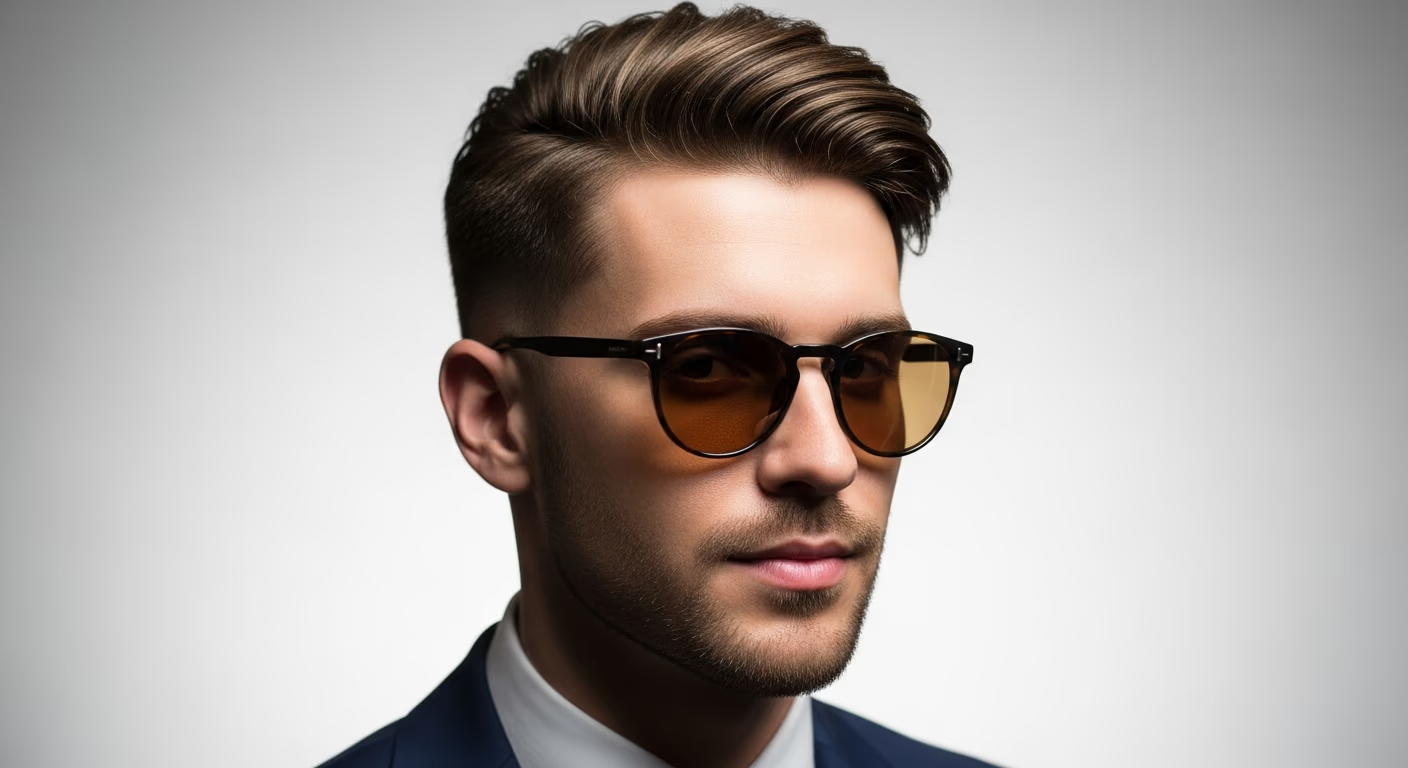
Style images are AI-generated illustrations.
📚 Part of our Barbering Basics guide hub collects every related guide.
The best haircuts for job interviews have one job: make grooming a non-issue so the conversation stays on you. That means clean, conservative, and unremarkable. Nothing the interviewer has to form an opinion about. The good news is the safe options are also genuinely sharp looks you'd wear anyway.
What Are the Best Haircuts for a Job Interview?
The best haircuts for a job interview are a classic side part, an Ivy League, a crew cut and a low taper fade with a modest top. They read as clean and competent in any industry. Book the cut 3 to 5 days before the interview so it settles, and keep the top at a length you can style.
- Classic side part: the most universally 'competent'-reading cut there is.
- Ivy League: short, tidy, a touch of style without risk.
- Crew cut: clean and no-nonsense; works in every industry.
- Low taper fade with a modest top: modern but conservative. The safest of the fades.
- A tidy textured crop: fine for creative and tech roles.
A taper fade means the sides get gradually shorter toward the ears and neckline; a low one starts just above the ear, so it stays subtle. The professional office haircuts gallery has more examples that work in conservative settings.
Which Interview Haircut Suits Your Industry?
| Industry | Play it |
|---|---|
| Finance, law, consulting | Most conservative: side part, Ivy League, low taper |
| Corporate / general office | Conservative but modern: taper with a tidy top |
| Tech / startup | Relaxed: textured crop, modern fade all fine |
| Creative / design | Personality is fine, just keep it deliberate and clean |
| Client-facing / sales | Clean and buttoned-up; err conservative |
When Should You Get a Haircut Before a Job Interview?
Get the cut 3–5 days before the interview, never the day before. Fresh cuts look slightly severe and any barber error has no time to settle or be fixed. A few days lets the hair relax into shape and gives you a window to correct problems. Also: style it the way you plan to on the day, so there are no surprises.
| When | What to do |
|---|---|
| 2 weeks before | Try any change in style now, not later |
| 3 to 5 days before | Main haircut and beard shape |
| 2 days before | Ask for a free fix if anything looks off |
| Night before | Test your styling and video setup |
| Morning of | Light product, check the neckline in a hand mirror |
Hair grows about half an inch a month, so 3 to 5 days adds only a sliver of length; it just takes the harsh edge off. A standard cut costs $25 to $45 at most neighborhood shops, per our 2026 haircut cost guide.
Which Haircuts Should You Avoid Before an Interview?
- Trying a brand-new dramatic style: an interview is not the time to experiment.
- A very fresh skin fade or hard line-up in conservative industries: can read as aggressive.
- Shaved designs or bold color unless the industry genuinely embraces it.
- Heavy shine products: matte or light hold reads more natural under office lighting.
- Skipping the beard tidy: an unkempt beard undoes a good haircut.
Which products look best on the day?
- Matte clay or paste: hold for a crop or Ivy League with no shine.
- Styling cream: light control for a side part that still moves naturally.
- Water-based pomade: a neat side part with a soft sheen, if your industry is traditional.
How Does Your Haircut Look in a Video Interview?
Webcam interviews compress everything into a small, flat, well-lit rectangle, which makes texture and shine more noticeable than they would be in person. Heavy pomade or wax can throw a bright highlight straight into the camera under typical desk lighting, so a lower-shine matte product usually looks cleaner on screen. Fringe and top length also matter more on camera, since a slightly long fringe can throw a shadow across the forehead under overhead light in a way it wouldn't under natural daylight.
Before a video interview, it's worth doing a quick camera test in the same room and lighting you'll actually use, since a haircut that looks fine in a bathroom mirror can look different once compressed through a laptop webcam. Sitting slightly further back and centering the camera at eye level also keeps the haircut's shape reading correctly instead of being distorted by a too-close, too-low angle.
What Should You Tell Your Barber Before an Interview Haircut?
Saying upfront that the cut is for a job interview changes how most barbers approach it. They'll usually blend fades softer, keep more length on top than they might for a regular client, and avoid anything trendy that could look out of place in an office next week. It also gives them a reason to ask about your industry, which is exactly the context that should shape how conservative the cut ends up being.
If you're unsure how short to go, ask the barber to leave slightly more length than you think you want rather than less. Extra length on top is easy to style down or trim off before the day; a cut that comes out shorter than planned can't be undone before an interview a few days later.
What to say in the chair
"I have a job interview in finance on Friday. Classic side part, low taper with a #2 blended soft, and leave a little more on top than usual. Natural neckline, no hard part line."
A guard is the clip-on comb that sets clipper length, and a #2 leaves about 6 mm; see clipper guard numbers explained. How to talk to your barber covers more phrasing, and our grooming and first impressions statistics show how much appearance shapes early judgments. To keep the look up after you get the job, how often you should get a haircut lists schedules by style.
Frequently Asked Questions
Q1: What is the best haircut for a job interview?+
Q2: How long before an interview should I get a haircut?+
Q3: Is a fade okay for a job interview?+
Q4: Should I try a new hairstyle before an interview?+
Q5: Does my beard matter for an interview?+
Q6: Should you get a line-up before a job interview?+
Related Haircut Guides
Make us a Preferred Source on Google
See our latest articles first in your Google Search & AI Overviews.