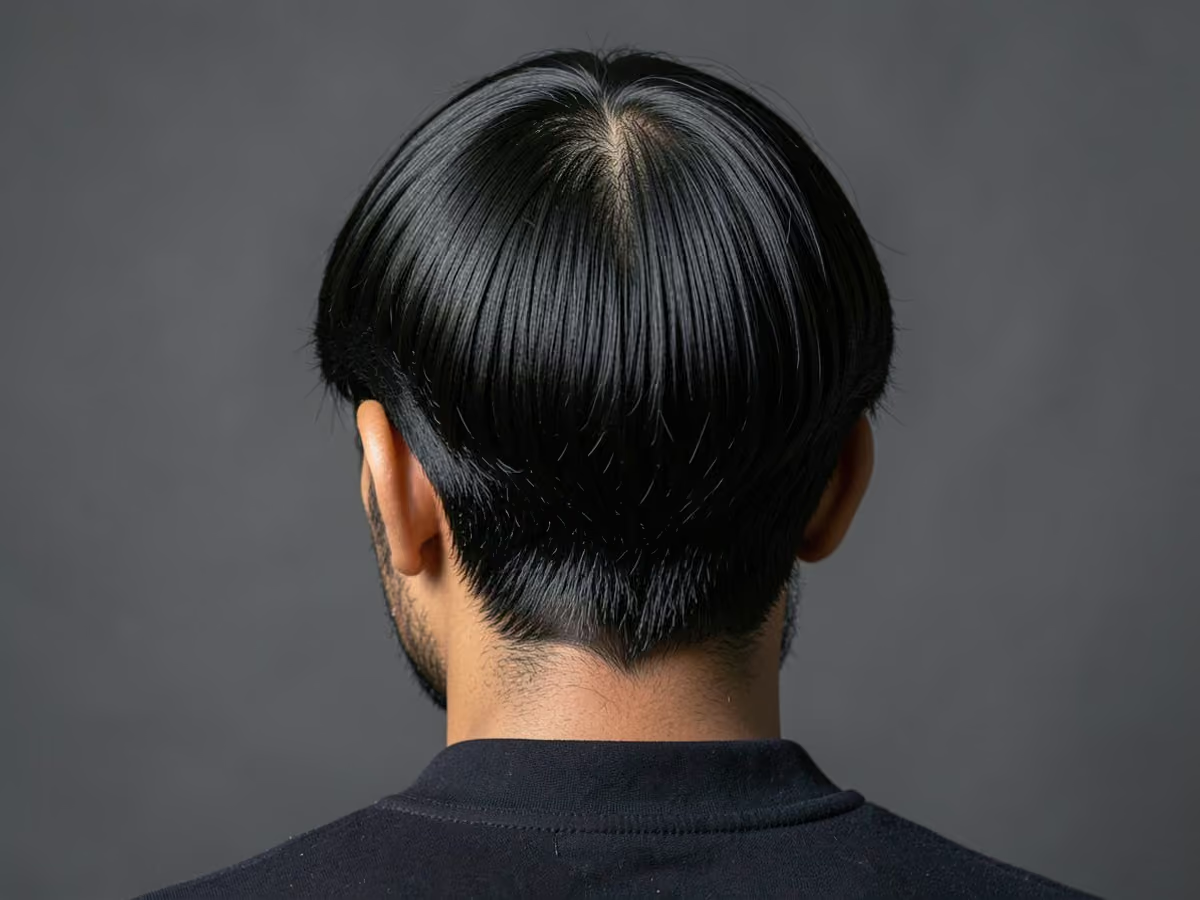
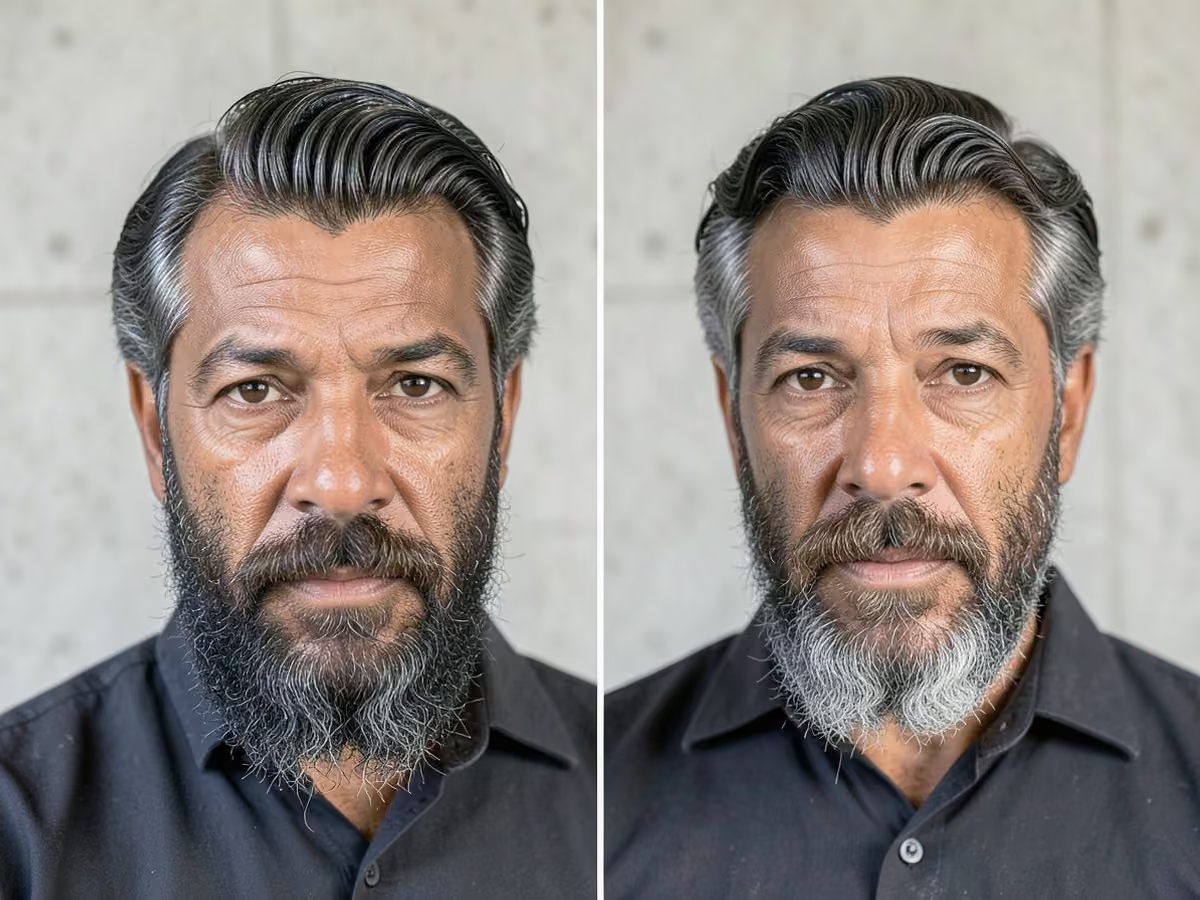
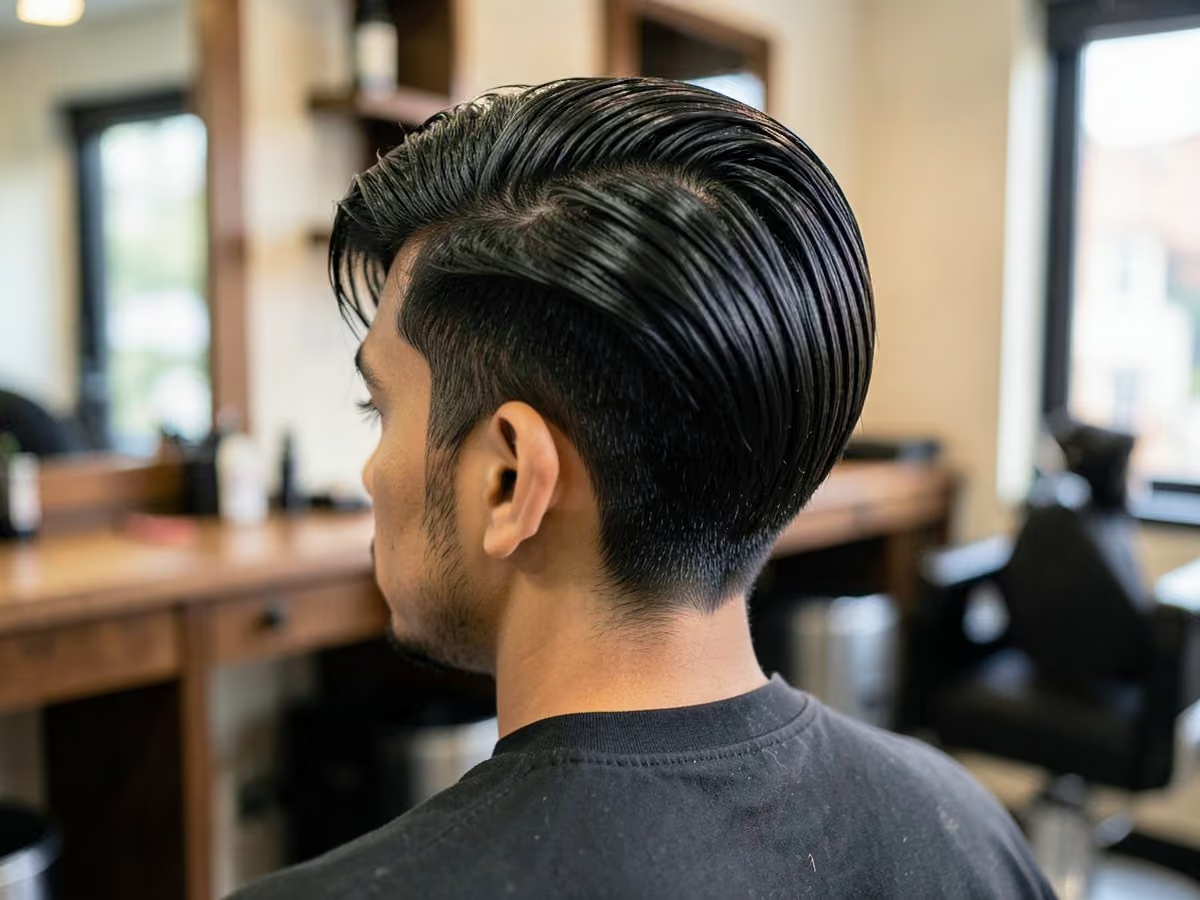
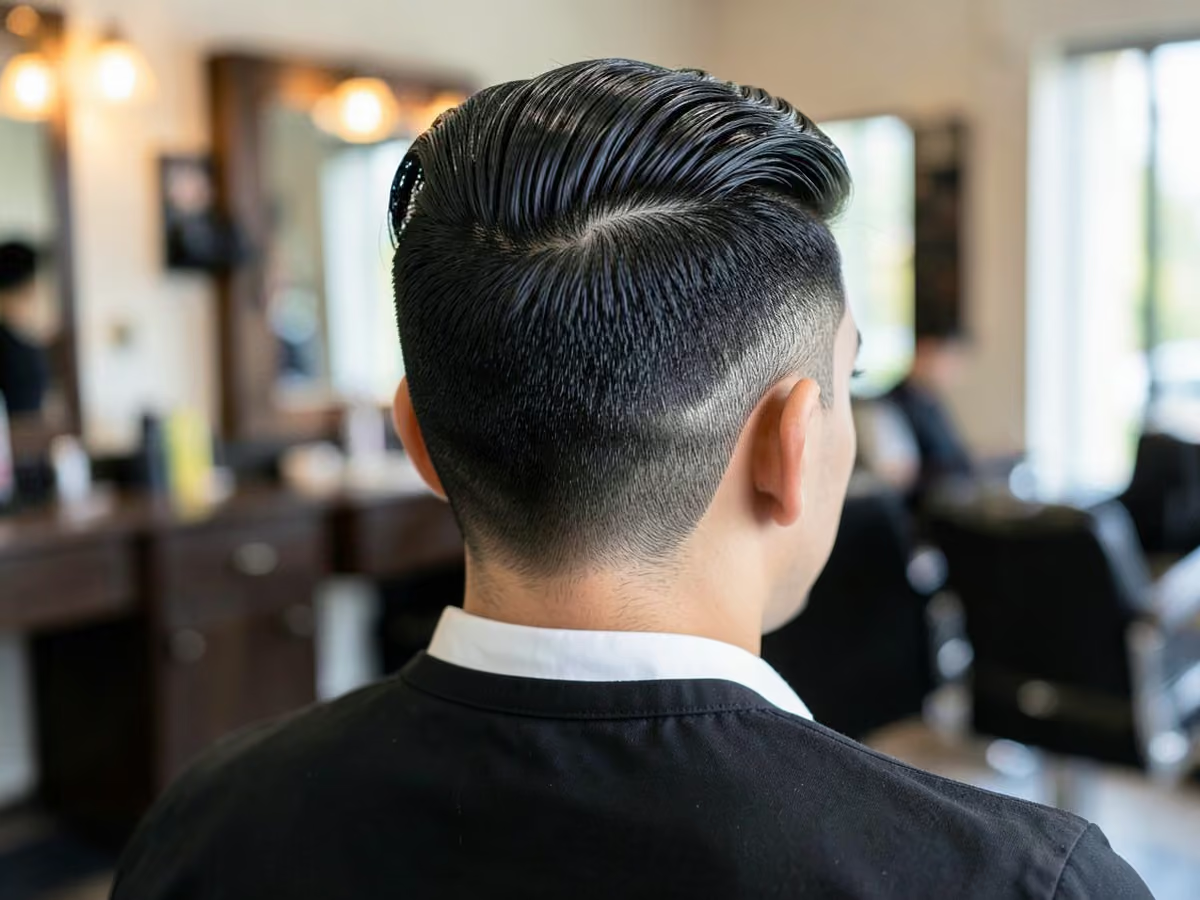
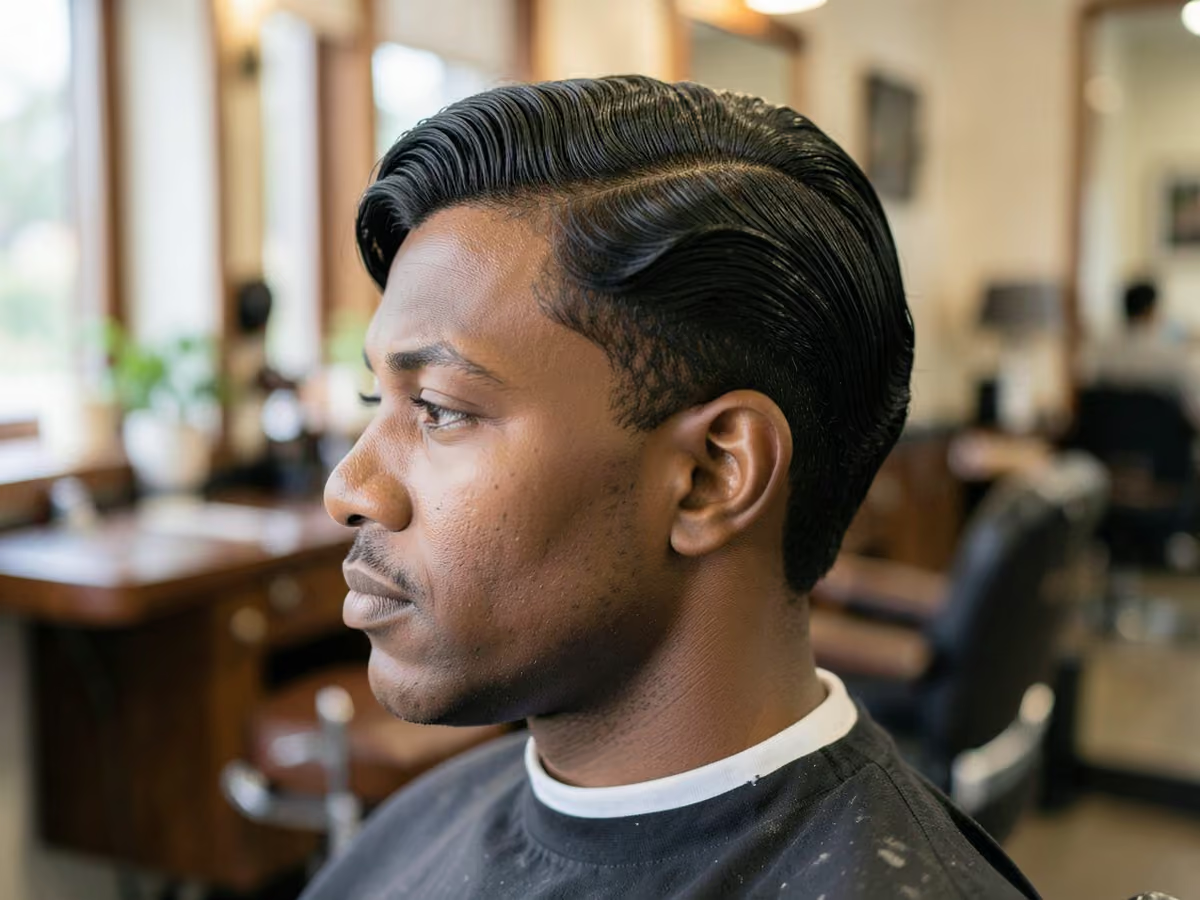
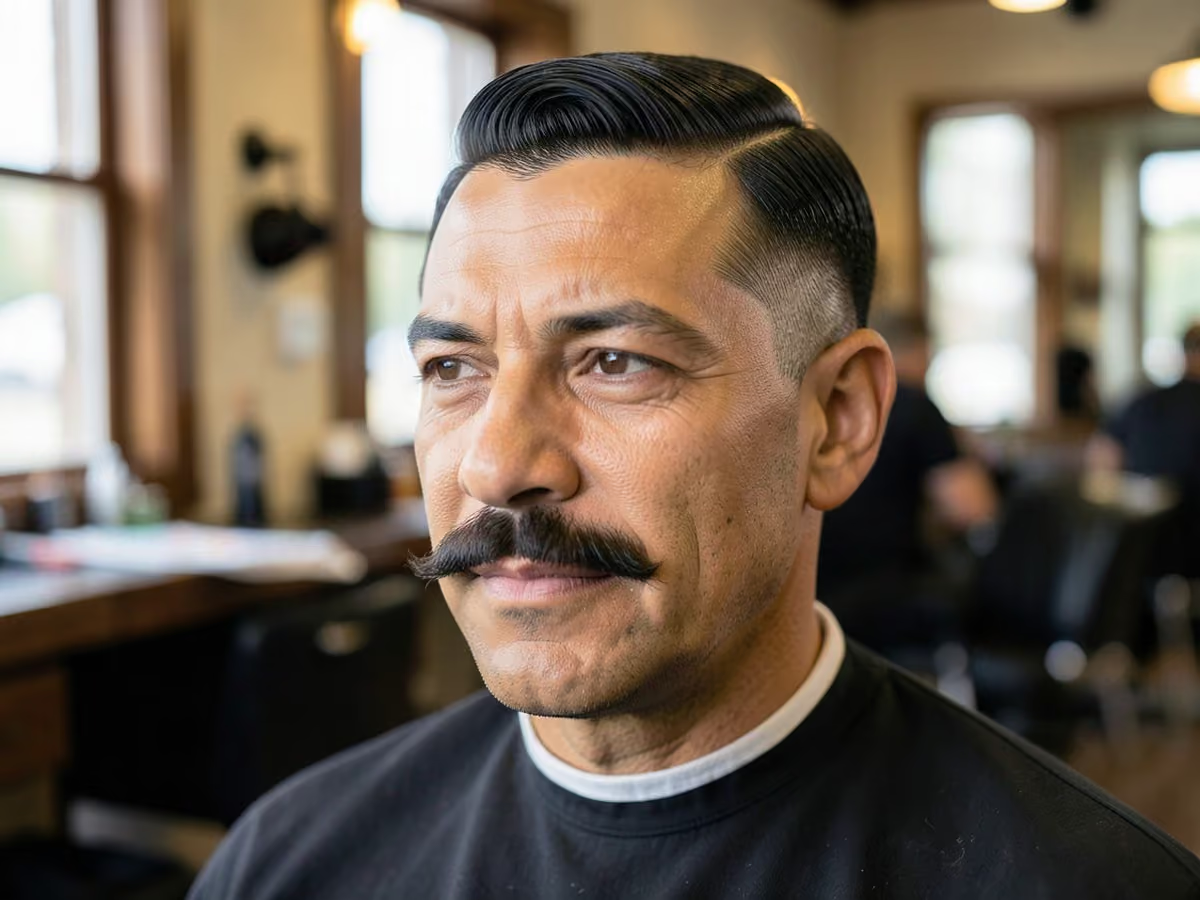
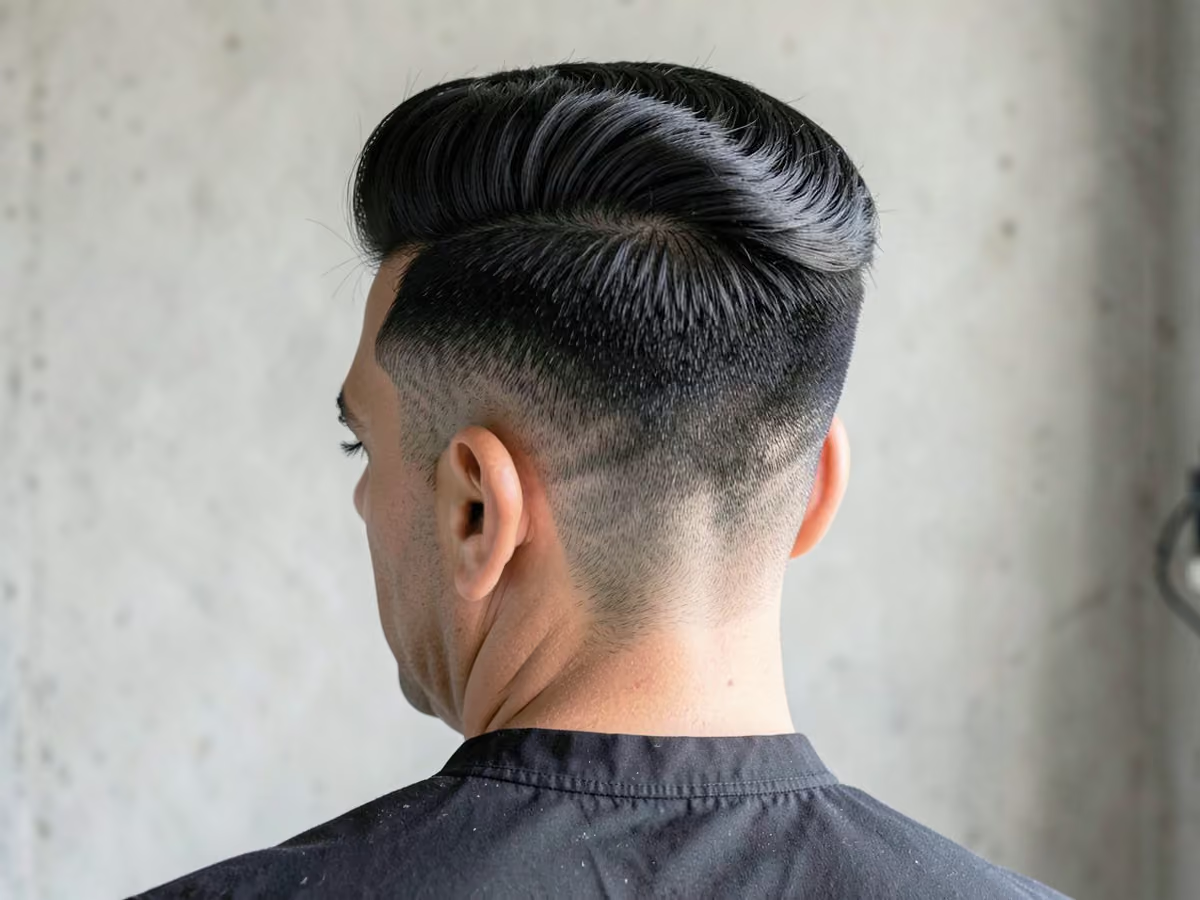
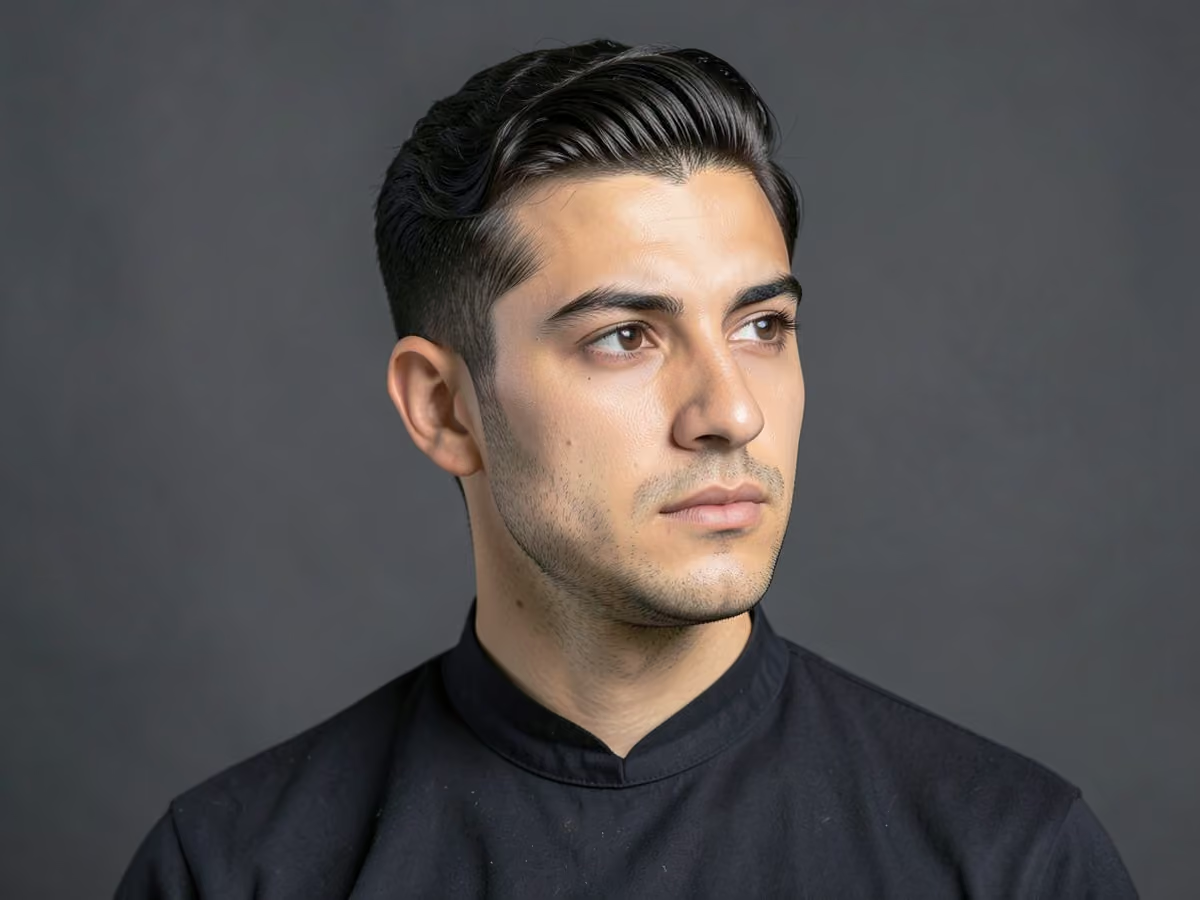
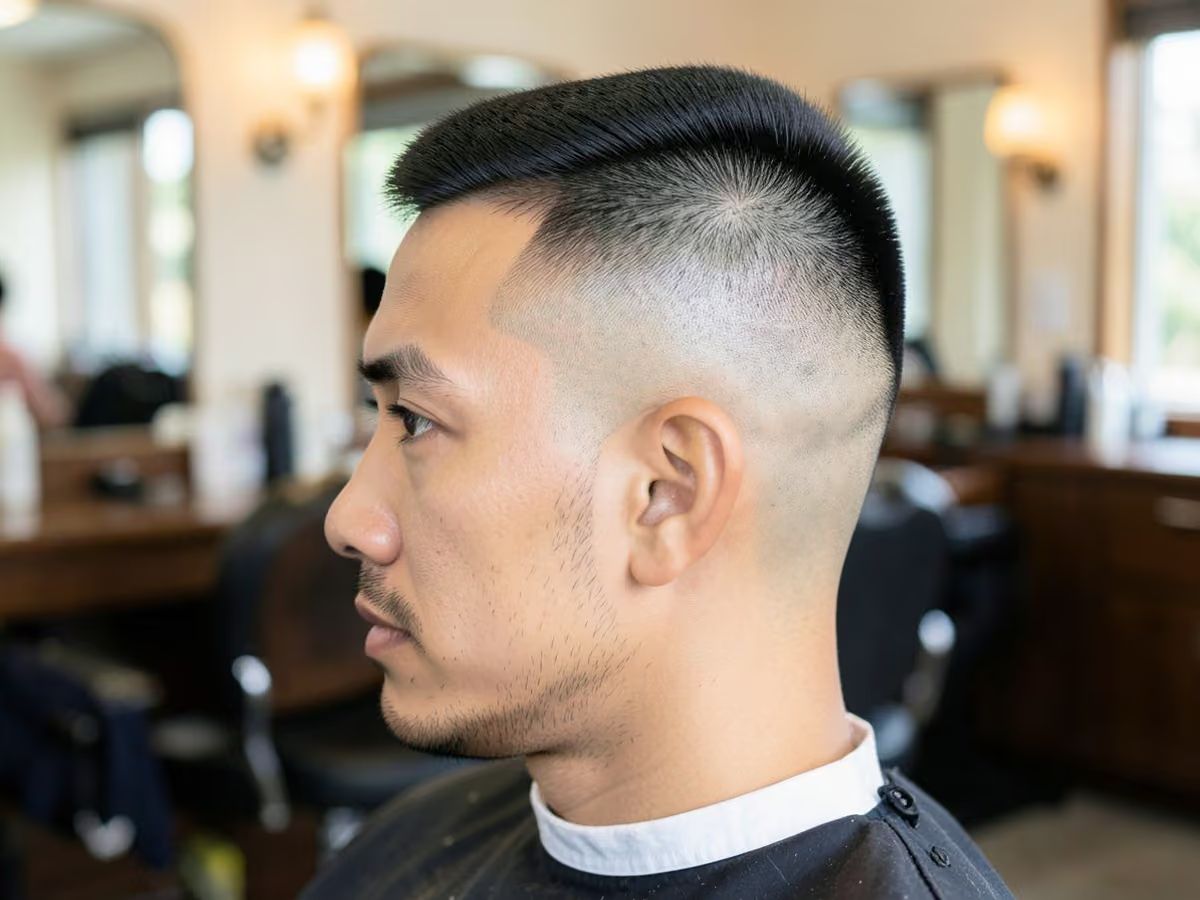
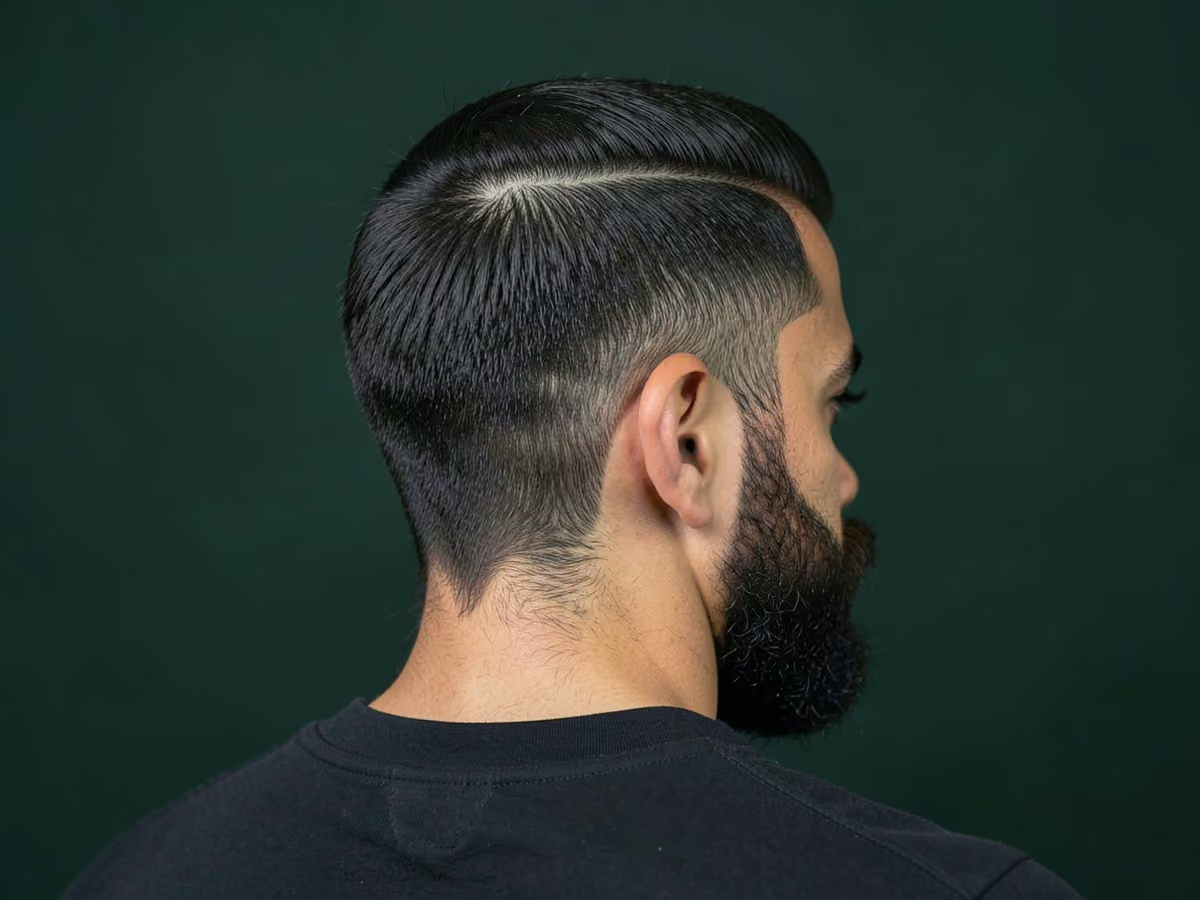
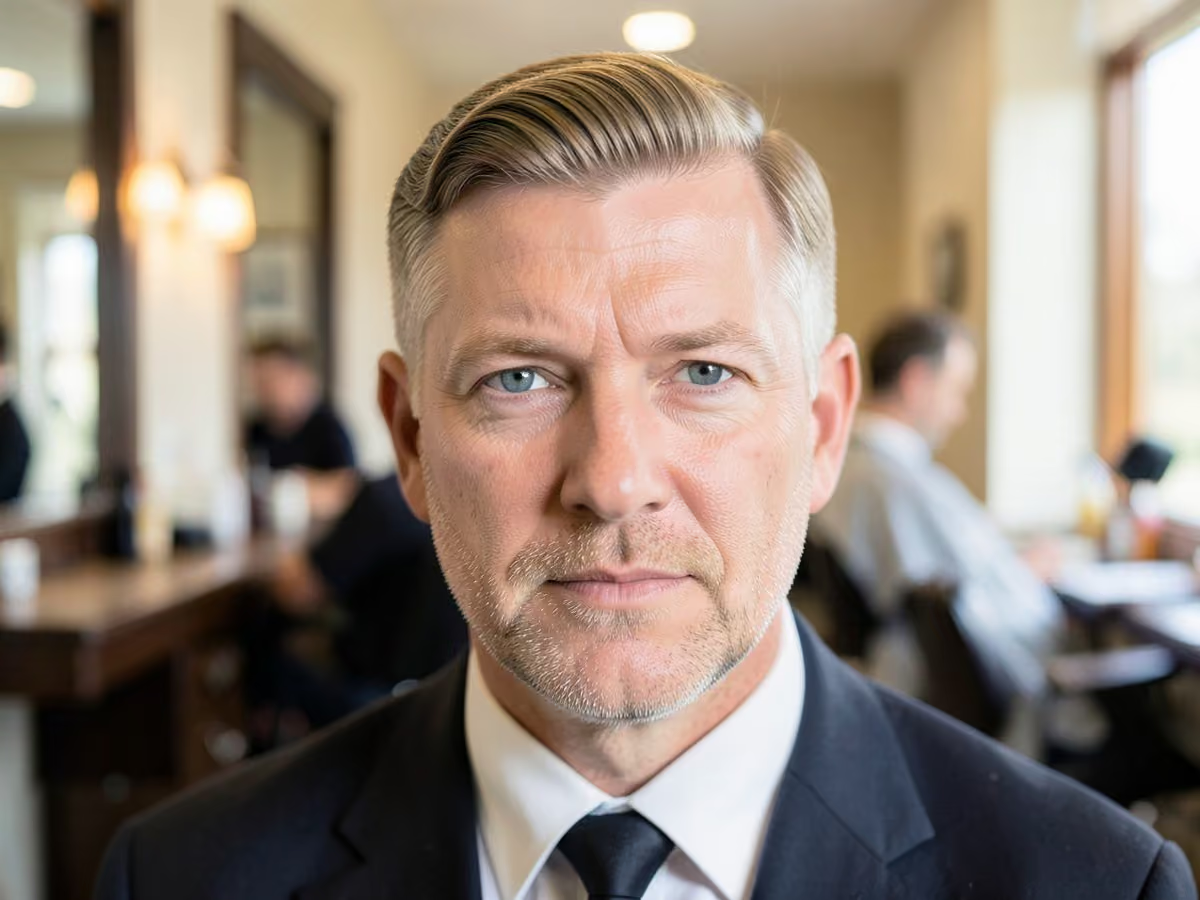
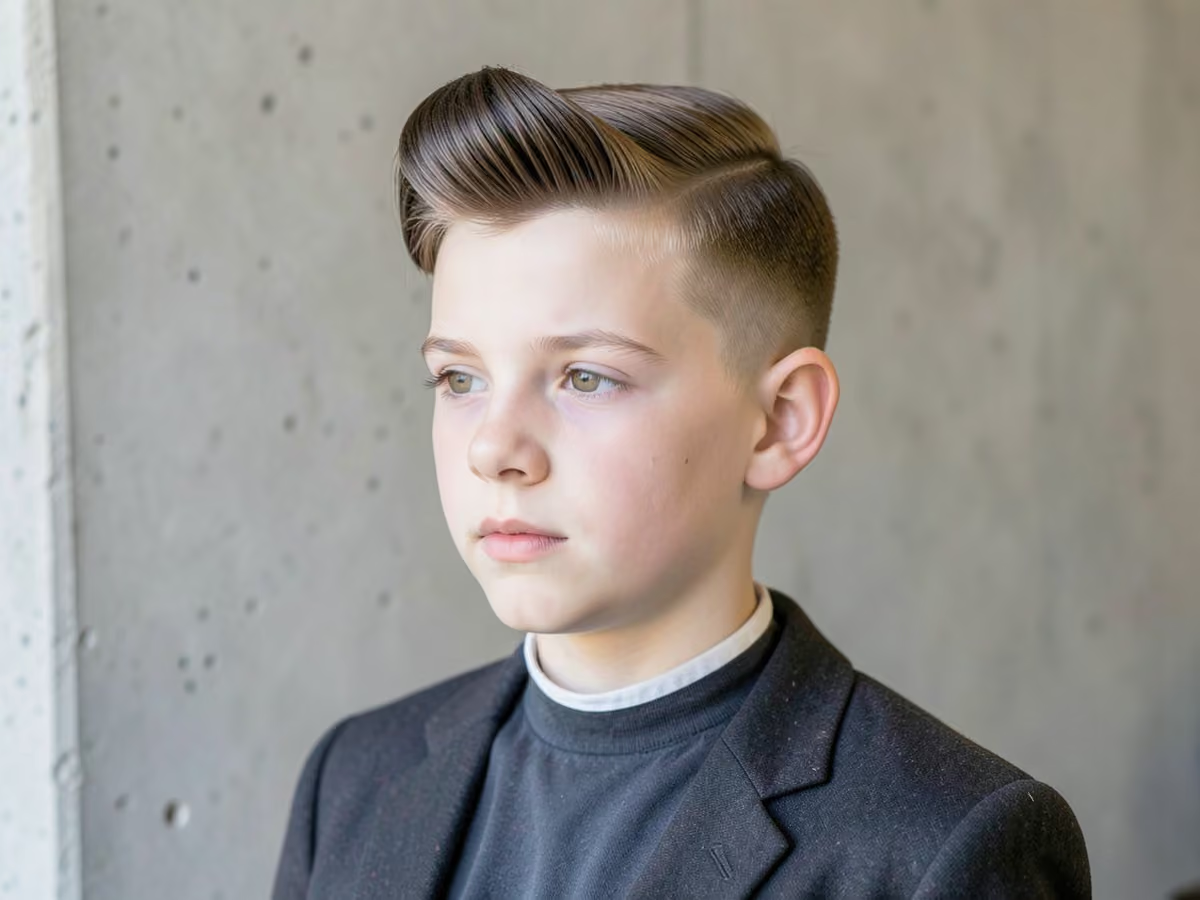
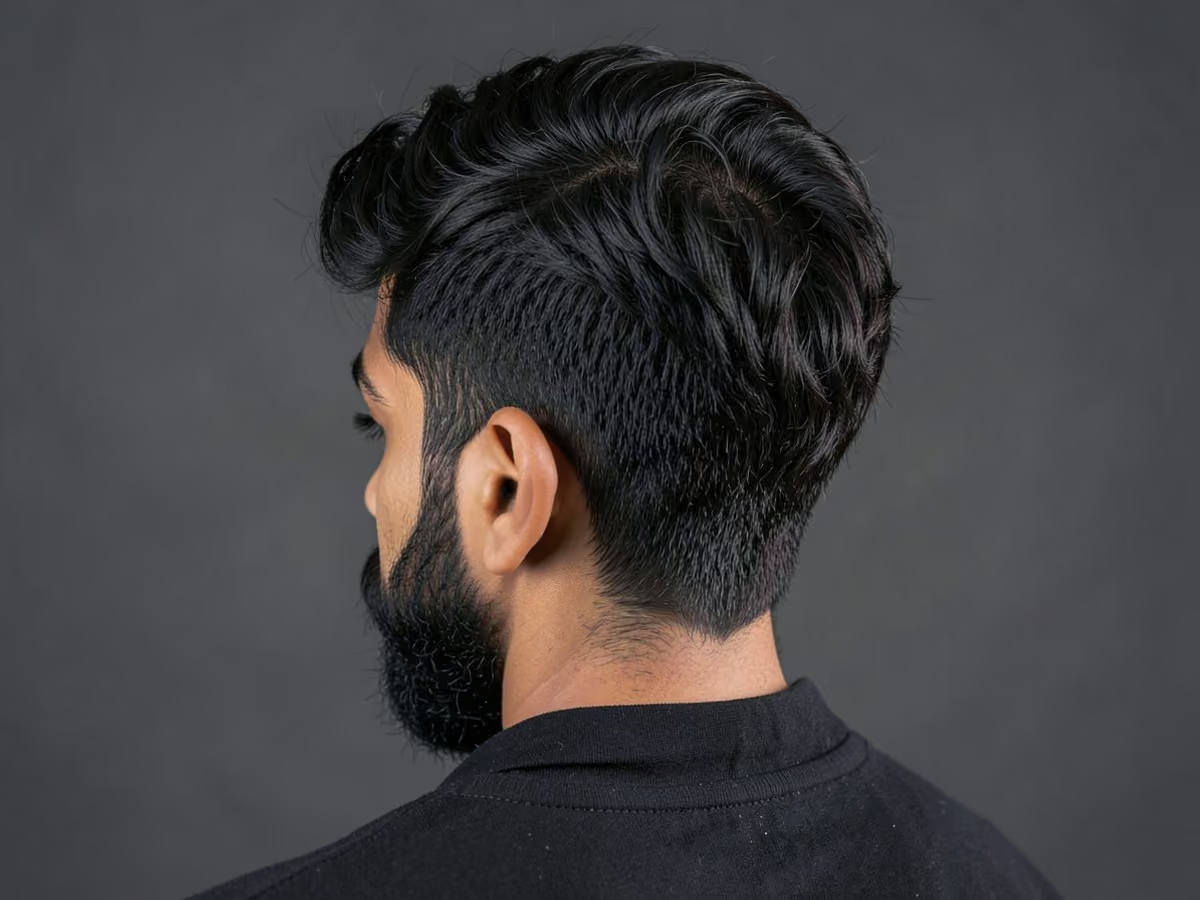
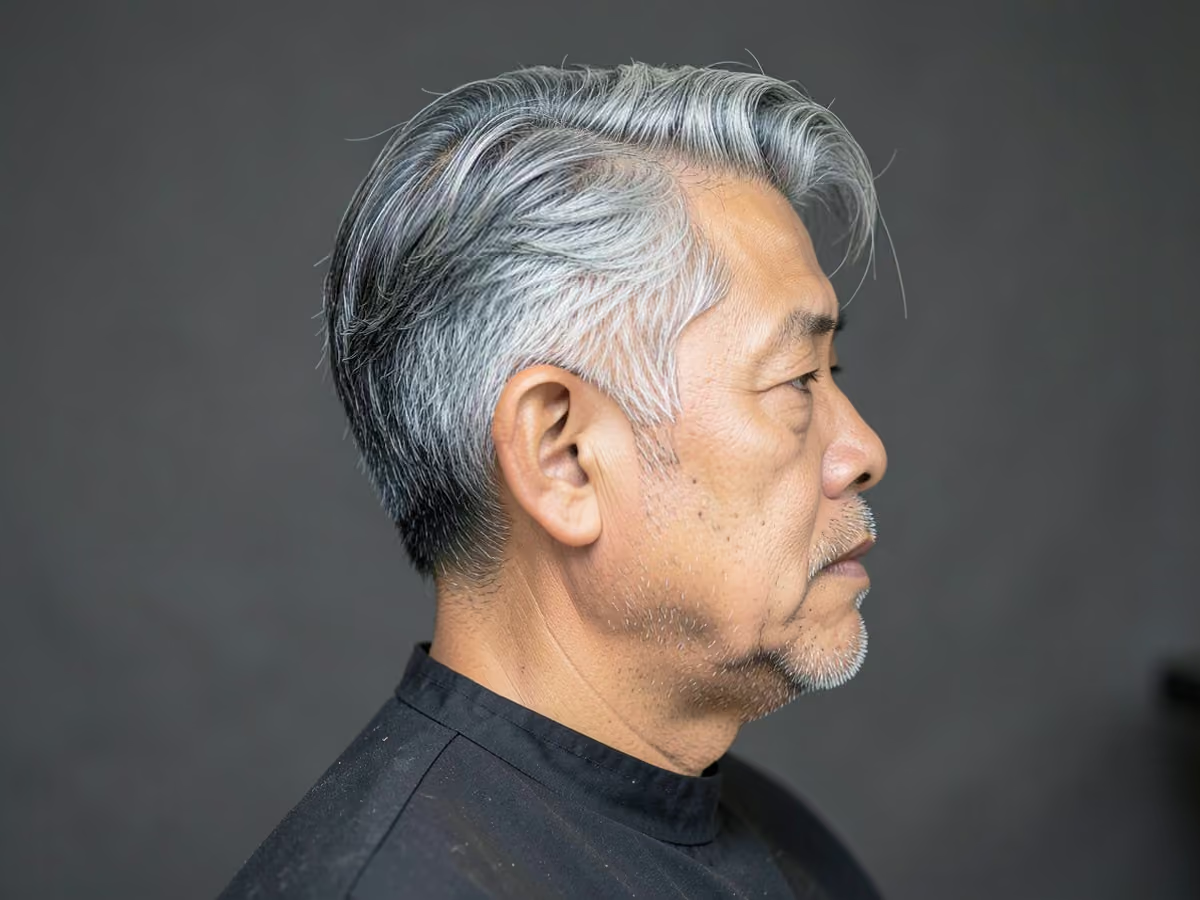
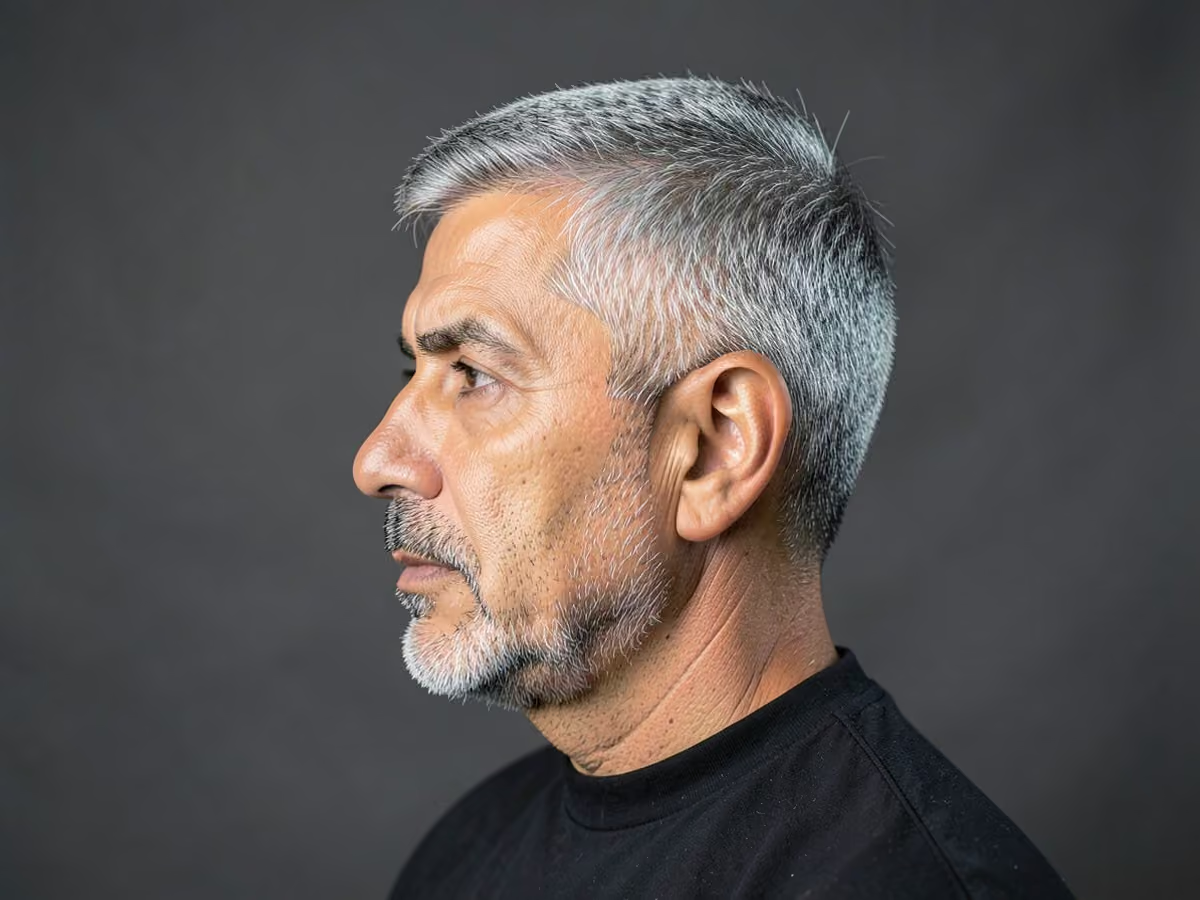
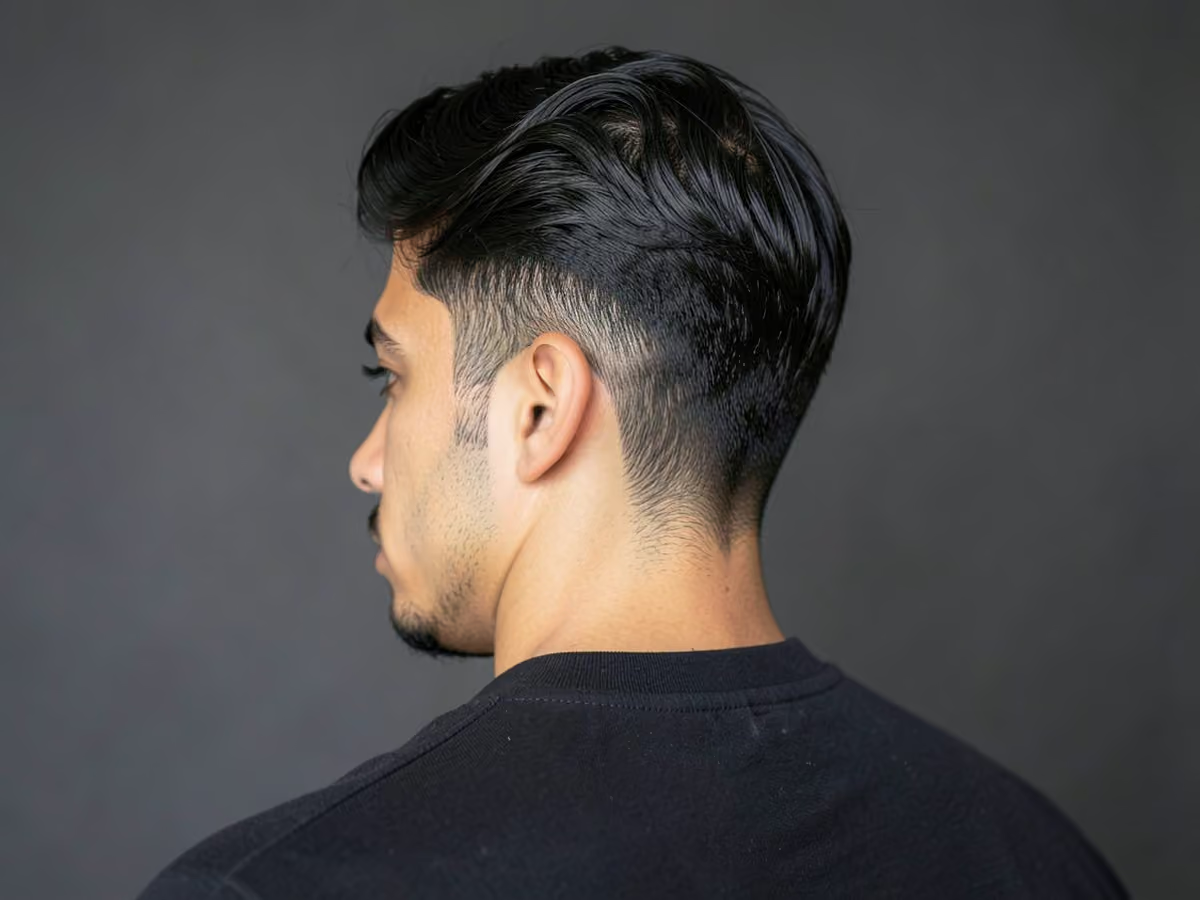
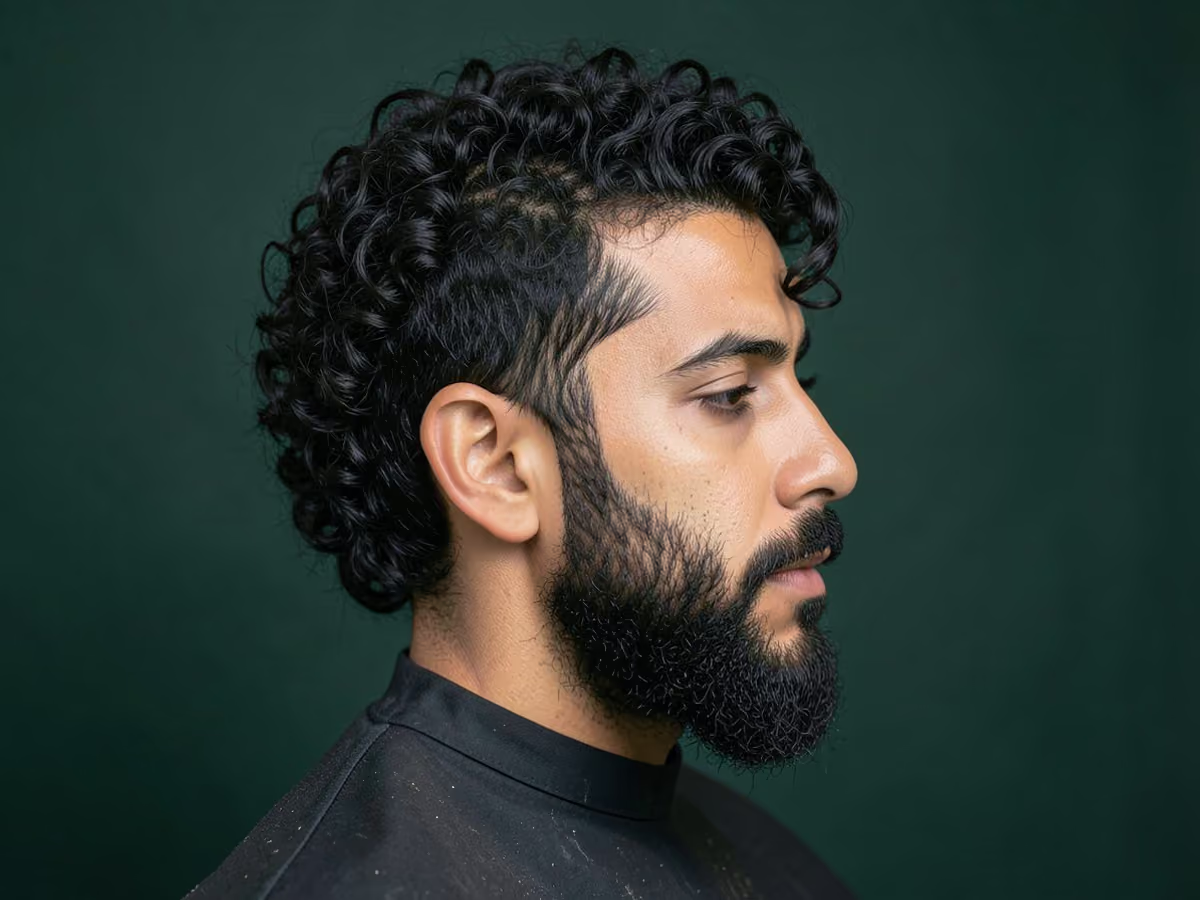
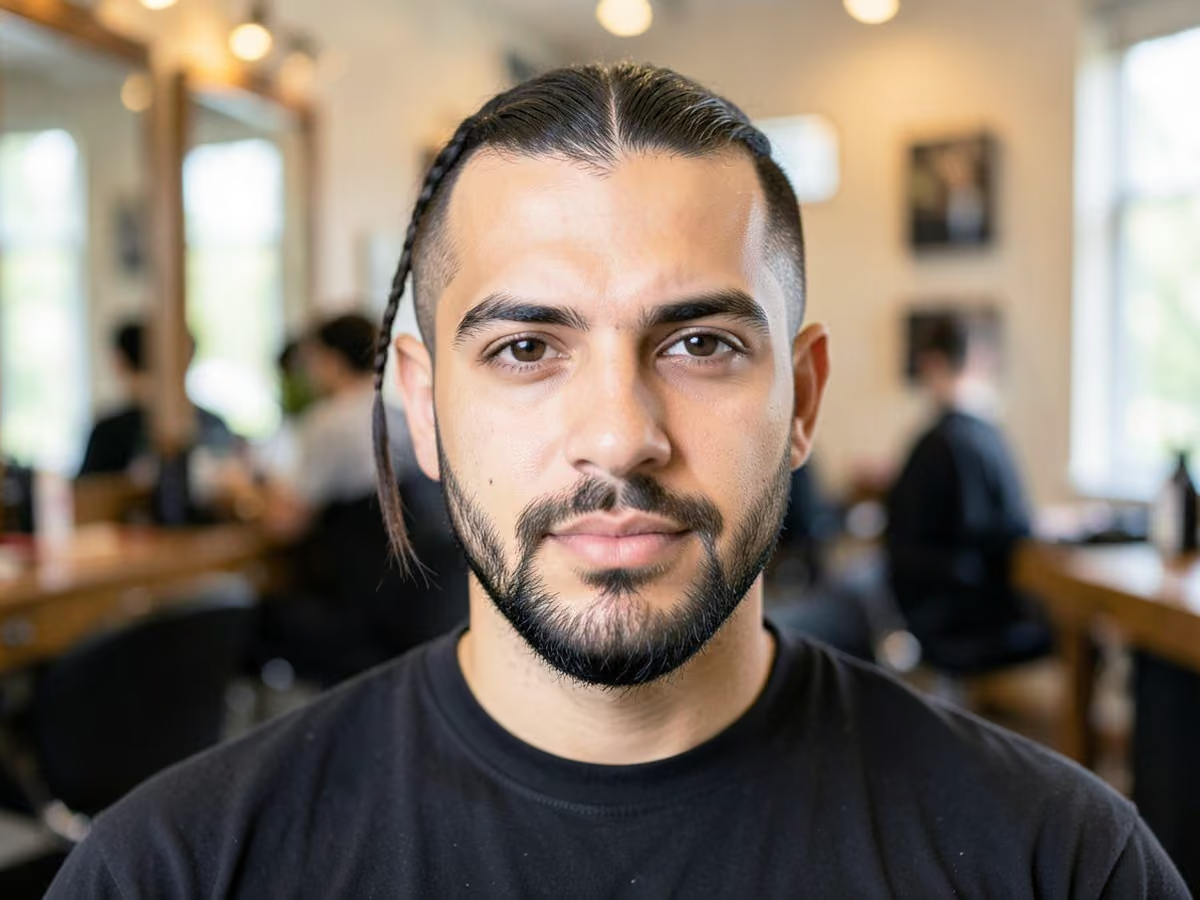
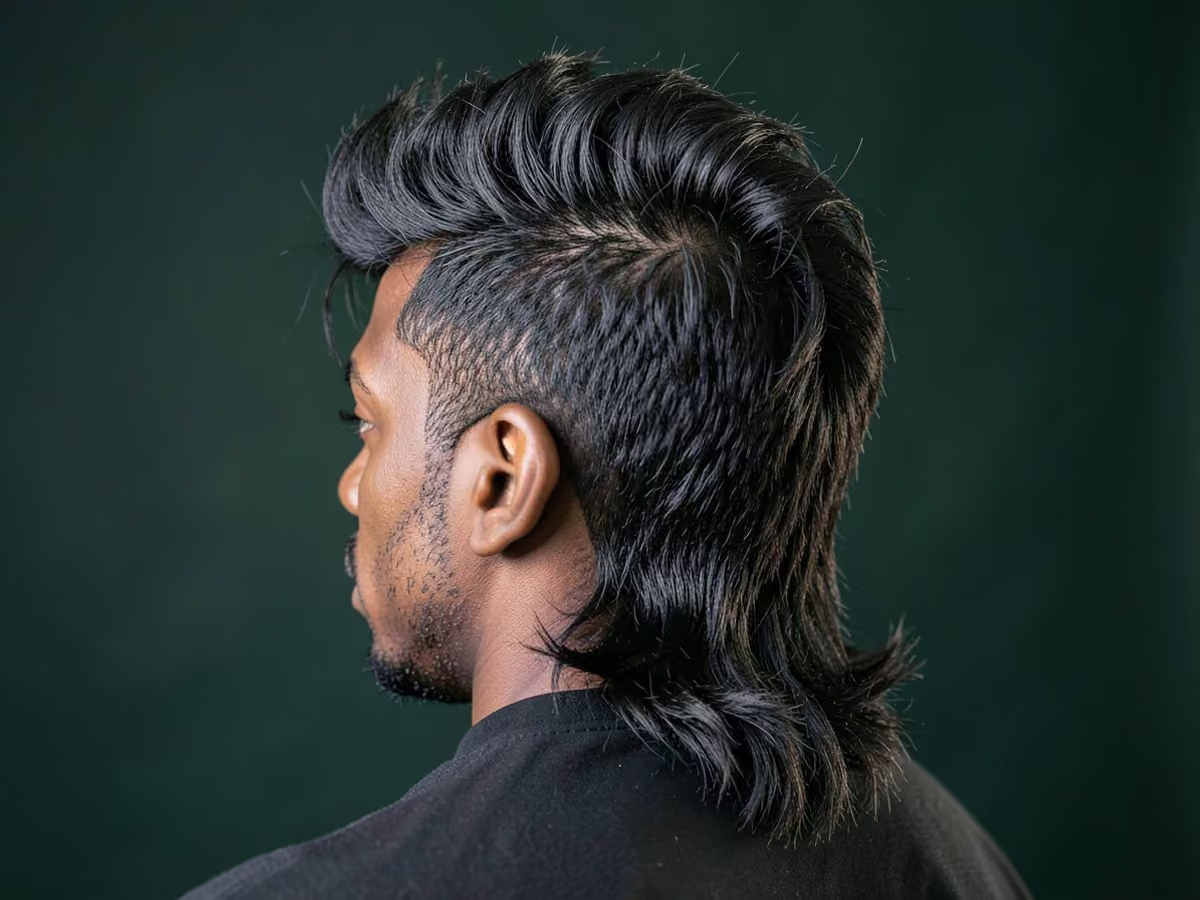
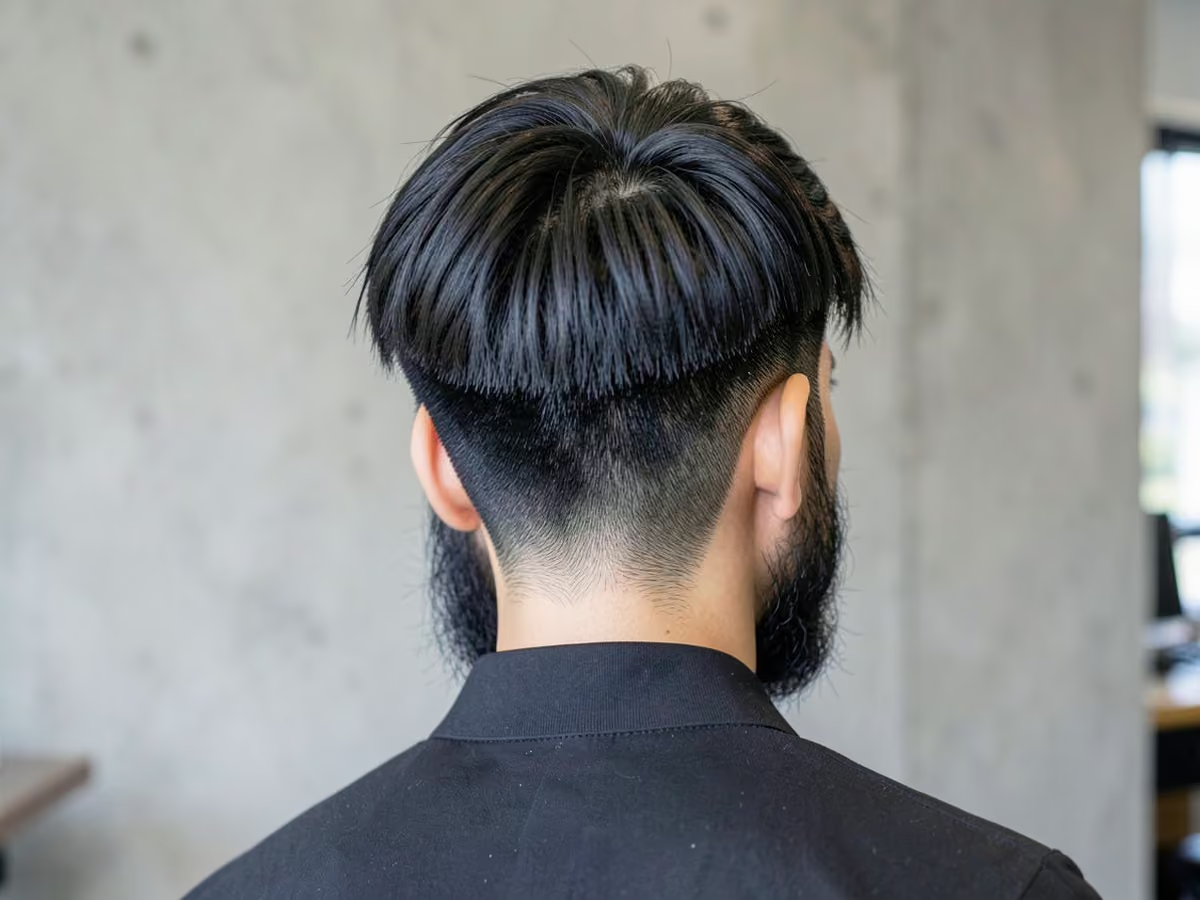
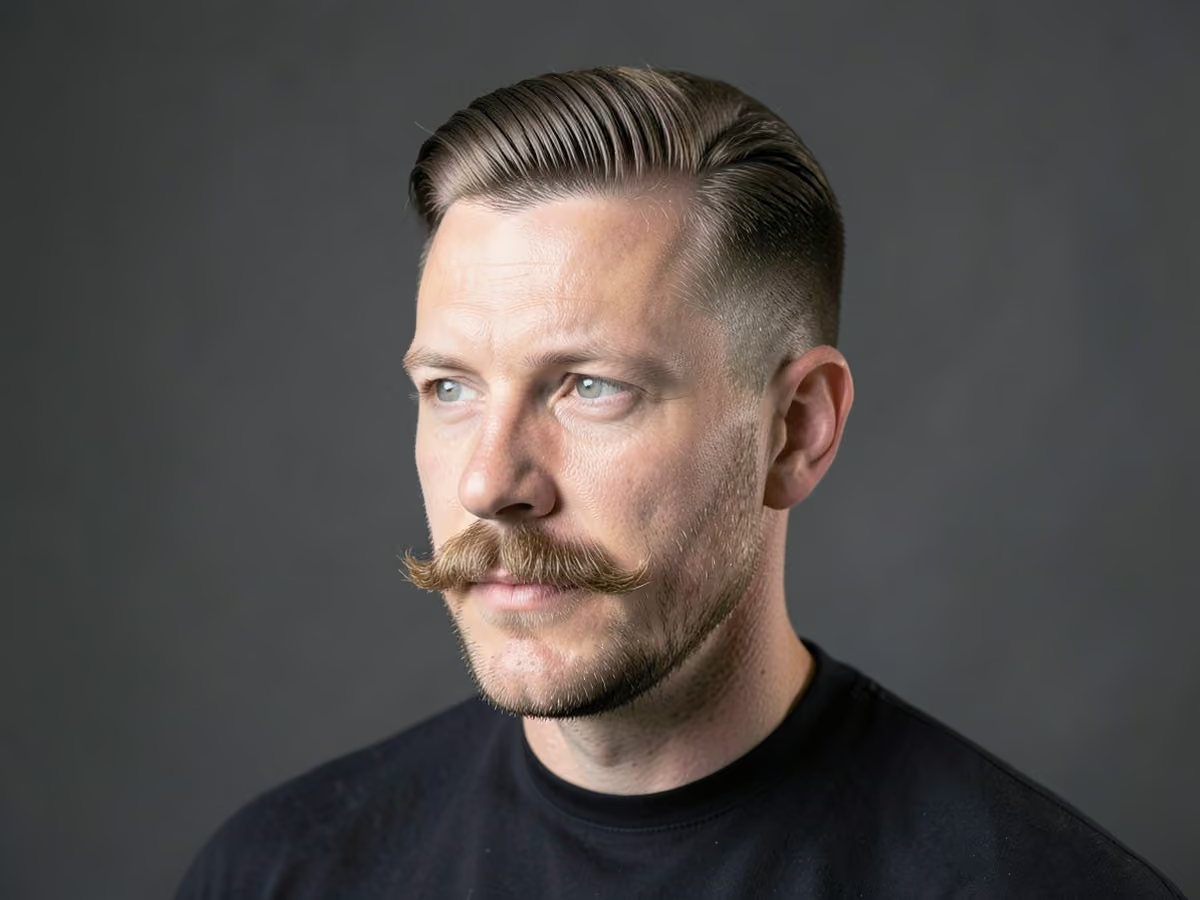
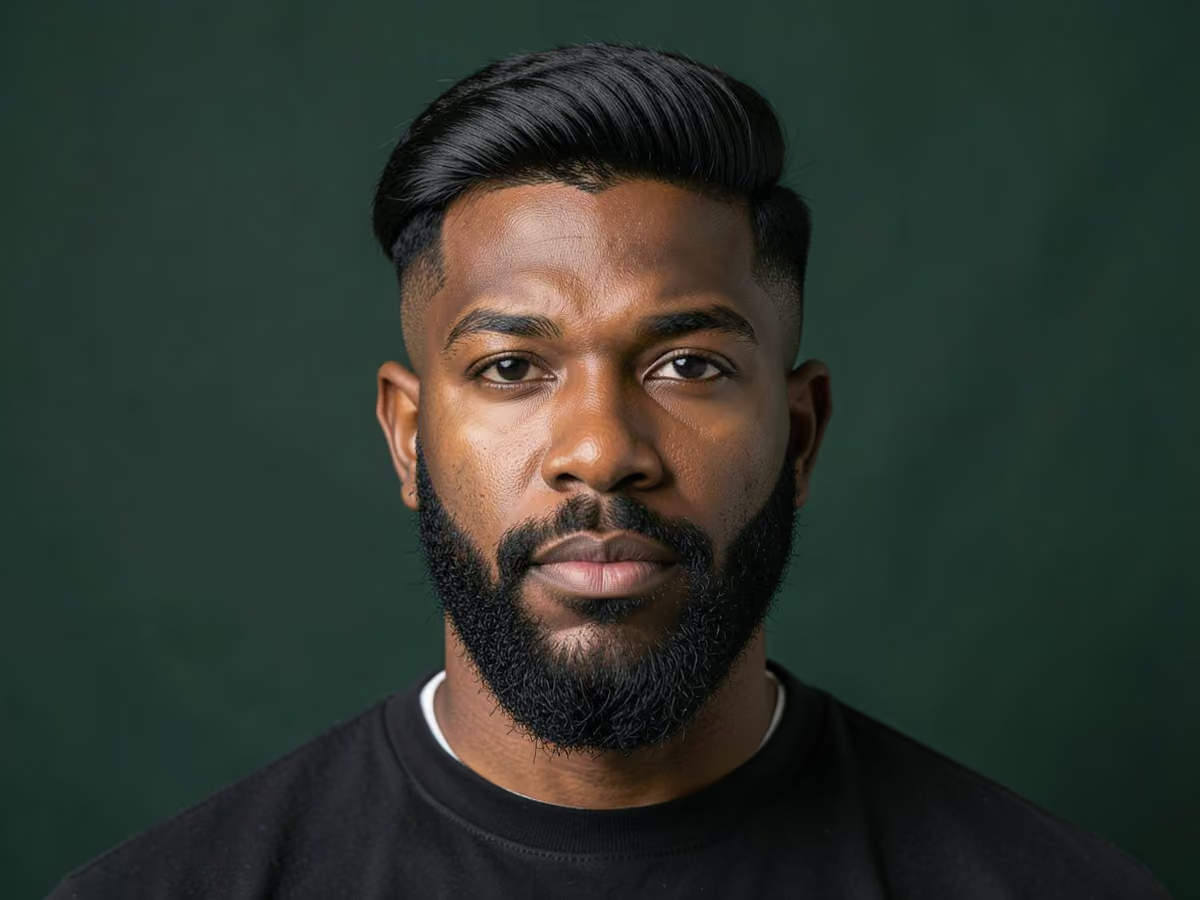
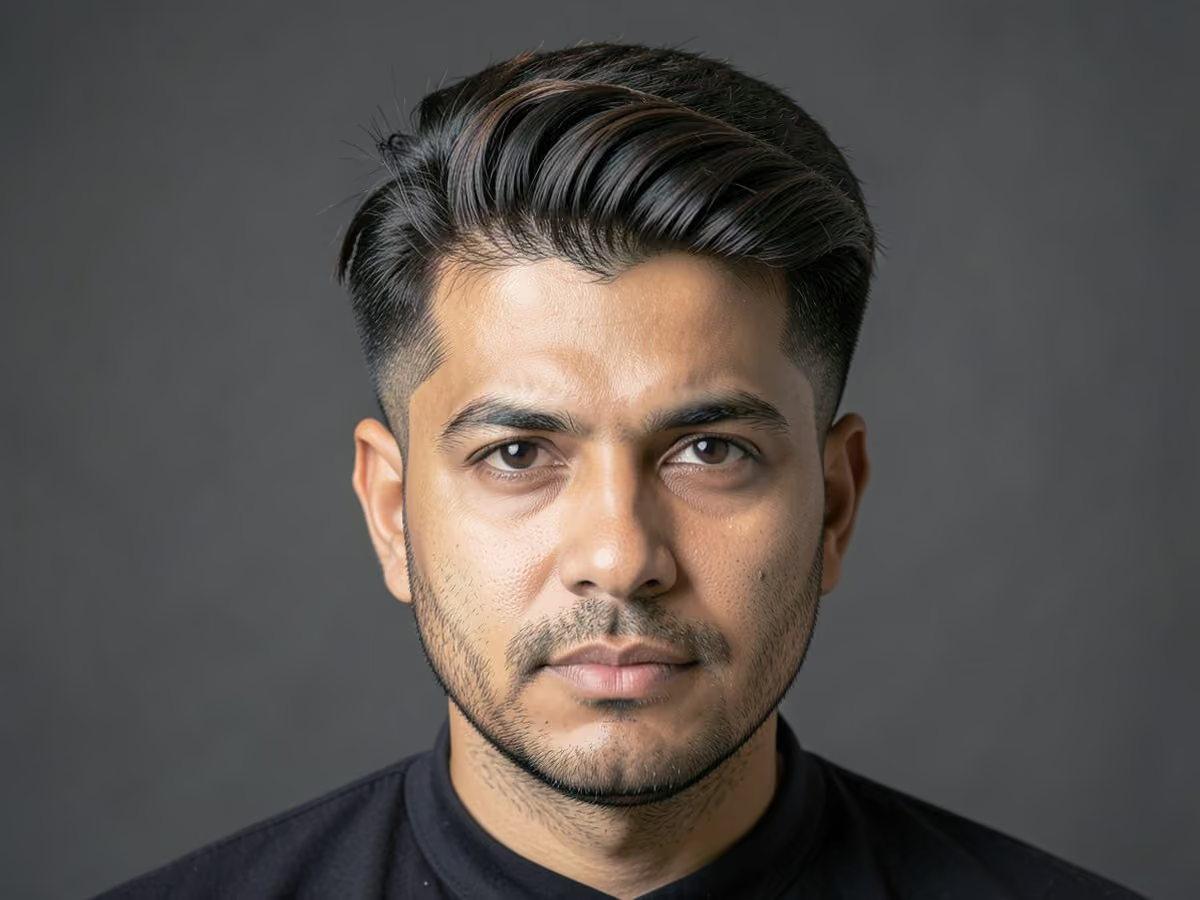
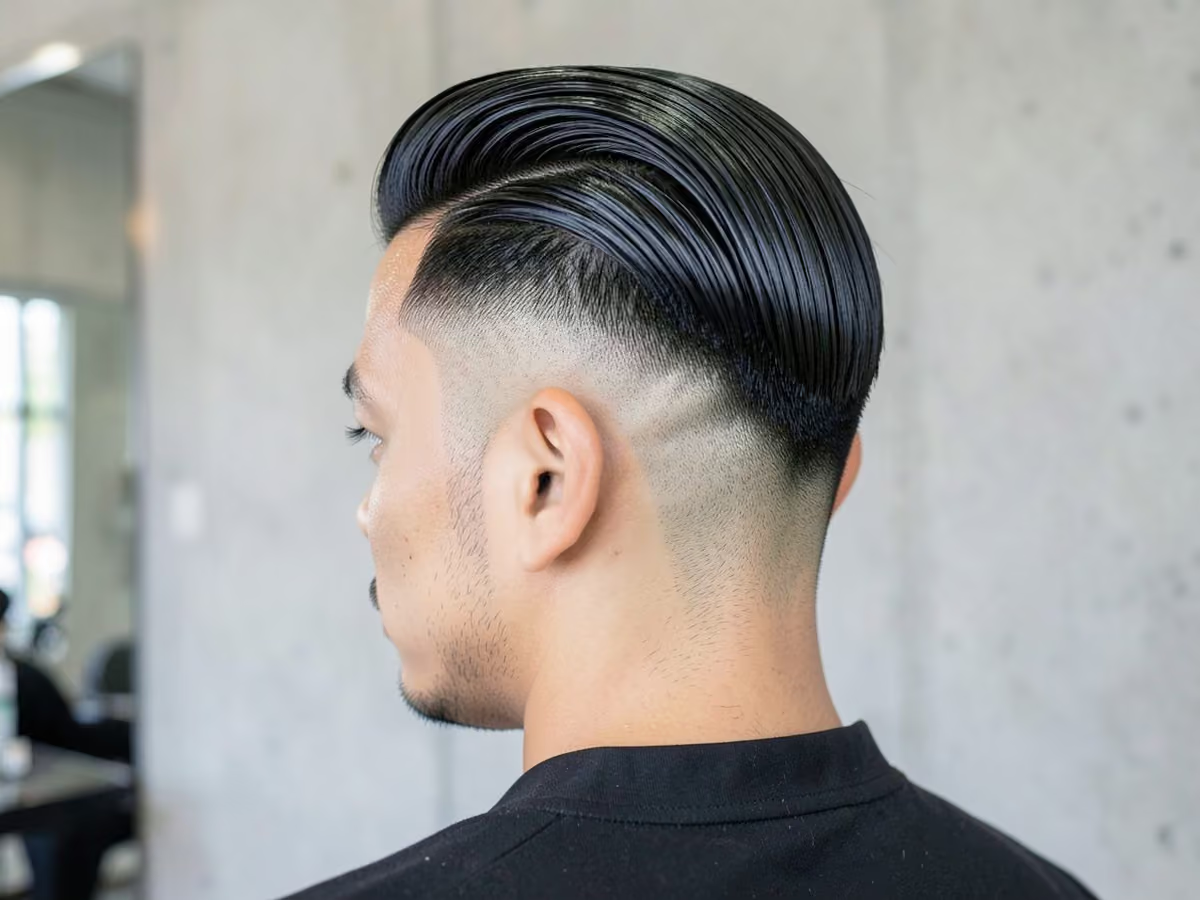
Quick answer: Retro haircuts for men are styles borrowed from earlier decades, roughly the 1920s to the 1990s: slicked side parts, short back and sides, pompadours, flat tops, mop tops, shags, mullets and Caesar cuts. To wear one now, keep the shape of the original and update the sides or product so it suits modern clothes.
Retro Haircuts for Men Styles at a Glance
Every style on this page with its clipper guard, top length and trim interval. Tap a name to jump to that card.
Retro haircuts for men cover about seventy years of barbershop history, from the brilliantine side parts of the 1920s to the bleached crops and center parts of the 1990s. Each decade had a few shapes that defined it. The 54 cuts below are grouped by decade, with lengths, products and the words to use with your barber, plus links to the full galleries for the 1950s, 1970s and 1990s.
What Counts as a Retro Haircut?
A retro haircut is any style that clearly belongs to an earlier decade, worn today on purpose. Most of the cuts people search for fall between the 1920s and the 1990s, because photographs, films and music videos from those years make each look easy to recognize. The shape matters more than the exact detail: a slicked side part reads as 1920s or 1930s, a tall rolled front reads as 1950s, and a center-parted fringe reads as 1990s.
Many retro cuts never fully disappeared. The side part, the crew cut and the flat top stayed in barbershops for decades, and others such as the mullet and curtains returned after long breaks. That is why the same names appear on our men's haircut names chart alongside modern fades. What makes a cut retro is mostly the finish, the product and how it is combined with clothes and facial hair.
How Did Men's Hair Change Decade by Decade?
Through the 1920s to the 1950s, men's hair was mostly short at the sides and set with shiny products, with the length and height on top growing each decade. The 1960s brought longer, softer cuts that covered the ears, and the 1970s pushed length to the collar and beyond. The 1980s mixed volume with short sides in the mullet and new wave cuts, and the 1990s split into neat crops, gelled spikes and long grunge hair.
The table summarizes each decade and links to our full galleries where we have them. Dates are approximate, since styles often started in one decade and peaked in the next, and different groups wore very different cuts at the same time. A 1950s office worker and a 1950s greaser, for example, shared a decade but almost nothing in their haircuts, so use the table as a rough guide rather than a strict timeline.
Almost anyone can wear one if the decade suits the hair. Straight and wavy hair takes the slicked and pompadour looks of the 1920s to the 1950s best, because it holds a comb line and a shine. Thick hair suits flat tops and shags. Curly and coily hair suits the afros, high tops and jheri curl era looks, as well as curly versions of the pompadour. Fine hair does well with short back and sides, crew cuts and Caesar cuts.
Face shape decides the height. Round and square faces suit the taller fronts of the 1950s and the spikes of the 1990s, while long faces do better with the fuller sides of the 1960s and 1970s. Older men often find the 1940s and 1950s side parts easy to wear, since they suit gray hair and a little thinning at the temples.
Filter the styles
Showing all 54 styles
Fade
Hair
Length
1920s and 1930s Haircuts
Short sides, longer tops and a high-shine finish defined the interwar years. These seven cuts range from a glossy slicked part to natural finger waves. Our slick back gallery has more combed-back versions.
Trim:Every 3–4 weeks. Shine highlights any uneven length on top.
Best For:Oval, square faces + straight dark hair.
About This Style
Named for its mirror-like finish, this 1920s look combs three inches of hair straight back or to the side so tightly that it reflects light like shiny leather shoes. The sides are short and scissor cut, and the hairline is kept neat. Dark straight hair gives the strongest gloss. Brilliantine created the original shine; a high-shine water-based pomade gets close today.
How to Style at Home
Comb a high-shine pomade through damp hair from roots to ends.
Comb the top straight back or to one side, pressing it flat.
Run a fine-tooth comb over the surface to remove any lift.
Ask Your Barber
"Three inches on top, short scissor-cut sides and back, neat hairline. I comb it back flat with high shine, so keep the top even and do not texturize it."
Best For:Most face shapes + straight or fine hair.
About This Style
Popular from the 1910s through the 1940s, this cut tapers the sides and back with scissors and clippers to about a #2 at the bottom, rising to two or three inches on top for a part. It was the standard civilian and military cut in Britain for decades. The neckline is tapered rather than blocked. Fine hair suits it because the short sides make the top look fuller.
How to Style at Home
Comb a small amount of light pomade through towel-dried hair.
Set a side part with the comb and push the top across.
Smooth the sides down flat with your palms.
Ask Your Barber
"Short back and sides tapered to a #2 at the bottom, two to three inches on top for a side part, tapered neckline. Old-fashioned, with scissor work on top."
Trim:Every 3–4 weeks. The part line needs an even top to sit flat.
Best For:Oval, long faces + straight fine hair.
About This Style
Parted dead center and combed flat down both sides, this 1920s look is linked to jazz-age film and photography. The top is two to three inches, cut evenly so both halves lie at the same length. The sides are short. It suits long faces because the flat top adds no height. Straight fine hair lies flattest. Shine is high, with every comb line visible.
How to Style at Home
Part the hair in the exact center with a fine-tooth comb while wet.
Comb pomade down each side so the hair lies flat to the scalp.
Press the top down with your palms and leave it to set.
Ask Your Barber
"Two to three inches on top cut evenly for a center part, short tapered sides, neat neckline. I comb it flat with shiny pomade."
Trim:Every 3–4 weeks. The wave in the front needs set length.
Best For:Oval, square faces + straight or wavy hair.
About This Style
Film stars of the 1930s often wore a deep side part with a soft wave lifted at the front, giving more volume than the flat 1920s cuts. The top is three to four inches, the sides short. Wavy hair forms the front wave naturally; straight hair needs a blow-dry. A medium-shine pomade keeps movement. Square faces suit the lift above a strong jaw.
How to Style at Home
Set a deep side part while the hair is damp.
Blow-dry the front up and across with a round brush to form a wave.
Smooth a medium-shine pomade over the surface with flat palms.
Ask Your Barber
"Deep side part with three to four inches on top, longer at the front for a wave, short scissor-cut sides and back. Leave some weight for volume."
Trim:Every 3 weeks. Waves only hold at a set length.
Best For:Oval, heart faces + wavy or relaxed curly hair.
About This Style
S-shaped ridges pressed into the top with the fingers and a comb, then set with gel, create a sculpted wave pattern linked to the 1920s and 1930s. The style was worn by both Black and white men of the era in different forms. The top is two to three inches. Wavy or relaxed hair holds the ridges best. Setting takes time, and the waves must dry undisturbed.
How to Style at Home
Comb light gel through wet hair and set a side part.
Press a ridge with your finger and push the hair below it the other way with a comb.
Repeat in rows and let the waves dry fully without touching.
Ask Your Barber
"Two to three inches on top cut evenly so I can set finger waves, short tapered sides, clean neckline. Please do not texturize the top."
Trim:Every 3–4 weeks. Short tops lose their even shape quickly.
Best For:Oval, square faces + thick, straight or coarse hair.
About This Style
Rowing crews at Ivy League colleges in the 1920s and 1930s are usually credited with the name of this short, practical cut. Unlike the later waxed version, the top is left soft: about an inch at the front, grading shorter toward the crown, with the sides clipped close and tapered. No product is needed. Thick straight hair stands up a little on its own, which gives the athletic look of old team photos.
How to Style at Home
Towel-dry and brush the front up with your fingers.
Leave the top unwaxed so it stays soft and natural.
Brush the sides down flat with a bristle brush.
Ask Your Barber
"Old style crew cut, about an inch at the front grading shorter to the crown, sides clipped close and tapered. No wax, keep the top soft."
Trim:Every 3–4 weeks. Long glossy hair needs regular shaping.
Best For:Oval, long faces + wavy, relaxed or straight hair.
About This Style
Photos and film clips of the bandleader from the 1930s show long, glossy hair slicked back from the forehead that fell forward in loose strands while he performed. The top is five to six inches, the sides shorter and combed back, and the finish is high shine. Wavy or relaxed hair suits it. Expect to use a heavy pomade and comb it back several times a day to keep the shape.
How to Style at Home
Work a heavy pomade through damp hair from roots to ends.
Comb the top straight back with a wide-tooth comb.
Let a few front strands fall loose for movement.
Ask Your Barber
"Five to six inches on top that I can slick back, sides shorter and combed back, scissor cut. Keep the front long enough to fall forward."
Recommended Products
Pomade
Light Gel
1940s Haircuts
Wartime made short cuts common, while civilian styles kept the waved side part. These eight range from a military clipper cut to the pompadour and ducktail of 1940s youth culture. See the high and tight guide for modern military cuts.
Trim:Every 2–3 weeks. Short clipper cuts show growth quickly.
Best For:Square, oval faces + any hair type.
About This Style
Many US servicemen in the 1940s received a short clipper cut, with the sides and back taken close and about an inch or less left on top. The name GI cut stuck for this simple shape. It needs no styling and dries in minutes. A strong jaw looks sharper with the tight outline. Today it sits close to a crew cut, with the sides slightly longer than a high and tight.
How to Style at Home
Towel-dry and push the top forward with your fingers.
Rub a fingertip of matte cream through the top if it sticks up.
Brush the sides down flat with a soft brush.
Ask Your Barber
"GI cut, sides and back at a #1 to #2, about an inch on top, blended and squared at the neckline. Short and simple, no part."
Trim:Every 3 weeks. The ducktail and front both need set lengths.
Best For:Oval, square faces + thick straight or wavy hair.
About This Style
Worn by Mexican-American youth in the zoot suit culture of the 1940s, this cut combines a long front combed up into a pompadour with sides swept back to a ducktail at the nape. Heavy pomade gives a dark, shiny finish. The front needs four inches or more and the sides two or three. It predates the 1950s greaser look and influenced it.
How to Style at Home
Comb heavy pomade through damp hair from roots to ends.
Lift the front up and back into a pompadour with a comb.
Comb each side back so they meet in a vertical line at the nape.
Ask Your Barber
"Four inches or more at the front for a pompadour, sides two to three inches combed back to a ducktail at the nape. Scissor cut, no fade."
Trim:Every 4 weeks. Waves stay neat as they lengthen.
Best For:Oval, long faces + natural wavy hair.
About This Style
Natural waves combed straight back with a little tonic or cream form soft ridges from front to crown, a common civilian look of the 1940s. The top is three to four inches and the sides are short but not clipped close. It needs wavy hair; straight hair can fake it with a texture spray. With so little height at the front, a long face does not look stretched.
How to Style at Home
Apply styling cream to damp hair and comb it straight back.
Push each wave forward slightly with your fingertips to deepen it.
Let it air-dry fully without touching or combing it again.
Ask Your Barber
"Three to four inches on top for a swept-back look, sides short with scissors over comb, tapered neck. I have natural wave, so keep the weight on top."
Trim:Every 3 weeks. The mustache needs shaping every few days.
Best For:Oval, heart faces + straight hair and fine facial hair.
About This Style
A thin, neatly shaved mustache along the top lip paired with a sharp, shiny side part gives a look linked to 1930s and 1940s film leads. The hair is three inches on top, combed flat to the side, with short sides. The mustache is shaved above and below so only a thin line remains. Heart-shaped faces gain balance from the line across the lip.
How to Style at Home
Comb shiny pomade through the hair and set a side part.
Trim the mustache short with a #1 guard.
Shave above and below the mustache to leave a thin line.
Ask Your Barber
"Side part with three inches on top combed flat, short tapered sides. Shape my mustache into a thin pencil line along the top lip."
Trim:Every 3–4 weeks. Front height drops as the sides grow.
Best For:Round, oval faces + straight or wavy hair.
About This Style
Somewhere between a side part and a full pompadour, this 1940s cut sets a high side part and lifts the front into a rounded wave of two to three inches. The sides are short and combed back. It was common among civilian men and big-band singers of the era. Round faces gain height. A blow-dry and a medium-shine pomade create the lift today.
How to Style at Home
Set a high side part while the hair is damp.
Blow-dry the front up and back with a round brush.
Smooth a medium-shine pomade over the lifted front.
Ask Your Barber
"High side part, three inches on top with the front longest for a rounded lift, short sides combed back, tapered neckline."
Trim:Every 2–3 weeks. Coily regrowth shows quickly at the roots.
Best For:Oval, long faces + coily or tightly curled hair.
About This Style
Worn by many Black men from the 1920s into the 1960s, the conk straightened coily hair with a harsh lye mixture so it could be combed into glossy waves or a pompadour. Jazz and swing musicians of the 1940s made it famous. Today a similar look comes from a professional relaxer or a wave-and-pomade routine on short hair, which avoids the chemical burns the original often caused. Ask a stylist, not a home kit.
How to Style at Home
Book any relaxer with a licensed stylist, never at home.
Comb a firm pomade through the top while damp.
Press the waves in with your fingers and a fine comb.
Ask Your Barber
"Vintage conk look: three inches on top combed into glossy waves, short tapered sides. Please check with a stylist first if a relaxer is needed."
Trim:Every 3–4 weeks. The front wave flattens as the top grows.
Best For:Oval, square faces + wavy or straight hair.
About This Style
Publicity photos of the singer from the 1940s show short, wavy hair with a neat side part and a soft lift at the front, held with a light tonic rather than heavy grease. The top is two to three inches and the sides are tapered short with scissors. Natural wave makes the front curl easier. It suits men who want a clean vintage look without a full pompadour.
How to Style at Home
Comb a light pomade through damp hair from the part.
Push the front up and forward to form a gentle wave.
Set the wave with a comb and a short blow-dry.
Ask Your Barber
"Short side part with two to three inches on top and a soft wave at the front. Scissor taper on the sides, not too much product."
Trim:Every 3–4 weeks. Short sides keep the receding outline tidy.
Best For:Oval, long faces + straight hair, receding temples.
About This Style
Film stills from the 1940s show the actor with short hair combed back and to the side over receding temples, finished with a light shine. The top is about two inches and the sides are short and neat. It is a useful reference for men with a maturing hairline, since the combed-back shape does not try to hide the temples. A little tonic or cream gives the period finish.
How to Style at Home
Comb damp hair back and slightly to the side.
Smooth with a small amount of light pomade.
Keep the temples clear rather than combing hair over them.
Ask Your Barber
"Two inches on top combed back and to the side, sides short and tidy. Do not try to cover my temples, just keep it neat."
Recommended Products
Light Pomade
Styling Cream
1950s Haircuts
The 1950s split between neat office cuts and the greaser look of rock and roll. These seven cover a waxed crew cut, a flat top, the Teddy Boy quiff, office side parts and film and jazz looks. For greaser styles, see our rockabilly hairstyles gallery.
Trim:Every 2–3 weeks. The front ridge drops as it grows.
Best For:Round, oval faces + straight or fine hair.
About This Style
A crew cut with the front inch brushed straight up and held stiff with a stick wax was a common 1950s boys' and men's cut. The top grades from about an inch at the front to half an inch at the crown. The sides are tapered short. The wax ridge at the front gives height to round faces. Fine hair stands up more easily with wax than without.
How to Style at Home
Rub a small amount of firm wax or clay into the front inch.
Brush the front straight up with a small brush.
Smooth the rest of the top back and leave it short.
Ask Your Barber
"Crew cut with an inch at the front grading down to half an inch at the crown, sides tapered short, so I can brush the front up with wax."
Trim:Every 2 weeks. The flat surface loses its level fast.
Best For:Square, round faces + thick straight hair.
About This Style
A flat top cut level across the crown, with the sides left long enough to comb back to the nape, gives this 1950s cut its name; the combed sides were called fenders. The top stands one to one and a half inches. The sides are two inches, combed back with pomade. Thick straight hair stands upright best. It mixes military neatness with greaser sides.
How to Style at Home
Brush the flat top straight up with a little wax.
Comb pomade through the long sides and set them back.
Check the flat surface is level and pat any high spots down.
Ask Your Barber
"Flat top at an inch to an inch and a half, cut level, sides left two inches long so I can comb them back as fenders, natural neckline."
Trim:Every 3 weeks. The curl at the front needs exact length.
Best For:Oval, heart faces + wavy or loose curly hair.
About This Style
Based on widely published film stills from the early 1950s, this cut combines a pompadour with a loose curl falling forward over the forehead and sides swept back toward a ducktail. It was widely copied by young men of the time. The front needs four inches and some natural wave. Pomade with medium shine keeps the curl defined. Heart faces suit the forward fall.
How to Style at Home
Apply pomade to damp hair and comb the sides back.
Lift the top into a pompadour, leaving the front lock free.
Twist the lock around a finger so it curls down onto the forehead.
Ask Your Barber
"Pompadour with four inches at the front and a loose curl left free to fall forward, sides two inches combed back toward a ducktail, scissor cut."
Trim:Every 3–4 weeks. Sides past the ears look untidy.
Best For:Most face shapes + straight or gray hair.
About This Style
Office workers of the 1950s wore this neat, short cut with a low side part, about two inches on top and sides tapered close above the ears. Hair tonic gave a light, combed finish rather than a heavy shine. It suits nearly every face and gray hair especially. Today it sits on a low taper and needs only a light cream.
How to Style at Home
Apply a small amount of light cream or tonic to damp hair.
Comb a low side part and push the top across neatly.
Smooth the sides flat against the head with your palms.
Ask Your Barber
"Low side part with two inches on top, sides tapered close above the ears, natural neckline. Neat and short, office length."
Trim:Every 3 weeks. Long quiff and combed sides need shaping.
Best For:Oval, square faces + thick, straight or wavy hair.
About This Style
British Teddy Boys of the 1950s, named after their Edwardian-style suits, wore a tall greased quiff at the front and sides combed back to meet at the nape. The front is four to five inches, the sides around three inches so they can be swept back. Heavy pomade gives the shine. It differs from an American pompadour by the fuller, longer sides that wrap around the head.
How to Style at Home
Apply pomade to damp hair from front to back.
Comb the sides back so they meet at the nape.
Roll the front up and forward into a tall quiff.
Ask Your Barber
"Teddy boy cut: four to five inches at the front for a quiff, three inches on the sides so I can comb them back to the nape. Scissor cut."
Trim:Every 4 weeks. The short crop keeps its shape well.
Best For:Oval, square faces + wavy or thick hair.
About This Style
Early-1950s film stills of the actor show a short, slightly tousled crop with natural wave, around two inches on top, pushed up and to the side without a sharp part. The sides are tapered short. Compared with the greased pompadours of the time, it uses little product and looks rougher. Wavy hair gives the right texture; straight hair needs a little sea salt spray.
How to Style at Home
Towel-dry and push the top up and to the side.
Scrunch a little sea salt spray into the top.
Leave it rough rather than combing it neat.
Ask Your Barber
"Short wavy crop, about two inches on top pushed up and to one side, sides tapered short. No sharp part and a rough finish."
Trim:Every 3–4 weeks. The soft quiff drops as the top lengthens.
Best For:Oval, heart faces + wavy or straight hair.
About This Style
Album covers and photos of the jazz trumpeter from the 1950s show a soft, wavy quiff swept to one side, with short sides and a light, natural finish. The top is three inches at the front, shorter at the crown. It sits between a slick side part and a full pompadour, with more movement than either. Wavy hair gives the front its curl without much product.
How to Style at Home
Blow-dry the front up and to one side with a brush.
Rub a little styling cream through for soft hold.
Let a few waves fall loosely over the forehead.
Ask Your Barber
"Three inches at the front for a soft quiff swept to the side, shorter at the crown, short tapered sides. Natural finish, no heavy grease."
Recommended Products
Styling Cream
Light Pomade
1960s Haircuts
Hair grew longer and softer through the 1960s, from a full side part at the start of the decade to collar-length mop tops and folk hair by the end. These eight follow that change. Our mod cut gallery shows modern versions.
Trim:Every 4–5 weeks. The fringe falls into the eyes quickly.
Best For:Oval, long faces + straight thick hair.
About This Style
Linked to the British band whose photos spread it worldwide in the early to mid-1960s, this mop top has a full fringe to the eyebrows, sides covering the top of the ears and a back reaching the collar. The outline is rounded. It was considered long at the time. Straight thick hair falls into the round shape best. Long faces suit the full fringe.
How to Style at Home
Towel-dry the hair and brush it forward from the crown.
Blow-dry the fringe down with a round brush.
Smooth the outline with a little styling cream.
Ask Your Barber
"Mop top with a full fringe to the eyebrows, sides over the top of the ears, back to the collar, rounded outline. Scissor cut only."
Trim:Every 4 weeks. A fuller cut grows out gradually.
Best For:Oval, square faces + thick straight or wavy hair.
About This Style
Early-1960s photos of the US president, widely reproduced, show a full side part with three to four inches on top, a slight lift at the front and sides kept fuller than a 1950s cut. Little product was used, so the hair moves naturally. Thick wavy hair gives the full look. Square faces suit it, and it remains an easy office cut today.
How to Style at Home
Towel-dry and set a side part with a comb.
Blow-dry the front up and to the side with your fingers.
Rub a little cream through the ends for light control.
Ask Your Barber
"Full side part with three to four inches on top, a little lift at the front, sides fuller than a fade and scissor cut, natural neckline."
Trim:Every 3–4 weeks. Short tops lose texture as they grow.
Best For:Square, oval faces + straight or fine hair.
About This Style
Seen in many 1960s film stills, this short cut has about two inches on top, swept loosely to one side with the fingers, and sides tapered short with scissors. Product use is minimal, and no comb line marks a part. It looks relaxed and practical. Fine hair suits it well because the short length avoids flatness. Square jaws pair well with the neat, low shape.
How to Style at Home
Towel-dry the hair and push it to one side with your fingers.
Work a small amount of matte paste through the top.
Leave the part loose and slightly uneven rather than combed sharp.
Ask Your Barber
"Two inches on top swept to one side, no hard part, sides tapered short with scissors, natural neckline. Textured but tidy."
Trim:Every 5 weeks. A loose shape hides some growth.
Best For:Oval, round faces + straight or wavy light hair.
About This Style
Early-1960s surf music and beach films made this medium-length, brushed-forward cut familiar. The top is three inches, swept forward and to the side, with the ears half covered and the back neat. Sun and salt lighten and texture the hair. Straight or wavy light hair suits it most. A sea salt spray gives the beach texture without the beach.
How to Style at Home
Spray sea salt spray evenly through damp hair from roots to ends.
Blow-dry the top forward and slightly to one side.
Twist a few front pieces with your fingers once dry.
Ask Your Barber
"Three inches on top swept forward and to the side, ears half covered, neat back. Scissor cut with soft texture, no fade."
Trim:Every 6–8 weeks. A loose shape tolerates long gaps.
Best For:Oval, long faces + wavy or curly hair.
About This Style
The mid-1960s folk scene favored longer, unkempt hair, often wavy or curly, reaching the collar and covering the ears. There is little shaping and no product. Natural texture carries the style. Wavy and curly hair suit it best. Long faces benefit from the volume at the sides. Light curl cream keeps it from looking frizzy on dry days.
How to Style at Home
Apply curl cream to damp hair and scrunch lightly.
Let it air-dry fully without brushing or combing it.
Shake the hair loose with your fingers once dry.
Ask Your Barber
"Collar-length hair covering the ears, loose layers, dry cut to keep the wave. Leave it a little messy and shape only the outline."
Trim:Every 4 weeks. Razor-cut ends lose their shape.
Best For:Oval, square faces + straight medium hair.
About This Style
Barbers in the 1960s used the term continental for a fuller, European-influenced cut that was razor cut and blow-dried rather than set with grease. The top is three to four inches, the sides cover part of the ears, and there is no sharp part. It bridged the neat 1950s cuts and the longer late 1960s styles. Straight hair suits the smooth finish.
How to Style at Home
Blow-dry the hair back and slightly to the side with a brush.
Smooth the sides down over the top of the ears.
Finish with a small amount of light cream.
Ask Your Barber
"Razor-cut continental style, three to four inches on top, sides covering part of the ears, no hard part. I blow-dry it smooth."
Trim:Every 3–4 weeks. Short tapered sides stay neat for weeks.
Best For:Oval, square faces + straight or wavy dark hair.
About This Style
Early-1960s spy film stills show the actor with a short, neat side part, two inches on top, combed with a light tonic, and full sideburns cut level with the middle of the ear. The sides are tapered with scissors. It is tidier than the longer cuts that followed later in the decade and suits men who want a classic look for suits and formal events.
How to Style at Home
Comb a light pomade through from a low side part.
Brush the sides down neatly toward the ears.
Square the sideburns at mid-ear with a trimmer.
Ask Your Barber
"Short side part with two inches on top, scissor taper on the sides, sideburns left full and squared at mid-ear. Light finish."
Trim:Every 2–3 weeks. Short natural hair shows growth quickly.
Best For:Oval, square faces + coily or 4C hair.
About This Style
Photos of the boxer from the 1960s show short, close-cropped natural hair kept even all over, about half an inch, with a neat hairline and tidy edges. It was a common look for Black men of the decade before longer afros took over. A low taper at the nape and sideburns keeps the outline clean. Daily moisture and a soft brush keep it even and healthy.
How to Style at Home
Apply a light leave-in to the hair after washing.
Brush in one direction with a soft brush.
Tidy the nape at home between barber visits.
Ask Your Barber
"Half an inch all over, even on top, neat hairline and a low taper at the nape and sideburns. Soft edges, nothing designed."
Recommended Products
Leave-In
Edge Brush
1970s Haircuts
Length and layers ruled the 1970s. These six add to the full collection on our 70s hairstyles page, from a collar-length rocker cut to a short punk crop from the end of the decade.
Trim:Every 5–6 weeks. Layers keep their shape as they grow.
Best For:Oval, square faces + straight or wavy fine hair.
About This Style
Familiar from many 1970s film images, this cut has collar-length layers swept to one side, with a soft part and hair partly covering the ears. Little product is used and the hair moves freely. Light-colored straight or wavy hair shows the layering. Square faces suit the soft sides. Of the decade's longer looks, this one fits an office most easily.
How to Style at Home
Towel-dry and comb the hair to one side.
Blow-dry on low heat with your fingers for soft lift.
Rub a small amount of cream through the ends.
Ask Your Barber
"Collar-length layered cut, swept to one side with a soft part, ears partly covered. Keep the layers long and natural."
Trim:Every 6 weeks. Ends split before the shape changes.
Best For:Oval, long faces + thick straight or wavy hair.
About This Style
Rock musicians of the 1970s often wore this heavy, layered cut that sits on the collar and covers the ears, with a center or loose side part and messy texture. It is shorter than hippie length and thicker than a feathered cut. Thick hair gives the weight. Long faces suit the fullness at the sides. A texture spray adds grit.
How to Style at Home
Mist sea salt spray through damp hair, focusing on the lengths.
Rough-dry with your fingers while your head is tipped forward.
Part loosely in the middle and leave the ends uneven.
Ask Your Barber
"Collar-length layered cut covering the ears, heavy and textured, with a loose middle part. Razor or point cut for rough ends, no clippers."
Trim:Every 3–4 weeks. Sideburns need squaring every week.
Best For:Long, oval faces + straight hair and full sideburns.
About This Style
Not every 1970s man grew long hair. Many kept a short cut of two to three inches on top and grew thick sideburns to the bottom of the ear or lower, giving a period look without the length. The sideburns are trimmed to a #3 and squared. Long faces gain width from them. It suits workplaces that ask for short hair.
How to Style at Home
Style the top with a little cream and a side part.
Comb the sideburns down and trim them with a #3 guard.
Square the bottom edge of each sideburn evenly with a trimmer.
Ask Your Barber
"Short cut, two to three inches on top with a side part, sides tapered, sideburns left long to below the ear, #3 and squared."
Trim:Every 3 weeks. Spiky texture needs short length.
Best For:Oval, square faces + straight thick hair.
About This Style
The late-1970s punk scene answered long hair with a short, rough crop, choppy on top and spiked up in uneven pieces, sometimes bleached or dyed. The top is one to two inches and the sides short. Thick straight hair stands up best. Square faces suit the hard outline. Texture powder gives the grit without heavy gel.
How to Style at Home
Apply texture powder to dry roots across the top.
Pinch the hair into uneven spikes with your fingers.
Leave the finish rough and uneven, not neat or symmetrical.
Ask Your Barber
"Short punk crop, one to two inches on top cut choppy and uneven, short sides at a #2, rough outline. I spike it up."
Trim:Every 4–6 weeks. The forward fringe needs trimming first.
Best For:Oval, square faces + straight, thick dark hair.
About This Style
Early-1970s martial arts film stills show the actor with straight, dark hair cut in a rounded shape, the fringe falling forward to the eyebrows and the sides covering the tops of the ears. The top is about three inches. Straight, thick hair holds this outline without product. It reads as a forerunner of the modern bowl cut but with more texture and a softer edge.
How to Style at Home
Towel-dry and comb the hair forward and down.
Shake the fringe loose with your fingers so it falls naturally.
Skip product or add a little styling cream for control.
Ask Your Barber
"Three inches on top, rounded shape with the fringe at my eyebrows, sides over the top of the ears, soft textured edges."
Trim:Every 4–5 weeks. The angled fringe loses its line as it grows.
Best For:Oval, long faces + straight or fine hair.
About This Style
British soul boys of the late 1970s, and football fans soon after, wore the wedge: short back and sides with a long, heavy fringe swept across one side of the forehead. The fringe is four to five inches and angled so it covers one eye. Straight hair shows the sharp line best. Today it pairs well with a low taper for a cleaner neckline.
How to Style at Home
Blow-dry the fringe across the forehead toward one side.
Smooth the fringe with a little styling cream on your fingertips.
Keep the back and sides brushed down flat.
Ask Your Barber
"Wedge cut: short back and sides with a scissor taper, long fringe of four to five inches swept across and angled over one eye."
Recommended Products
Styling Cream
Round Brush
1980s Haircuts
Volume, contrast and product defined the 1980s. These eight cover the mullet, the new wave cut, the jheri curl and big rock hair. For current versions, see the modern mullet guide.
Trim:Every 4–6 weeks. The short sides need regular shaping.
Best For:Oval, square faces + straight or wavy thick hair.
About This Style
Short on top and at the sides, long at the back, with a clear jump between the two, the 1980s mullet is the version most people picture. The top is about two inches, the sides cut above the ears, and the back falls past the collar. Thick straight or wavy hair gives the back its flow. Today's versions usually blend the step more softly.
How to Style at Home
Towel-dry and push the top up with your fingers.
Comb the short sides back so they sit above the ears.
Let the back hang straight or flick out naturally.
Ask Your Barber
"Classic mullet: two inches on top, sides cut above the ears, back left long past the collar, clear step between sides and back."
Trim:Every 4–5 weeks. The neat front needs regular trims.
Best For:Oval, long faces + straight or wavy hair.
About This Style
A neat side-parted front that looks like an office cut from the front, with longer hair at the back reaching the collar, is the toned-down 1980s version. The sides are tapered and the transition to the back is soft. Choose it if you like the mullet idea but not a dramatic step. Extra hair at the nape also balances a long face.
How to Style at Home
Set a side part and comb the front neatly across.
Smooth the sides down with a little cream.
Let the back fall naturally over the collar.
Ask Your Barber
"Neat side part on top, sides tapered with scissors, back left long to the collar and blended softly. Tidy from the front."
Trim:Every 4 weeks. Curls dry out and need constant moisture.
Best For:Oval, round faces + coily or tightly curled hair.
About This Style
Popular among Black men and women in the 1980s, this chemical process loosened coily hair into soft, glossy curls that were kept moist with an activator spray. The curls hung to the collar or shorter. The process was demanding and could stain collars and pillows. Today a similar loose curl is achieved with curl sponges or curl cream. Any chemical treatment needs a licensed professional.
How to Style at Home
Apply curl cream to damp hair for a glossy finish.
Twist with a curl sponge in small circles to form loose curls.
Mist with leave-in during the day to keep the curls moist.
Ask Your Barber
"Jheri curl style: curls two to three inches long, rounded shape, tapered sides. For a non-chemical version, I will use curl cream and a sponge."
Trim:Every 3–4 weeks. Short hair around the tail grows unevenly.
Best For:Teens, young men + straight or wavy hair.
About This Style
Short hair all over with a single thin strand left long at the nape, sometimes braided, was a common 1980s look for boys and young men. The tail is half an inch wide and three to six inches long. The rest is cut to about an inch. It is easy to wear and remove. Straight or wavy hair hangs neatest in the tail.
How to Style at Home
Style the short top with a little matte cream.
Comb the tail straight down at the nape.
Braid the tail if you want a tidier finish.
Ask Your Barber
"Short cut, about an inch all over, with a thin rattail half an inch wide left long at the nape. Keep the tail centered."
Trim:Every 3–4 weeks. The asymmetric fringe loses its angle.
Best For:Oval, heart faces + straight fine or medium hair.
About This Style
Early-1980s new wave music brought asymmetric cuts: a long, heavy fringe swept across one side of the face, with the other side cut short or shaved. The top is often teased or sprayed into volume. Straight hair shows the angle most clearly. Heart-shaped faces suit the swept fringe. Some versions were dyed jet black or bleached.
How to Style at Home
Blow-dry the fringe across one side of the face.
Tease the crown lightly with a comb for volume.
Set the fringe with a light mist of spray or paste.
Ask Your Barber
"Asymmetric new wave cut: long fringe swept across my left side, right side cut short at a #2, volume at the crown."
Best For:Oval, long faces + long thick or permed hair.
About This Style
Late-1980s rock bands made big, teased, layered hair past the shoulders their trademark, often permed and held with heavy hairspray. The layers are short at the crown for lift and long at the back. Thick or permed hair builds the volume. All that side volume makes a long face look shorter. Heavy teasing damages hair, so modern versions use texture spray instead.
How to Style at Home
Spray thickening spray at the roots of damp hair.
Blow-dry with your head upside down for the most root volume.
Backcomb the crown lightly and set with spray.
Ask Your Barber
"Long layered cut past the shoulders, short layers at the crown for volume, long at the back. I want big hair, so keep it full."
Trim:Every 4–5 weeks. Feathering droops once it grows.
Best For:Oval, round faces + straight fine hair.
About This Style
Preppy students of the early 1980s wore a shorter, neater feathered cut than the 1970s version, with a side part, sides feathered back over the ears and a back above the collar. It is blow-dried smooth. Straight fine hair suits it. Round faces gain lift from the side-swept front. It reads as clean-cut rather than rock.
How to Style at Home
Set a side part with a comb while the hair is damp.
Blow-dry the sides back over the ears with a round brush.
Finish with a light mist of spray or cream.
Ask Your Barber
"Short feathered cut with a side part, sides feathered back over the ears, back above the collar. Neat and blow-dried."
Trim:Every 3–4 weeks. The short crop stays tidy with regular trims.
Best For:Oval, square faces + dark straight or wavy hair.
About This Style
Concert photos from the early 1980s show the singer with short, dark hair, around two inches on top, combed back and slightly to the side, paired with a thick mustache. The sides are tapered short. It marked a change from the longer glam hair of the 1970s and suits men who want a retro look built around facial hair rather than length.
How to Style at Home
Comb a light pomade through and push the top back.
Trim the mustache along the lip line every week.
Brush beard oil through the mustache in the morning.
Ask Your Barber
"Two inches on top combed back and slightly to the side, sides tapered short. Square off my mustache at the corners of the mouth."
Recommended Products
Light Pomade
Beard Oil
1990s Haircuts
The 1990s mixed bleach, shaved designs and undercuts with longer grunge hair. These six add to the full collection on our 90s hairstyles page, which covers curtains, spikes and high tops.
Best For:Oval, square faces + straight or thick hair.
About This Style
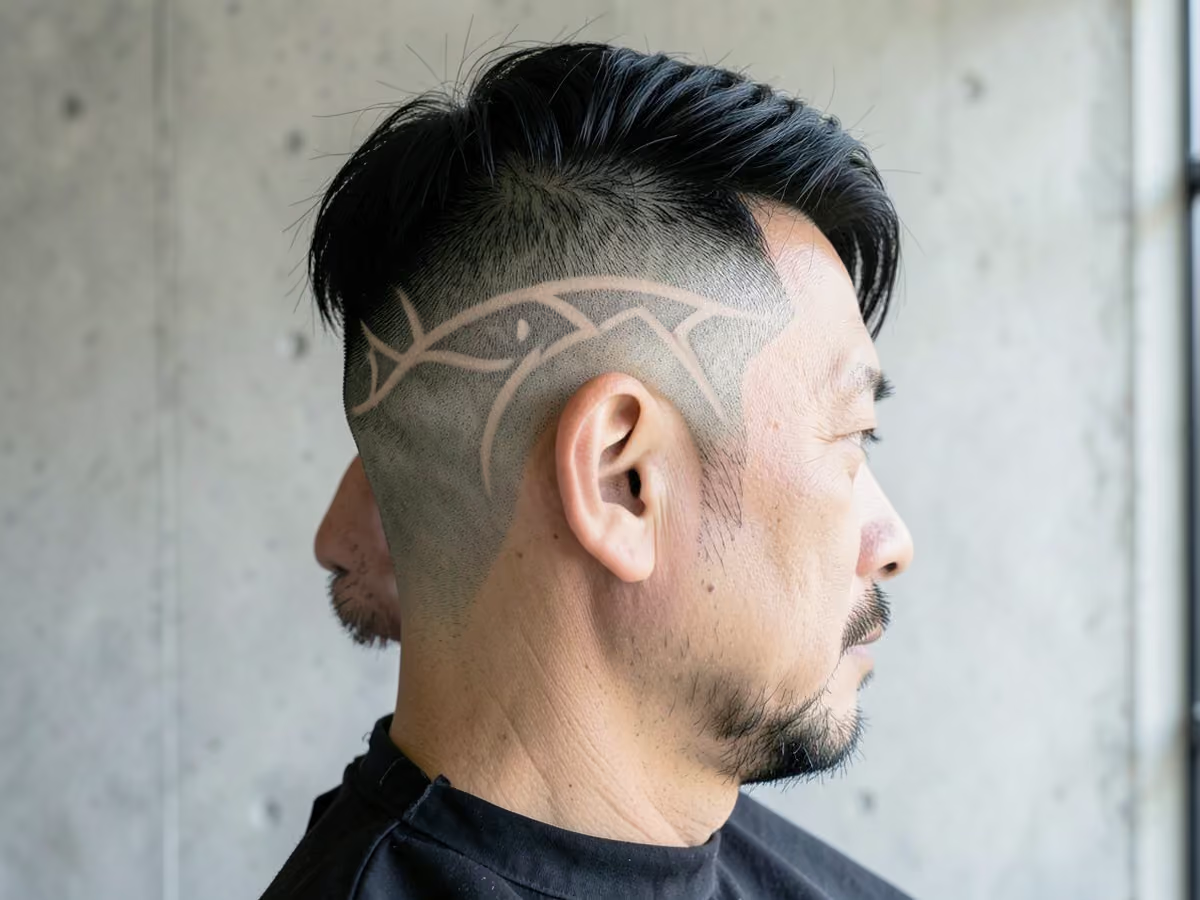
Shaved patterns such as tribal curves and points cut into an undercut were a popular late-1990s detail. The sides are clipped short, and the design is shaved into them with a trimmer. The top is longer, often three inches, and worn forward or spiked. Thick hair shows the contrast best. Designs need touching up every week or two.
How to Style at Home
Style the top forward or spiked with matte clay.
Keep the shaved sides clean and moisturized between barber visits.
Book a design touch-up every ten to fourteen days.
Ask Your Barber
"Undercut at a #1 on the sides, three inches on top, with a tribal pattern shaved into one side. Keep the lines sharp."
Trim:Every 4 weeks. Roots show and the bowl loses shape.
Best For:Oval, long faces + straight thick hair.
About This Style
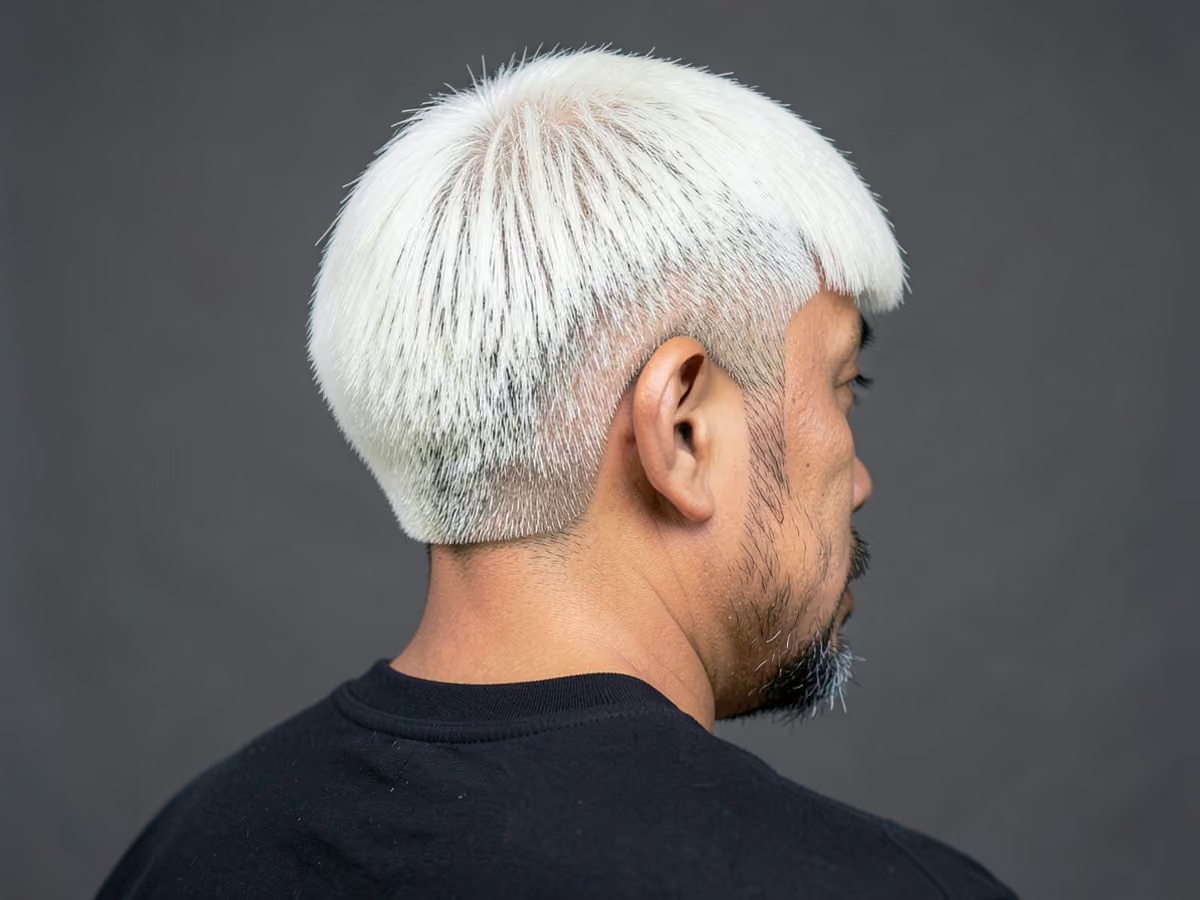
Skate parks of the 1990s were full of round bowl cuts lightened to near white. The top hangs evenly around the head at eyebrow and ear level, and the sides beneath are short. Straight thick hair keeps the round shape. Dark roots grow in fast. Purple shampoo and a weekly conditioner keep the color from turning yellow.
How to Style at Home
Wash with a purple shampoo once a week to stop yellowing.
Blow-dry the hair straight down around the head.
Apply leave-in conditioner to the ends after every wash.
Ask Your Barber
"Bowl cut, even all around at eyebrow and ear level, short sides underneath. I will bleach it, so cut it a little longer."
Trim:Every 2–3 weeks. Roots and fringe both need upkeep.
Best For:Square, round faces + straight or coily short hair.
About This Style
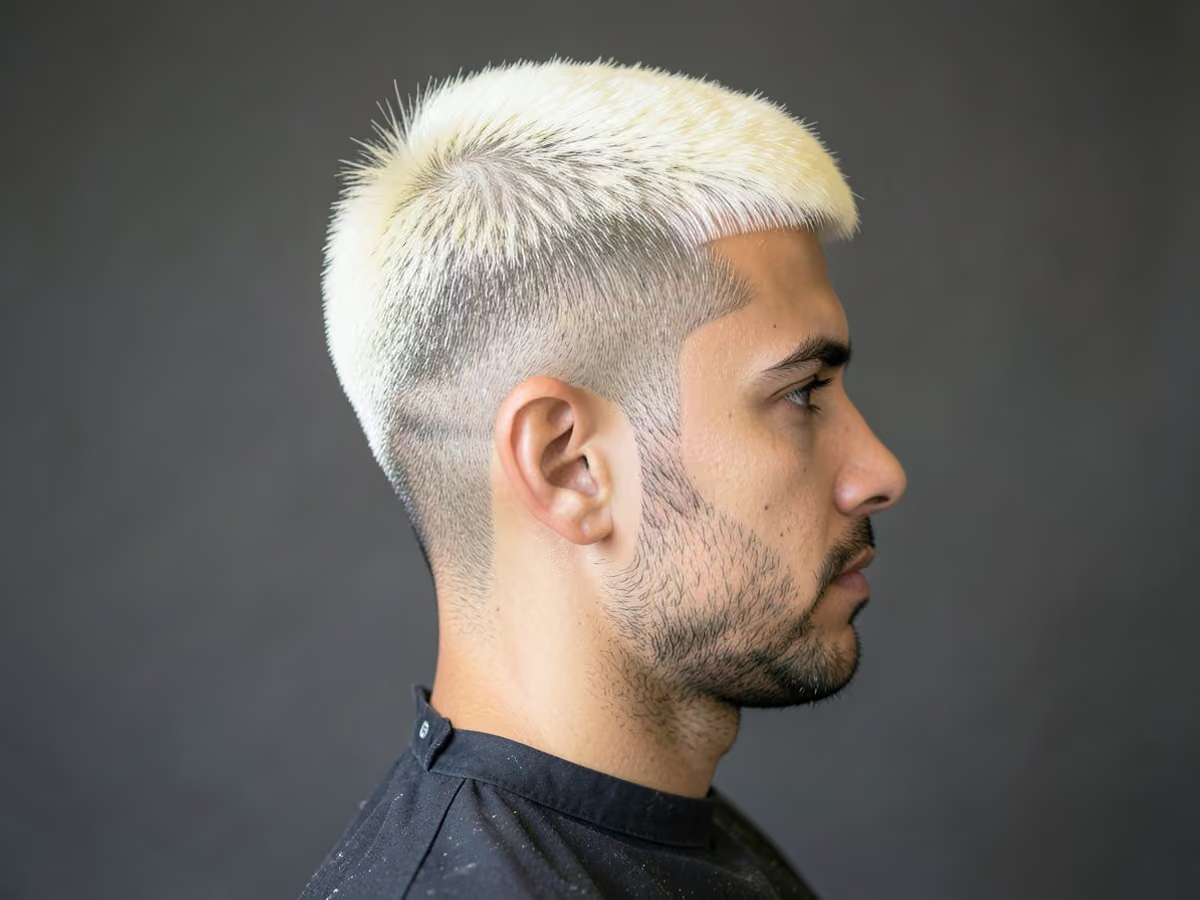
Bleaching a short Caesar cut, with an inch on top brushed forward to a straight fringe, gave a bright, cropped look that turned up on sports stars and pop acts around the turn of the millennium. The sides are short. Coily and straight hair both suit it. Roots show quickly, so touch-ups are needed often. Moisture is important after bleaching to prevent breakage.
How to Style at Home
Brush the top forward to a straight fringe.
Apply leave-in to the bleached top after washing.
Use purple shampoo weekly to keep the color pale.
Ask Your Barber
"Caesar cut, an inch on top brushed forward, straight fringe, short tapered sides. I am bleaching the top, so keep it even."
Trim:Every 3 weeks. Shaved sides need clipping often.
Best For:Oval, long faces + straight or wavy long hair.
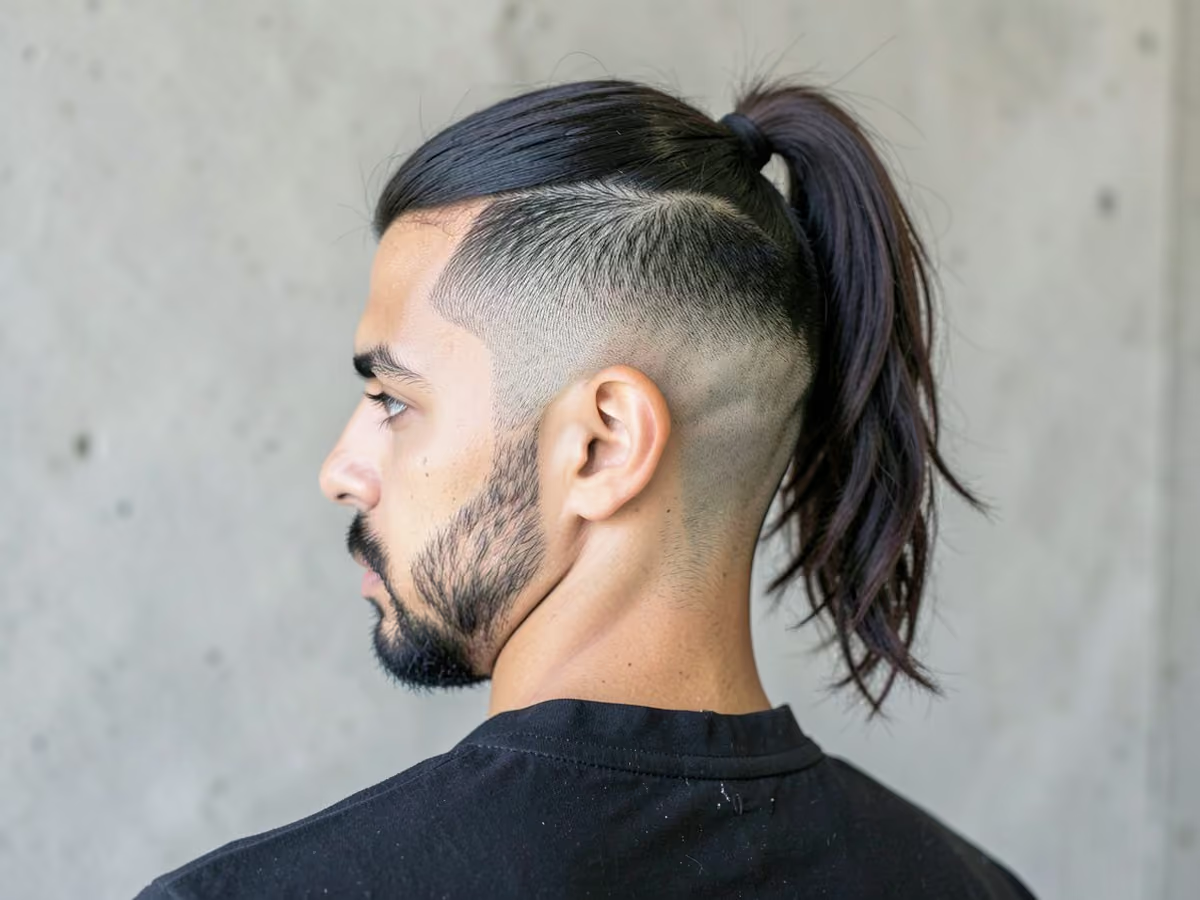
About This Style
Long hair on top tied back into a ponytail, with the sides and back shaved or clipped close underneath, was a late-1990s alternative look. The top is six inches or more. The shaved sides show when the hair is tied up. Straight or wavy hair ties neatly. Tying the hair back keeps the face open, which flatters long faces.
How to Style at Home
Brush the long top straight back from the hairline.
Tie it into a ponytail at the crown or nape.
Rub a little scalp oil on the shaved sides.
Ask Your Barber
"Sides and back clipped to a #1, top left long, six inches or more, so I can tie it back. Keep a clean line where they meet."
Trim:Every 6–8 weeks. Braids are redone as new growth loosens them.
Best For:Oval, long faces + coily or 4C hair, four inches plus.
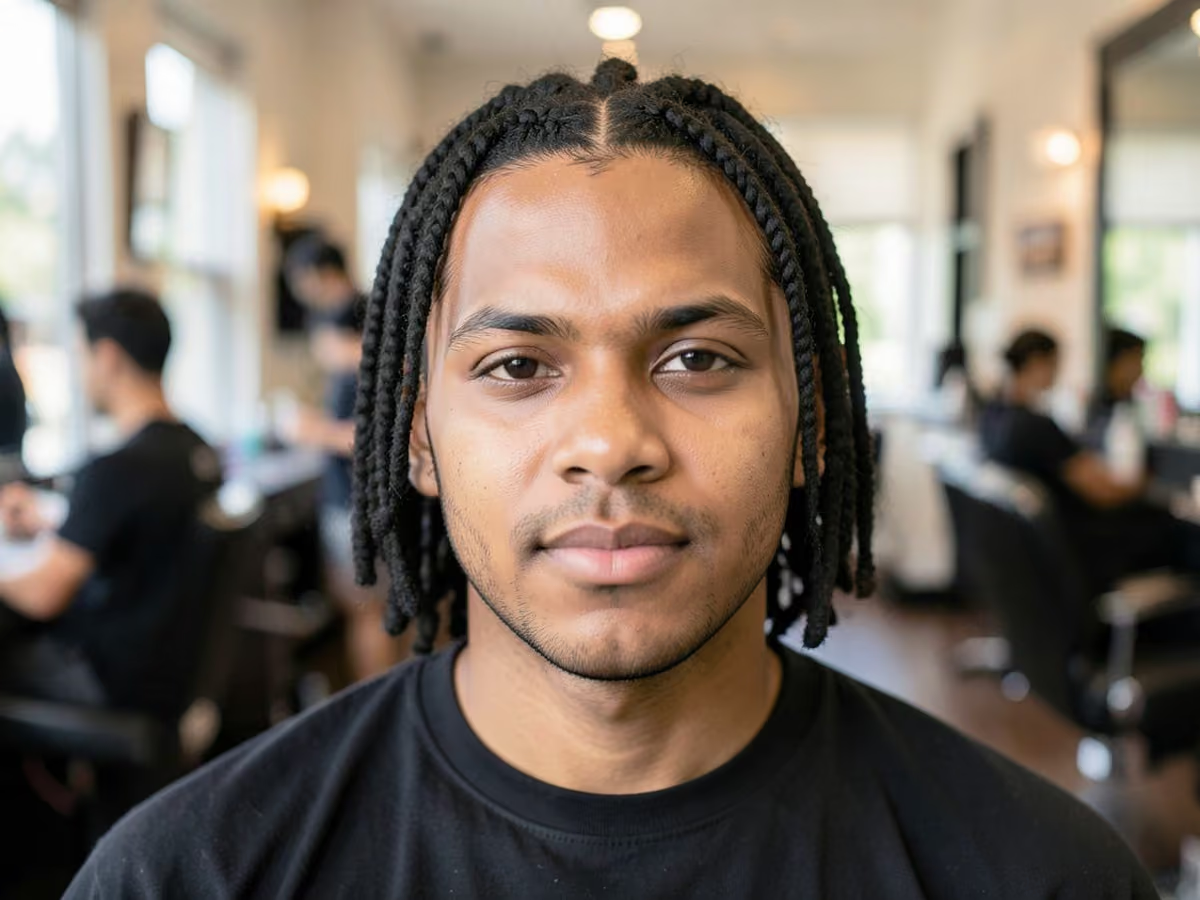
About This Style
Chin-length box braids with square parts and no extensions were a common look for young Black men in the 1990s, often worn with a bandana or loose. The hair needs about four inches to braid, and the parts are about an inch square. A braider, not a barber, usually installs them. Keep the scalp moisturized and avoid braiding too tightly, which can pull at the hairline.
How to Style at Home
Spray the scalp lightly with leave-in between washes.
Oil the scalp along the parts once or twice a week.
Sleep in a satin durag or bonnet to stop frizz.
Ask Your Barber
"Chin-length box braids with one-inch square parts, no extensions, not too tight at the hairline. Low taper at the nape."
Trim:Every 3–4 weeks. The tall front needs shaping to stay upright.
Best For:Oval, long faces + thick, straight or wavy hair.
About This Style
Early-1990s television photos show the actor with a brushed-up front of about three inches, combed back at the sides, and long sideburns reaching below the ear. It borrowed from the 1950s pompadour but with a softer, drier finish. Thick hair holds the height. A blow-dry with a round brush lifts the front, and a matte product keeps it from looking greasy.
How to Style at Home
Blow-dry the front up and back with a round brush.
Work matte paste through the top for hold.
Comb the sides back and trim the sideburns straight.
Ask Your Barber
"Three inches at the front brushed up and back, sides combed back, long sideburns to below the ear. Matte finish, not greasy."
Recommended Products
Matte Paste
Round Brush
Retro Haircuts Updated with Modern Fades
Most men wear retro cuts today with one modern change: a fade or taper on the sides. These four keep a vintage shape on top and swap the old scissor sides for a cleaner, shorter finish.
Trim:Every 2–3 weeks. Skin at the sides regrows within two weeks.
Best For:Oval, square faces + straight or wavy hair.
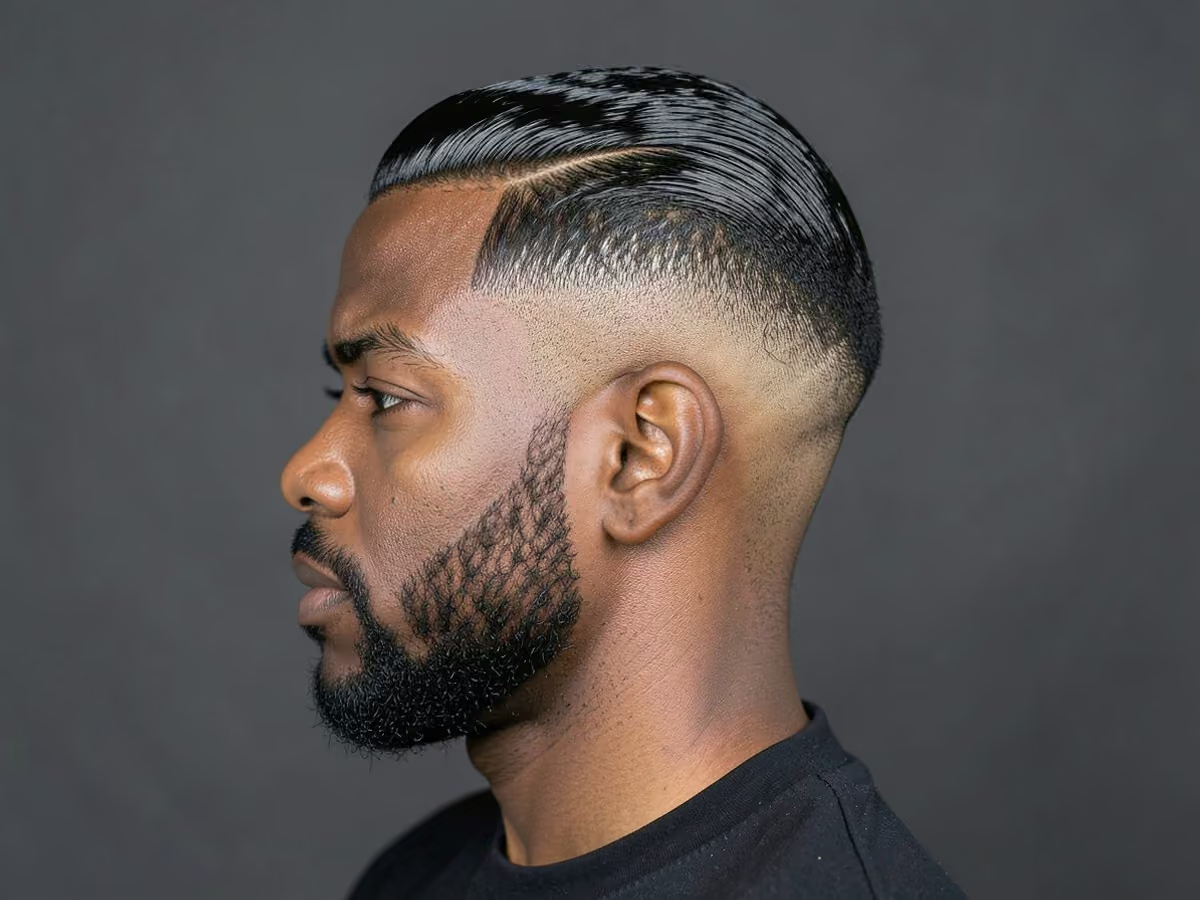
About This Style
Keeping the 1940s side part on top, three inches combed across with a glossy pomade, and replacing the scissor sides with a mid skin fade gives the vintage shape a cleaner edge. The fade runs from bare skin above the ear to a #2 near the part. It needs more barber visits than the original, but it photographs sharply and works with modern suits.
How to Style at Home
Comb pomade through damp hair from the part.
Blow-dry the top across from the part on medium heat.
Smooth the shine with a final pass of the comb.
Ask Your Barber
"Classic side part with three inches on top, mid skin fade from bare skin above the ear to a #2 at the part, glossy finish."
Trim:Every 4–5 weeks. The fringe reaches the eyes first.
Best For:Oval, long faces + straight or wavy hair.
About This Style
Built on the 1960s rounded fringe and full top, about three to four inches, this update cuts a low taper at the sideburns and nape so the edges look tidy instead of shaggy. The ears are left half covered. It keeps the period shape but suits an office better than the collar-length original. Straight hair holds the round outline best.
How to Style at Home
Towel-dry and comb the fringe forward to the brows.
Shake the top loose with your fingers to keep it soft.
Use a small amount of matte cream on the ends.
Ask Your Barber
"Rounded mop top with three to four inches on top and a fringe at the brows, low taper at the sideburns and nape, ears half covered."
Trim:Every 3–4 weeks. Feathered layers and fade grow out together.
Best For:Oval, heart faces + straight or wavy hair.
About This Style
Taking the blow-dried 1970s feathered top, swept back from a center or side part over the ears, and pairing it with a low fade under the layers makes the shape lighter. The top stays three to four inches with layers, while the fade removes bulk around the ears and nape. A round brush and some heat give the classic wing shape.
How to Style at Home
Blow-dry the top back and away from the face with a round brush.
Mist a light thickening spray before drying for lift.
Brush the wings back over the ears once dry.
Ask Your Barber
"Feathered layers on top, three to four inches, swept back from a side part. Low fade under the layers so there is no bulk at the ears."
Trim:Every 3–4 weeks. Tapered edges keep the slick look tidy.
Best For:Oval, long, square faces + straight or wavy hair.
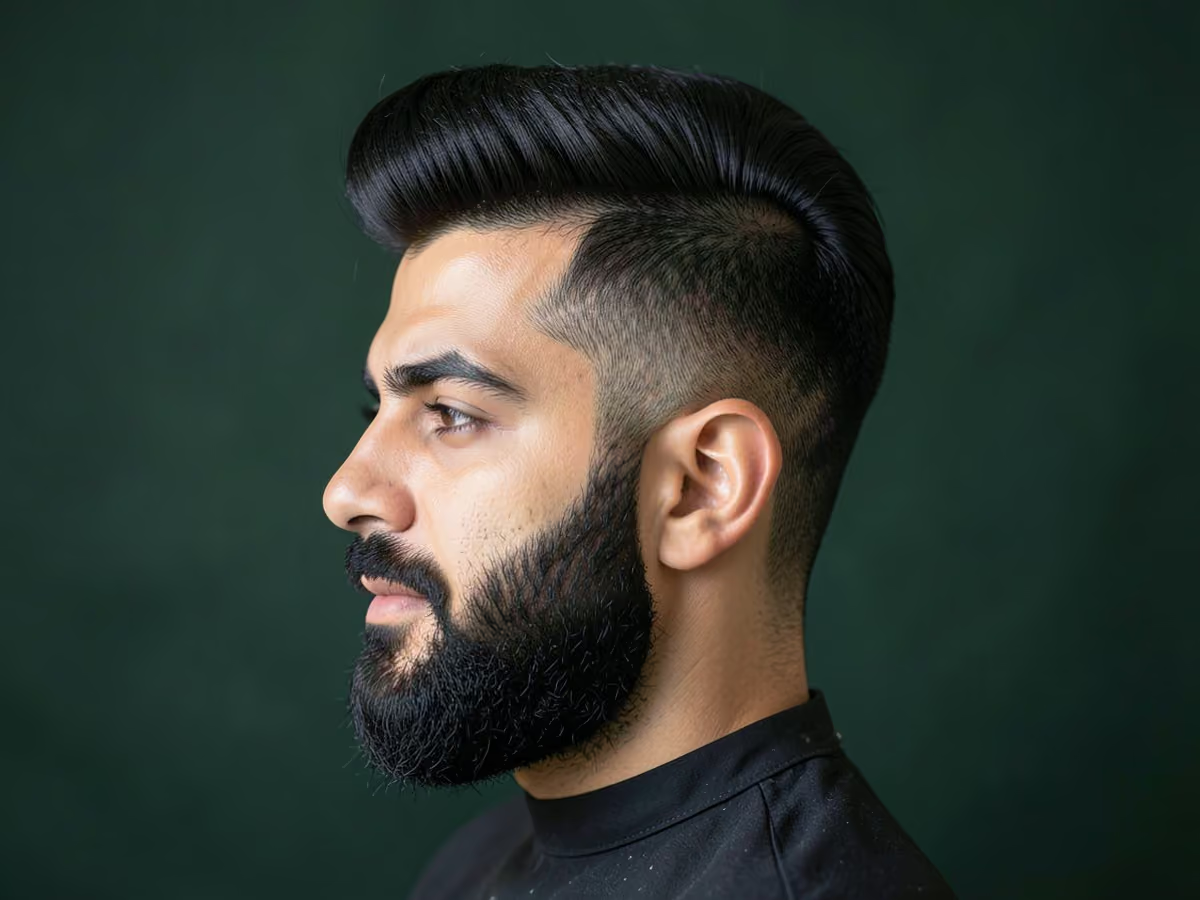
About This Style
Borrowing the high-shine 1920s slick back, with three to four inches combed straight back, and finishing the sides with a mid taper gives a cleaner outline than the old scissor sides. Water-based pomade keeps the shine but washes out easily. The taper leaves most of the side length, so it still looks period-correct from the front while the edges stay neat.
How to Style at Home
Apply water-based pomade evenly to damp hair from front to back.
Comb straight back from the hairline to the crown.
Finish with a fine comb for clean, even lines.
Ask Your Barber
"Three to four inches on top combed straight back, mid taper on the sides and nape, high-shine finish. Keep the length on the upper sides."
Recommended Products
Pomade
How Do You Ask Your Barber for a Retro Cut?
Start with the decade and the name, then give lengths for the top, sides and back. Many older barbers know terms such as short back and sides, flat top with fenders or executive contour, but younger barbers may know the shape only from photos. Say how you want the sides finished: scissor cut for most pre-1960 looks, or a taper or fade for a modern version. Guard numbers help; a #2 leaves 1/4 inch and a #4 leaves 1/2 inch.
Bring one photo from the front and one from the side, and mention the product you plan to use, because shiny pomades and dry clays need different amounts of weight left in the hair. If the cut needs growth, such as a shag or mop top, ask for a plan of trims rather than one big change. Our classic side part guide covers the most common pre-1960 request in more detail.
Clipper Guards Used in Retro Haircuts for Men Styles
A clipper guard is the plastic comb that clips onto the blade and sets how much hair is left: a #1 leaves 3 mm (1/8 inch), each step up adds about 3 mm. The right column lists the cards on this page that call for each guard. See the full clipper guard numbers guide for the complete chart.
Clipper guard sizes for retro haircuts for men styles
Old products such as brilliantine, hair tonic, butch wax and heavy grease are still made in small numbers, but most men now use modern equivalents. A water-based pomade gives the shine of the 1920s to 1950s cuts and washes out with one shampoo. Matte clay or paste suits the textured looks of the 1960s and 1990s, while sea salt spray and light cream suit the 1970s. Curl cream and leave-in replace the heavy activators of the 1980s.
Heat matters as much as product. A blow-dryer with a round brush sets the lift for pompadours and feathered cuts before any product goes on, and a cool blast at the end locks the shape. Use less product than you expect at first and add more only on the surface. For a full comparison of finishes, see our guide to pomade vs clay vs wax, which explains hold and shine levels for each type.
How Do You Wear a Retro Cut Without Looking Like a Costume?
Keep one strong reference and make the rest modern. A 1950s pompadour looks current with a low taper and everyday clothes, but can look like fancy dress with a matching leather jacket, sideburns and heavy grease all at once. The same goes for a 1970s shag with a full mustache and wide collar. Choose the hair first, then decide how far the clothes and facial hair should follow.
Softening the finish helps too. Swap high shine for a medium-shine pomade, or stiff gel for clay. Clean up the neckline and edges even on long cuts, because a sharp outline makes any style look deliberate. Regular trims keep the shape close to the photo you brought in, which is usually what separates a retro cut from simply overdue hair.
Which Retro Haircuts for Men Is Right for You?
Pick your hair type and how much upkeep you will put in. The matches below come from the Best For and Maintenance notes on each card. Upkeep follows the Maintenance badge: low means a cut every 3 to 6 weeks and almost no daily styling, high means weekly line-ups or daily product.
Q1: What is the most popular retro haircut for men?+
The slicked side part and the pompadour are among the most requested, because they suit offices and grow out well. Curtains and the mullet have also returned strongly in recent years. Barbers often update all of them with a taper or fade at the sides and a lighter product on top.
Q2: What is the difference between retro and vintage haircuts?+
The terms are often used for the same cuts. Vintage usually points to older styles from the 1920s to the 1950s, such as side parts, slick backs and flat tops. Retro is broader and also covers later decades, including 1970s shags, 1980s mullets and 1990s curtains.
Q3: Which retro haircut is easiest to maintain?+
The short back and sides, the crew cut and the Caesar are the easiest, since they are short, need little product and grow out evenly. Longer looks from the 1960s and 1970s need fewer visits but more daily styling. Pompadours and flat tops need the most frequent trims to keep their shape.
Q4: Can retro haircuts work with a fade?+
Yes. Most barbers now pair retro tops with a low taper or fade, which keeps the sides tidy and makes the cut easier to grow out. Pompadours, side parts, flat tops and Caesar cuts all work well this way. Shags, mop tops and feathered cuts look better with scissor-cut sides.
Q5: What product did men use in old hairstyles?+
Brilliantine and hair tonic were common from the 1920s to the 1950s, heavy pomade and butch wax were linked to the 1950s, hairspray to the 1970s and 1980s, and gel to the late 1980s and 1990s. Modern water-based pomade, clay and cream give similar results with easier wash-out.
Q6: Are retro haircuts suitable for older men?+
Many are. The side part, short back and sides and executive-style cuts of the 1940s and 1950s suit gray hair and light thinning at the temples, since they keep the sides neat and the top moderate. Very tall pompadours and long shags can be harder to wear if hair is thinning on top.