
Men's Haircut Names:
Chart of Every Cut and Term
Know the name, know the numbers. A one-page reference for what each haircut is called and how to ask for it.
By Jessica Hamilton · Updated
Quick answer: Most men's haircut names combine a side treatment (a taper, a fade or an undercut) with a top style (a crop, a quiff, a side part), as in "mid fade textured crop." Guard numbers make it precise: a #1 leaves about 3 mm, a #2 about 6 mm and a #4 about 13 mm.
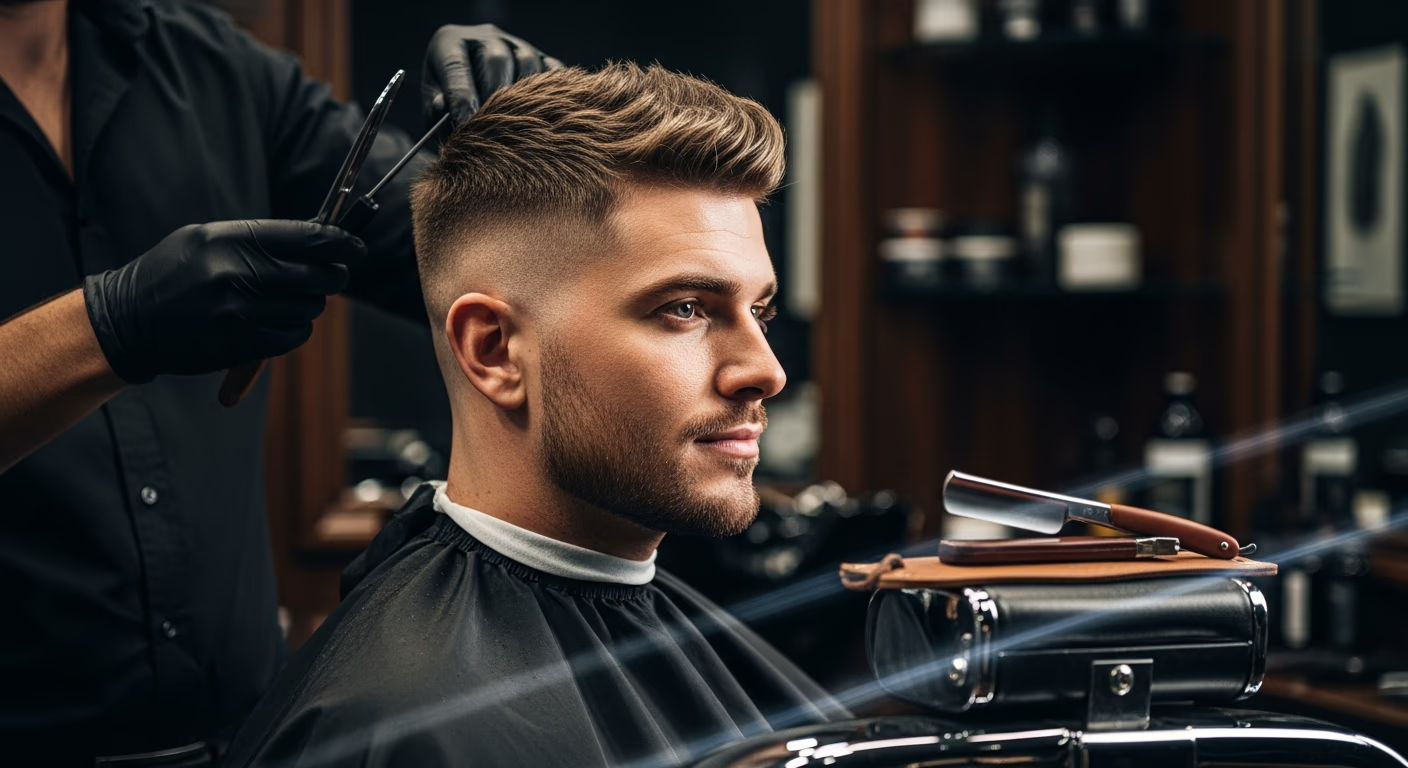
Style images are AI-generated illustrations.
📚 Part of our Barbering Basics guide hub, explore every related guide in one place.
Men's haircut names describe two things: what happens on the sides (a taper, a fade, an undercut) and what shape the top takes (a crop, a quiff, a side part). Most haircuts combine one of each, which is why you hear names like "mid fade textured crop" or "low taper side part." The chart below lists the common names with the usual length on top, the side treatment, a typical clipper guard and who the cut suits, with a link to our full guide for each. A glossary of barber terms follows so you can describe any cut accurately.
How Haircut Names Work
Think of a haircut name as a short formula: side treatment + top style + finish. "Low skin fade, French crop, line-up" tells a barber where the fade starts, how short it goes, what to do with the top and how to finish the hairline. Once you know the parts, you can combine them yourself.
- Side treatments: taper, fade (low, mid, high, skin, drop, burst, temple), undercut, scissor-cut sides.
- Top styles: buzz, crop, crew, quiff, pompadour, side part, slick back, fringe, curtains, curls.
- Finishes: line-up, hard part, design, neckline shape (blocked, tapered, rounded).
Clipper guard numbers make each part precise. A #1 leaves about 3 mm, a #2 about 6 mm, a #3 about 10 mm and a #4 about 13 mm; our clipper guard numbers chart and mm conversion chart list them all. Guard sizes follow the manufacturer chart in Wahl USA's Ultimate Guide to Hair Clipper Guard Sizes.
Men's Haircut Names Chart
Guard numbers are typical starting points, not fixed rules. Barbers adjust them for hair type and density, and curly or coily hair looks shorter at the same guard. "Scissors" means the top is cut by hand rather than with a guard.
| Name | Length on top | Sides | Typical guard (sides) | Who it suits | Our guide |
|---|---|---|---|---|---|
| Buzz cut | #1 to #4 all over | Same or faded | #1 to #4 | Oval, square faces; strong head shape | Buzz cuts |
| Burr cut | Very short, #0 to #1 | Same as top | #0 to #1 | Men who want zero styling | Buzz cuts |
| Crew cut | 0.5 to 1.5 in, longer at front | Tapered | #2 to #3 | Most faces; low upkeep | Crew cut |
| High and tight | 0.5 to 1 in | Very short, high | #0 to #1 | Square, oval; active lifestyles | High and tight |
| Caesar cut | About 1 in, short straight fringe | Tapered or faded | #1 to #3 | Receding hairlines, oval faces | Caesar cut |
| French crop | 1 to 2 in, forward fringe | Faded | #0.5 to #3 | High foreheads, round and oval faces | French crop |
| Textured crop | 1 to 2 in, choppy | Faded | #0.5 to #3 | Thick or wavy hair, round faces | Textured crop |
| Edgar cut | Short, blunt straight fringe | Faded, often high | #0 to #2 | Straight or wavy hair | Edgar cut |
| Ivy League | 1 to 2 in, long enough to part | Tapered | #2 to #3 | Office jobs, oval and square faces | Ivy League |
| Side part | 2 to 3 in | Taper or low fade | #2 to #4 | Most faces; formal settings | Side part |
| Comb over | 2 to 4 in, combed to one side | Taper or fade | #1 to #3 | Straight hair, oval and square faces | Comb over |
| Quiff | 2 to 4 in at front | Faded or short | #1 to #3 | Round and square faces | Quiff |
| Pompadour | 3 to 5 in, swept up and back | Faded or tapered | #1 to #3 | Round faces, thick hair | Pompadour |
| Slick back | 3 to 5 in, combed back | Taper or fade | #1 to #3 | Oval and square faces | Slick back |
| Undercut | 3 to 6 in | Short, not blended | #1 to #2 | Thick hair, oval faces | Undercut |
| Slick back undercut | 4 to 6 in, combed back | Short, not blended | #1 to #2 | Straight thick hair | Slick back undercut |
| Two-block | 3 to 5 in, falls over sides | Short underneath | #2 to #3 | Straight Asian hair, oval faces | Two-block |
| Faux hawk | 2 to 4 in, pushed to centre | Faded | #0.5 to #2 | Round faces, thick hair | Faux hawk |
| Curtains (middle part) | 4 to 6 in, centre part | Scissor-cut or taper | #3 and up | Oval, long faces; straight or wavy hair | Curtains |
| Textured fringe | 3 to 5 in, forward | Faded or tapered | #1 to #3 | High foreheads | Textured fringe |
| Mod cut | 3 to 5 in, full fringe | Scissor-cut | None (scissors) | Oval faces, straight hair | Mod cut |
| Modern bowl cut | 3 to 4 in, rounded fringe | Faded or undercut | #1 to #2 | Straight hair, oval faces | Bowl cut |
| Broccoli cut | 2 to 4 in of curls | High fade or taper | #0 to #2 | Curly and wavy hair | Broccoli cut |
| Modern mullet | Short to medium front, longer back | Faded or tapered | #0.5 to #2 | Oval, square faces | Modern mullet |
| Wolf cut | Shaggy layers, longer back | Scissor-cut | None (scissors) | Wavy and thick hair | Wolf cut |
| Tapered shag | Medium, choppy layers | Taper | #3 and up | Wavy hair, oval faces | Tapered shag |
| Bro flow | Chin to shoulder length, swept back | Scissor-cut | None (scissors) | Thick wavy hair | Bro flow |
| Man bun | Long enough to tie | Long or undercut | #1 to #2 if undercut | Long hair, oval faces | Man bun |
| Afro | 2 in and up, shaped | Taper or temple fade | #0.5 to #2 | Coily hair | Afro |
| High top fade | Tall, flat-topped | Faded | #0 to #1 | Coily hair, oval and long faces | High top fade |
| Taper fade | Any | Gradually shorter at edges | #0.5 to #4 | Almost everyone | Taper fade |
| Low fade | Any | Fade starts above ear | #0.5 to #4 | Conservative looks; long faces | Low fade |
| Mid fade | Any | Fade starts at temple | #0.5 to #3 | Round and square faces | Mid fade |
| High fade | Any | Fade starts near top of sides | #0 to #2 | Bold looks; strong head shape | High taper fade |
| Skin (bald) fade | Any | Down to bare skin | Skin to #3 | Sharp, high-contrast looks | Skin fade |
| Drop fade | Any | Curves down behind ear | Skin to #3 | Curly tops, rounded heads | Drop fade |
| Burst fade | Any, often mohawk | Arcs around ear | Skin to #3 | Mohawks, mullets, curls | Burst fade |
| Temple fade | Short to medium | Faded at temples only | Skin to #2 | Waves, short natural hair | Temple fade |
Short Haircut Names
Short cuts are the names you hear most in a barbershop. The buzz cut is one guard all over; the burr cut is the very shortest version. A crew cut leaves the front a little longer and tapers the sides; grow it long enough to part and it becomes an Ivy League (also called a Princeton). A high and tight takes the short sides almost to the top. The Caesar, French crop and Edgar all push a short top forward into a fringe, differing mainly in fringe length and how blunt it is. A textured crop is a crop with choppy texture cut into the top. Our short haircuts for men guide compares them in detail.
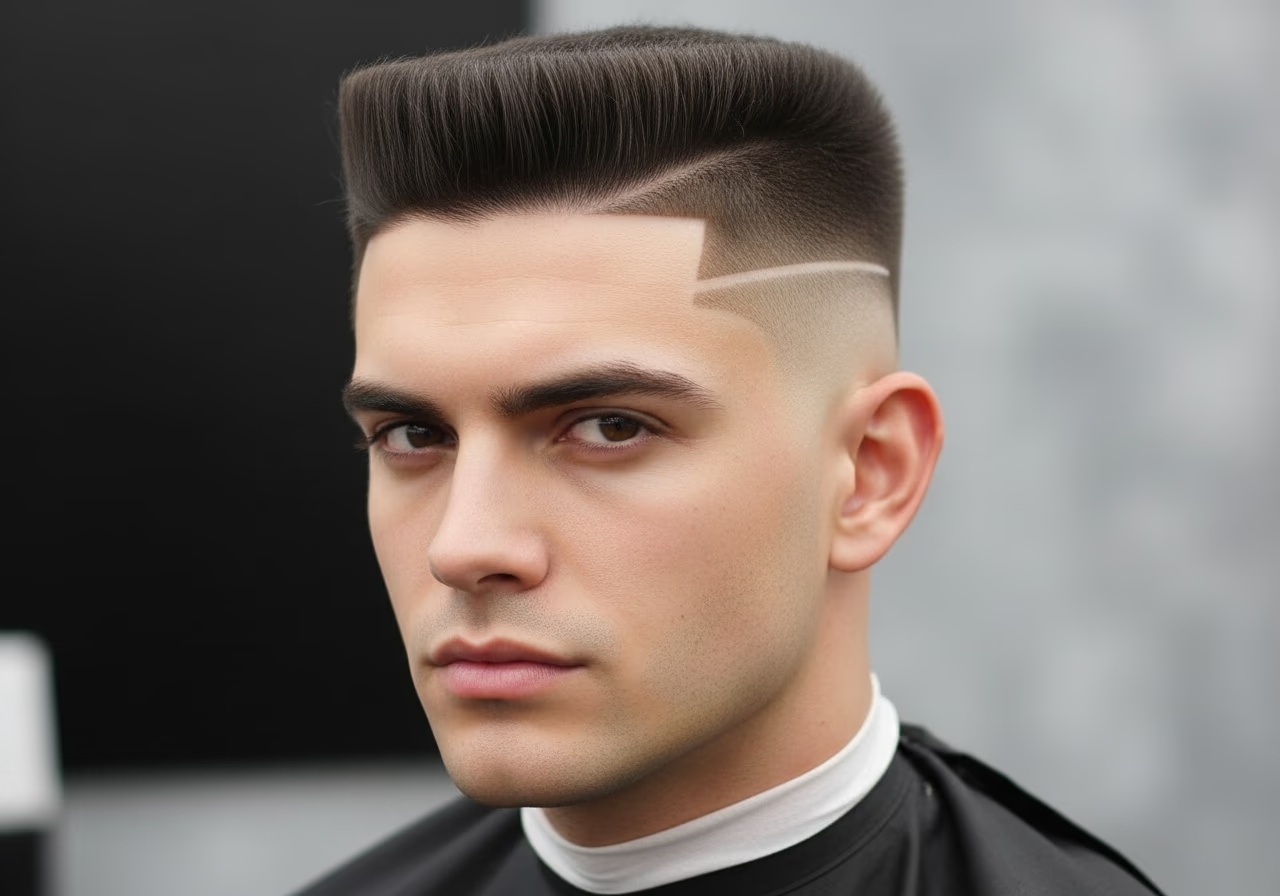
You may also hear flat top (the top cut to a level, flat plane) and butch cut (a short, even top slightly longer than a buzz). These are less common today, and we cover them within the buzz cut and crew cut guides rather than as separate pages.
Medium and Classic Haircut Names
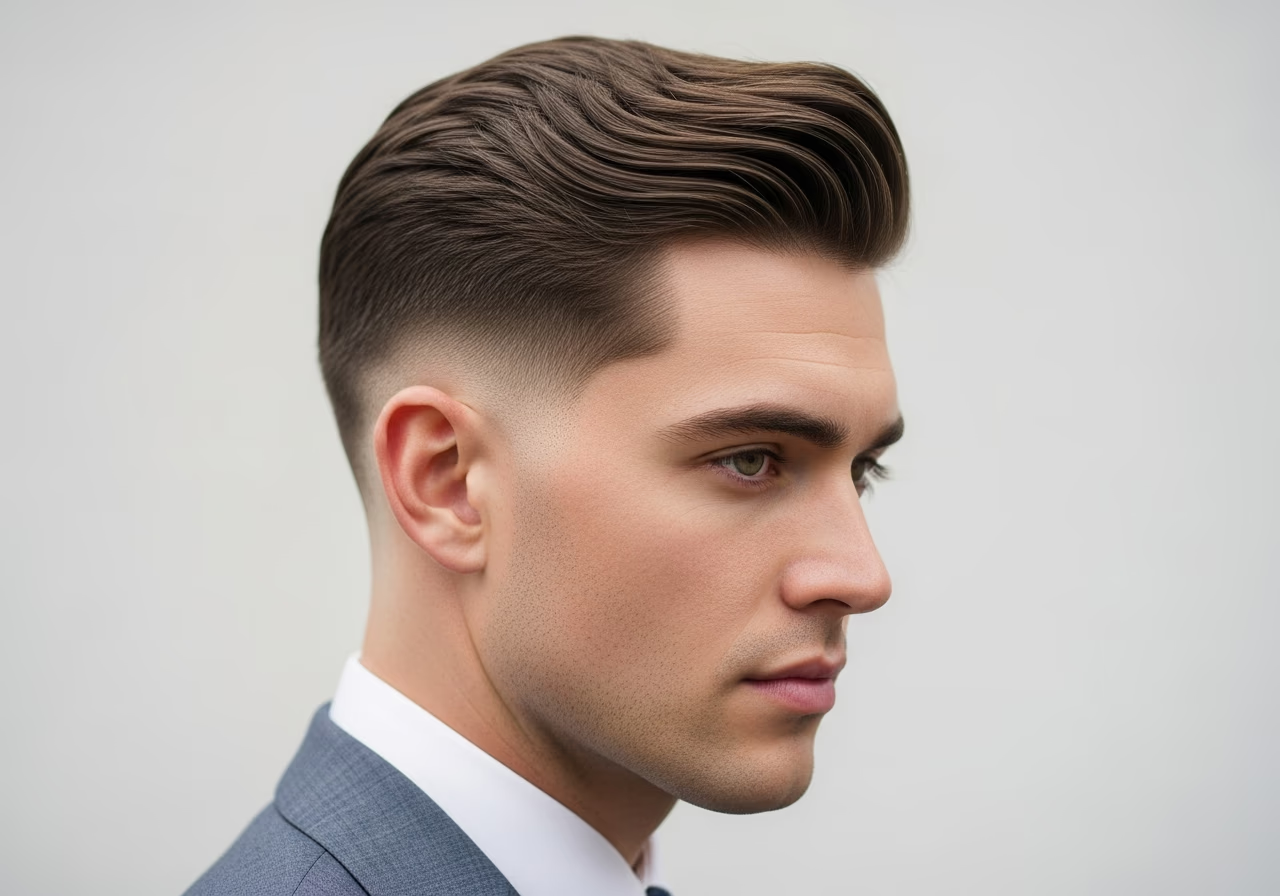
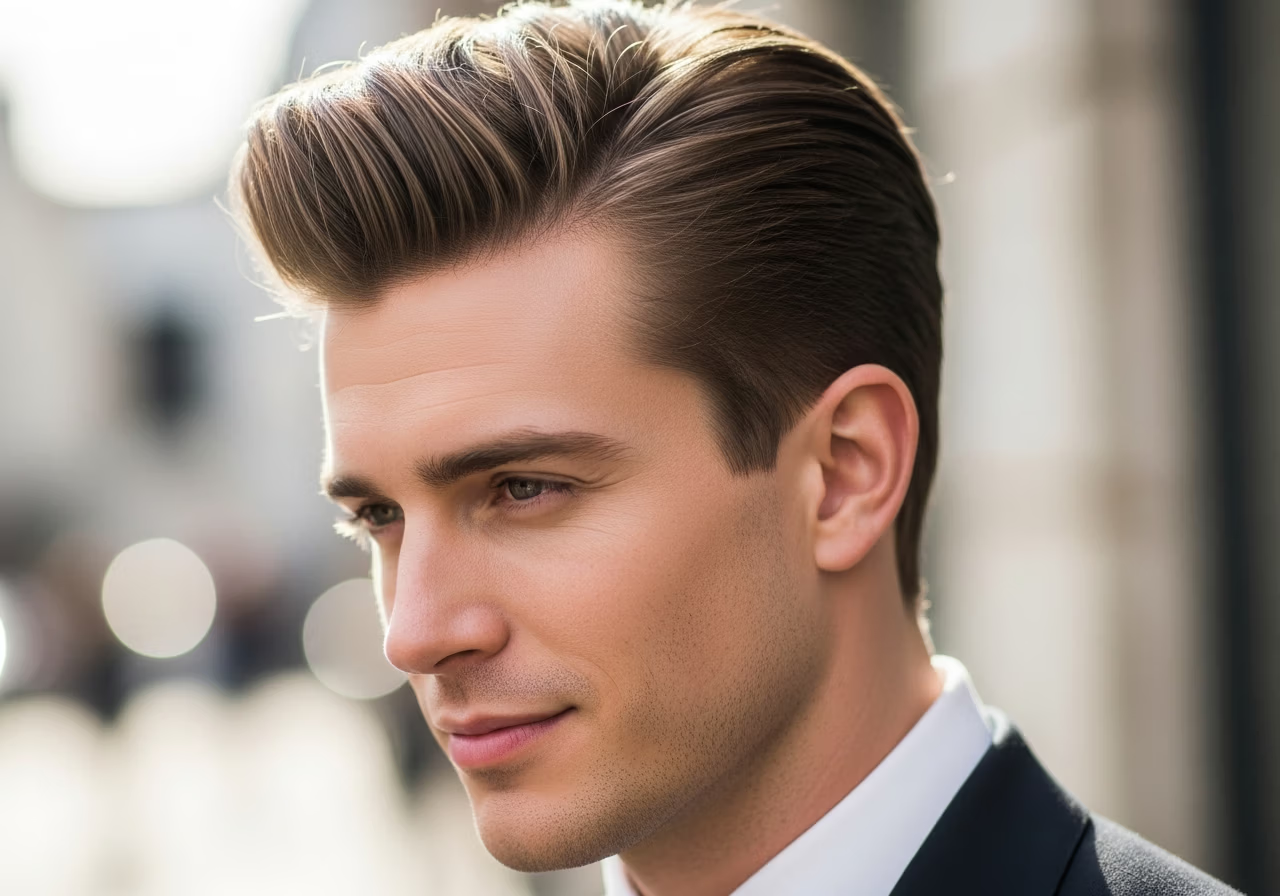
Classic names are about how the top is combed. A side part combs the hair away from a parting; a comb over is a side part with more length swept across, usually over a fade. A quiff lifts the front up and slightly forward or back; a pompadour is taller and swept back with more volume. A slick back combs everything straight back with a shine product.
Disconnected names describe a hard break between the sides and the top. In an undercut the sides are clipped short without blending into the top. A two-block is the Korean version, where longer top hair falls over the short sides. A slick back undercut combines both ideas. See undercut, two-block and the guide to medium-length hairstyles.
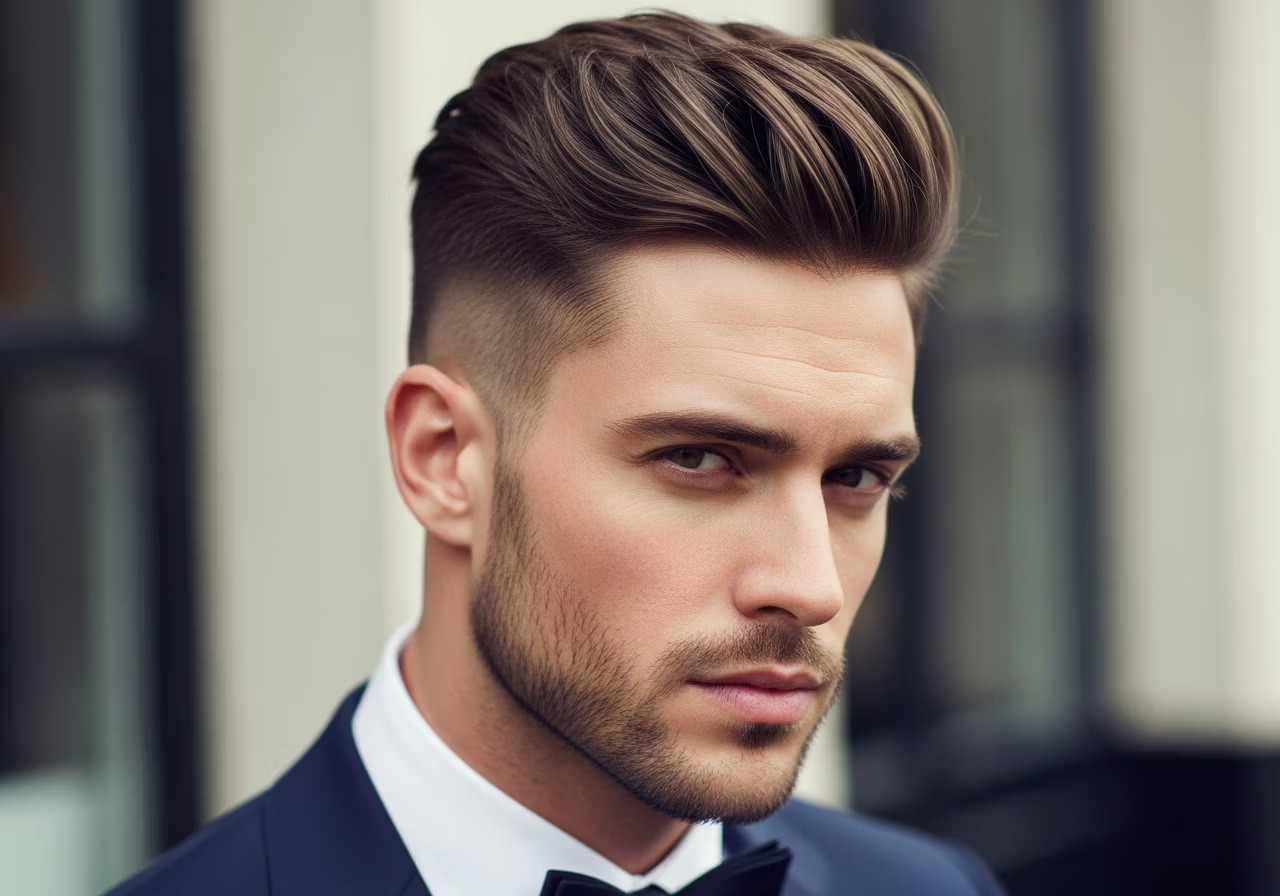
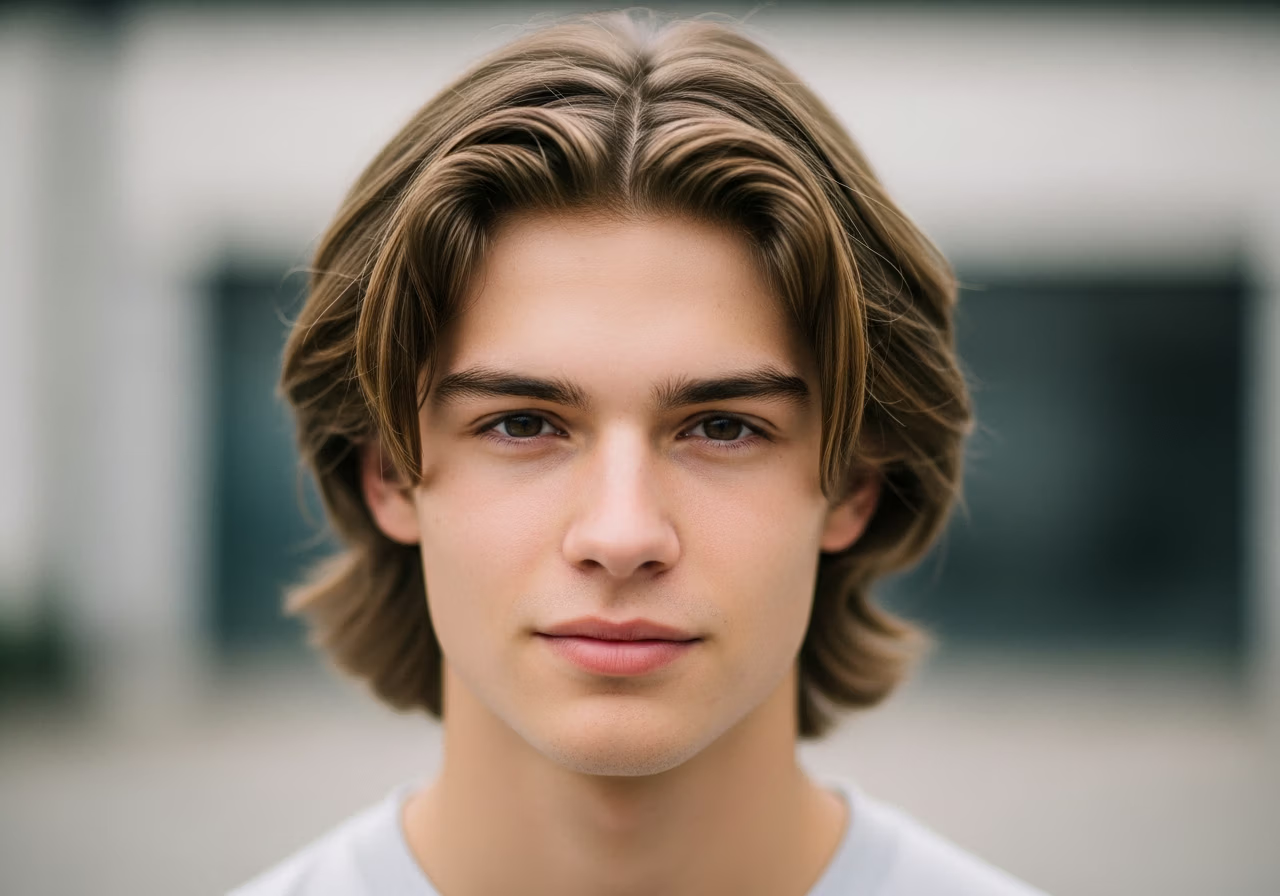
Fringe names include curtains (a middle part with hair falling to each side), the textured fringe (a choppy forward fringe), the mod cut (a fuller, rounded 1960s fringe) and the heartthrob cut, a 90s-style middle-part look covered in our heartthrob cut guide.
Longer Haircut Names
Longer names tend to describe the overall shape. A modern mullet is short at the front and sides with length at the back; a baby mullet is a softer, shorter version (see baby and soft mullets). A wolf cut combines shaggy layers with a mullet shape. A shag is choppy layers all over. A bro flow is chin-to-shoulder hair swept back, and a flow cut is the shoulder-length version (see flow cut). The man bun ties long hair up, and the warrior cut is long, textured hair often worn half up (see warrior cut).
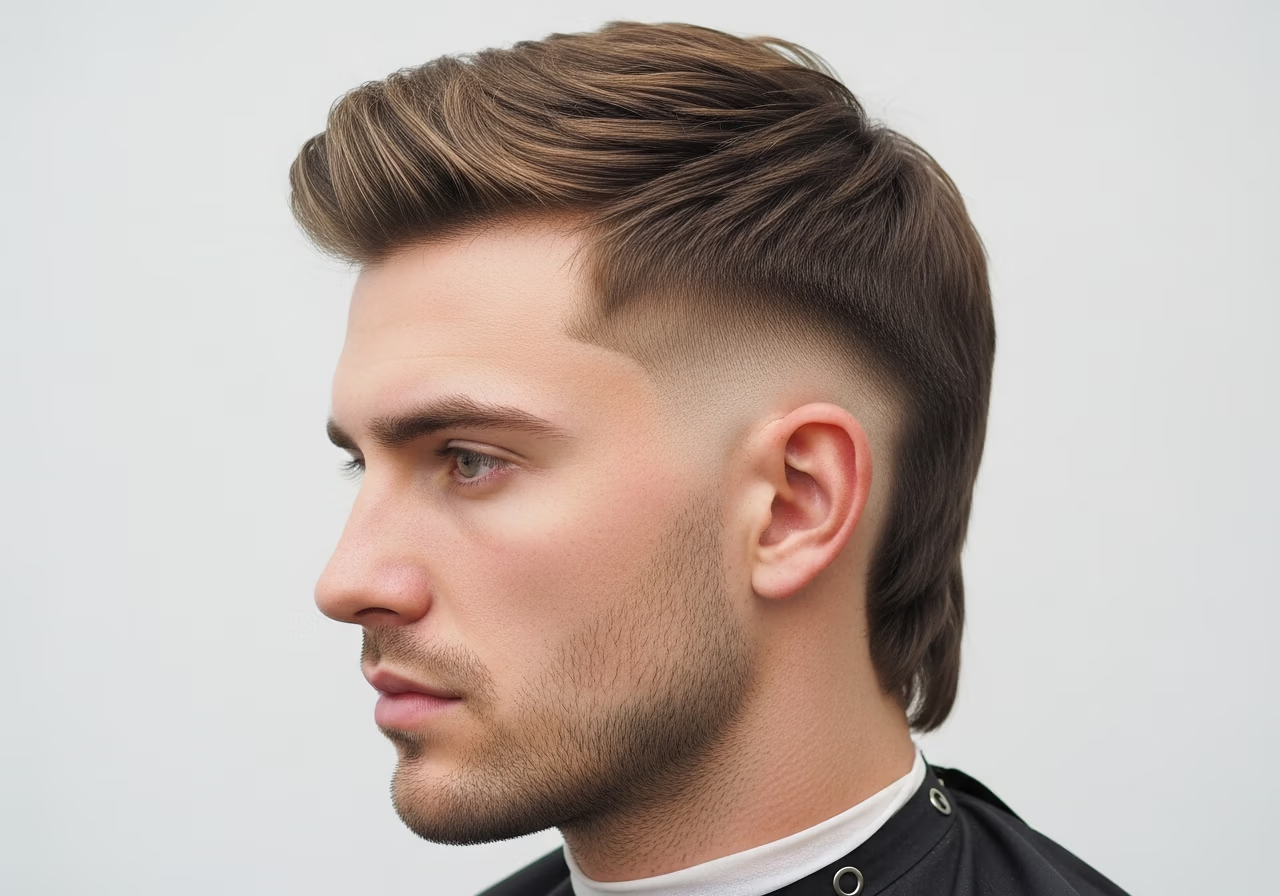
For all longer options, see long hairstyles for men and how to grow your hair out.
Fade and Taper Names
Fade names follow the same two variables: height (low, mid, high) and shortness (skin or not). A taper shortens only the edges; a taper fade carries that blend further up; a fade wraps around the head at a set height. A drop fade curves down behind the ear, a burst fade arcs around the ear, and a temple fade sits only at the temples. You can stack the terms: "low skin drop fade" is a perfectly clear request.
Start with the taper fade overview, then see the low fade, mid fade and fade types explained guides. Detailed style galleries live on the low taper fade, medium taper fade, high taper fade and skin fade pages.
Barber Terms Glossary
These are the words barbers use when they ask what you want. Knowing them makes the conversation much faster.
| Term | What it means | Learn more |
|---|---|---|
| Guard | Plastic comb on the clipper that sets the length left | Guard chart |
| Blend | A smooth transition between two lengths with no visible line | What blend means |
| Taper | Hair gradually shortened toward the hairline | Taper fade |
| Fade | Sides blended down to very short or skin at a set height | Fade types |
| Line-up / edge-up / shape-up | Sharp outline cut at the hairline with a trimmer or razor | Line-up vs edge-up |
| Neckline (block, tapered, rounded) | The shape of the hair at the back of the neck | Neckline types |
| Disconnected | Sides and top cut to different lengths without blending | Undercut |
| Hard part | A parting line shaved in with a trimmer or razor | Side part |
| Texture / point cutting | Cutting into the ends so hair looks choppy and separated | Asking for texture |
| Design | Shapes or lines shaved into the sides | Hair designs |
How to Use These Names at the Barber
A name alone can mean different things in different shops, so pair it with numbers and a photo. A clear request follows the formula from the top of this page:
Example request
"Mid skin fade, starting at the temple, blended up to a #3. Textured crop on top, about an inch and a half, point cut. Line me up at the temples but keep the front natural, tapered neckline."
If you do not know the right name, describe the result instead: where you want it shortest, how much length to keep on top and which way it should fall. Our guides on how to talk to your barber, how to ask for a fade without knowing the terminology and barbershop etiquette cover the rest. To choose a cut for your features, see the face shape guides hub.
Frequently Asked Questions
Q1: What are the most common men's haircut names?+
Q2: What is the difference between a taper and a fade?+
Q3: What is the name of the haircut with short sides and a longer top?+
Q4: What is a number 2 haircut?+
Q5: What is the difference between a crew cut and an Ivy League?+
Q6: How do I tell my barber what haircut I want?+
Q7: What is a flat top?+
Make us a Preferred Source on Google
See our latest articles first in your Google Search & AI Overviews.