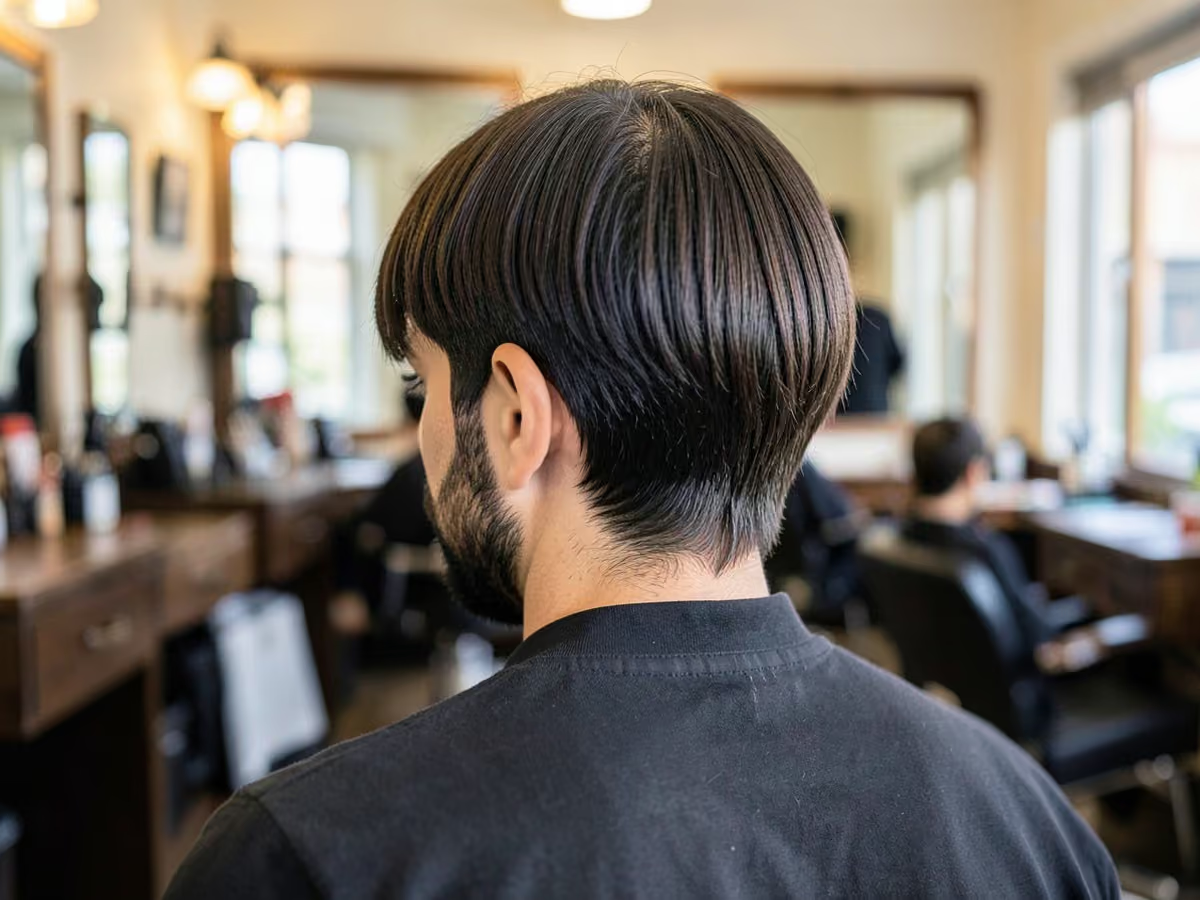
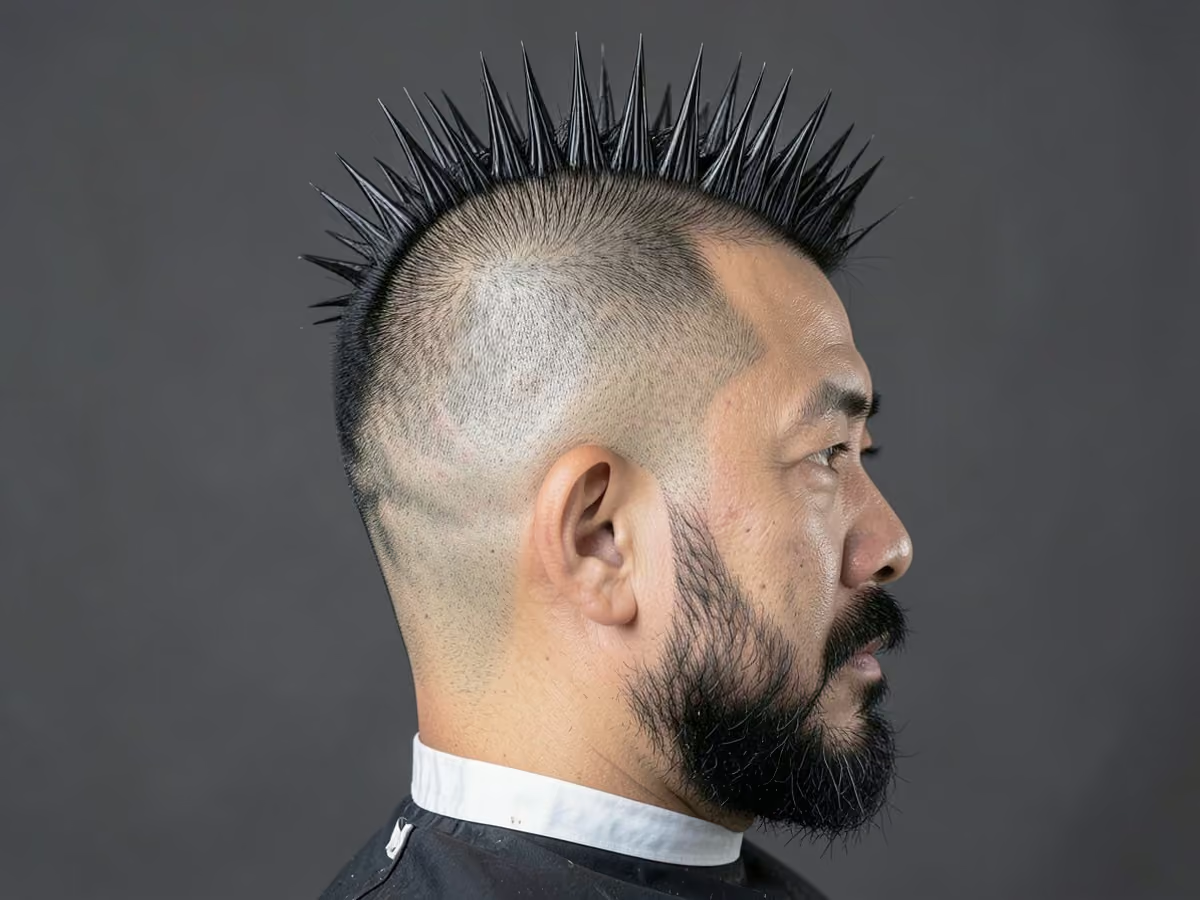
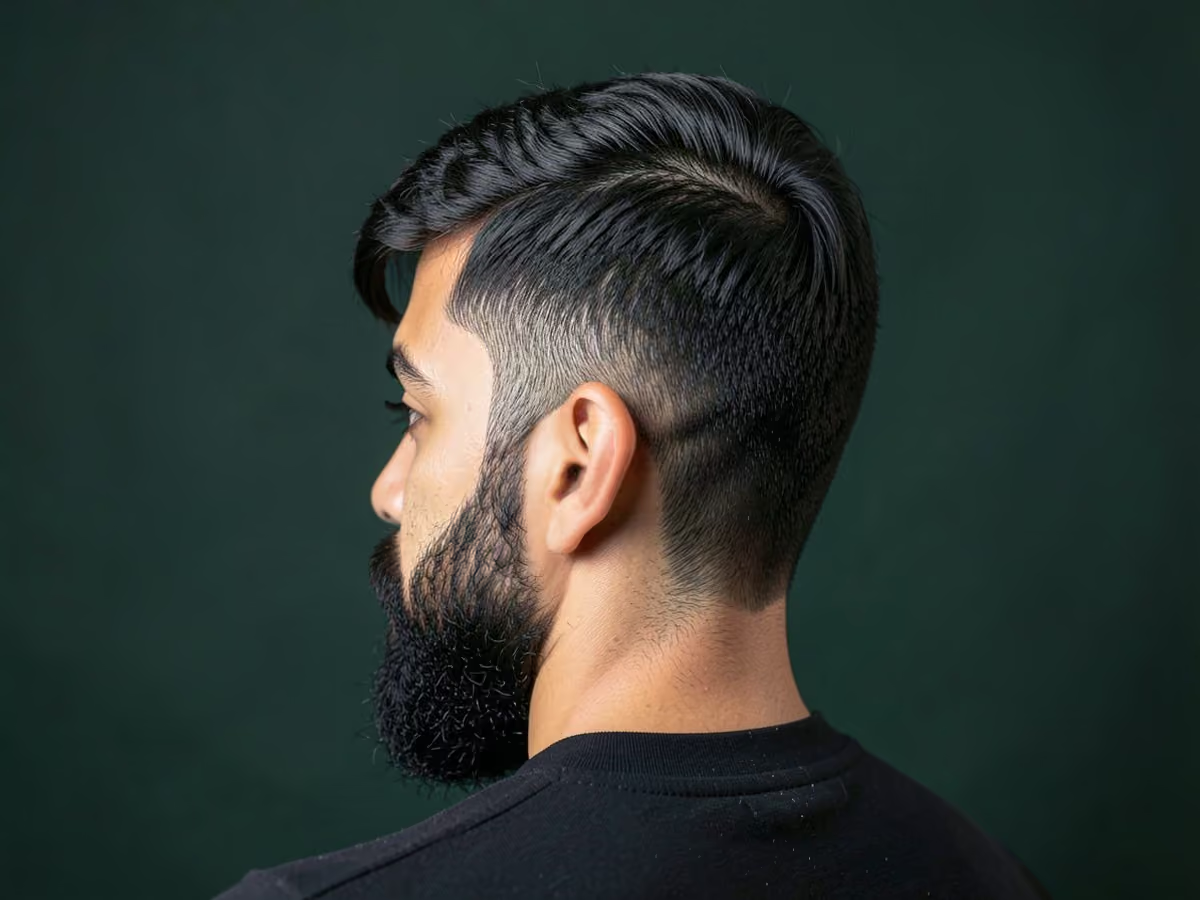
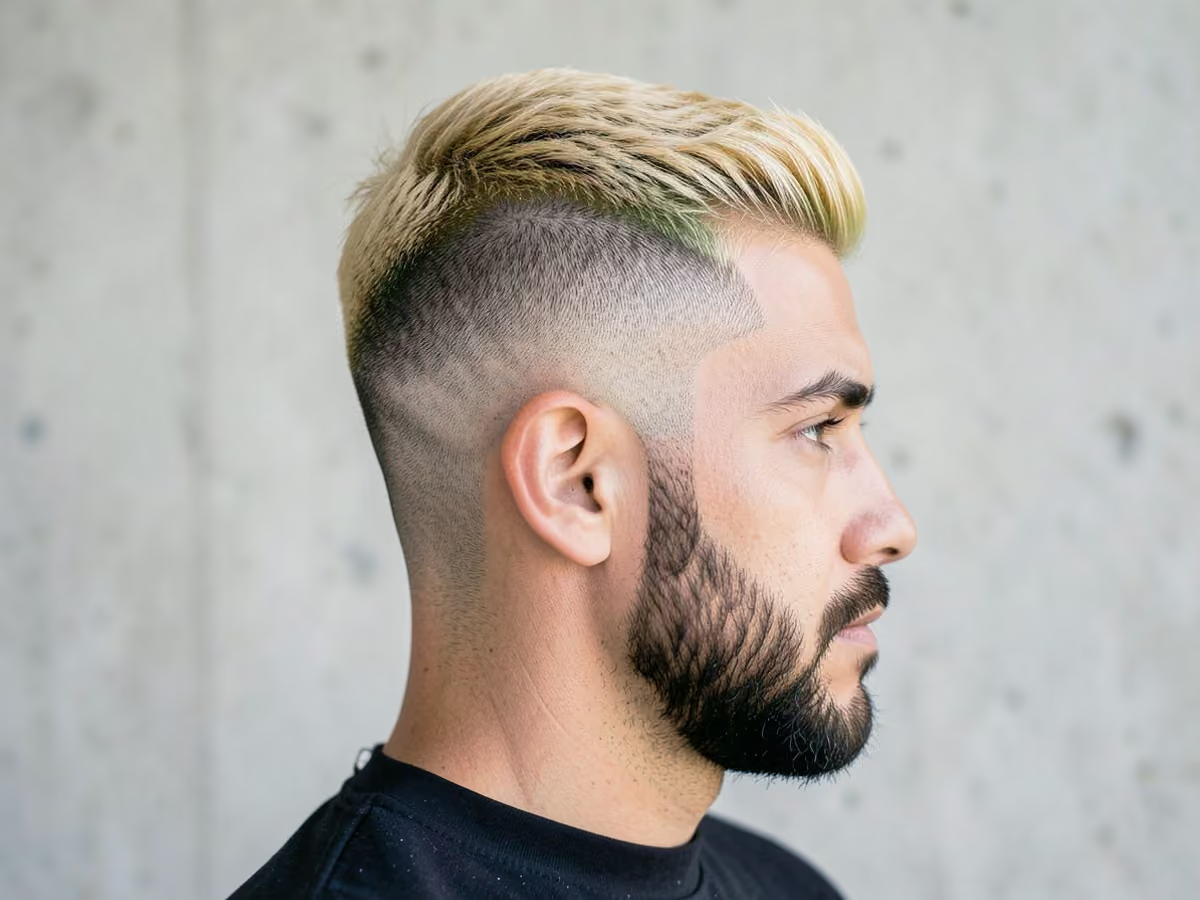
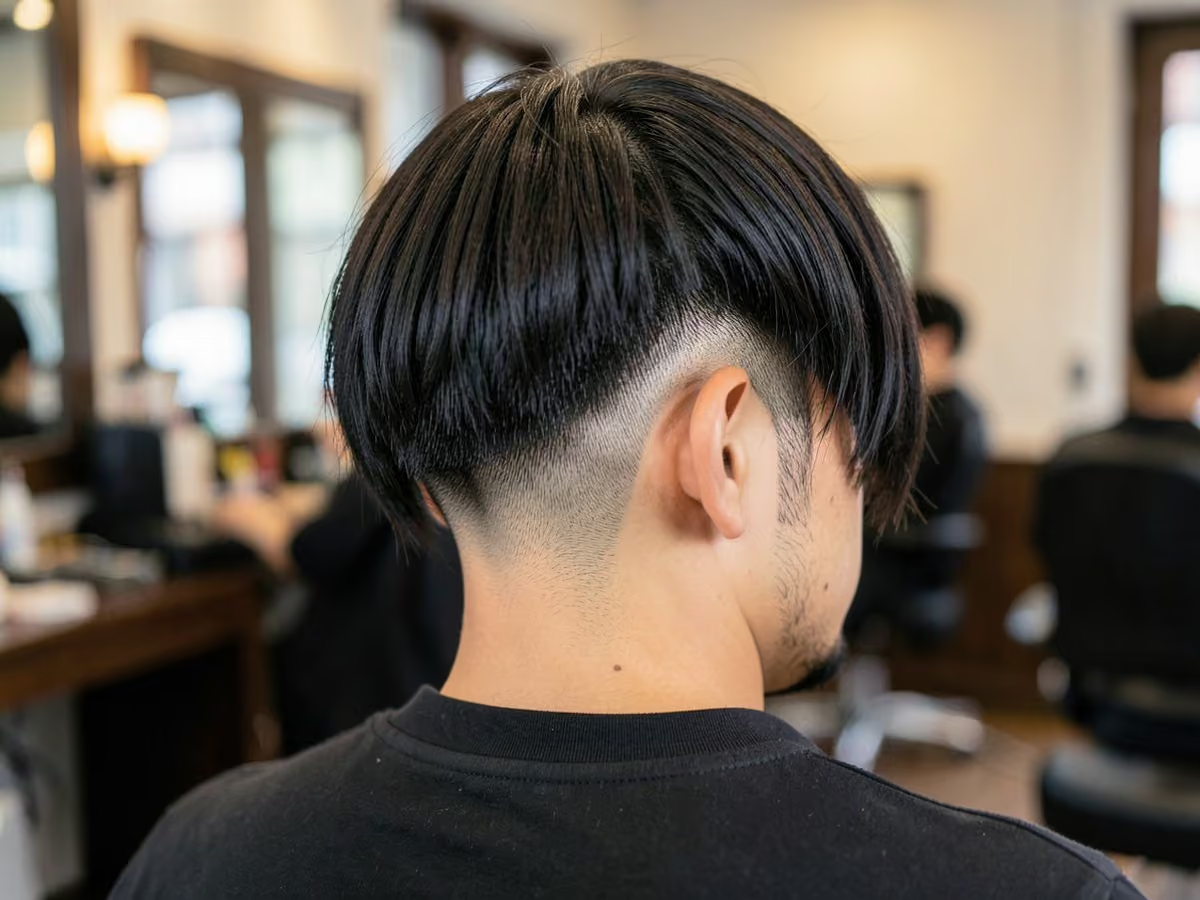
Quick answer: 90s hairstyles for men include curtains with a center part, gelled spikes, frosted or chunky highlighted tips, brushed-forward Caesar cuts, high top fades, cornrows and long grunge middle parts. Most can be worn today with lighter products: swap stiff gel for clay or cream and keep the sides tidier than the originals.
90s Hairstyles for Men Styles at a Glance
Every style on this page with its clipper guard, top length and trim interval. Tap a name to jump to that card.
90s hairstyles for men split along music and TV lines: boy bands wore curtains and spikes, hip-hop and R&B made the high top and shaved parts famous, and grunge brought unwashed middle parts. Many of these cuts have returned in recent years. The 25 below cover each look with lengths, products and modern updates, plus the exact words to use with your barber.
What Defined Men's Hair in the 1990s?
Two products shaped the decade: hair gel and bleach. Gel set spikes, flicked fringes and wet-look slick backs, often with a stiff, crunchy finish. Bleach produced frosted tips, chunky highlights and the all-over blond buzz. At the same time, the center part returned in a big way through curtains, a fringe split down the middle and pushed to each side, worn short by boy bands and long by grunge musicians.
Black barbershops drove another strand of the decade. High top fades, box shapes, shaved part lines and early designs became widely recognized through hip-hop videos and TV. Short twists and cornrows grew in visibility toward the end of the decade. If you want a modern center-parted cut rather than a period one, our curtains haircut guide covers today's versions, with fade and taper options for each.
How Do 90s Haircuts Compare With Today's Versions?
The outlines are similar, but finishes have softened. Original curtains and spikes were set with wet gel that dried hard; today the same shapes use matte clay, sea salt spray or cream for movement. The sides are also cleaner now, since tapers and fades have replaced the scissor-cut sides of many 90s cuts. The table lines up the main looks with what to ask for if you want the modern equivalent.
The return of these styles is partly nostalgia and partly practical: curtains suit medium hair that is growing out, and a Caesar or buzz is easy to keep. Spikes and flicks also work on short hair that would otherwise sit flat. If you want the boy-band look without the period details, the heartthrob cut gallery shows softer versions, and a low taper keeps any of them neat for the office.
How Do 90s Haircuts Compare With Today's Versions?
Curtains and center parts suit oval and long faces, because the hair falls at the sides and frames the cheeks. Round faces do better with spikes or a Caesar, which add height or keep the sides tight. Square faces suit almost all of them, especially grunge lengths that soften the jaw. Straight and wavy hair is easiest for curtains and floppy fringes, while thick hair holds spikes without much product.
Coily and tightly curled hair suits the high top, shaved part fades, twists and cornrows, all of which grew out of Black barbering in the decade. Fine hair can wear a Caesar or bleached buzz easily but may struggle with tall spikes and heavy curtains. If your hair is short now, the Caesar and buzz styles are ready at once, while curtains need three to four inches at the front.
Filter the styles
Showing all 25 styles
Fade
Hair
Length
90s Curtains and Center Part Haircuts
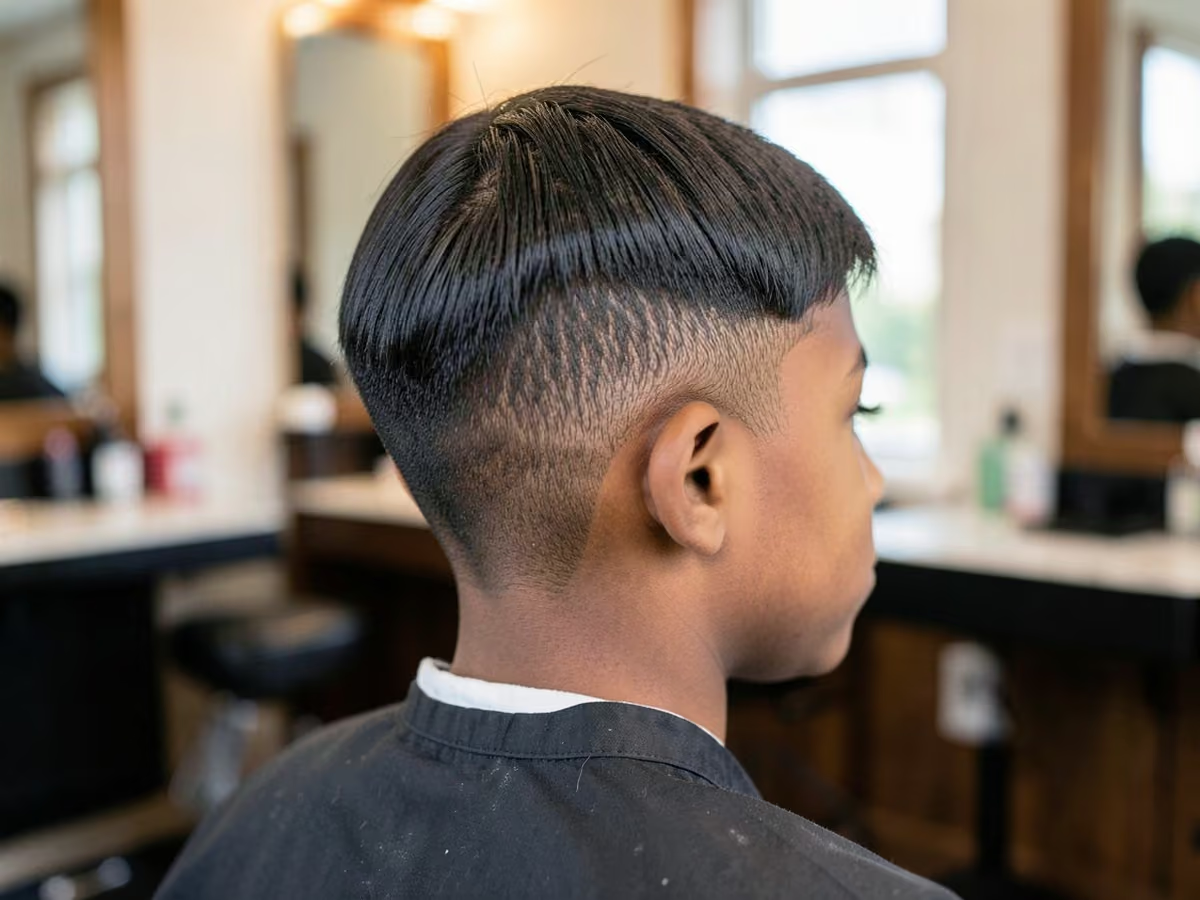
The center part ran through the whole decade, from boy-band curtains to floppy British fringes. These five differ in length, product and curl. For current versions, see the curtains haircut gallery.
Trim:Every 4 weeks. The fringe must stay at cheekbone length.
Best For:Oval, long faces + straight or fine hair.
About This Style
A fringe of four to five inches parted dead center and blow-dried so each side curves outward is the version seen on mid-1990s pop groups. The sides are scissor cut to about two inches and the back is short and tapered. Straight hair splits most cleanly. Volume at the roots on either side of the part is what separates it from flat, limp curtains.
How to Style at Home
Part the fringe in the center while the hair is damp.
Blow-dry each side up and outward over a round brush.
Smooth a small amount of styling cream over the surface.
Ask Your Barber
"Curtains with a center part, fringe at four to five inches reaching the cheekbones, two-inch scissor-cut sides and a short tapered back. Keep weight at the part."
Trim:Every 4 weeks. Longer pieces turn stringy once gelled.
Best For:Oval, heart faces + thick straight hair.
About This Style
Stiff and shiny, these curtains are set with gel so each side forms a firm curve that holds all day. The look is the period original rather than a soft modern update. Thick hair keeps the curve without separating into strands. The part is sharp and straight, combed while the hair is wet. Use a small amount of gel, since too much clumps the fringe.
How to Style at Home
Comb a small amount of light gel through wet hair.
Set a sharp center part with a fine-tooth comb.
Curve each side outward with the comb and leave it to dry untouched.
Ask Your Barber
"Curtains with a sharp center part, four-inch fringe, sides cut with scissors to two inches, tapered neck. I set it with gel, so keep the fringe thick."
Trim:Every 5–6 weeks. A loose fringe hides slow growth.
Best For:Oval, long faces + straight or wavy fine hair.
About This Style
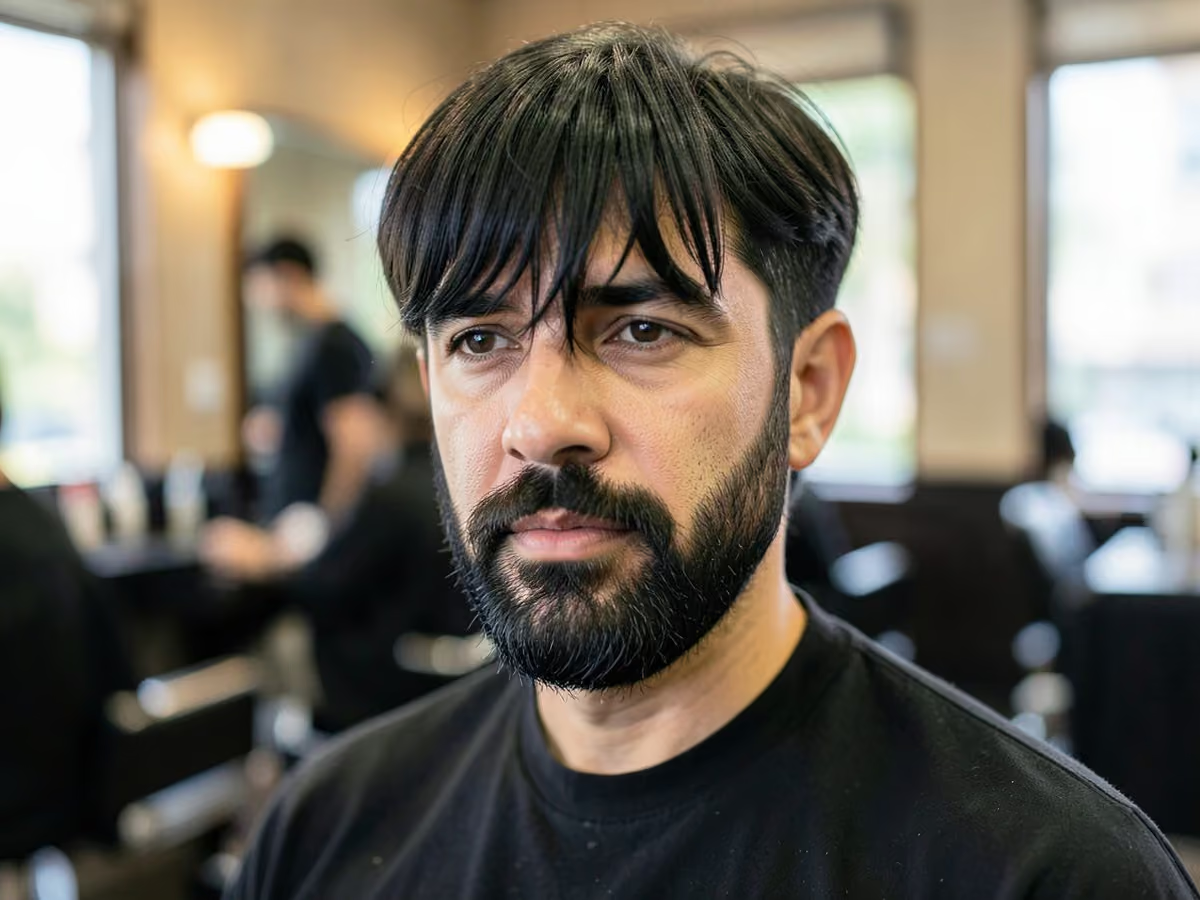
Associated with British film leads of the mid-1990s, this cut lets a long side-swept fringe fall loosely across the forehead and into the eyes. The fringe runs five inches, the sides reach the top of the ears, and the back is layered. A drop of cream is the most it asks for. Covering the forehead shortens a long face. Fine hair falls into place easily.
How to Style at Home
Towel-dry the hair and push the fringe to one side with your fingers.
Let it air-dry or blow-dry on low heat without a brush.
Shake the fringe loose with your fingers once dry.
Ask Your Barber
"Floppy fringe with five inches at the front swept to one side, sides covering the top of the ears, layered back. No product needed, keep it soft."
Trim:Every 4–6 weeks. Bleached curls need regular end trims.
Best For:Oval, round faces + tight natural or permed curls.
About This Style
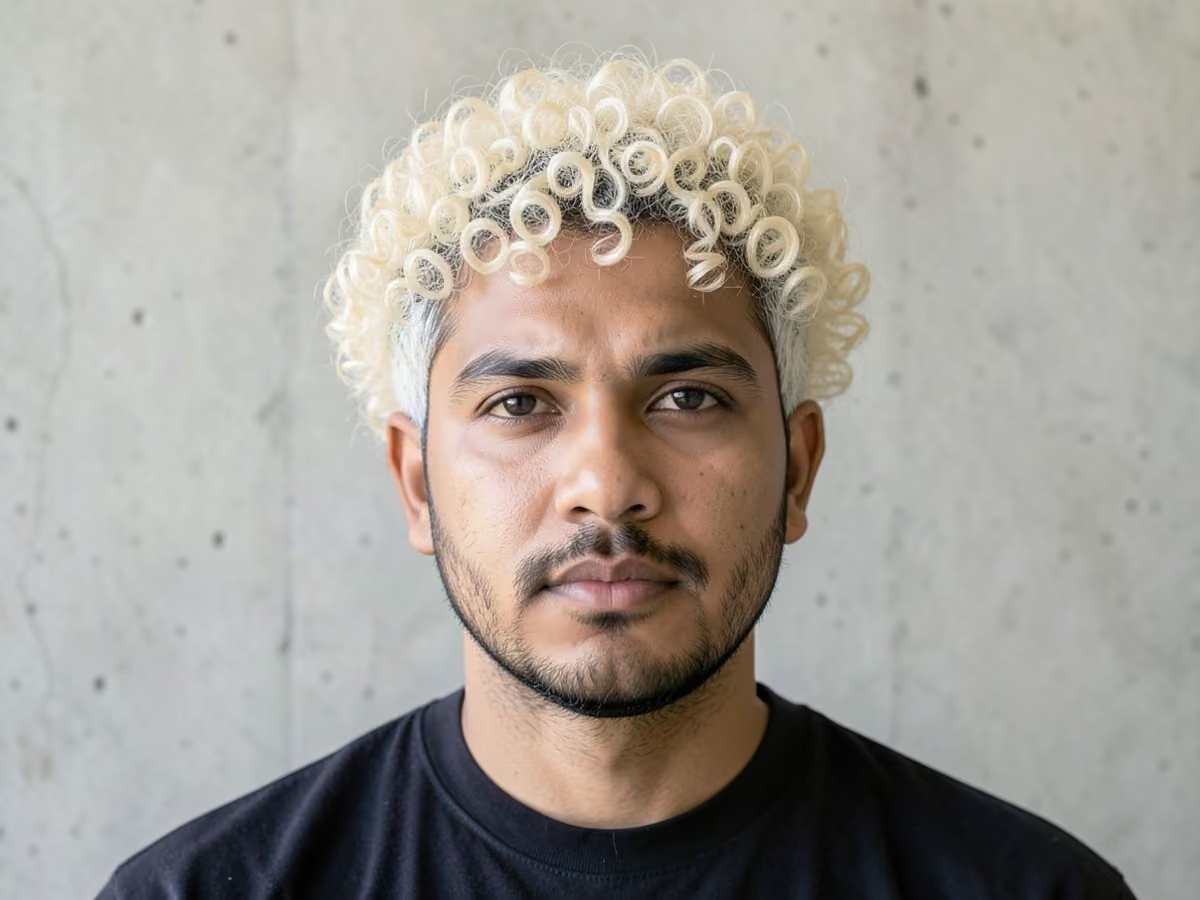
Small, tight curls, often bleached pale blond, packed close on top and around the head earned this late-1990s look its nickname. The curls are two to three inches long and the sides are kept fairly short. Natural tight curls or a tight perm create the pattern. Bleaching on top of curls dries them out quickly, so moisture and a gentle toner are needed.
How to Style at Home
Apply curl cream to soaking-wet hair and scrunch upward.
Twist small sections around one finger to tighten each curl.
Let the curls air-dry fully without touching or combing them.
Ask Your Barber
"Curly top two to three inches long, cut dry so the curls sit evenly, sides short and tapered. I may bleach it, so leave a little extra length on top."
Best For:Oval, heart faces + straight or wavy hair.
About This Style
Hair grown to chin length all around and parted in the middle, falling straight on both sides of the face, was common among actors and musicians in the mid-1990s. The ends are cut with light layers so they do not look blunt. Straight and wavy hair suit it best. Hair ending at the jaw fills out a narrow chin, which helps heart shapes. Tuck it behind the ears for a cleaner look.
How to Style at Home
Part the hair in the center while damp.
Comb a few drops of leave-in through the lengths.
Let it air-dry and tuck one side behind the ear if you like.
Ask Your Barber
"Chin-length hair all around, center part, light layers at the ends so it falls straight on both sides. Just trim the ends and keep the length even."
Recommended Products
Leave-In
Gelled Spikes, Flicks and 90s Color
Gel and bleach defined many 90s cuts. These six cover spikes, flicked fringes, two-tone dye, chunky highlights, wet slick backs and the zigzag part, each with a modern product swap so the finish stays flexible.
Trim:Every 3–4 weeks. Spikes flop once the top passes two inches.
Best For:Round, oval faces + thick straight hair.
About This Style
Even spikes standing straight up all over the top, set hard with gel, made this a commonly common teenage cuts of the decade. The top is cut to about an inch and a half, evenly, with point cutting at the ends. The sides are short. Thick straight strands keep their points longest. A matte clay gives the same shape today without the stiff, shiny finish.
How to Style at Home
Apply light gel or matte clay to towel-dried hair.
Blow-dry the top straight up with your fingers.
Pinch small sections into points across the top.
Ask Your Barber
"Spiky top cut to an inch and a half all over with point cutting, short sides at a #3 tapered at the neck. I want it to stand up straight."
Trim:Every 3–4 weeks. The flick needs a set fringe length.
Best For:Oval, round faces + straight or thick hair.
About This Style
Just the front edge is gelled up into a short ridge here, while the rest of the top lies forward and flat. The fringe is about two inches and the top an inch and a half. It was common on teenage boys and footballers of the mid-1990s. Round faces gain a little height from the flick. A firm cream or clay replaces gel for a modern version.
How to Style at Home
Comb the whole top forward while the hair is still damp.
Blow-dry only the front edge upward with a brush.
Set the flick with a small amount of clay on your fingertips.
Ask Your Barber
"Short top at an inch and a half, fringe at two inches so I can flick the front up, sides at a #2 tapered. Cut the fringe straight across."
Trim:Every 4 weeks. Roots show the original color within weeks.
Best For:Oval, square faces + straight medium-length hair.
About This Style
Dyeing the top a different color from the underneath, often blond over dark undercut sides, turned up across skate and alternative music scenes. The top is usually three to four inches so the color shows, and the sides are cut short or shaved. Straight hair shows the line between colors most clearly. Bleached sections need weekly conditioning to avoid breakage.
How to Style at Home
Wash with a color-safe or purple shampoo two or three times a week.
Apply leave-in conditioner to the colored section after every wash.
Style the top loosely with a little matte paste.
Ask Your Barber
"Top at three to four inches, sides short at a #2, clean line between them. I am coloring the top, so keep the parting where the color will sit."
Trim:Every 4–6 weeks. Highlights need toning as they grow out.
Best For:Oval, long faces + straight or wavy medium hair.
About This Style
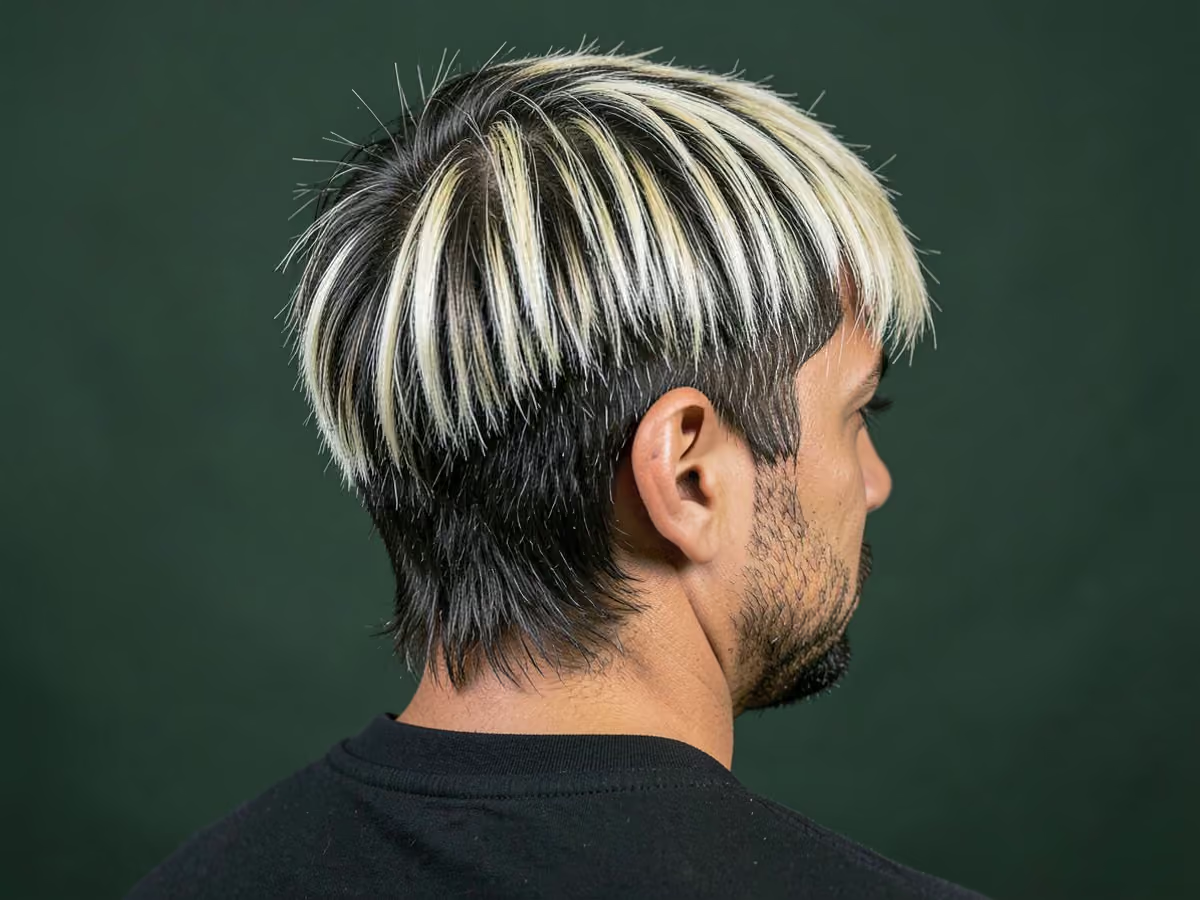
Thick stripes of bleached hair, often half an inch wide, running through darker hair from root to tip, gave this late-1990s look its striped effect. The cut underneath is usually medium length with a spiky or center-parted top. A colorist places the stripes; at-home kits often go orange. Purple shampoo keeps the stripes from yellowing. Our bleached hair gallery shows softer options.
How to Style at Home
Wash with a purple shampoo once a week.
Apply a deep conditioner to the highlighted strands weekly.
Style the top with a small amount of matte paste.
Ask Your Barber
"Medium cut with three inches on top and short tapered sides. I am having chunky highlights done, so leave the top long enough for the stripes to show."
Trim:Every 4 weeks. Longer hair lifts at the crown.
Best For:Oval, square faces + straight medium hair.
About This Style
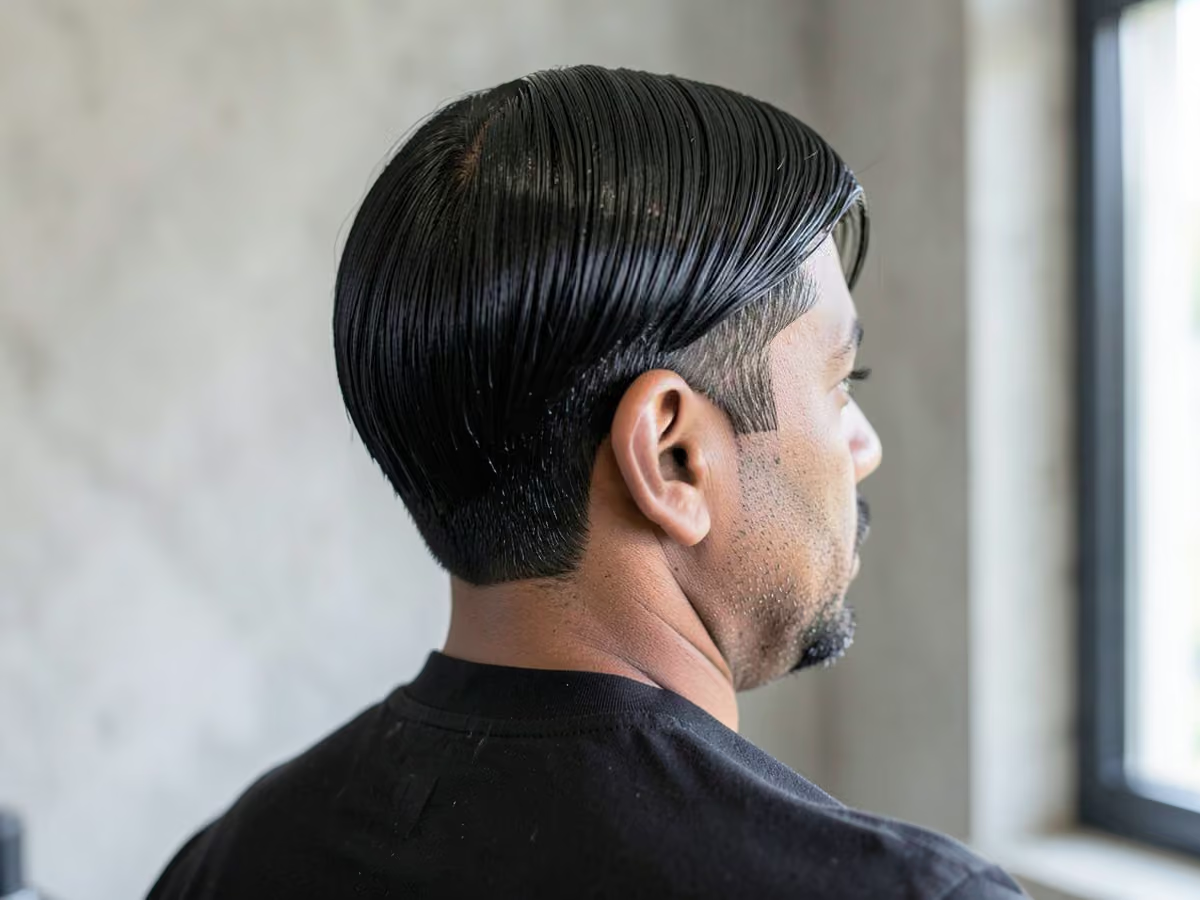
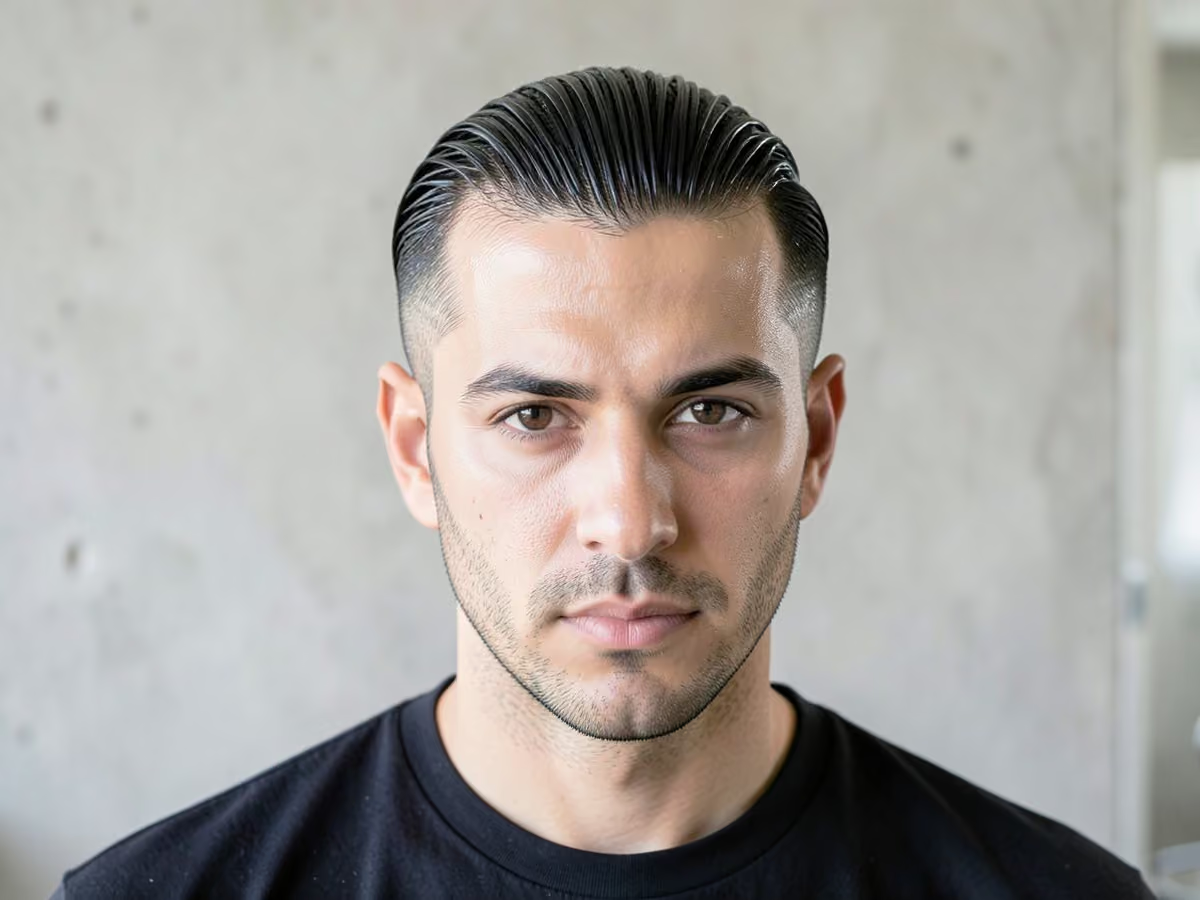
Combed straight back from the forehead with wet-look gel, this mid-decade slick back was shorter and stiffer than the 1980s version. The top is three to four inches and the sides are combed back or cut short. Gel leaves a glossy, hard finish that does not move. Oval and square faces suit it. A light pomade gives a softer modern equivalent.
How to Style at Home
Comb a small amount of light gel through soaking-wet hair.
Comb everything straight back from the hairline in long strokes.
Let it dry completely without touching it, then leave it alone.
Ask Your Barber
"Three to four inches on top, sides short at a #3, combed straight back. I wear it with gel, so keep the top even so it lies flat."
Trim:Every 3–4 weeks. The part disappears as the hair lengthens.
Best For:Teens + straight or wavy medium hair.
About This Style
Instead of a straight line, the part is combed in a sharp zigzag, a fun detail that turned up on teens in the 1990s. The hair is usually three to four inches on top so the zigzag shows. It is done with a comb tail at home rather than a razor. Straight hair holds the pattern most clearly. It works on short curtains or a side part.
How to Style at Home
Comb all of the hair straight back while it is damp.
Draw the comb tail back from the hairline in a zigzag line.
Comb each side away from the line and set with light gel.
Ask Your Barber
"Three to four inches on top, short tapered sides, layered enough that I can comb a part either side. I will style the zigzag part myself."
Recommended Products
Light Gel
Short and Shaved 90s Cuts
Not every 90s cut needed length. These four short styles, from a Britpop crop to a bleached buzz, are quick to wear and easy to update. Compare them with the Caesar cut and buzz cut galleries.
Trim:Every 5–6 weeks. A shaggy outline tolerates growth.
Best For:Oval, long faces + straight thick hair.
About This Style
Borrowed from the British guitar bands of the mid-1990s, this cut is a shaggy mod shape with a heavy fringe brushed forward to the eyebrows and sides covering the top of the ears. The back is layered to the collar. It draws on the 1960s mod cut but is rougher. Thick straight hair gives the right weight. Sideburns are usually left medium length.
How to Style at Home
Towel-dry and push the hair forward with your fingers.
Rough-dry with a dryer, keeping the fringe forward.
Twist a few pieces with a small amount of matte paste.
Ask Your Barber
"Britpop cut with a heavy fringe to the eyebrows, sides covering the top of the ears, layered back to the collar. Choppy, not neat, and no clippers."
Trim:Every 3–4 weeks. The straight fringe line blurs quickly.
Best For:Round, square faces + straight, wavy or thinning hair.
About This Style
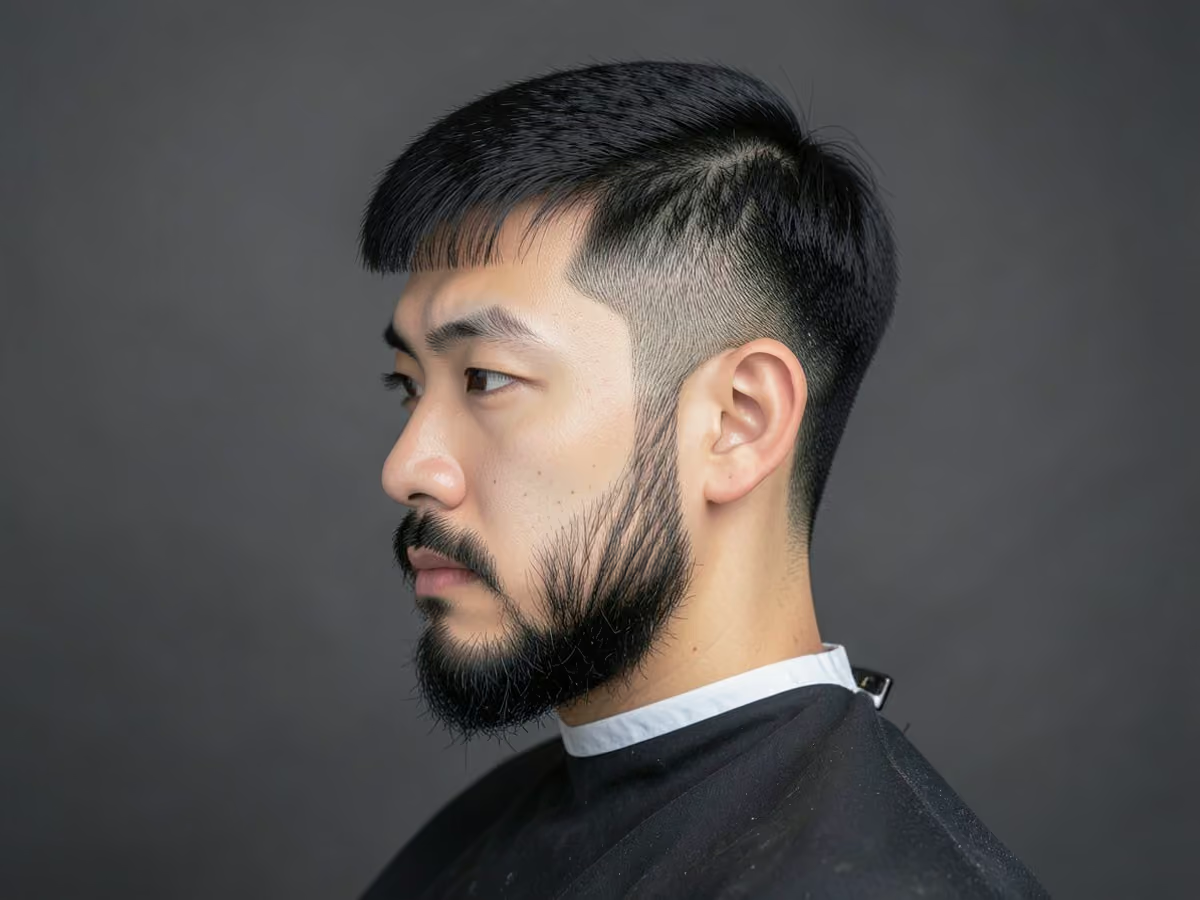
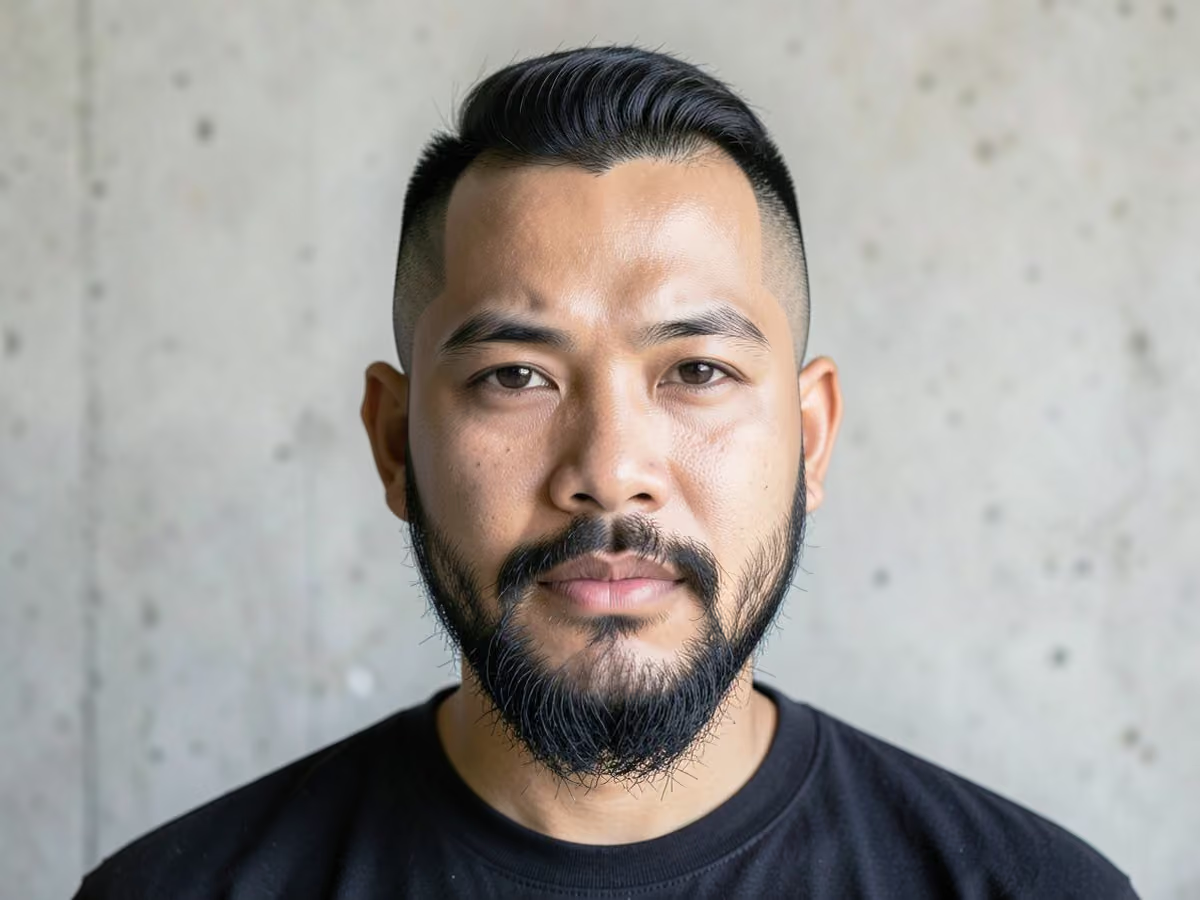
About an inch on top, brushed straight forward to a short horizontal fringe, gives this Caesar its flat, even look that was common on TV leads in the mid-1990s. Scissors or a #3 guard take the sides, slightly shorter than the top. It hides a receding hairline well. Round faces suit the flat front. A fingertip of cream is plenty.
How to Style at Home
Brush the whole top straight forward while the hair is damp.
Push the fringe down with a fingertip of matte cream.
Check in the mirror that the fringe line sits straight across.
Ask Your Barber
"Caesar cut, an inch on top brushed forward to a short straight fringe, sides at a #3 blended into the top. Keep the fringe line horizontal."
Trim:Every week. The head shave needs repeating every few days.
Best For:Oval, round faces + thinning or receding hair.
About This Style
A fully shaved head with a goatee became widespread in sport and music during the later 1990s. The goatee covers the chin and connects to a mustache, kept at a quarter inch. The head is shaved with a razor or very close foil shaver. Men with thinning hair benefit most. A pointed chin beard makes a round face look longer.
How to Style at Home
Shave the head with a razor after a warm shower.
Apply a moisturizer or scalp oil to the scalp.
Trim the goatee to a #2 guard and clean the cheeks.
Ask Your Barber
"Head shaved smooth with a razor, goatee kept at a #2 connecting to the mustache, cheeks and neck shaved clean."
Trim:Every 2–3 weeks. Dark roots show within days on short hair.
Best For:Oval, square faces + straight or wavy dark hair.
About This Style
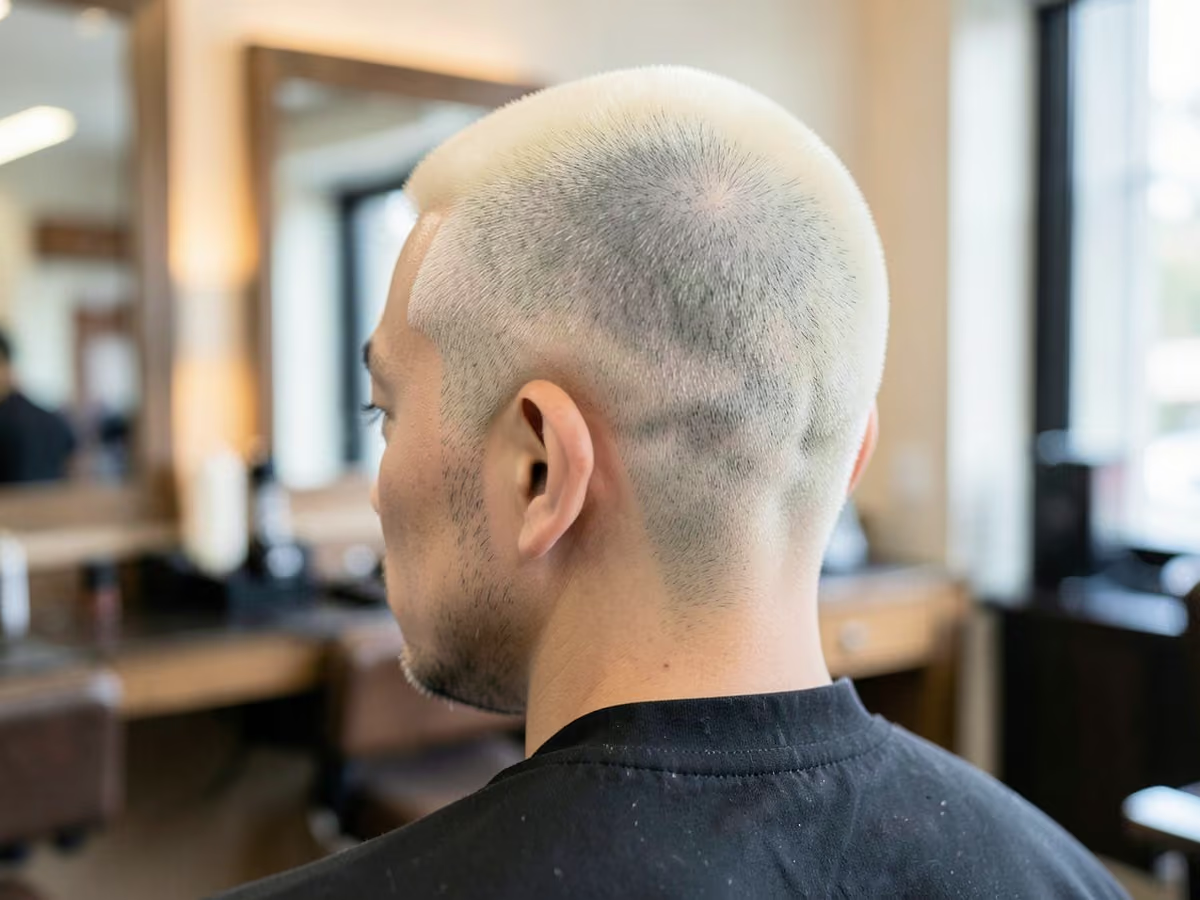
A buzz cut at a #2 or #3, then bleached pale blond or platinum, was everywhere in sport by the end of the decade. The short length means bleach reaches the whole hair evenly. Dark hair needs more than one bleaching session to reach platinum. The roots show quickly, so frequent touch-ups are needed. Scalp sensitivity is common; a patch test helps.
How to Style at Home
Wash with purple shampoo once a week to stop yellowing.
Apply scalp oil if the scalp feels dry after bleaching.
Wear sunscreen or a cap, since the scalp burns easily.
Ask Your Barber
"Buzz cut at a #3 all over, even length, with a tapered neckline. I am bleaching it, so please keep it even so the color lands the same."
Recommended Products
Scalp Oil
90s Hip-Hop and R&B Haircuts
Black barbershops shaped some of the most lasting cuts of the decade. These five cover the high top, a slanted version, shaved part fades, cornrows and short twists. See the high top fade gallery for modern versions.
Trim:Every 2 weeks. The flat top and corners round off quickly.
Best For:Oval, round faces + coily or 4C hair.
About This Style
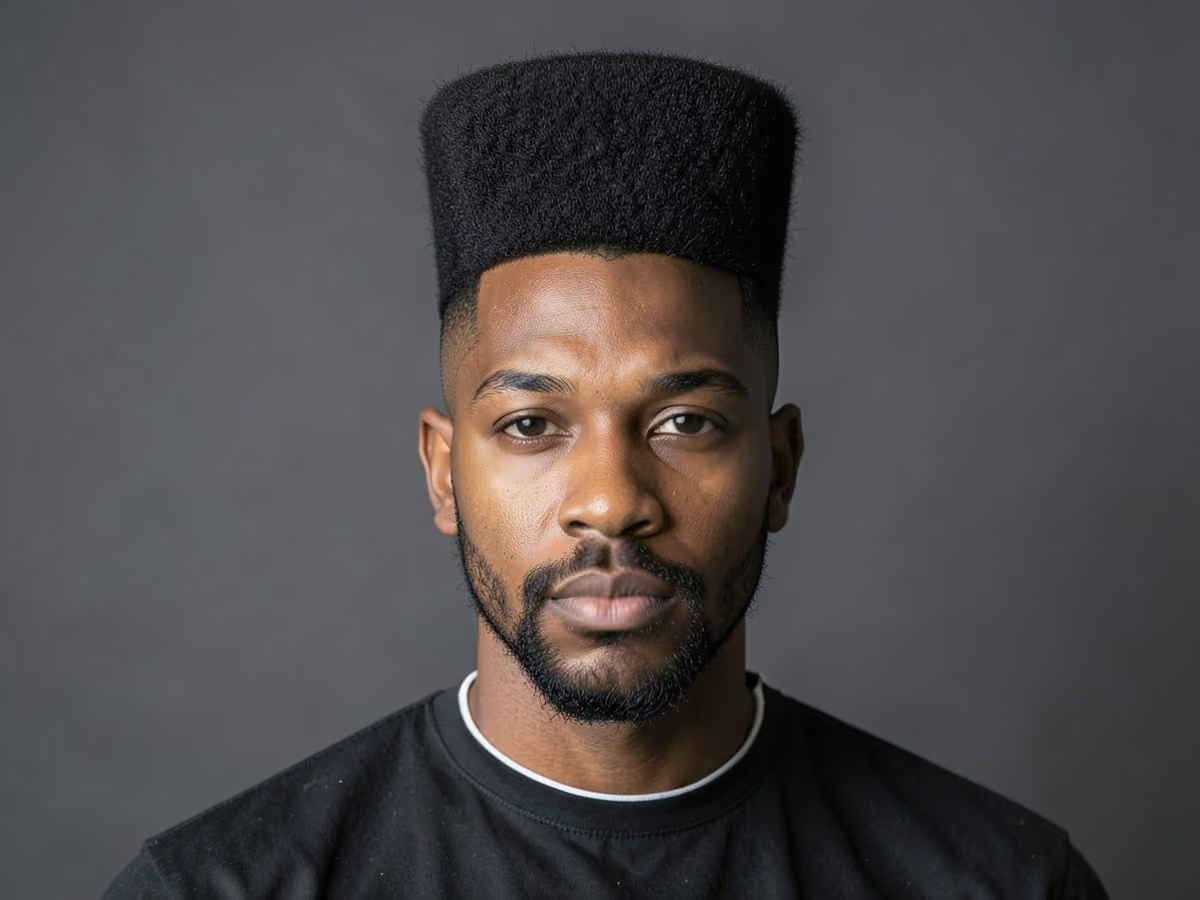
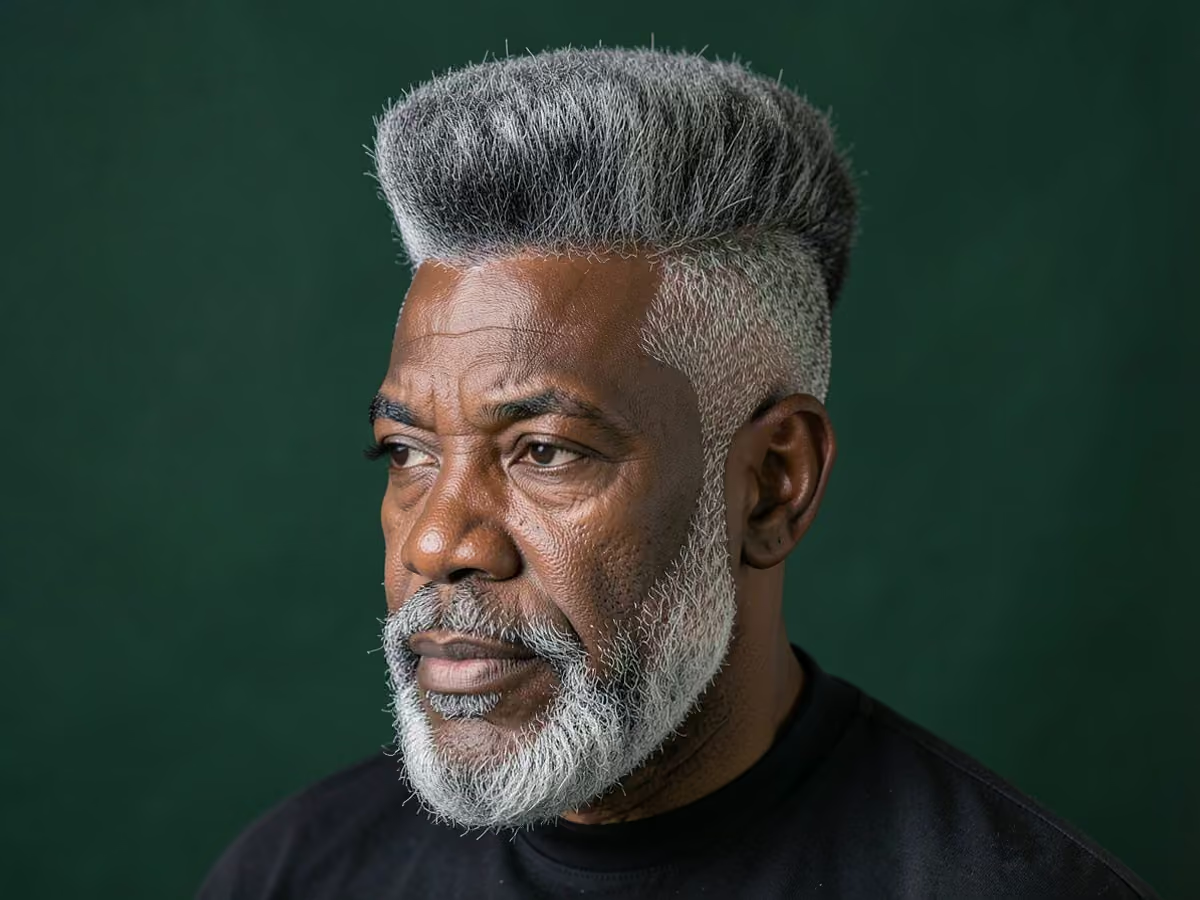
Tall and flat on top, with square corners and sides faded tight, this is the high top most people link to late-1980s and early-1990s hip-hop. The top stands three to five inches and is cut level with clippers and a comb. The sides fade from a #1 to skin. Coily hair holds the height. Its vertical shape stretches a round face.
How to Style at Home
Pick the top straight up from the roots.
Pat the surface flat with your palms until it looks level.
Brush the faded sides and front edges with a soft brush.
Ask Your Barber
"High top four inches tall, flat on top with square corners, sides faded from a #1 down to skin, line-up at the front and temples."
Trim:Every 2 weeks. The slanted angle needs exact recutting.
Best For:Oval, long faces + coily or 4C hair.
About This Style
Named after the early-1990s sitcom, this high top is cut at an angle so it is taller on one side than the other, giving a tilted, flat surface. The sides are faded tight from a #1. It needs coily hair at three to four inches on top. Long faces suit the slant because it breaks up the vertical line. The angle is set by the barber with clippers over a comb.
How to Style at Home
Pick the top straight up from the roots.
Pat it level along the slant with your palms.
Moisturize the scalp at the faded sides with a light oil.
Ask Your Barber
"Slanted high top, three to four inches, taller on the left and cut flat at an angle, sides faded from a #1 to skin, sharp line-up."
Trim:Every 2 weeks. The part line blurs within ten days.
Best For:Oval, square faces + coily or curly short hair.
About This Style
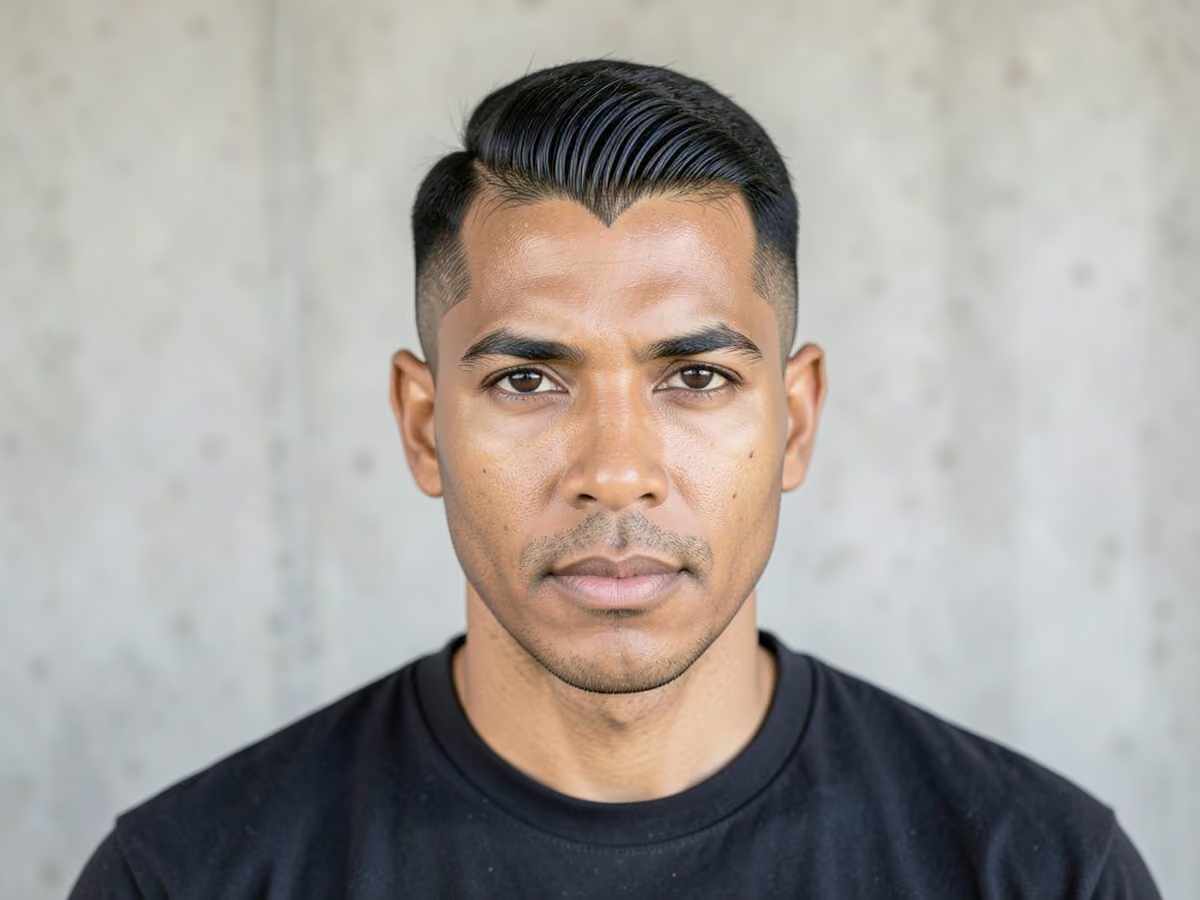
One shaved line on one side, often curved or slightly slanted, sits on a short top of about an inch with a low or mid fade. The part was a simple but recognizable detail in 1990s Black barbershops. Coily hair shows the line clearly against the dark texture. It is one of the easiest ways to add a design without a full pattern.
How to Style at Home
Brush the top in the direction of the part.
Apply a little leave-in to keep the texture soft.
Book a quick line touch-up between full cuts.
Ask Your Barber
"Low fade from a #1, an inch on top, shaved part line on my left side, slightly curved, with a sharp line-up at the front."
Trim:Every 2–3 weeks. Cornrows are redone, edges tidied between.
Best For:Oval, long faces + coily hair four inches or longer.
About This Style
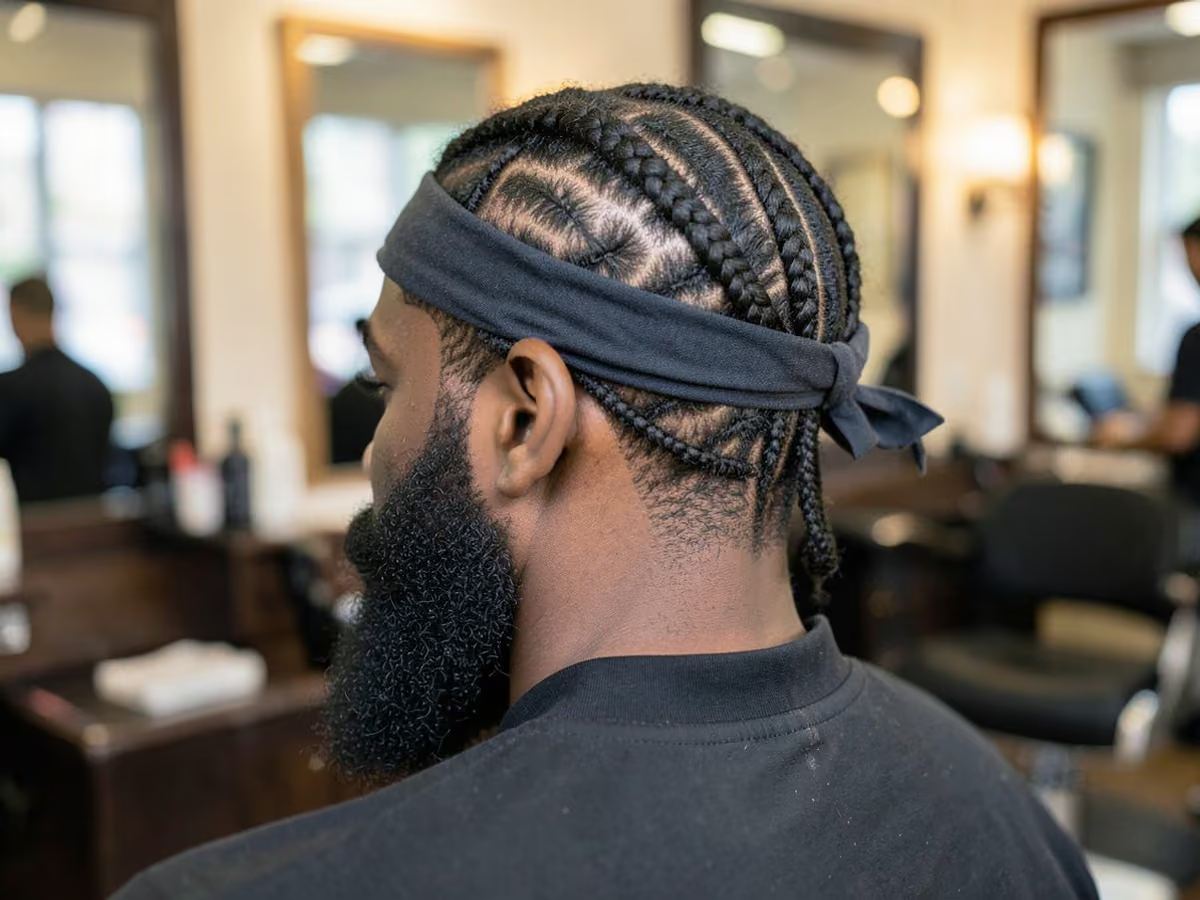
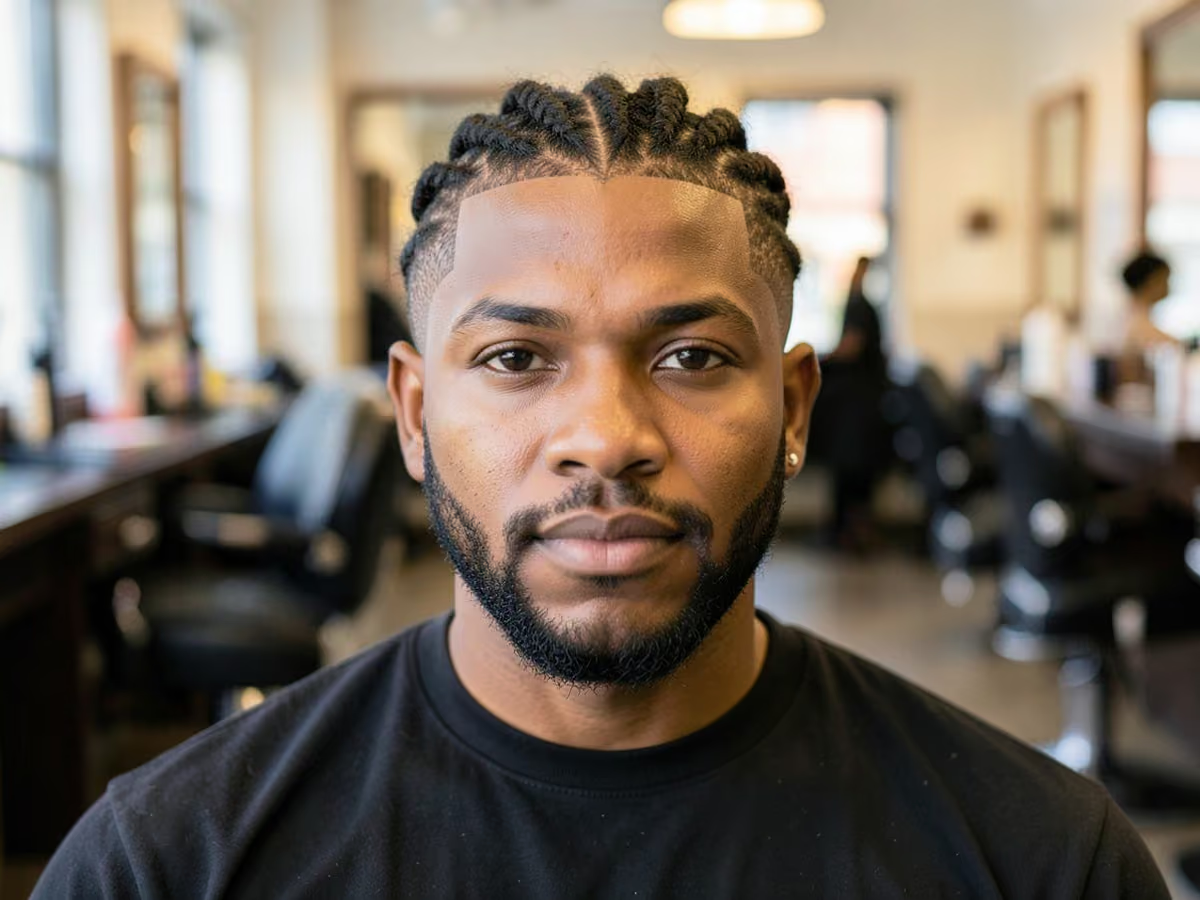
Straight-back cornrows worn under a folded bandana or headscarf became a common late-1990s look in hip-hop and R&B. The braids are usually eight to twelve rows from the hairline to the nape. Hair needs to be four inches or longer. The bandana protects the braids and edges. Braiding too tight can pull at the hairline, so ask for medium tension.
How to Style at Home
Spray the braids lightly with a leave-in to keep the scalp moist.
Fold the bandana into a band and tie it over the braids.
Sleep with a satin scarf to keep the braids tidy.
Ask Your Barber
"Straight-back cornrows, eight to ten rows from hairline to nape, medium tension so my edges are not pulled, line-up at the front."
Trim:Every 2–3 weeks. Fade and twists need refreshing together.
Best For:Round, oval faces + coily or 4C hair.
About This Style
Two-strand or comb twists of two to three inches on top, over a low or mid fade, grew in visibility toward the end of the decade. The twists stand slightly up and out, giving texture without the length of locs. Coily hair locks the twists in place. Round faces gain height from the top. Twists last one to two weeks before they need redoing.
How to Style at Home
Apply leave-in and a small amount of twisting cream to damp hair.
Twist two-inch sections with your fingers or a comb.
Let the twists dry fully before you touch or separate them.
Ask Your Barber
"Low fade from a #1, two to three inches on top for two-strand twists, line-up at the front. Leave the top even so the twists sit level."
Recommended Products
Leave-In
Curl Cream
Grunge, Skater and Mullet Cuts
Alternative music and skate culture rejected neat cuts. These five cover a grunge middle part, hockey hair, a mushroom undercut, long hair with a goatee and an undercut with a long fringe. For a modern mullet, see our modern mullet guide.
Trim:Every 8–10 weeks. A rough outline hides most growth.
Best For:Oval, long faces + straight or wavy hair.
About This Style
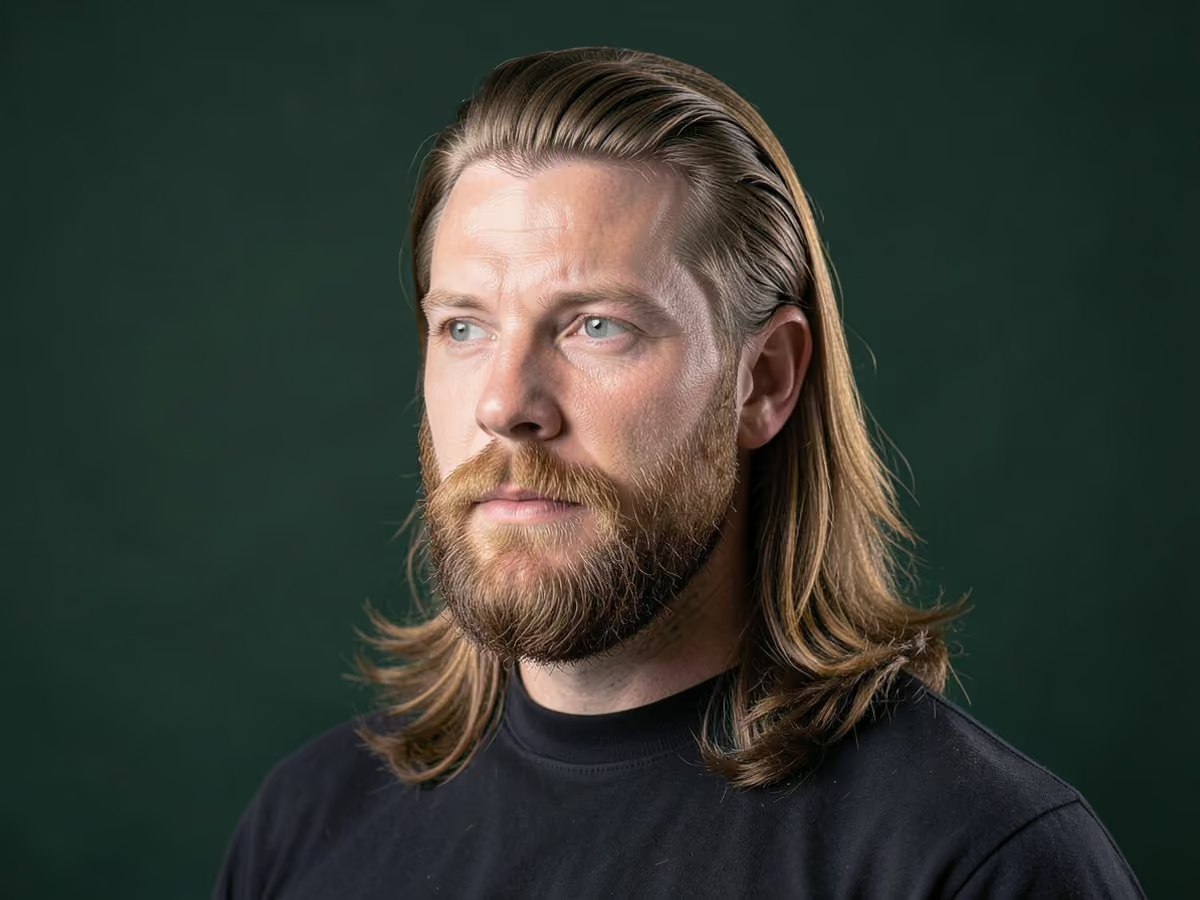
Shoulder-length hair parted down the middle, left messy and slightly unwashed-looking, was the signature early-1990s grunge look. There is little layering; the ends are uneven and the hair falls across the face. Straight or slightly wavy hair works best. Long faces suit it. Styling takes seconds, though the ends still need occasional trims to stay healthy.
How to Style at Home
Wash the hair every two to three days, not daily.
Part it in the middle with your fingers, not a comb.
Scrunch a little sea salt spray into the ends and let it air-dry.
Ask Your Barber
"Shoulder-length hair with a middle part, rough uneven ends, very little layering. Dust off the split ends but keep it messy."
Trim:Every 6 weeks. The back flows better with some length.
Best For:Oval, square faces + straight or wavy thick hair.
About This Style
Long at the back, flowing out from under a helmet, with a medium top swept back and sides covering half the ear, this is the mullet cousin linked to 1990s ice hockey players. The back reaches below the collar. It is softer than a strict mullet because the sides blend into the back. Thick wavy hair gives the best flow.
How to Style at Home
Towel-dry and comb the top and sides straight back.
Let the back air-dry so it flips out naturally.
Rub a small amount of cream through the ends.
Ask Your Barber
"Medium top swept back, sides half over the ears blending into a long back below the collar. Keep the back flowing, no hard line between sides and back."
Trim:Every 3–4 weeks. Shaved sides grow into the bowl.
Best For:Oval, long faces + straight thick hair.
About This Style
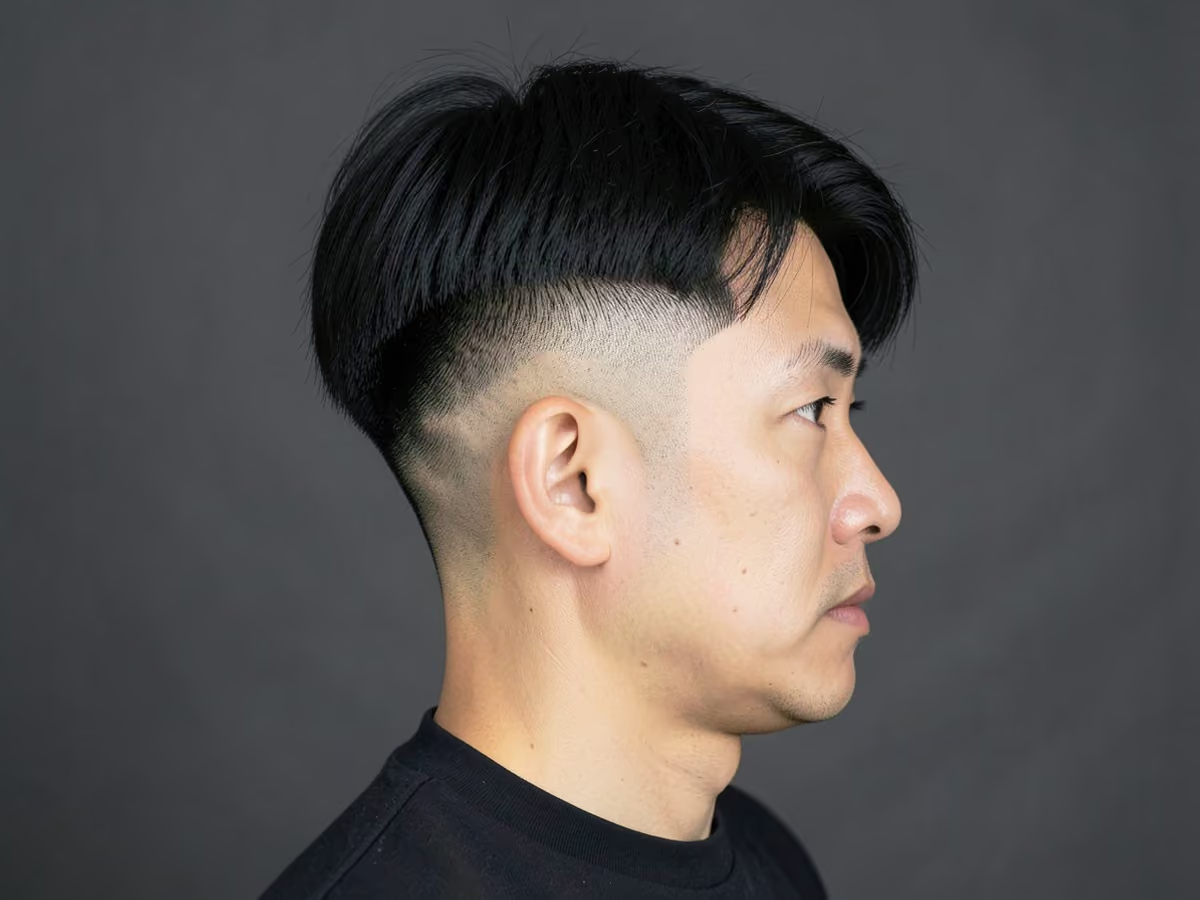
Skaters and teens in the mid-1990s wore this rounded bowl of hair over shaved or clipped sides, giving the top a mushroom-cap outline. The top runs four inches, cut even all around at about ear level. The sides beneath are a #1 or #2. Straight thick hair keeps the cap round. The modern bowl cut gallery shows softer versions.
How to Style at Home
Comb the top down and around from the crown.
Blow-dry straight down to keep the bowl smooth.
Shake the fringe slightly with your fingers so it is not too neat.
Ask Your Barber
"Undercut at a #2, top at four inches cut round in a bowl shape that hangs to ear level, no blend between the sides and the top."
Trim:Every 8 weeks. The goatee needs a weekly tidy.
Best For:Oval, round faces + straight or wavy long hair.
About This Style
Alternative rock musicians in the mid to late 1990s often paired shoulder-length hair with a goatee. Little layering goes into the length, which is center or loosely side parted. The goatee is kept short, about a quarter inch, connecting to a mustache. A round face looks narrower with that point at the chin. The rest of the face is shaved clean.
How to Style at Home
Air-dry the hair with a little sea salt spray.
Trim the goatee to a #2 guard and tidy the edges.
Shave the cheeks and neck clean so the goatee stands alone.
Ask Your Barber
"Shoulder-length hair, mostly one length, just trim the ends. Keep my goatee at a #2 connecting to the mustache, and shave the cheeks clean."
Trim:Every 3–4 weeks. Short sides grow out within a month.
Best For:Oval, heart faces + straight medium hair.
About This Style
Clipped sides and back with a long fringe falling forward or to one side over the eyes was popular with skaters and grunge fans. The fringe runs five inches and the sides are a #2 with no blend. The fringe hides the forehead, which suits heart-shaped faces. Straight hair falls in place easily. Push it back for a cleaner look.
How to Style at Home
Towel-dry the hair and let the fringe fall forward.
Blow-dry the fringe down and to one side.
Twist the ends with a little matte paste for separation.
Ask Your Barber
"Undercut at a #2 on the sides and back, fringe left at five inches to fall forward over my eyes, no blend. Keep the fringe a little choppy."
Recommended Products
Matte Paste
How Do You Ask Your Barber for a 90s Haircut?
Name the look, then translate it into lengths. For curtains, give the fringe length (usually to the cheekbones), say you want a center part, and choose scissor-cut sides or a low taper. For spikes, ask for one to two inches on top cut evenly with point cutting. For a high top, give the height in inches and say if you want flat, slanted or rounded edges. For a buzz or Caesar, give the guard number; a #2 leaves 1/4 inch.
Bring photos, because many 90s cuts are known by a celebrity or TV show rather than a barber term, and your barber may have a different picture in mind. Show the front and the side. Mention any bleaching or color plans at the same time, since the barber may cut the top slightly longer to allow for damaged ends to be trimmed later, and may suggest booking the color first so the cut can tidy it up.
Clipper Guards Used in 90s Hairstyles for Men Styles
A clipper guard is the plastic comb that clips onto the blade and sets how much hair is left: a #1 leaves 3 mm (1/8 inch), each step up adds about 3 mm. The right column lists the cards on this page that call for each guard. See the full clipper guard numbers guide for the complete chart.
Clipper guard sizes for 90s hairstyles for men styles
Replace stiff gel with flexible products. Matte clay or paste gives spikes and flicks the same shape with a dry finish that can be restyled during the day. For curtains, blow-dry the fringe away from the center part with a round brush, then add a small amount of cream so the sides fall softly. Grunge looks need almost nothing: air-dry with a little sea salt spray and avoid brushing.
For high tops and twists, moisture comes first, then shape. A sponge or pick and a light leave-in keep the texture healthy, and a satin scarf at night stops the top from flattening. Bleached hair needs extra care: use a purple shampoo once a week to keep yellow tones down, and a weekly deep conditioner because bleach dries hair out. Trim bleached ends more often than untreated hair, since they split faster.
If you want the original wet look
Use a light gel on damp hair and let it dry without touching it. Apply less than you think, because gel shows flakes when overused.
What Are Common Mistakes With 90s Hairstyles?
Too much product is the most common one. A pile of gel makes spikes look stiff and greasy and turns curtains into wet strings. Another mistake is cutting the fringe too short for curtains; once it sits above the eyebrows it no longer splits into two clean sides, and it takes several weeks to grow back. Bleaching at home without a toner often leaves orange or yellow tones instead of the pale frosted finish.
With high tops and box shapes, skipping regular trims lets the outline round off, which loses the flat top that defines the style. Cornrows braided too tightly can pull at the hairline over time, so ask for medium tension. Grunge hair still needs trims every eight weeks or so to remove split ends, even if it is meant to look unkempt. A dusting of the ends keeps it looking chosen instead of neglected.
Which 90s Hairstyles for Men Is Right for You?
Pick your hair type and how much upkeep you will put in. The matches below come from the Best For and Maintenance notes on each card. Upkeep follows the Maintenance badge: low means a cut every 3 to 6 weeks and almost no daily styling, high means weekly line-ups or daily product.
Q1: What were the most popular men's hairstyles in the 90s?+
Curtains with a center part, gelled spikes, frosted tips, the Caesar, high top fades, buzz cuts and long grunge hair were among the most widely worn. Boy bands, sitcoms, hip-hop and grunge each popularized different cuts, so the look depended a lot on the music and TV people followed.
Q2: Are 90s haircuts back in style?+
Several are. Curtains and middle parts have returned strongly in recent years, and barbers also report requests for frosted tips, Caesar cuts and textured spikes. Today's versions are usually softer, with matte products instead of stiff gel and cleaner tapers or fades at the sides.
Q3: How long does hair need to be for 90s curtains?+
The fringe should reach at least the cheekbones, roughly four to five inches, so it can split down the middle and fall to each side. The sides can be shorter, around two inches, or tapered. If your hair is short now, expect three to four months of growth before curtains sit properly.
Q4: How do you get 90s spiky hair without it looking crunchy?+
Ask for one to two inches on top, cut with point cutting so the ends are uneven. Blow-dry the hair upward, then work a small amount of matte clay through the tips and pinch them into spikes. Clay gives the shape with a dry finish that moves, unlike traditional gel.
Q5: What is the difference between a 90s Caesar and a modern Caesar?+
The 90s Caesar was usually scissor cut, about an inch all over, brushed straight forward to a short horizontal fringe, with sides slightly shorter than the top. Modern versions often add a skin or low fade and more texture on top, giving more contrast between the sides and the fringe.
Q6: What 90s haircuts work for Black men?+
High top fades, box shapes, shaved part fades, short twists, cornrows and Caesar cuts with waves all have strong roots in 1990s Black barbering. Most are still common requests, often updated with skin fades, sharper line-ups or sponge texture on top.