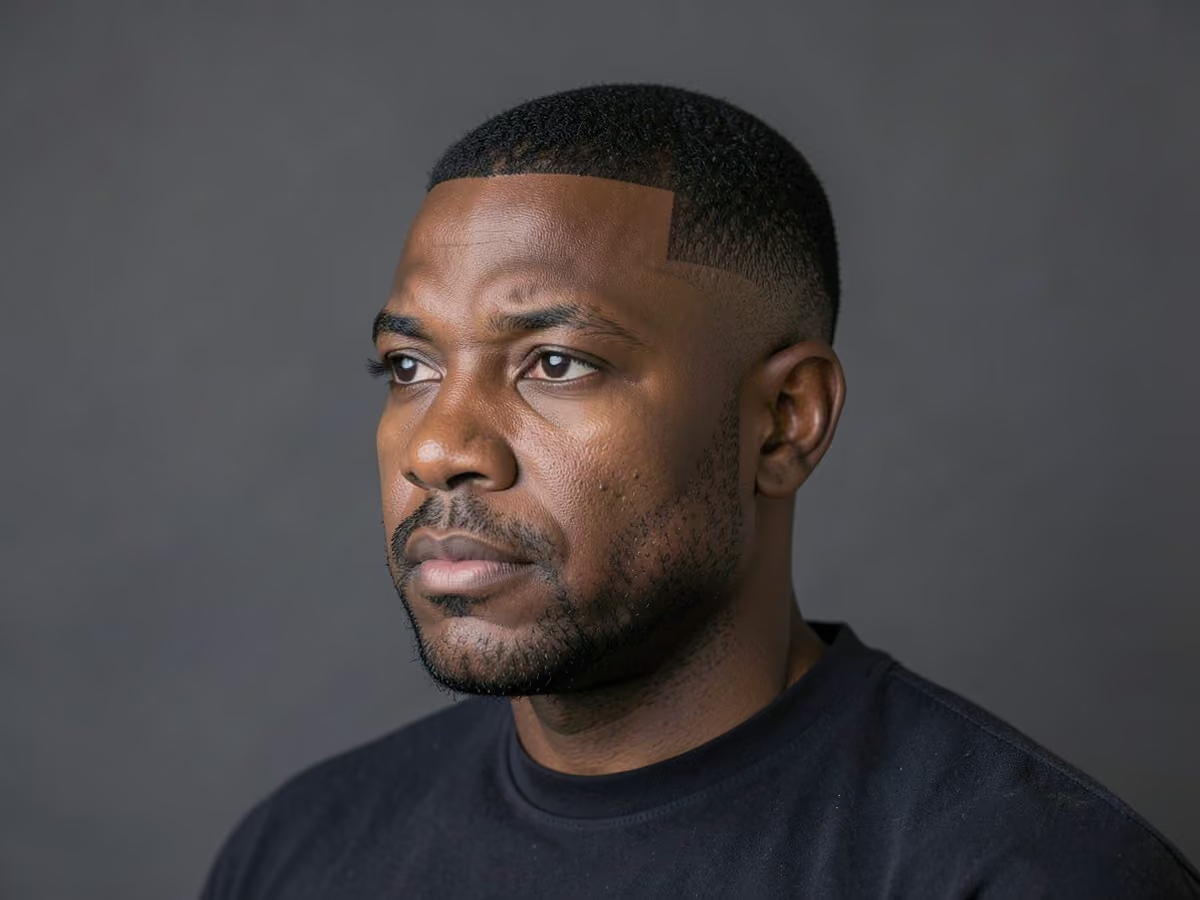
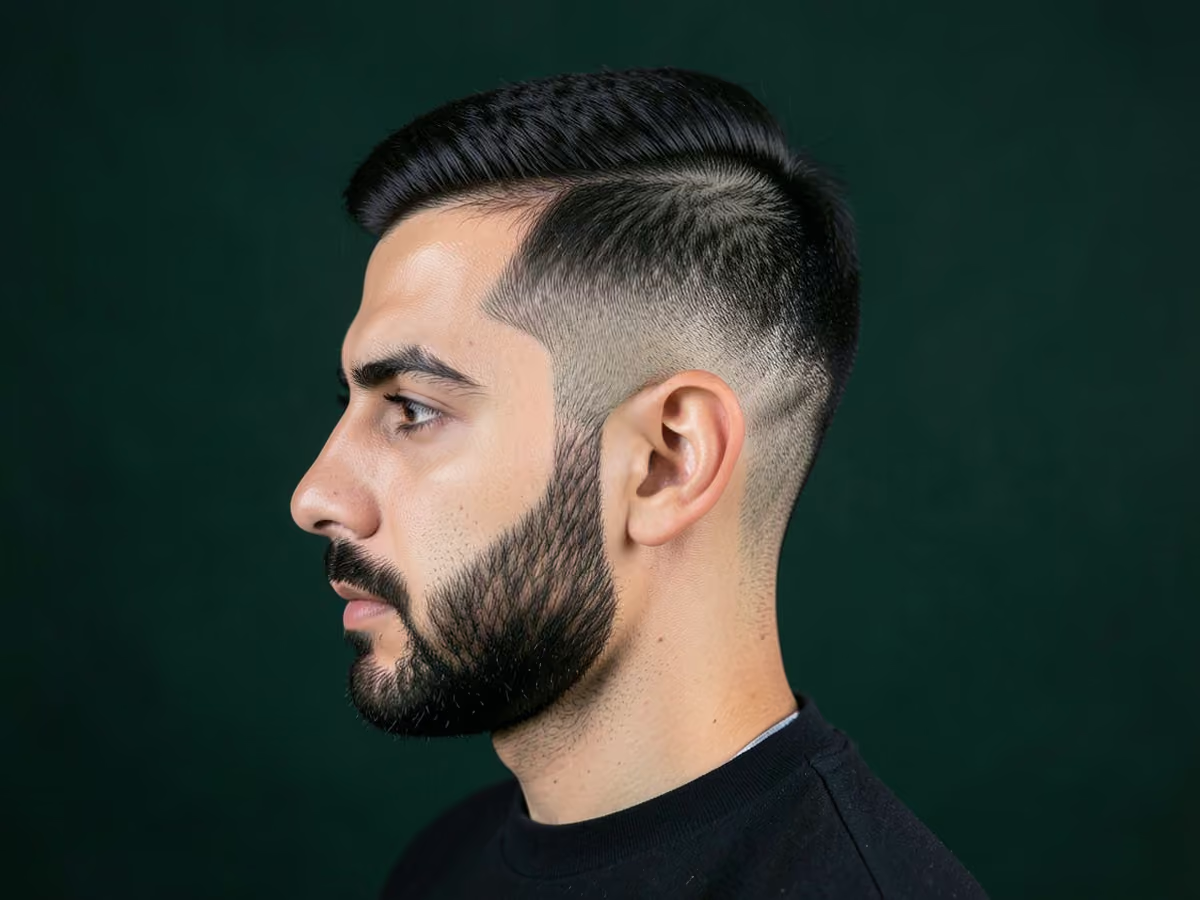
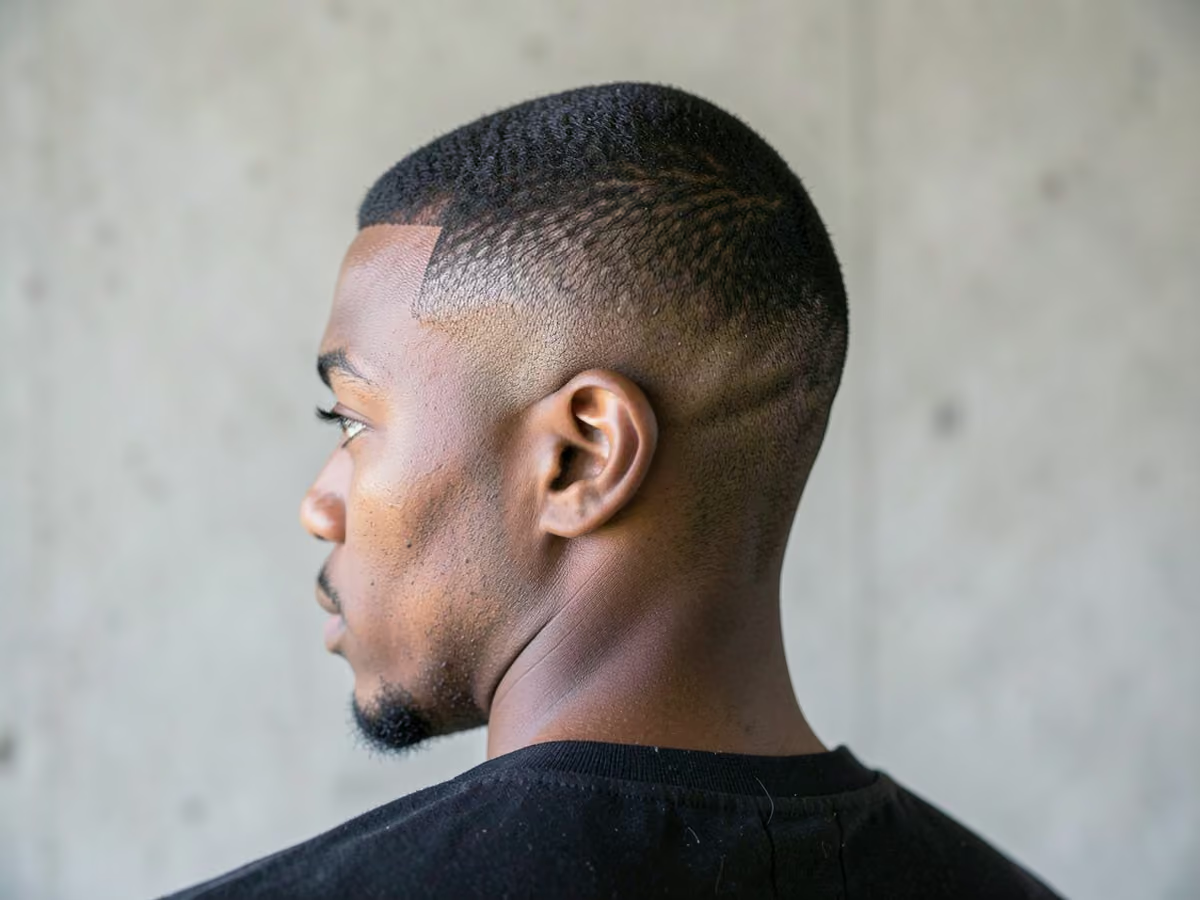
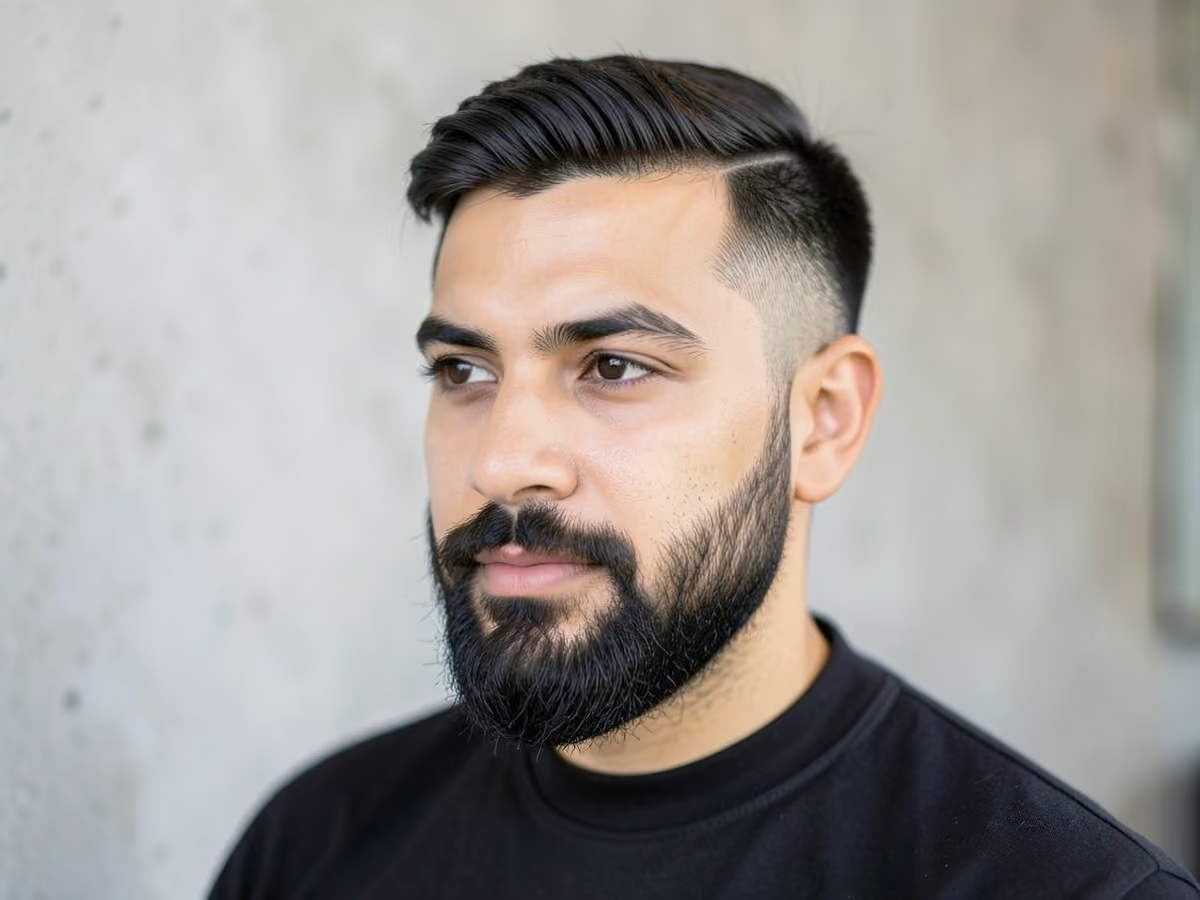
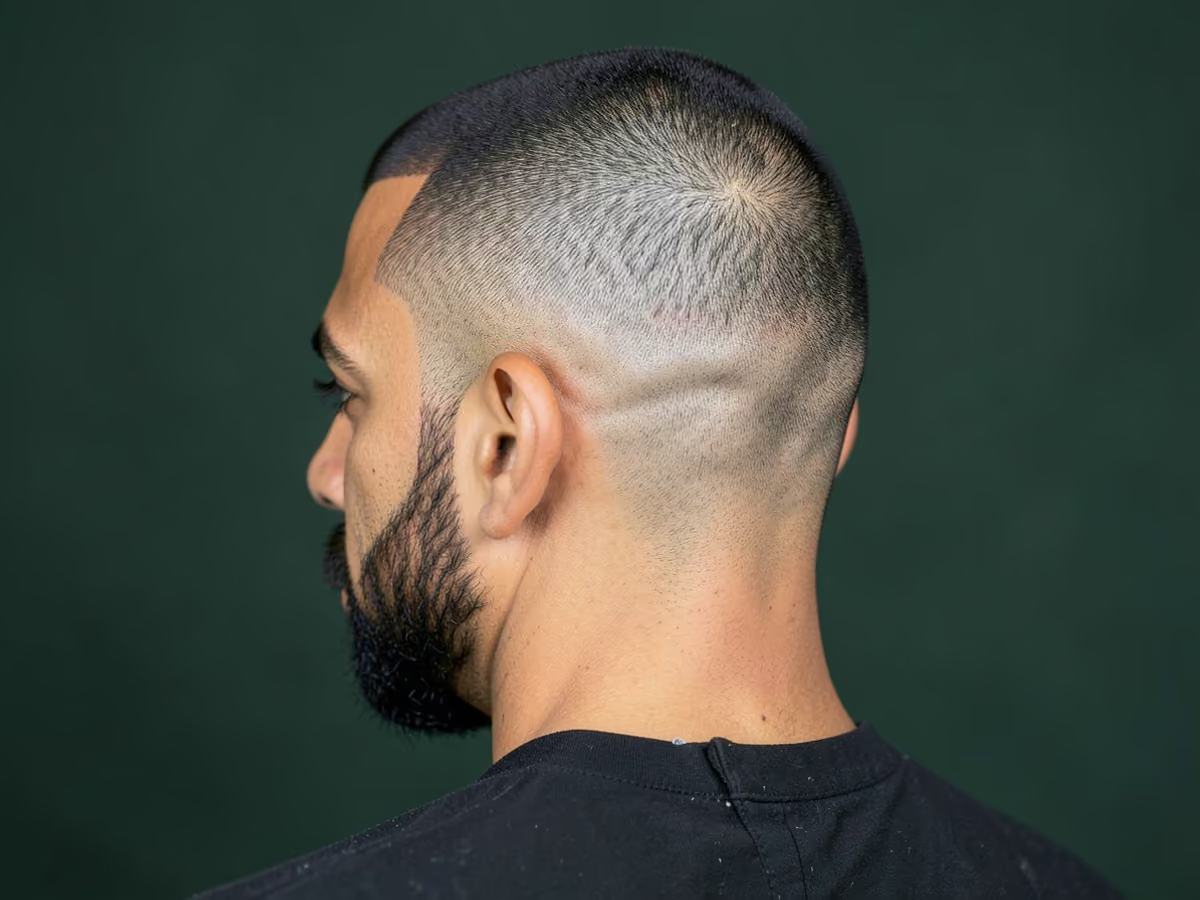
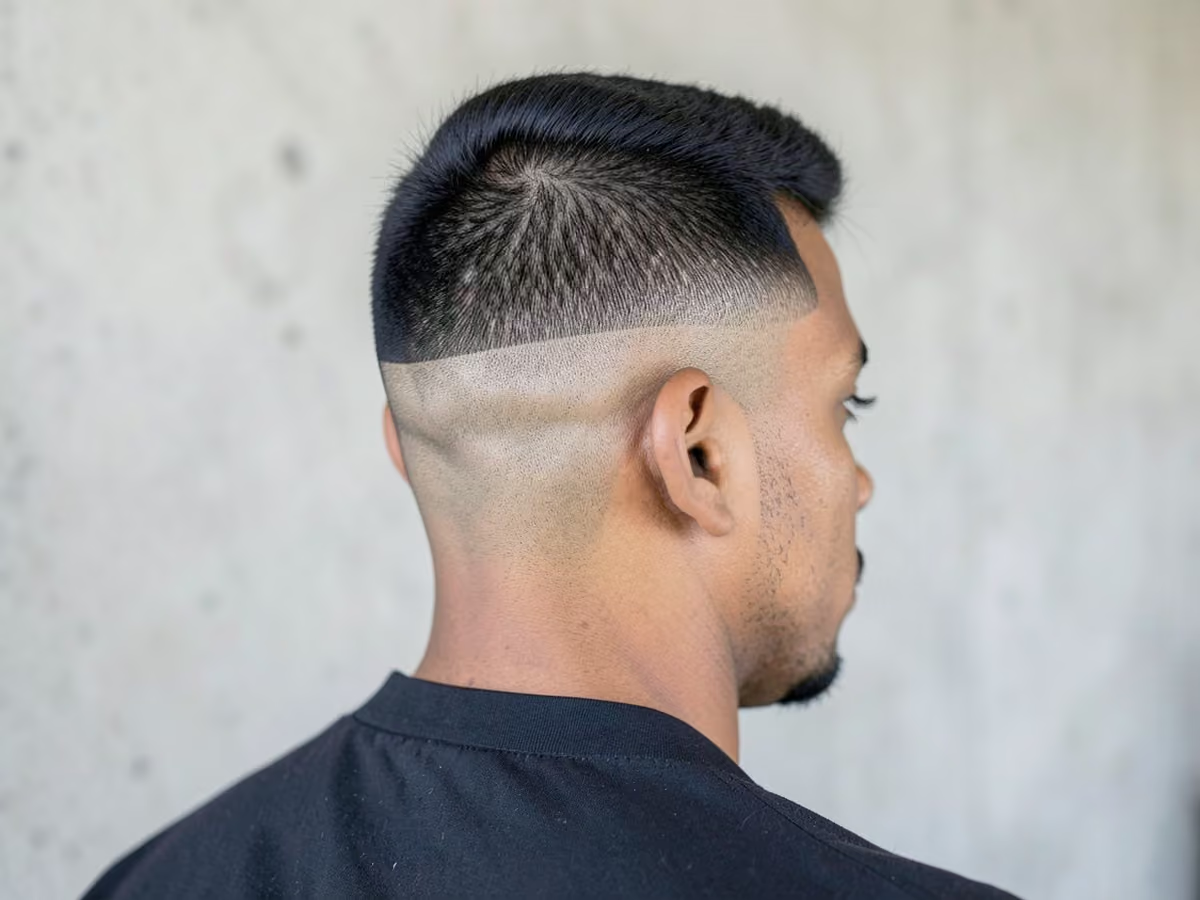
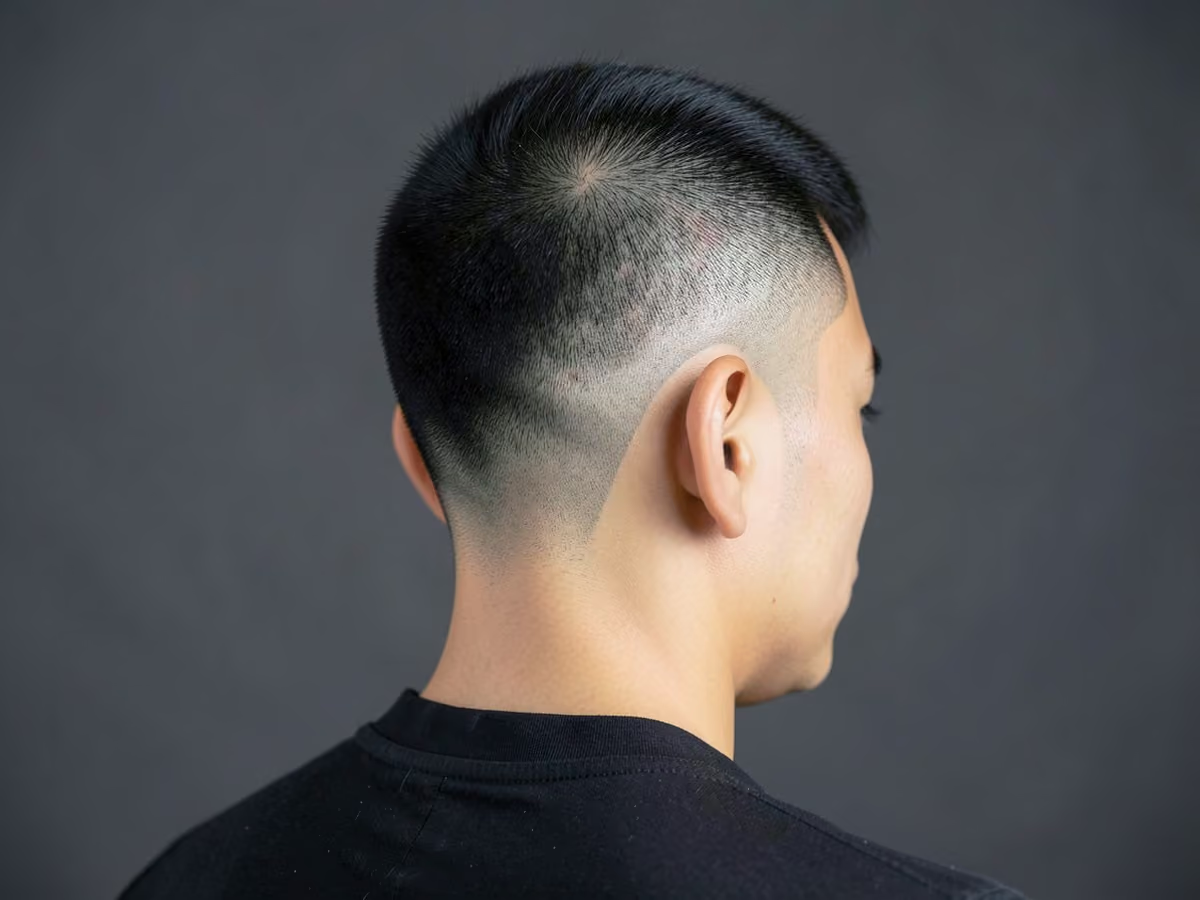
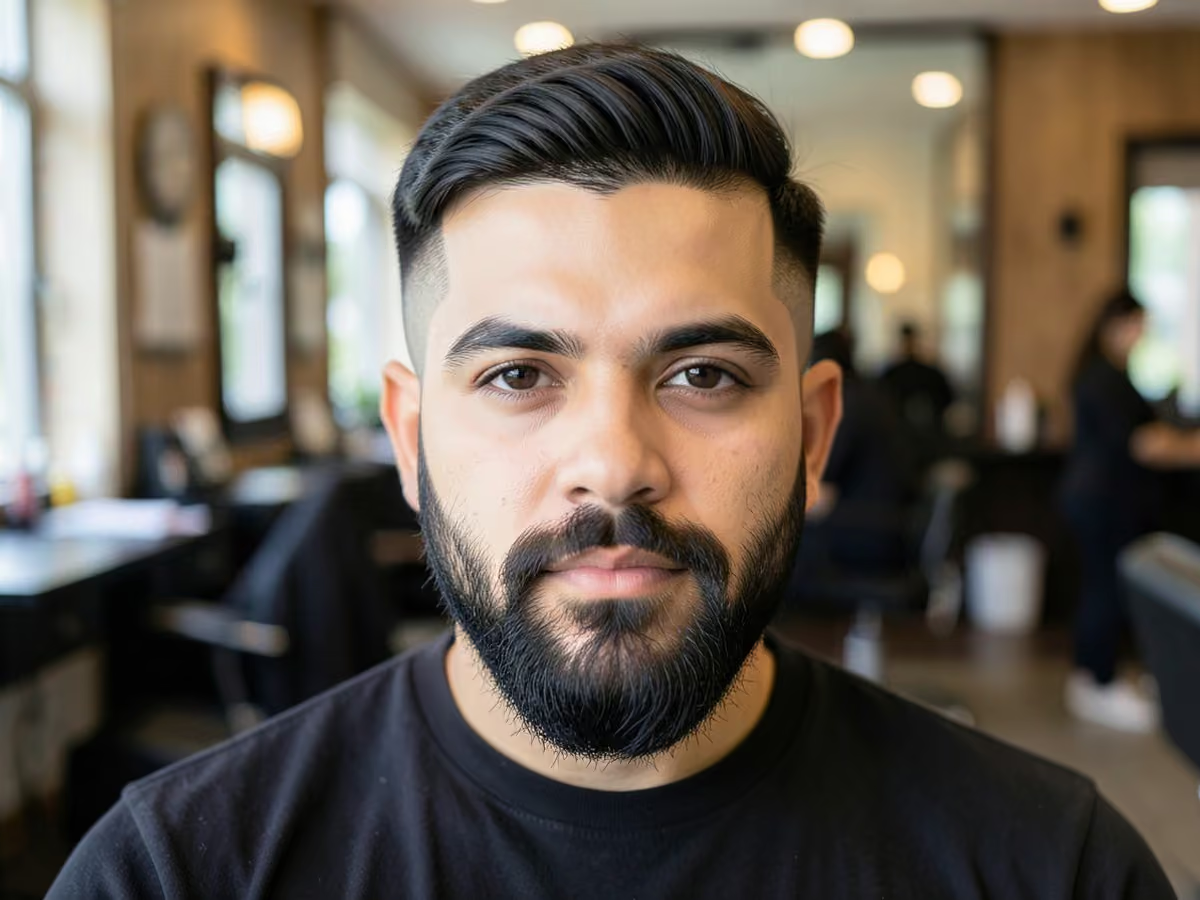
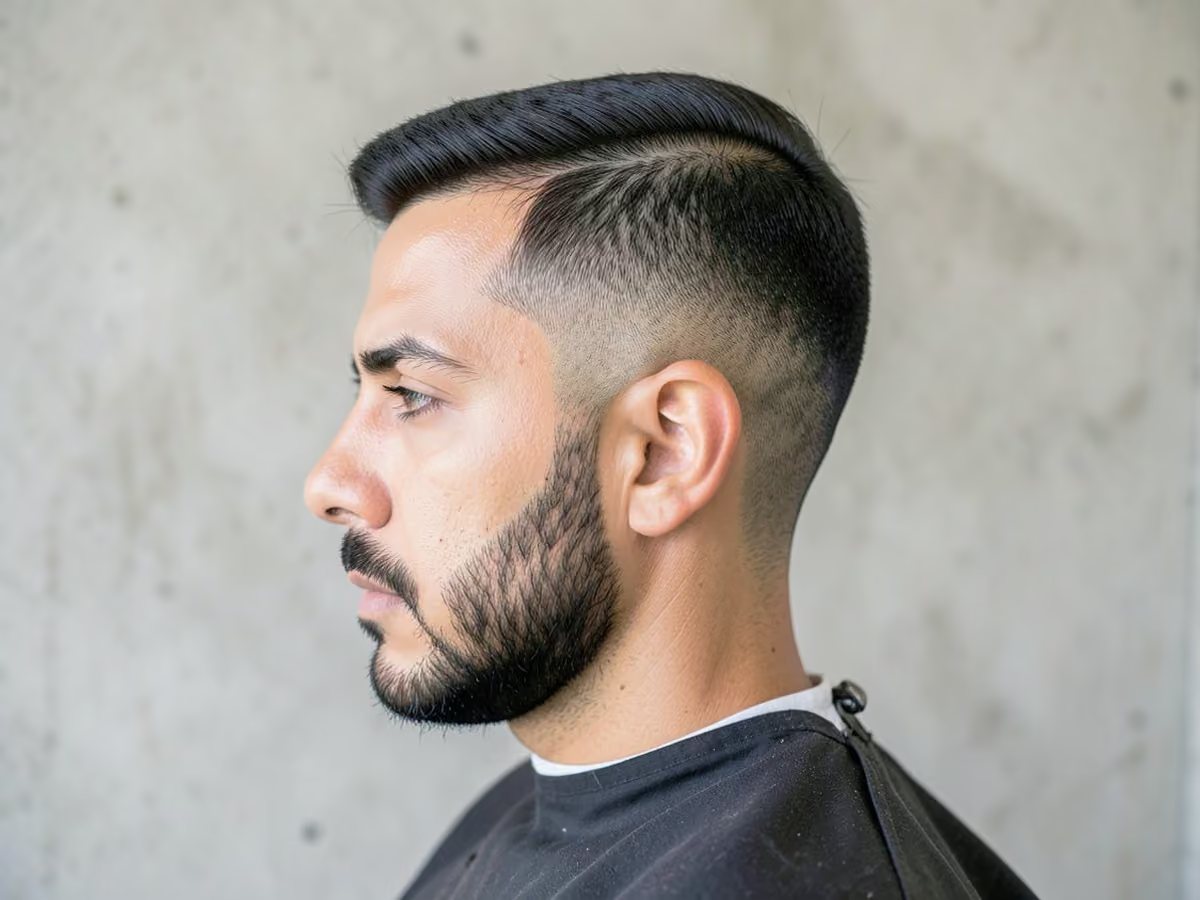
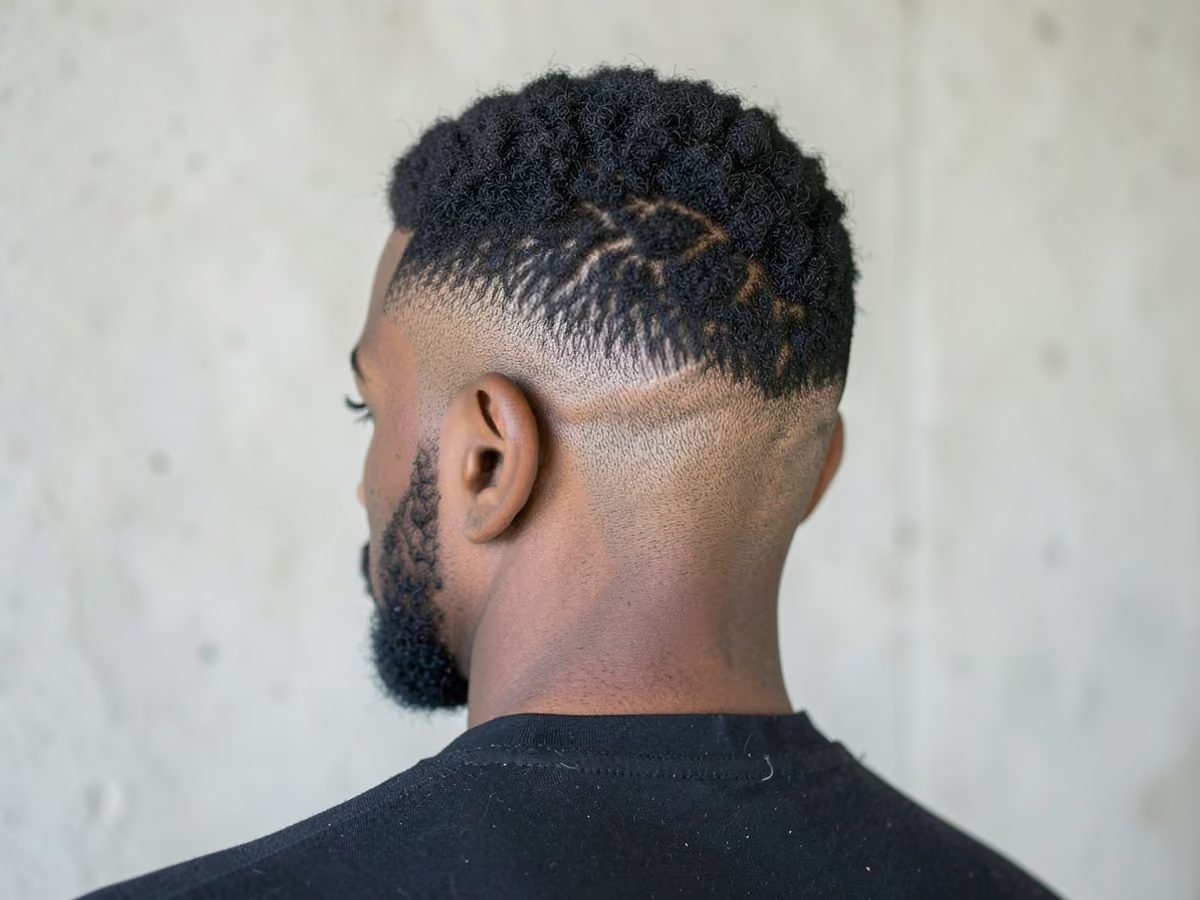
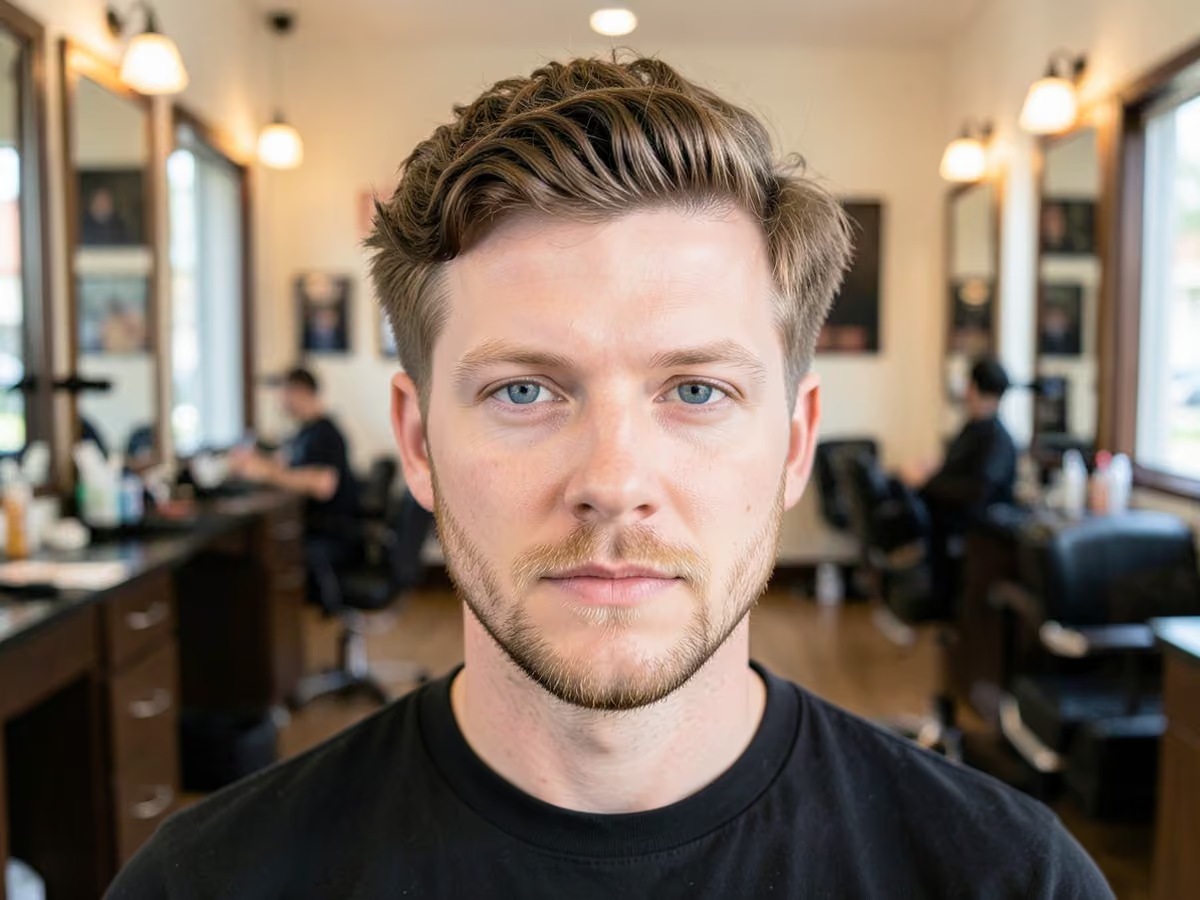
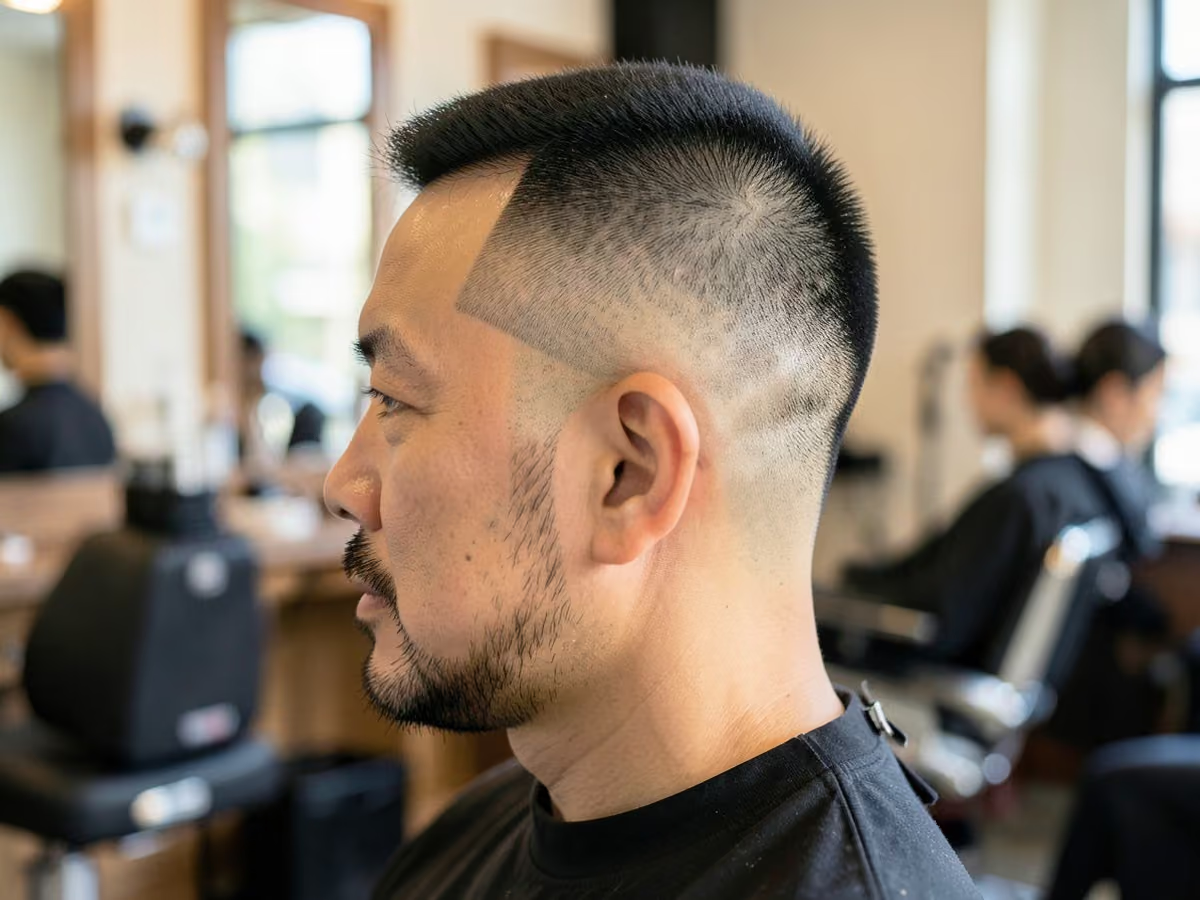
Quick answer: A flat top haircut is a short cut where the hair on top stands upright and is trimmed level, so the head looks square and flat from the front and side. The top is usually 1/2 to 2 inches long, the sides are clipped or faded short, and it needs a trim every two to three weeks.
Flat Top Haircut Styles at a Glance
Every style on this page with its clipper guard, top length and trim interval. Tap a name to jump to that card.
A flat top haircut is one of the few cuts defined by its shape rather than its length: the top stands straight up and is clipped into a level plane. It started as a military and 1950s civilian cut, returned in the 1980s on coily hair, and still turns up in shops today. Below are 30 versions grouped by shape, side cut, texture and beard.
What Is a Flat Top Haircut?
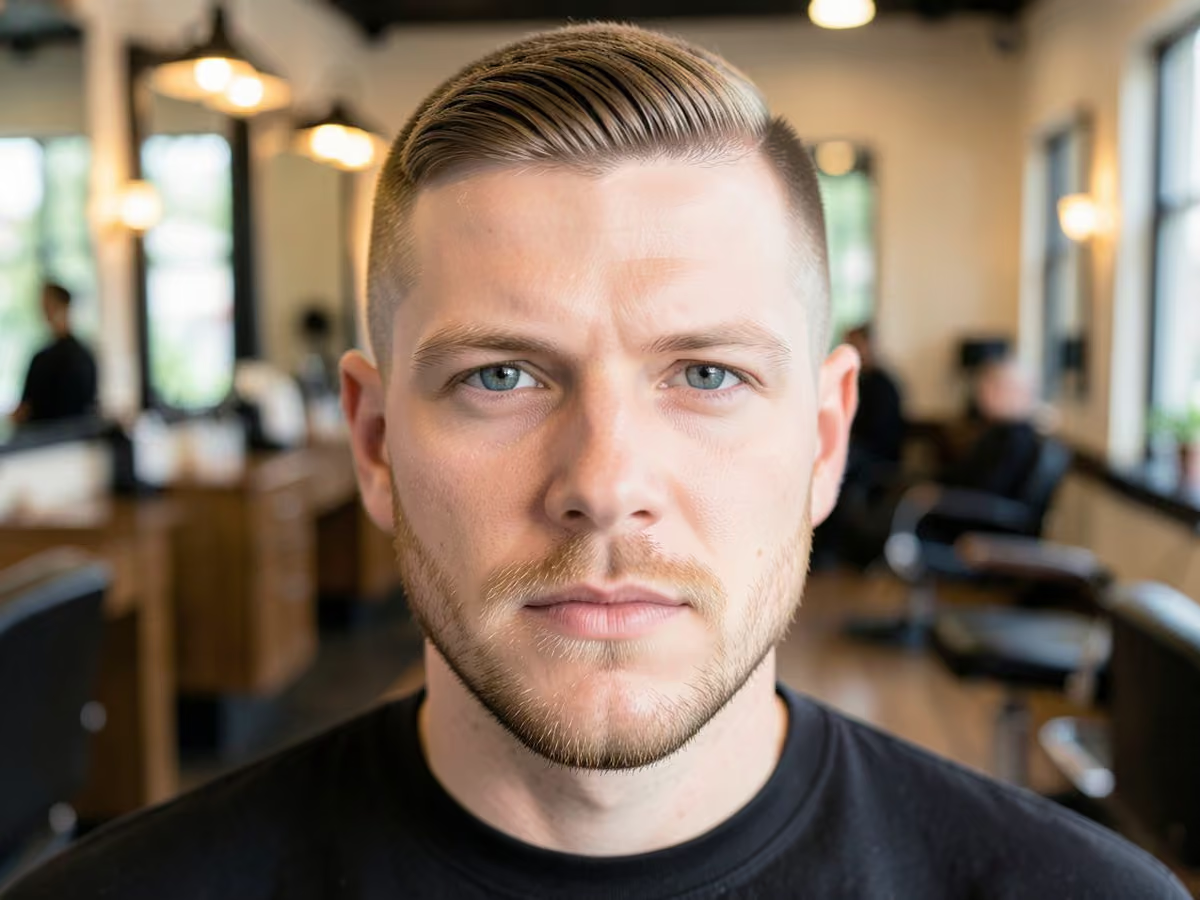
A flat top is a cut where the hair on top is made to stand vertically, then clipped so the ends form a flat, level surface. Barbers usually cut it with clippers over a flat top comb, a wide comb that sometimes has a small spirit level built in so the plane stays even. The front edge is often left a touch longer than the back, and the corners where the top meets the sides are either squared or softly rounded.
The top usually runs from half an inch to two inches. Below it, the sides are tapered or faded short, commonly from a #1 or #2 up to the corner. On straight hair, the top needs a stiff product to stay upright. On coily hair, the natural texture stands up by itself, which is why the afro flat top and high top fade became so popular in the 1980s.
How Is a Flat Top Different From a Crew Cut or High and Tight?
All three have short sides and a short top, but the top is shaped differently. A crew cut follows the round shape of the head, with the front slightly longer and the length tapering toward the crown. A flat top ignores the head shape and cuts across it, so the crown is often shorter than the front and the outline from the side is a straight line. A high and tight clips the sides very high and leaves only a small patch on top, which may or may not be flat.
In practice, a flat top takes more skill and more time in the chair than a crew cut, and fewer barbers cut it well, because the level plane shows every dip. Ask whether your barber uses a flat top comb before you book, and look at photos of their previous flat tops. The table below compares the four cuts that people most often confuse, by top shape, usual length and how the sides are cut.
How Is a Flat Top Different From a Crew Cut or High and Tight?
Thick, coarse and coily hair suits it best, because the hair stands up with little help and the flat surface stays even. Straight hair can wear a flat top, but it needs a stiff product every day and tends to lie down by evening. Fine or thinning hair is the hardest case, since the level top lets light through and scalp shows from above.
Round and oval faces gain the most, because the square top adds height and angles. Long faces should keep the top short, around half an inch, so the cut does not add more length. The shape also shows the head clearly, so a flat or uneven crown may be easier to see; a taller front and a drop at the back can help. Men who sweat a lot or play sports like the low daily effort once the top is cut.
Filter the styles
Showing all 30 styles
Fade
Hair
Length
Classic Flat Top Shapes
These six cuts set the basic outline: how tall the top stands, how the corners are cut and how close it sits to a crew cut. Start here before choosing a side cut.
Trim:Every 3 weeks. A short top keeps its level shape longer.
Best For:Long, oval faces + thick straight or coarse hair.
About This Style
At about half an inch, this is the shortest length that still stands up and reads as flat. The sides taper from a #1 or #2 into the corners. Because so little hair is left on top, daily styling takes a minute with a small amount of gel, and long faces do not get any extra height. It is a common first flat top for men moving up from a buzz cut.
How to Style at Home
Rub a small dab of light gel between your fingers.
Brush the top upward from front to back with a stiff brush.
Let it dry without touching so the surface stays level.
Ask Your Barber
"Short flat top, about half an inch on top cut level, square corners, and a #2 taper on the sides up to the corners."
Trim:Every 2 weeks. Taller tops show unevenness sooner.
Best For:Round, square faces + thick, coarse or coily hair.
About This Style
Leaving one and a half to two inches gives a box shape that adds clear height to a round face. On straight hair this needs firm wax every morning and a blow-dry upward to stay up; coarse or coily hair holds the height naturally. Short sides, often a #1 fade, make the top look even taller. The barber will usually take longer, since a tall plane shows every dip.
How to Style at Home
Blow-dry the top straight up while brushing it vertically.
Work firm pomade through the front row first, then the rest.
Brush across the surface lightly to level the ends.
Ask Your Barber
"Tall flat top with about two inches on top cut level with a flat top comb, square corners, and a mid fade from a #1."
Trim:Every 2–3 weeks. Corners round off first as hair grows.
Best For:Round, oval faces + thick straight or coarse hair.
About This Style
Sharp 90 degree corners where the top meets the sides give this version its boxy profile from the front. The barber clips the sides up to the corner line, then cuts the top flat across, so the two planes meet at a clear edge. Square corners add angles to a round face but can make a square jaw look heavier. Corners lose their edge in about two weeks.
How to Style at Home
Brush the top up with matte paste for hold without shine.
Pinch along the corners with your fingertips to sharpen the edges.
Brush the sides down flat with a soft brush.
Ask Your Barber
"Flat top with sharp square corners, one inch on top cut level, sides clipped with a #2 up to the corner line."
Softening the corners keeps the top flat but blends it into the sides with a curve, so the cut looks less severe and closer to a crew cut from the front. Square jaws look less blocky this way. The rounded edge also grows out more gracefully, which makes a three-week gap practical. Ask for the corners to be blended with clipper over comb rather than left sharp.
How to Style at Home
Apply a little texture clay to damp hair from front to back.
Brush the top up and slightly back with a stiff brush.
Smooth the curved corners down with your palms.
Ask Your Barber
"I'd like a flat top with rounded corners blended into the sides, one inch on top, and a #3 taper on the sides."
Trim:Every 2–3 weeks. The front row loses height first.
Best For:Oval, square faces + straight or thick hair.
About This Style
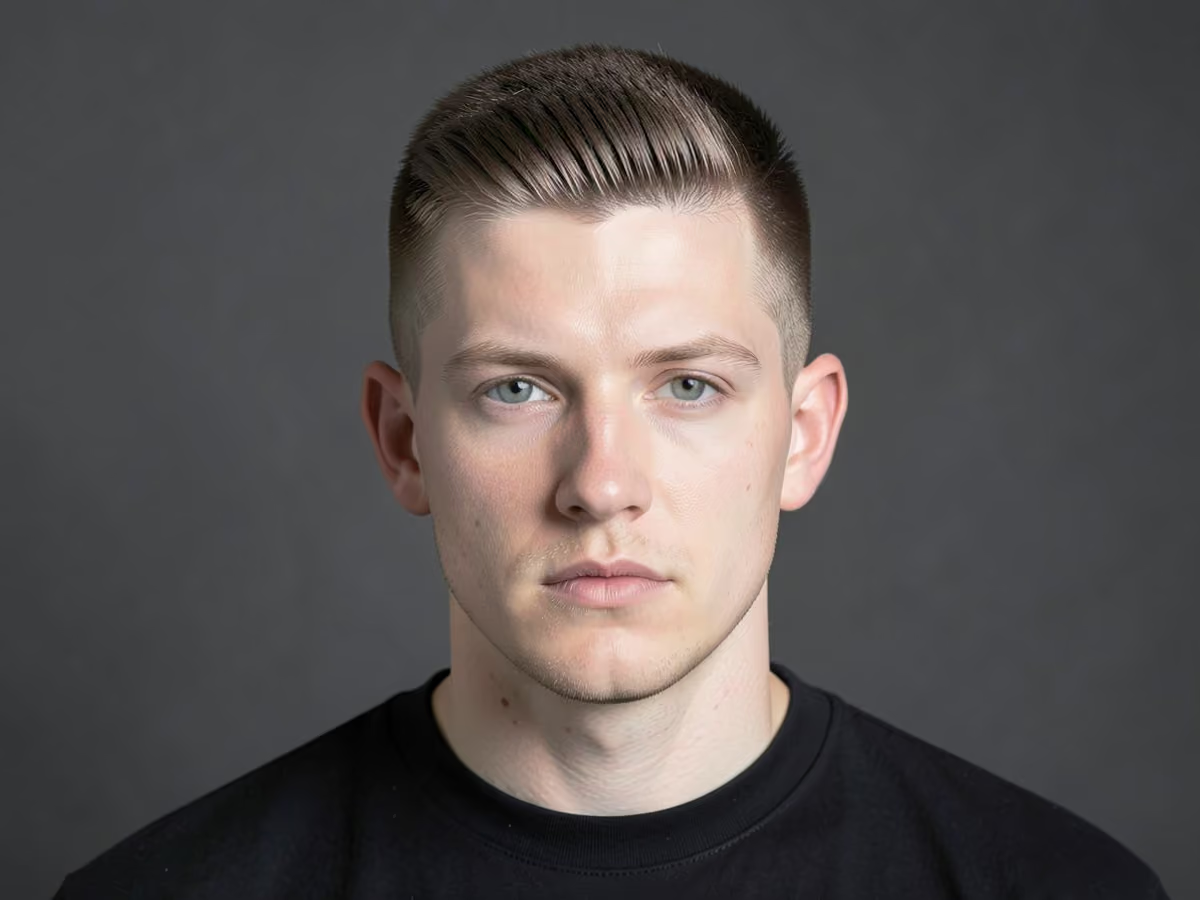
The mid-century civilian flat top has a slightly taller front row, about an inch and a quarter, stepping down to about three quarters of an inch at the crown. The sides are tapered with scissors or a #2, never faded to skin. Stiff wax holds the front upright. Pair it with a clean-shaven face for the classic 1950s look, or add stubble to make it current.
How to Style at Home
Comb firm pomade into the front row and brush it straight up.
Brush the rest of the top up and back toward the crown.
Comb the tapered sides down neatly with a fine-tooth comb.
Ask Your Barber
"Vintage flat top, front a bit taller at about an inch and a quarter, down to three quarters at the crown. Scissor taper on the sides, no skin."
Trim:Every 3–4 weeks. The blended shape grows out gently.
Best For:Office workers + straight, medium or thick hair.
About This Style
Halfway between the two cuts, this keeps the crew cut's longer front and graduated length but cuts the front half of the top level. From the side, the front looks flat while the back follows the head. It is less formal-looking than a full flat top and takes almost no styling. Fine for men who want a hint of the shape without daily wax.
How to Style at Home
Rub a pea-size amount of matte clay through the front.
Push the front up with your fingertips so it stands.
Leave the back of the top to fall as it grows.
Ask Your Barber
"Crew cut with the front half of the top cut flat, about an inch at the front, shorter toward the crown, #3 taper on the sides."
Recommended Products
Matte Clay
Flat Top with a Fade, Taper or Long Sides
The sides change the whole outline. A fade makes the box look taller, a taper keeps it classic, and long combed-back sides give the retro Fort Lauderdale shape. See fade types for heights.
Trim:Every 3 weeks. Only the sideburns and nape go short.
Best For:Older men, office workers + straight or thick hair.
About This Style
Tapering only at the sideburns and neckline leaves most of the sides at a #3 or #4, so the flat top sits on a fuller frame. The overall look is softer and more traditional than a faded version. Good for workplaces that prefer a conservative cut and for men who stretch visits. Compare taper heights in the low taper fade guide.
How to Style at Home
Brush the top straight up with a small amount of light gel.
Comb the sides down flat with a fine-tooth comb.
Check that the top is level using a hand mirror from the side.
Ask Your Barber
"Can you do a flat top, one inch on top, sides at a #3 with a low taper at the sideburns and nape only."
Trim:Every 2 weeks. The fade blurs before the top does.
Best For:Round, oval faces + thick, coarse or coily hair.
About This Style
Starting at the temple, the fade runs from skin or a #0.5 up through a #1 and #2 to the corners of the top. This is a common modern pairing, since the gradient adds contrast without the starkness of a high fade. The top usually runs one to one and a half inches. Book every two weeks if the fade starts at skin.
How to Style at Home
Brush the top upward with a small amount of matte paste.
Run your palm lightly across the top to level any high spots.
Leave the faded sides bare of any product.
Ask Your Barber
"Mid fade from a #0.5 at the temple blending up to the corners, flat top with an inch and a half on top, square corners."
Trim:Every 2 weeks. The curve around the ear softens fast.
Best For:Oval, heart faces + coily or thick hair.
About This Style
The fade wraps in a semicircle around the ear and leaves more length at the nape, so from the back the outline is fuller. Combined with a flat top, the result is a short square top with a rounded fade below it. It shows best on coily hair with a line-up. See the burst fade guide for how the arc is cut.
How to Style at Home
Pick the top out with an afro pick before shaping it.
Pat the picked-out top level with the flat of your palm.
Brush the front and temple edges with an edge brush.
Ask Your Barber
"Burst fade around the ears, keep length at the nape, flat top with an inch and a half on top and a line-up."
Trim:Every 2 weeks. The drop behind the ear loses shape.
Best For:Round, oval faces + thick straight or coily hair.
About This Style
A drop fade curves down behind the ear toward the nape, so the side profile has a sweeping line under the straight edge of the flat top. The contrast between the curve below and the level plane above is the appeal. The drop also leaves weight at the back of the head, which helps a flat crown. Keep the top at one inch or more.
How to Style at Home
Brush the top upright with a small amount of texture clay.
Level the surface with a flat brush, moving front to back.
Rub scalp oil on any area faded down to skin.
Ask Your Barber
"Drop fade curving down behind the ear from a #0, flat top with an inch on top, square corners, and keep weight at the back."
Trim:Every 2–3 weeks. The disconnected line blurs as sides grow.
Best For:Oval, square faces + thick straight hair.
About This Style
With an undercut, the sides are clipped to one length, often a #1 or #2, with no blending into the top, so the flat plane sits on a hard step. It suits thick straight hair, since the step hides how the top is held up. The look is more modern and less military than a faded flat top. Keep at least an inch on top so the step reads.
How to Style at Home
Blow-dry the top upward with a round brush at the roots.
Apply firm pomade from the front row back to the crown.
Brush the top level and leave the clipped sides alone.
Ask Your Barber
"Disconnected undercut with a #2 on the sides, no blend, flat top with an inch and a half on top cut level."
Trim:Every 3 weeks. Long sides need reshaping to stay combed back.
Best For:Oval, long faces + thick straight or wavy hair.
About This Style
Also called a flat top with fenders, this mid-century variant keeps the sides long, two to three inches, and combs them straight back along the head and the top above them is clipped short and level. The result is a narrow, level top framed by slicked sides. It needs pomade daily and a barber who knows the shape, but it fits rockabilly and retro styles.
How to Style at Home
Comb pomade through the long sides and slick them straight back.
Brush the short top upright with firm hold.
Comb the back of the sides together at the nape.
Ask Your Barber
"Fort Lauderdale flat top: top cut short and flat at about an inch, sides left two to three inches long to comb straight back."
Trim:Every 3 weeks. The ducktail seam loses its shape.
Best For:Oval, square faces + thick straight hair.
About This Style
Long sides are combed back to meet in a vertical seam at the nape, the shape known as a ducktail, while the top is cut flat. It is a 1950s look that suits rockabilly fans and retro car culture. The sides need three inches or so and a firm, shiny pomade. Without daily combing, the seam falls apart and the cut looks overgrown.
How to Style at Home
Comb pomade through the sides and sweep them back.
Use the comb edge to press a seam down the center of the nape.
Brush the top upright to keep it flat.
Ask Your Barber
"Give me a flat top about an inch on top, sides left three inches long so I can comb them back into a ducktail at the nape."
Recommended Products
Pomade
Light Gel
Afro and Coily Flat Tops
Coily hair stands up on its own, so the flat surface holds without wax. These five cuts range from a low afro box to the slanted Gumby, with links to the taller high top fade.
Trim:Every 2–3 weeks. Uneven coil growth rounds the top.
Best For:Round, oval faces + coily or 4C hair.
About This Style
Natural coils are picked out and clipped level at two to three inches, so the top forms a low box above faded or tapered sides. Shorter than a high top, it is easier to keep level and needs less picking. Regular moisture keeps the coils from shrinking unevenly. The afro guide covers longer natural shapes. Leave-in and a satin cap help.
How to Style at Home
Spray leave-in on the top and pick it out evenly.
Pat the picked surface flat with both palms.
Wear a durag or satin cap at night to protect the shape.
Ask Your Barber
"Afro flat top with about two and a half inches on top, picked out and cut level, low taper on the sides and a line-up."
Trim:Every 2 weeks. The slant needs regular recutting.
Best For:Oval, long faces + coily or kinky hair.
About This Style
Named after the clay cartoon character, the Gumby is a flat top cut on a slant, taller on one side and lower on the other, popular in the late 1980s and early 1990s. Coily hair holds the angled surface without product. The sides are usually faded high. The angle makes it a hard cut to get right, so ask to see the barber's previous work.
How to Style at Home
Pick the top out fully with an afro pick before shaping.
Pat the slanted surface with your palm to keep the angle.
Brush the faded sides with an edge brush.
Ask Your Barber
"Gumby flat top, slanted from about three inches on the left down to two on the right, high fade on the sides."
Trim:Every 2 weeks. Fades and edges regrow quickly on coily hair.
Best For:Round, square faces + coily or 4C hair.
About This Style
Kept between one and one and a half inches, this shorter coily flat top is easier to wear daily than a tall box. A low or mid skin fade and a line-up are the usual partners. Brushing the sides and keeping the top moisturized stops dry ends from breaking the flat surface. Check black men haircuts for related cuts.
How to Style at Home
Apply curl cream to the top and pick it lightly.
Pat the top flat with your palm after picking.
Moisturize the scalp on the faded sides with scalp oil.
Ask Your Barber
"Short flat top at an inch and a half, mid skin fade, and line me up at my natural hairline."
Trim:Every 1–2 weeks. The hairline blurs before the top.
Best For:Oval, square faces + coily, curly or thick hair.
About This Style
Squared temples and a straight front hairline repeat the square corners of the top, so the face looks framed from both ends. The line-up should follow your natural hairline; cutting it back too far raises the hairline over time. A low skin fade below keeps every edge crisp. The line-up vs edge-up guide explains the difference.
How to Style at Home
Brush the front edge with an edge brush each morning.
Pat the top level with your palm after picking it out.
Rub scalp oil on the lined edges after washing.
Ask Your Barber
"Flat top at two inches, square corners, low skin fade and a line-up at my natural hairline, not pushed back."
Trim:Every 2–3 weeks. Twists unravel and need levelling.
Best For:Teens, young men + coily or kinky hair.
About This Style
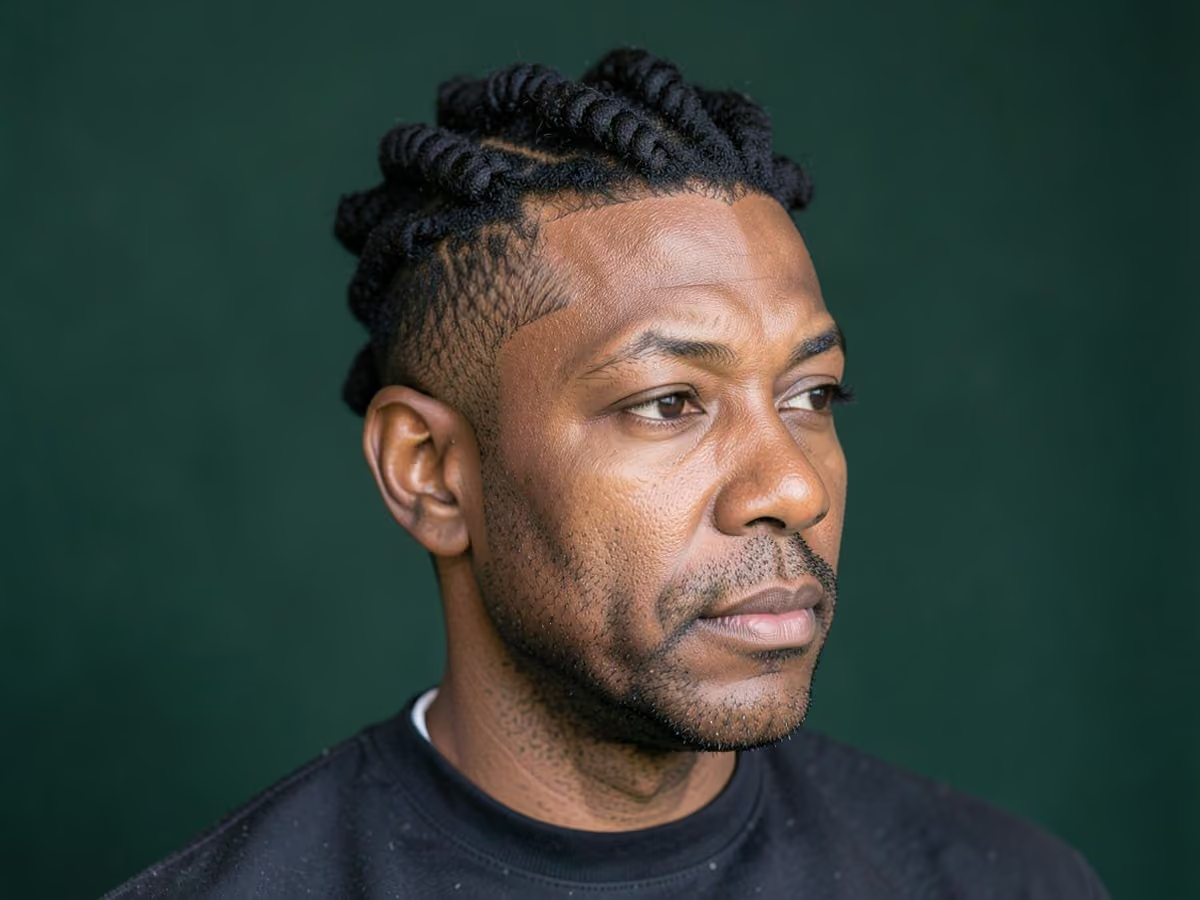
Sponge or two-strand twists on top are trimmed so the ends sit at one level, giving a textured square top. The twists add surface detail that a picked-out flat top lacks. Re-twisting every week or two keeps them defined. Pair it with a high taper so the twists remain the focus and the sides stay neat between visits.
How to Style at Home
Rub a curl sponge in circles over the top to set the twists.
Apply loc gel to loose roots near the hairline.
Snip any long twist ends with scissors to keep the top level.
Ask Your Barber
"High taper, keep my twists on top at about two inches, cut level so the top is flat, and clean the edges."
Recommended Products
Curl Sponge
Loc Gel
Flat Tops by Hair Type and Age
Straight, fine and gray hair each need a different top length and product to stay flat. These six cards cover the common cases, plus a version for boys.
Trim:Every 2–3 weeks. Straight hair bends over once it grows.
Best For:Oval, round faces + straight, medium-thick hair.
About This Style
Straight hair wants to lie flat, so this version keeps the top at three quarters of an inch, the length that stands most easily. The barber may cut the front row slightly shorter to stop it flopping. Daily styling means a blow-dry upward followed by firm wax or gel. Expect the top to soften in hot or humid weather; carrying a small brush helps.
How to Style at Home
Blow-dry the top straight up, aiming the nozzle from the root toward the ends.
Brush firm gel through from the front back.
Set it with a short burst of cool air.
Ask Your Barber
"Let's go with a flat top for straight hair, about three quarters of an inch on top so it stands, #2 taper on the sides."
Trim:Every 3 weeks. Dense hair hides small unevenness.
Best For:Square, round faces + very thick or coarse hair.
About This Style
Dense, coarse hair is the easiest straight texture for a flat top, because the strands support each other and stand upright with light product. The barber can leave one to one and a half inches and still get a clean plane. Thinning the sides with clippers rather than shears keeps them from puffing out. A matte product is enough.
How to Style at Home
Rub matte clay between your palms and push it through.
Brush up and back with a stiff brush.
Level any high spots with a light pat.
Ask Your Barber
"Flat top with an inch and a quarter on top for thick hair, sides clipped to a #2 so they lie flat."
Trim:Every 2–3 weeks. Fine hair loses lift as it lengthens.
Best For:Oval faces + fine or light straight hair.
About This Style
Fine hair struggles to hold a flat plane, so the top is kept short, about half an inch, and the surface is cut slightly textured to hide scalp. Thickening spray and powder give the roots grip. A shadow fade or #2 sides avoid adding more visible skin. If the crown is thinning, consider a crew cut instead, since a level top shows the crown from above.
How to Style at Home
Spray thickening spray at the roots before drying.
Blow-dry the top upward on medium heat with a brush.
Dust texture powder at the roots and brush the top up.
Ask Your Barber
"Short flat top at half an inch with a textured surface, #2 sides, no skin fade, since my hair is fine."
Trim:Every 2–3 weeks. Coarse straight hair pushes forward as it grows.
Best For:Round, oval faces + thick, straight Asian hair.
About This Style
Thick, coarse, straight hair often stands well once it is short, so a flat top at about an inch suits many East and Southeast Asian hair types. A low fade or two-block style sides keep the head from looking wide. Forward-growing fronts may need a slightly shorter front row. Blow-drying upward each morning sets the shape for the day.
How to Style at Home
Blow-dry upward with a round brush at the front.
Apply matte paste and brush the whole top up.
Comb the sides flat with a little water on the comb.
Ask Your Barber
"Could I get a flat top with an inch on top, front row slightly shorter so it stands, low fade from a #1 on the sides."
Trim:Every 3–4 weeks. Kids' hair can stretch longer at this length.
Best For:Ages 5–12 + thick straight or coily hair.
About This Style
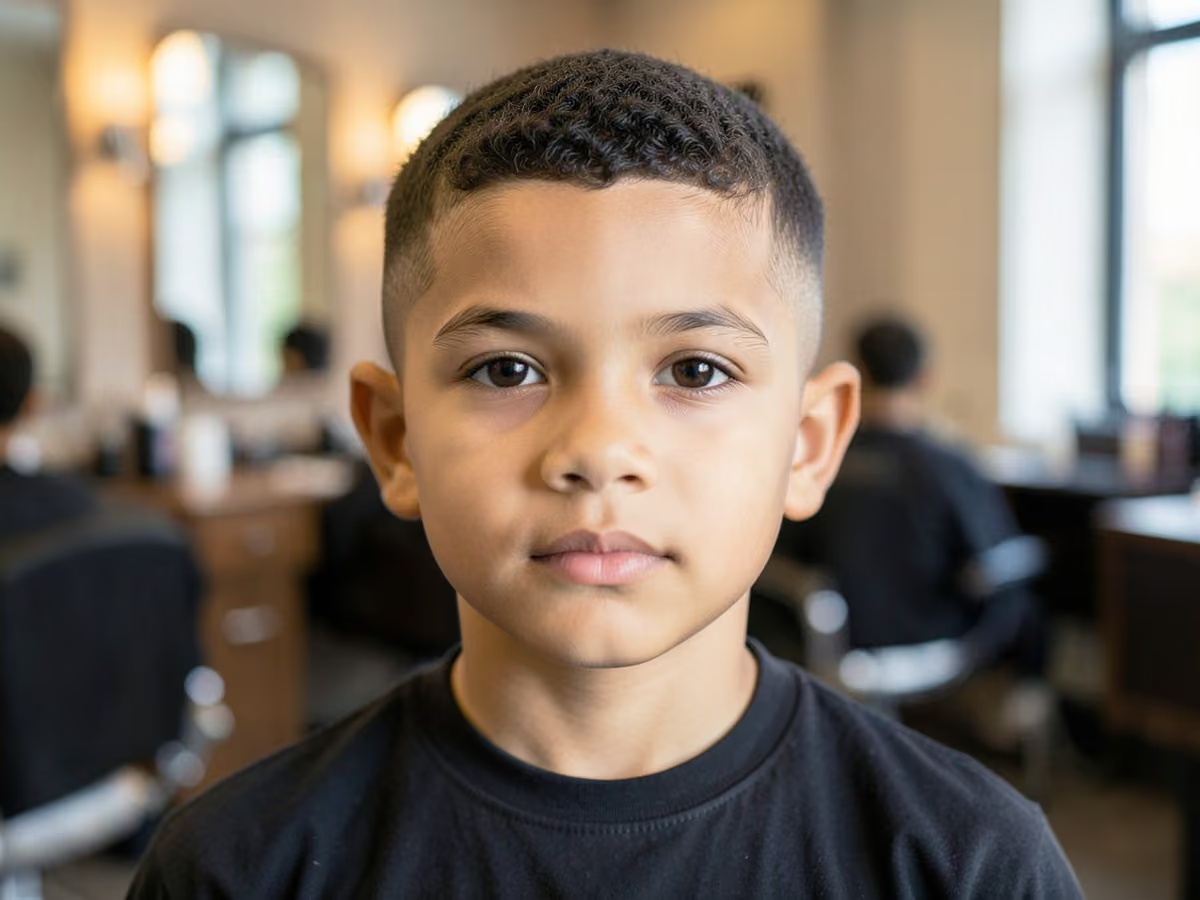
For kids, a short flat top of half an inch to an inch is a sports-friendly cut that needs no styling on coily or thick hair. Soft tapered sides with a #2 avoid skin fades on young scalps. Straight-haired boys may need a little gel for photos. Check the school dress code first if it is strict about haircuts.
How to Style at Home
Brush the top up with a little water in the morning.
Use a dab of light gel only for photos or events.
Wash out product with kids shampoo at night.
Ask Your Barber
"Short flat top for my son, about an inch on top, #2 taper on the sides, no skin, and keep it easy to wash."
Best For:Older men + gray, white or salt and pepper hair.
About This Style
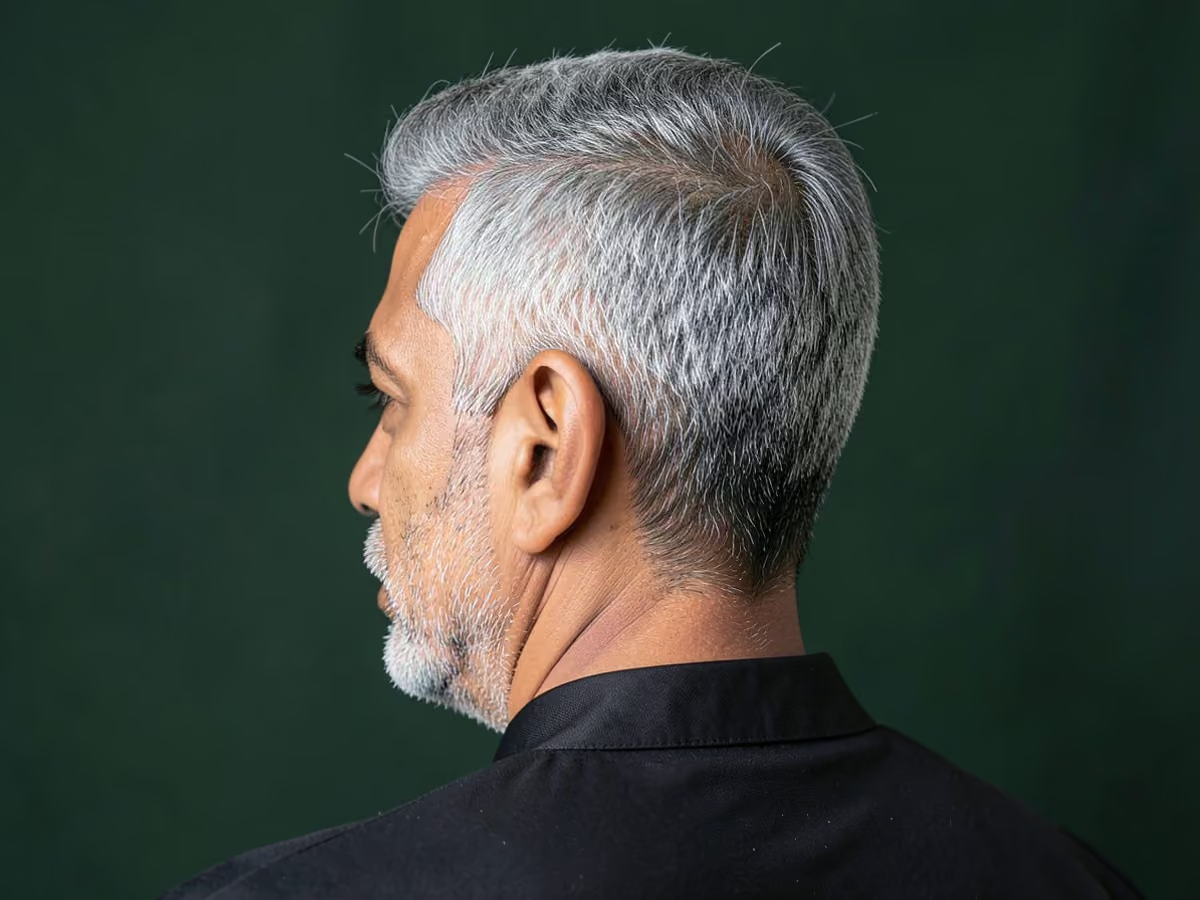
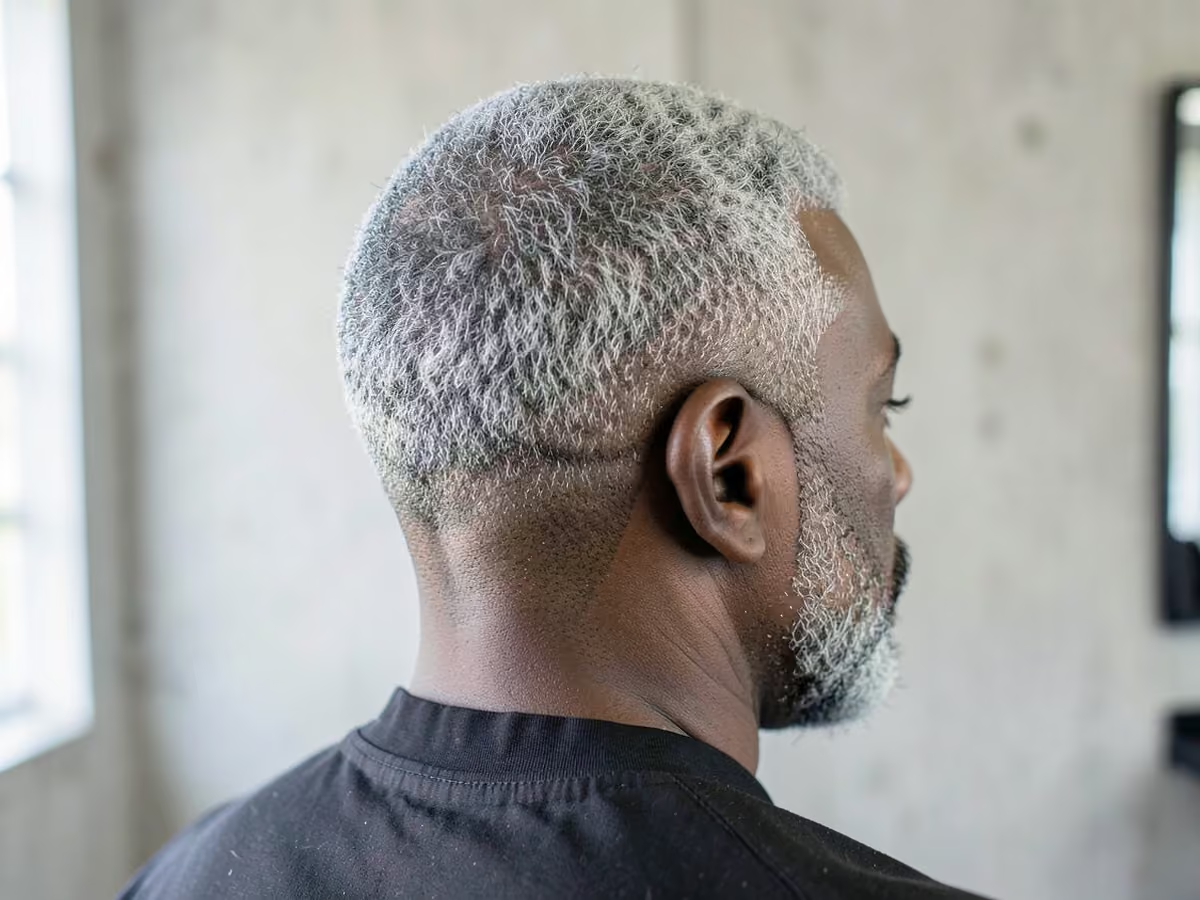
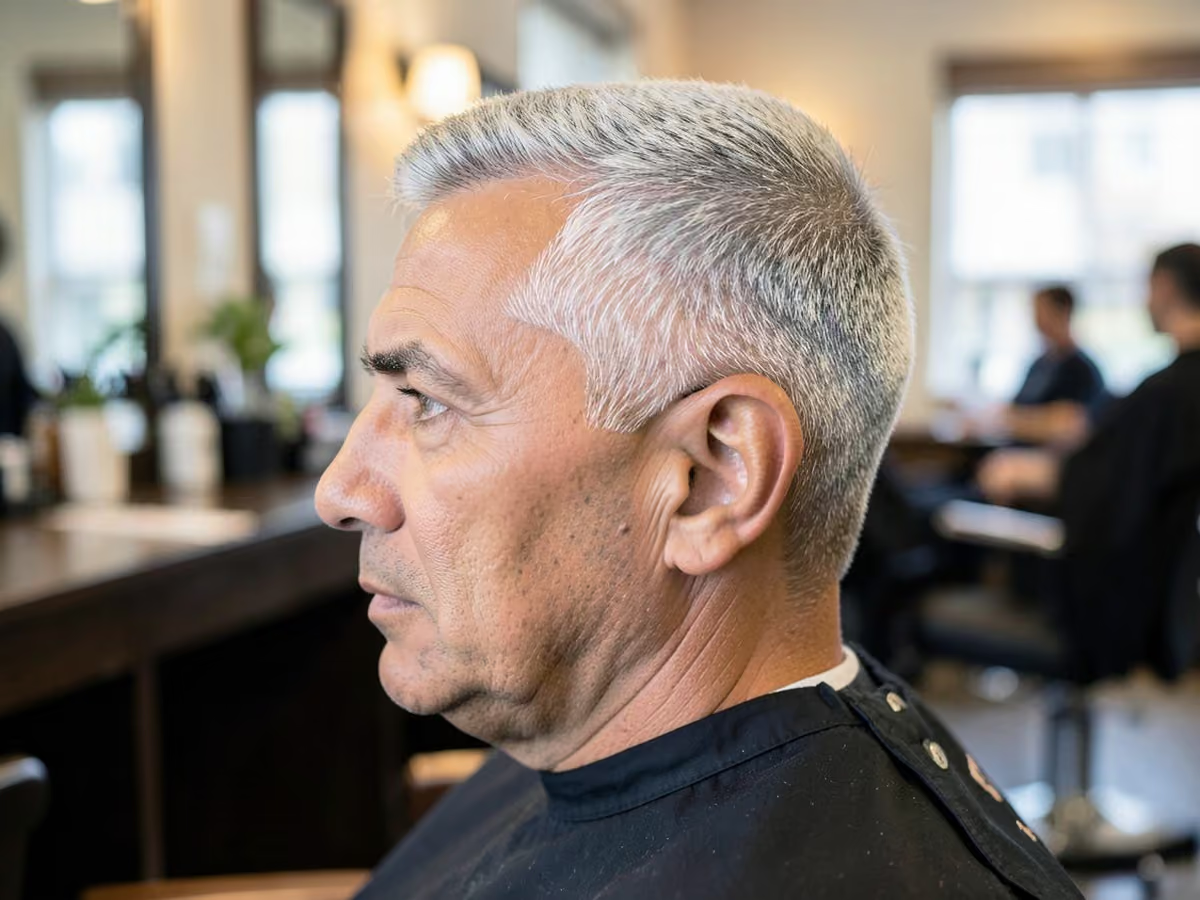
Gray and white hair tends to be coarser and wirier, which helps a flat top stand. Kept at about three quarters of an inch with a scissor or #3 taper, it looks tidy without exposing pale scalp the way a skin fade would. Light colors reflect light, so the barber should cut the surface carefully. See gray hair styles for more.
How to Style at Home
Wash with a purple shampoo weekly if yellowing shows.
Brush the top up with a light gel.
Comb the sides down with a fine-tooth comb.
Ask Your Barber
"Flat top at three quarters of an inch for gray hair, #3 taper on the sides, no skin, neat neckline."
Recommended Products
Light Gel
Styling Cream
Flat Top with Beard, Moustache or Hard Part
Facial hair adds weight under a square top, and a hard part adds a sharp side line. These six pairings cover full beards, goatees, chin straps, stubble and a classic moustache.
Trim:Every 2 weeks. Beard and fade need to stay connected.
Best For:Round, oval faces + thick hair and dense beards.
About This Style
A full beard of about an inch, faded into the sideburns, balances the box on top with mass at the jaw. The square top and full beard together give the face a strong, stacked outline. Keep the cheek line natural so the beard does not look painted on. Round faces benefit from a beard kept fuller at the chin than the cheeks.
How to Style at Home
Rub beard oil into the beard and skin every day.
Brush the beard down with a beard brush to set its shape.
Brush the top upright with a small amount of matte paste.
Ask Your Barber
"Mid fade connected into my full beard at the sideburns, beard at an inch, flat top with an inch and a half on top."
Trim:Every 2–3 weeks. A goatee holds its shape between visits.
Best For:Round, square faces + straight or coarse hair.
About This Style
With shaved cheeks and hair kept only on the chin and upper lip, the goatee draws the eye down and lengthens a round face, balancing the width of a flat top. It needs daily shaving around the shape. A low taper keeps the sides quiet so the top and goatee are the two main features.
How to Style at Home
Shave the cheeks and neck around the goatee outline.
Trim the goatee with a guard and comb it down.
Brush the top straight up with a little light gel.
Ask Your Barber
"I'd like a flat top at an inch, low taper on the sides, and tidy my goatee with the cheeks and neck shaved clean."
A thin band of beard follows the jawline from sideburn to sideburn, connected to a skin fade. The narrow line traces the jaw and gives a round face more definition, matching the clean edges of the flat top. It is common with coily hair and a line-up. Keep the strap about a quarter inch wide and edge it every few days.
How to Style at Home
Edge the strap with a trimmer along the jaw.
Brush the beard band with a little beard balm.
Pat the top flat after picking it out.
Ask Your Barber
"Skin fade blended into a thin chin strap along my jaw, flat top at two inches, and a line-up at the front."
Trim:Every 3 weeks. Short stubble is easy to keep at home.
Best For:Oval, square faces + straight or thick hair.
About This Style
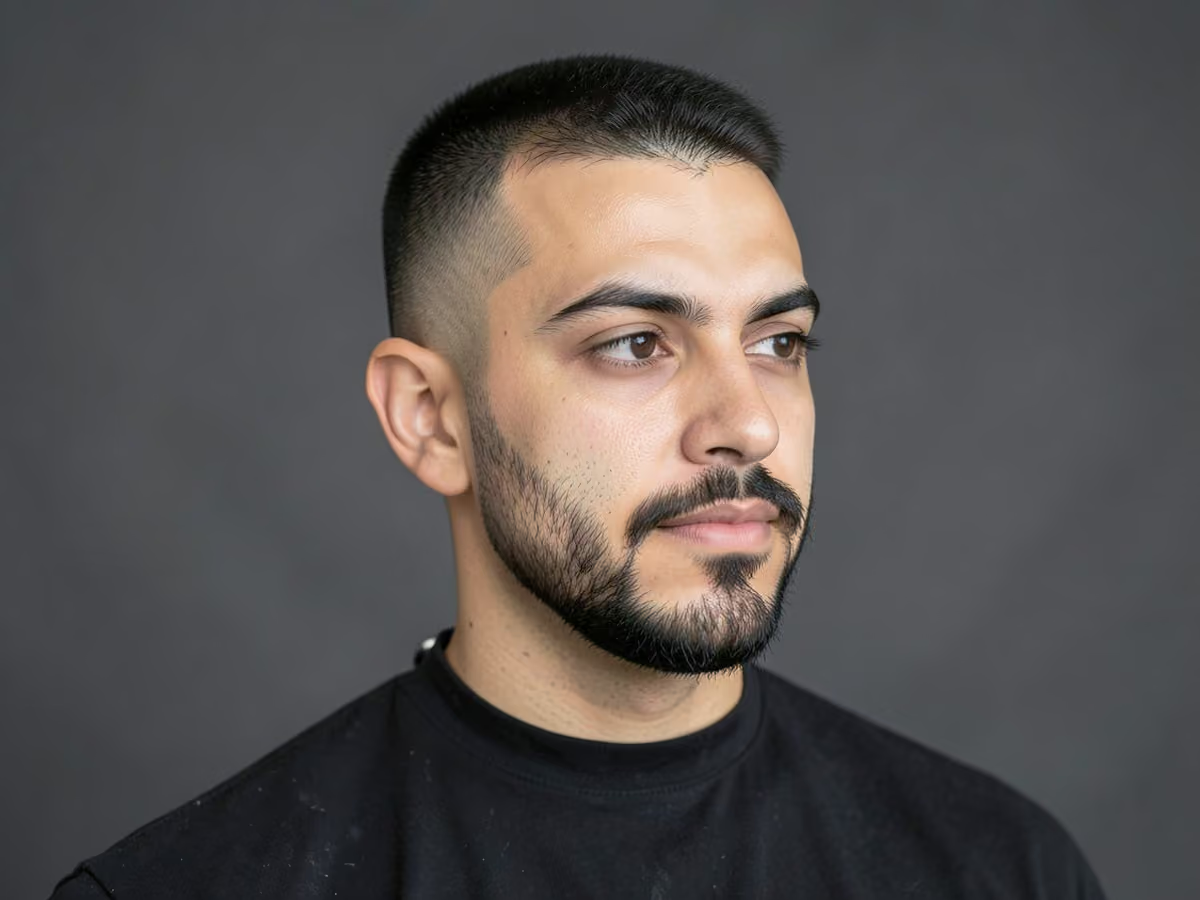
A few days of even growth, kept at about 3 mm, softens the strict outline of a flat top so the cut looks current rather than military. It suits men who do not want a full beard. Trim the stubble every two or three days and clean the neckline. The top can be any height from half an inch to an inch and a half.
How to Style at Home
Trim the stubble with a 3 mm guard every few days.
Clean up the neckline just above the Adam's apple.
Brush the top straight up with a little matte clay.
Ask Your Barber
"Can you do a flat top at an inch, #2 fade on the sides, and clean up my neckline so the stubble looks deliberate."
Trim:Every 3 weeks. The moustache shape holds well between trims.
Best For:Oval, long faces + straight or thick hair.
About This Style
Paired with a chevron-style moustache and a clean-shaven chin, the cut recalls 1970s and 1980s flat tops. The moustache adds width at mid-face, which helps a long face. Keep it trimmed so it does not cover the lip. A short top, about three quarters of an inch, and a #2 taper keep the look neat. The chevron moustache guide covers trimming.
How to Style at Home
Comb the moustache down and trim along the top lip.
Shave the chin and cheeks clean every day or two.
Brush the top straight up with a small amount of pomade.
Ask Your Barber
"Give me a flat top at three quarters of an inch, #2 taper on the sides, square corners. I keep a moustache, so leave the face alone."
Trim:Every 1–2 weeks. The shaved line fills in within days.
Best For:Teens, young men + coily or thick hair.
About This Style
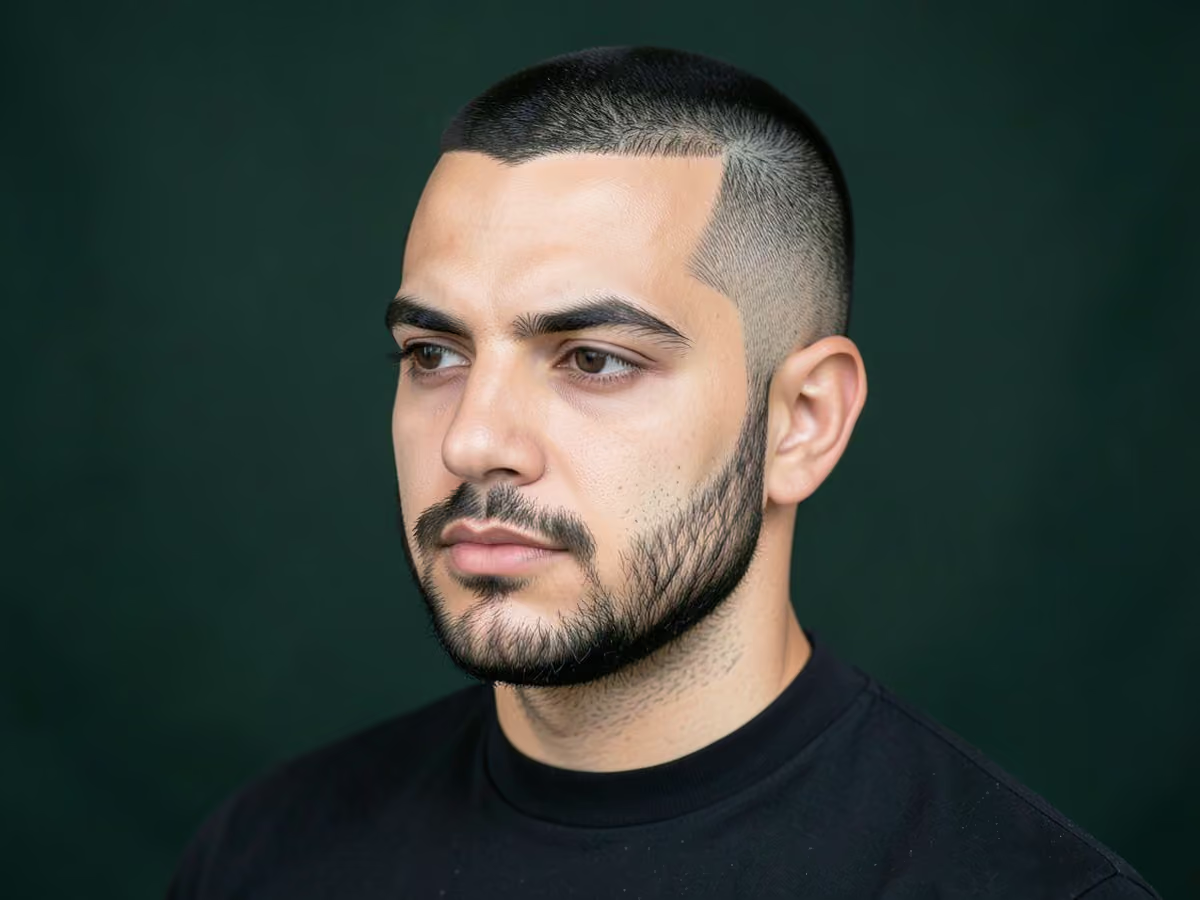
A shaved line on one side, cut where the fade meets the corner of the top, sharpens the edge between the box and the sides. It is a small detail that makes a basic flat top look custom. Dark, dense hair shows the line best. Expect weekly touch-ups. The hard part haircut guide covers line widths and placement.
How to Style at Home
Pick out the top and pat it flat with your palm.
Rub a little scalp oil along the shaved line.
Brush the sides so no hair falls across the line.
Ask Your Barber
"Flat top at two inches, high skin fade, and a hard part on my left where the fade meets the corner."
Recommended Products
Scalp Oil
Afro Pick
How Do You Ask Your Barber for a Flat Top?
Name the top length, the corner shape and the sides. For example: a flat top with one inch on top, square corners and a mid fade from a #1, with the front left slightly taller. Mention if the top should be level all the way back or drop a little toward the crown. A guard is the plastic comb that sets clipper length: a #1 leaves 1/8 inch, a #2 leaves 1/4 inch. The clipper guard numbers chart lists the rest.
Bring photos from the front and the side, since the height and corners are easier to show than to describe. Point out any cowlick or crown swirl before the cut starts, since it decides how level the back can be. For a regulation version, read military grooming standards and confirm the current rule with your unit, because policies change and limits on bulk vary by branch.
Clipper Guards Used in Flat Top Haircut Styles
A clipper guard is the plastic comb that clips onto the blade and sets how much hair is left: a #1 leaves 3 mm (1/8 inch), each step up adds about 3 mm. The right column lists the cards on this page that call for each guard. See the full clipper guard numbers guide for the complete chart.
Straight hair needs product that sets firm. Comb a stiff wax, often sold as flat top or butch wax, or a light gel into the front row and brush it upward, then brush the rest of the top up and back. Blow-drying upward first helps. Coily hair only needs moisture: leave-in or curl cream, then an afro pick to lift the top before the barber or you trim the surface level.
Expect a barber visit every two to three weeks. The flat surface is the first thing to go, because hair grows at slightly different rates across the top and the plane turns rounded. Between visits, keep the neckline and sideburns clean with a trimmer, but leave the top to the barber. Sleeping on a satin pillowcase or durag helps coily flat tops keep their edges overnight.
What Flat Top Mistakes Should You Avoid?
The most common problem is a top cut too short to stand, which leaves a lumpy buzz instead of a flat plane. Keep at least half an inch on straight hair. Another is skipping product on straight hair, so the top falls flat by noon. Asking for a tall flat top on a long face, or square corners on a very angular jaw, can also exaggerate features you did not want to.
Uneven tops usually come from cutting without a flat top comb or from a cowlick at the crown pushing hair sideways. Point out any swirl before the barber starts, and ask them to leave the crown a little longer if needed. If a fade under the top looks patchy, why a fade looks patchy explains the causes and what to ask for next time.
Which Flat Top Haircut Is Right for You?
Pick your hair type and how much upkeep you will put in. The matches below come from the Best For and Maintenance notes on each card. Upkeep follows the Maintenance badge: low means a cut every 3 to 6 weeks and almost no daily styling, high means weekly line-ups or daily product.
Q1: How long does hair need to be for a flat top?+
At least half an inch on top for straight hair, so it can stand and be cut level. One to two inches is the most common length. Coily hair can go taller, since it stands on its own, and afro flat tops of three inches or more are common. The sides can be any length shorter than the top.
Q2: What product holds a flat top up?+
Straight hair needs a firm product: a stiff wax sold as flat top or butch wax, or a light gel brushed upward at the front. Pomade adds shine but less lift. Coily hair needs only moisture, such as a leave-in or curl cream, plus an afro pick to fluff the top before shaping.
Q3: Is a flat top allowed in the military?+
Flat tops have a long history in the military, and many branches allow short, tapered versions where the hair does not touch the ears or collar. Bulk and length limits on top vary by branch and change over time, so check the current regulation or ask your unit before booking.
Q4: How often should you trim a flat top?+
Every two to three weeks. The level surface rounds off as the hair grows, and the corners lose their shape first. Faded sides may need a quick clean-up every two weeks. A flat top with a #2 or #3 taper on the sides can stretch to three or four weeks.
Q5: Can you get a flat top with straight hair?+
Yes, but it takes more work. Straight hair wants to lie down, so you need a firm product and a blow-dryer to push it upright each morning. Thick straight hair holds better than fine. If the top keeps falling, ask for a shorter length; half an inch stands more easily than two inches.
Q6: What is the difference between a flat top and a high top fade?+
A high top fade is a flat top cut on coily hair, kept tall, often three inches or more, with sides faded to skin. A classic flat top on straight hair is usually shorter, around one inch, with tapered sides. Both are cut level on top; the high top is taller and boxier.