
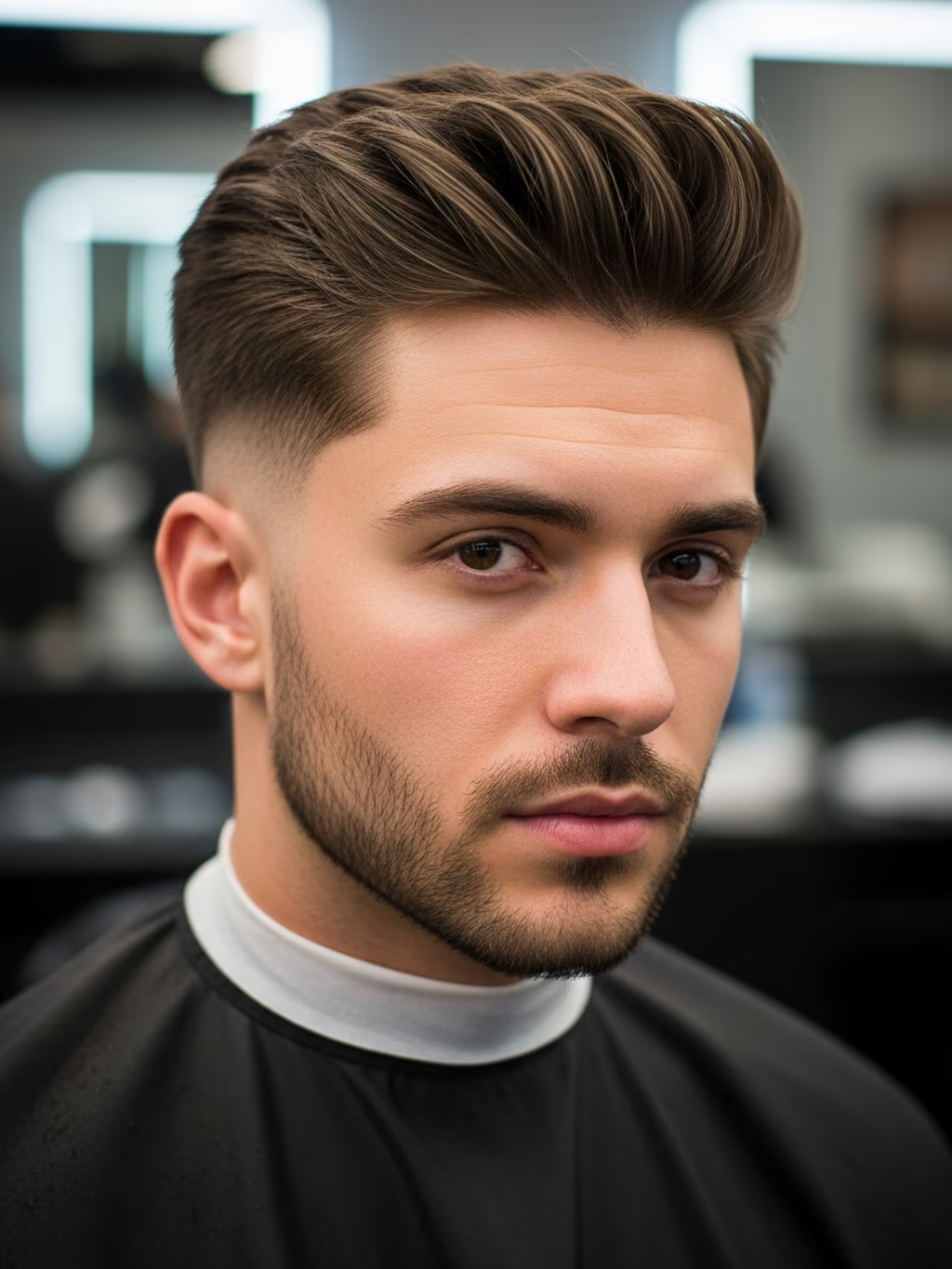
Best Haircuts That Meet
Military Grooming Standards
Every branch has slightly different rules, but the safe cuts are consistent. Here's what passes inspection and how to ask for it.
By Jessica Hamilton — Master Stylist & Creative Director
Military grooming standards vary by branch and change over time, so always check your branch's current regulation, but the cuts that reliably pass are consistent: short, tapered, off the ears and collar, with a clean neckline. Here are the standard options and how to ask a barber for them.
The Regulation-Safe Cuts
- High and tight: the classic: very short or shaved sides with a short flat top. Always passes.
- Induction cut: clippers all over with no guard; the shortest option and the standard for basic training.
- Regulation taper: tapered sides blending into a short top, kept off the ears and above the collar. The most 'normal-looking' compliant option.
- Crew cut: slightly more length on top, still short and tapered, acceptable in many contexts.
The General Rules (Check Your Branch)
- Hair must not touch the ears or collar.
- A tapered appearance at the sides and back is typically required.
- Bulk and length on top are limited (commonly around 2 inches, but this varies).
- No extreme or faddish styles, designs, or unnatural colors.
- Facial hair is generally prohibited or tightly regulated (with documented exceptions).
- These are general patterns, your branch's current regulation is the authority.
How to Ask a Barber
Most barbers near a base know exactly what's required (say the branch and "regulation cut" and you're usually set. Elsewhere, be specific: "High and tight) clippers on the sides up to about here, short and flat on top, taper the neckline, nothing touching my ears or collar." Bring your branch's standard if you want certainty.
Keeping It Regulation Between Cuts
Regulation cuts grow out of compliance faster than most civilian styles because the tolerances are tighter, especially around the sides and back. Booking a trim every one to two weeks, rather than waiting until an inspection is close, keeps you consistently within standard instead of scrambling before formation. Many service members find a specific day of the week works best as a standing appointment, since forgetting a trim for even a few extra days can be enough to fall out of regulation.
If you cut your own hair between barbershop visits, stick to the same guard numbers used by your barber and only touch up the neckline and sides rather than attempting to recreate the full taper yourself, since a self-cut error on top is far harder to fix than a slightly late trim.
Common Mistakes New Recruits Make
- Assuming all branches use identical standards: guard numbers and acceptable top length vary between branches and even between units, so it always pays to confirm the current standard rather than assuming.
- Growing the top out too fast between cuts: letting the top grow unchecked for several weeks means a much bigger, more noticeable cut is needed to bring it back into regulation.
- Ignoring facial hair rules: most active-duty standards require a clean shave or a very tightly limited, regulation mustache. Confirm the exact rule for your branch before growing anything on the face.
- Not asking the barber about unit-specific preferences: some units have unwritten preferences slightly stricter than the written regulation. A base or post barber usually already knows these and will cut accordingly if asked.
Frequently Asked Questions
Q1: What haircuts meet military grooming standards?+
Q2: What is a high and tight haircut?+
Q3: How short does military hair have to be?+
Q4: Can you have a fade in the military?+
Q5: How do I ask a barber for a military haircut?+
Related Haircut Guides
Make us a Preferred Source on Google
See our latest articles first in your Google Search & AI Overviews.