
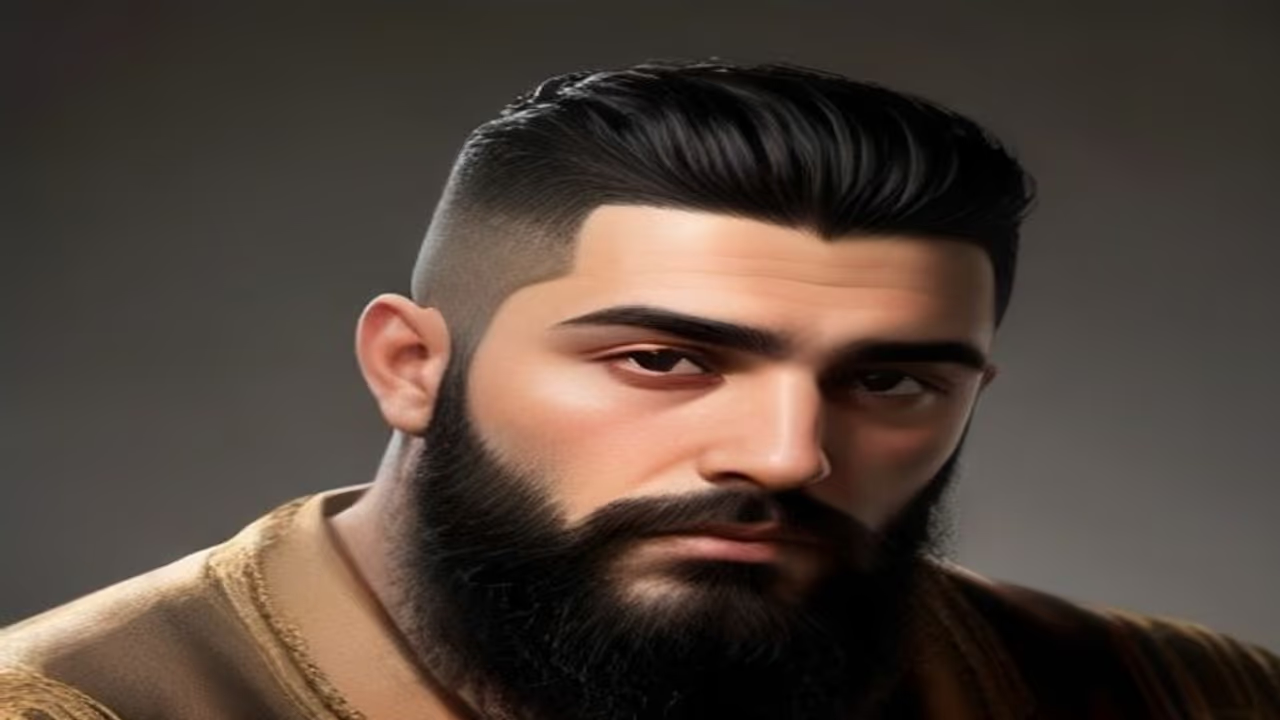
Best Haircuts for
Middle Eastern Men (Thick Curly Hair)
Dense curls, strong hairlines, and beard-friendly faces: here are the cuts built for Middle Eastern hair and how to ask for them.
By Jessica Hamilton — Master Stylist & Creative Director
Middle Eastern hair is typically thick, curly to wavy, and strong-growing, usually paired with dense facial hair, which is why the region's barbering culture is built around fades, sharp line-ups, and beard work. The winning formula is almost always controlled sides + textured curly top + a well-shaped beard.
The Winning Formula
Thick curls need the sides controlled or they widen the head. A skin fade or mid taper keeps the profile clean while the curls stay full on top. Then the beard (connected or disconnected) frames the face. This combination is the backbone of Middle Eastern barbering and it works because it plays to the hair's natural strengths.
The Best Cuts
- Curly top + skin fade: maximum contrast, sharp and modern: the signature look.
- Textured crop with a taper: shorter and lower-maintenance, still handles curl.
- Medium curly styles: if you want length, keep the sides tapered to control width.
- Drop fade: follows the head shape and suits curly tops especially well.
- Pompadour: thick hair holds serious height if you want a classic look.
Curls, Beard, and Upkeep
- Use curl cream, not gel, unless you want a hard hold. Cream keeps curls soft and defined.
- Decide on the beard connection: connected to the fade is the sharper modern look, while disconnected is more classic.
- Line-up matters: a crisp hairline is central to the look and needs refreshing every 1–2 weeks.
- Don't over-wash, since thick curls dry out. Wash less and condition more.
Growing Out Thick Curly Hair Without It Getting Messy
The awkward stage for thick curly or wavy hair usually hits a few weeks after a fade, once the sides have grown past the tapered zone and start puffing outward rather than lying flat against the head. Keeping the fade or taper refreshed every two to three weeks while letting the top grow is the easiest way through this stage, since it keeps the width under control even as the curls on top get longer and heavier.
As the top passes a couple of inches, the curls start to add real weight, which naturally pulls some of the bounce out and settles the shape closer to the head. This is usually the point where a curl cream or light styling paste starts doing more work than it did on shorter hair, since there is now enough length for the product to actually train the curl pattern rather than just coating short strands.
Explaining the Fade and Line-Up to Your Barber
Because curly and coily hair shrinks up after cutting, it helps to tell the barber you want the fade height checked once the hair is dry and settled, not just while it is wet and pinned back during the cut. Specify roughly where you want the taper to start (temple, mid-head, or higher) and how sharp you want the line-up, since a razor-sharp hairline needs touching up far more often than a softer, brushed edge.
If you want the beard connected to the fade, say so explicitly before the clippers start, since connecting the two after the fact usually means removing more hair than either area needed on its own. A disconnected look, with a small strip of skin between beard and sideburn, is easier to adjust later if you change your mind about the connected style.
Frequently Asked Questions
Q1: What is the best haircut for Middle Eastern men?+
Q2: How do I manage thick curly Middle Eastern hair?+
Q3: Should my beard connect to my fade?+
Q4: Does a skin fade suit thick curly hair?+
Q5: How often do Middle Eastern men need a haircut?+
Related Haircut Guides
Make us a Preferred Source on Google
See our latest articles first in your Google Search & AI Overviews.