
How to Bleach Hair:
A Safer At-Home Guide for Men
The tests, tools and steps for lightening your own hair, and the signs it is time to book a colorist.
By Jessica Hamilton · Updated
Quick answer: How to bleach hair at home as a man: do the allergy test your kit's instructions describe, run a strand test, mix lightener and developer exactly as directed, apply to dry, unwashed hair from mid-lengths to ends before the roots, check every few minutes, rinse, then tone and condition. Stop immediately if your scalp burns.
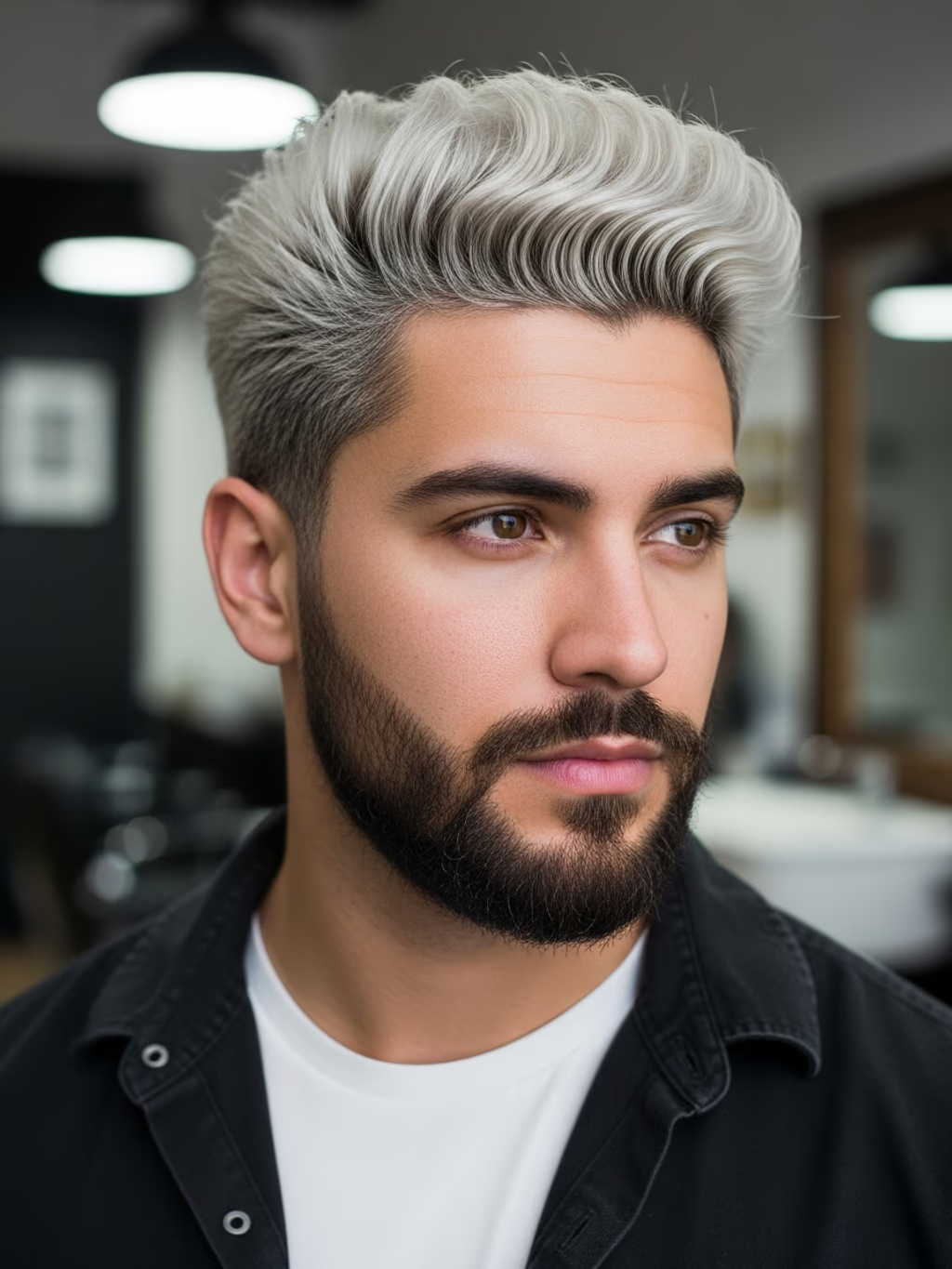
Style images are AI-generated illustrations.
📚 Part of our Styling, Products & DIY guide hub; start there for the rest of the topic.
How to bleach hair at home safely comes down to five stages: an allergy test, a strand test, the right developer, a timed application, and toning with good aftercare. Bleach works by breaking down your natural pigment, and the same chemistry can irritate skin and weaken hair if it is rushed. This guide covers each stage and the situations where a professional colorist is the better choice.
Should You Bleach Your Hair at Home or See a Colorist?
Home bleaching works best on short, healthy hair that has never been dyed, when the goal is a moderate lift such as dark blonde or golden blonde. It gets riskier as the gap between your starting color and your target grows. Going from black or dark brown to icy platinum often takes more than one session, careful toning and a lot of judgment, which is why many men start at home and finish at a salon. The table below gives a rough guide; your own hair and the product you use matter most.
If you are still deciding on a shade, our guide to the best hair colors for men covers which tones suit different skin tones, and the bleached haircuts gallery shows finished looks on different cuts. This page is about the process itself, so you know what you are taking on before you start, how long it takes, and where the common mistakes happen on a first attempt.
| Your situation | At home? | Why |
|---|---|---|
| Short, virgin light or medium brown hair, aiming for blonde | Often fine with care | Smaller lift and less hair to cover |
| Buzz cut or very short crop | Often fine with care | Little length, easy to cut off if it goes wrong |
| Black or very dark hair aiming for platinum | Consider a colorist | Needs big lift, often over several sessions |
| Hair already dyed, especially box dye or henna | See a colorist | Old color and henna can react unpredictably |
| Sensitive scalp, eczema or past reaction to dye | See a doctor or colorist first | Higher risk of irritation |
| Long hair or full head of highlights | Consider a colorist | Even coverage is hard to do on yourself |
What Do You Need to Bleach Hair at Home?
Buy everything before you start, because once the bleach is mixed it needs to go on straight away. A complete kit from one brand is the simplest option for a first attempt, since the powder, developer and instructions are designed to work together. If you buy separately, stay within one brand for lightener and developer and read both labels. Work in a ventilated room, wear an old shirt, and keep a timer on your phone.
Do not wash your hair for a day or two before bleaching; the natural oils give the scalp some protection. Remove any heavy styling product with a plain rinse the day before instead. Avoid shaving the scalp or neck right before bleaching, since freshly shaved or broken skin is more easily irritated. Check the scalp for cuts, spots or sunburn, and wait until any of these have healed before you start.
The basic kit
Lightener powder, developer, a non-metal bowl, a tint brush, a pack of gloves, an old towel, clips for longer hair, a timer, toner or purple shampoo, and a rich conditioner or hair mask for afterward.
Nice to have
A second mirror to see the back, a plastic cap to keep the bleach from drying out, and a bond-building treatment if your kit recommends one.
How Do You Do an Allergy Test and a Strand Test?
Two tests come before any full application, and they test different things. The allergy or skin test checks how your skin reacts. Many hair color products ask you to do one a set time before every use, often 48 hours, even if you have used the same product before, because sensitivity can develop over time. Follow the timing and method in your own pack's leaflet, since it varies between products and brands, and do not go ahead if you notice redness, itching, swelling or a rash.
The strand test checks what the bleach does to your hair. Snip a small section from a hidden spot, such as behind the ear or under the crown, and apply the mixed bleach to it. Check it every five minutes. Note how long it takes to reach the shade you want and how the hair feels after rinsing. If it turns gummy, stretchy or snaps easily, your hair is not ready for that level of lift, and a colorist is the safer route.
Which Developer Volume Should You Use?
Developer is the peroxide that activates the bleach, and its strength is labeled in volumes. As a general guide, a lower volume such as 20 lifts more slowly and gently and is commonly used on the scalp, while 30 lifts faster and is harsher on hair and skin. Volume 40 is strong, and many manufacturers say it is not meant for on-scalp use. These are general patterns, not rules, so always follow the instructions for the specific product you buy.
A higher volume is not a shortcut to lighter hair. It works faster, which gives you less time to react if something goes wrong, and it raises the risk of irritation and breakage. For most men bleaching at home, a lower volume and a longer, carefully watched processing time is the safer choice. If one session does not get you light enough, wait and do a second session later rather than reaching for stronger developer.
How Do You Bleach Your Hair Step by Step?
Read the full leaflet once more before mixing. The steps below follow the usual order for a full head of short hair, but your product's directions on mixing ratio and maximum processing time come first. Never leave bleach on longer than the instructions allow, and never cover your head with heat unless the leaflet says to. Set aside about an hour for the whole session, including prep, rinsing and toning, and keep your phone nearby so you can check the time and the leaflet without touching anything with bleach-covered gloves.
Application steps
1. Put on gloves and an old shirt, and rub a barrier cream or petroleum jelly along the hairline and ears.
2. Mix the powder and developer in the non-metal bowl in the exact ratio the instructions give, until smooth.
3. Apply to the mid-lengths and ends first, since the scalp's warmth makes roots lighten faster.
4. Apply to the roots last, working quickly in small sections so coverage is even.
5. Check a strand every five minutes by wiping off a little bleach with a damp tissue.
6. Rinse thoroughly with lukewarm water as soon as you reach the target shade or the maximum time, then shampoo gently.
Stop straight away if
Your scalp burns, stings strongly or itches badly, or you see swelling. Rinse the bleach out with plenty of cool water and seek medical advice if the reaction does not settle quickly.
How Do You Tone Bleached Hair?
Bleach rarely lands on a clean blonde. Darker hair passes through red and orange before yellow, and most men end the first session somewhere in the yellow to orange range. Toner deposits a sheer color that cancels the unwanted tone: purple cancels yellow and blue cancels orange. It only adjusts tone; it will not lighten hair further, so if the result is still orange-brown you need more lift before toner can help.
Apply toner to towel-dried hair after bleaching, following the timing in its instructions, which is often far shorter than bleach. Rinse and condition. Between sessions, a purple shampoo used once or twice a week keeps brassy tones down. Leave it on for a minute or two at first; left too long on very light hair it can leave a faint lilac tint, which washes out over a few days.
How Do You Look After Bleached Hair?
Bleached hair is more porous and more fragile than it was before. It absorbs water fast, tangles more and loses moisture quickly. Wash less often, use a gentle shampoo, and condition every time. A deep conditioning mask once a week helps the hair feel softer. Cut back on heat styling, and protect the color from chlorine by wetting your hair with clean water before swimming and rinsing straight after; our haircuts for swimmers page has more tips.
Space out sessions
Leave at least a few weeks between bleach sessions so you can see how the hair is coping. Do not rebleach hair that already feels gummy or breaks when stretched.
Only bleach new growth
For root touch-ups, apply bleach to the new growth only. Overlapping onto hair that is already light is a common cause of breakage.
Keep the cut short and fresh
Regular trims remove the most damaged ends. If the hair is badly damaged, a shorter cut is often the quickest fix; see our damaged hair recovery cuts.
Watch the scalp
Mild dryness after bleaching is common. Ongoing redness, flaking or soreness is not; follow scalp care basics and see a doctor if it persists.
When Should You Stop and See a Colorist?
Book a professional if your strand test shows serious damage, if you have box dye or henna in your hair, or if you want a big change such as black to platinum. A colorist is also worth it for patchy results, where some areas are yellow and others orange, because evening out uneven bleach is one of the hardest jobs in hair color. Tell them honestly what products you have used, so they can plan around them.
See a doctor rather than a colorist if you had a skin reaction, blistering or swelling from any dye or bleach. That kind of reaction can be more severe the next time, so do not try another product until a professional has advised you. For the rest of your routine, products that coat and weigh hair down can dull blonde quickly, so our guide to clearing product buildup is useful once your color is done.
Frequently Asked Questions
Q1: Is it safe for men to bleach their hair at home?+
Q2: What developer should a man use to bleach his hair?+
Q3: Should I wash my hair before bleaching it?+
Q4: Why did my hair turn orange after bleaching?+
Q5: How long should you leave bleach on men's hair?+
Q6: Can you bleach your hair twice in one day?+
Related Haircut Guides
Make us a Preferred Source on Google
See our latest articles first in your Google Search & AI Overviews.