
Best Hair Colors
for Men in 2026
From subtle gray blending to bold bleach, the men's hair color options that actually look good, and how to choose one that suits you.
By Jessica Hamilton, Editor · Updated
Quick answer: The best hair color for men depends on your goal and your skin's undertone. Stay within two shades of your natural color, or blend your gray, for a low-upkeep result. Cool undertones suit ash, silver and platinum. Warm undertones suit caramel, honey and golden brown. Bleach and fashion colors need a professional colorist and regular root touch-ups.
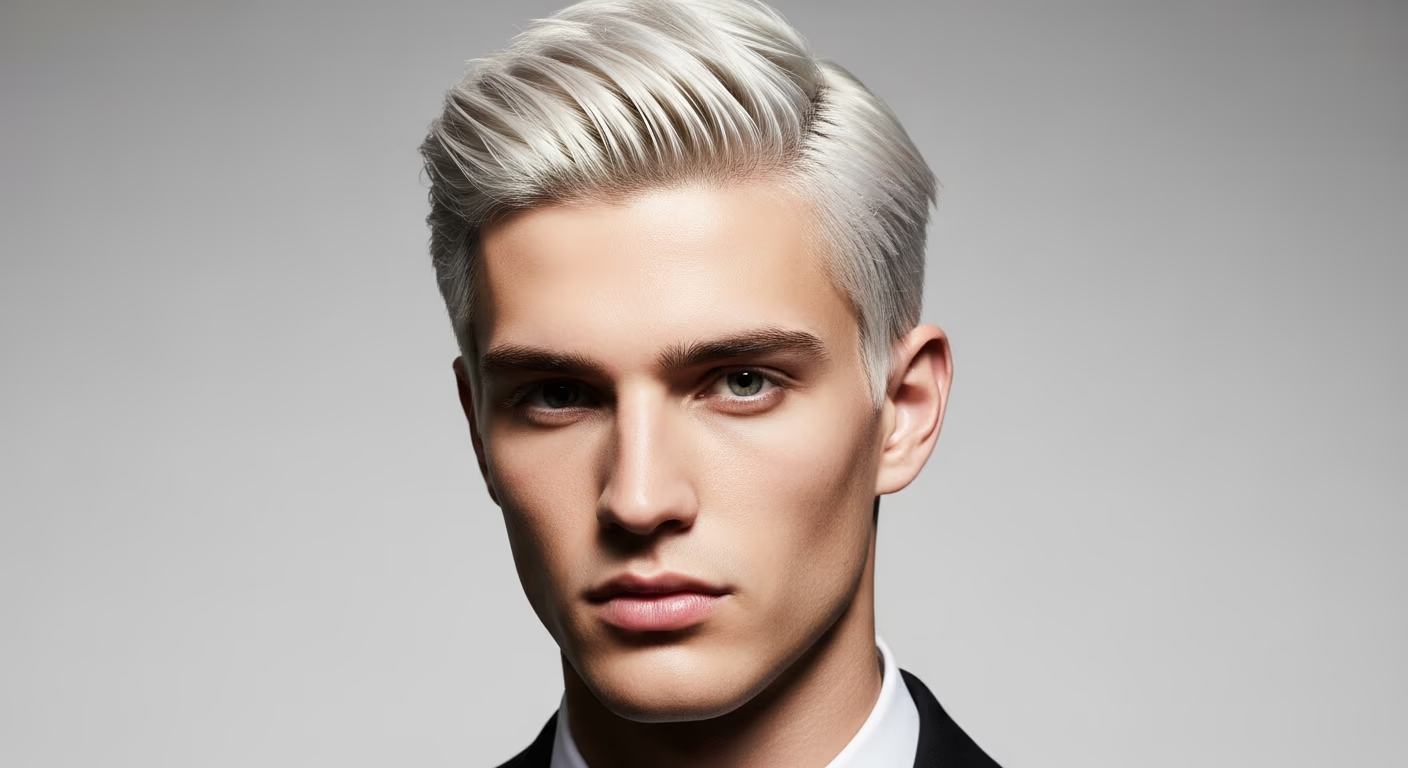
Style images are AI-generated illustrations.
Men's hair color has gone fully mainstream, from barely-there gray blending to full platinum. The key is matching the level of commitment and the shade to what you actually want: a natural enhancement nobody clocks, a gray strategy, or a bold statement. Here are the options, honestly, including the upkeep each one demands.
What Are the Best Hair Color Options for Men?
The best hair color options for men, from least to most upkeep, are a natural enhancement, gray blending, highlights, full gray coverage, bleach and fashion colors. Staying within 2 shades of your natural color grows out quietly, while full coverage and bleach show roots every 3 to 4 weeks.
For blonde and platinum shades done at home, our guide on how to bleach your hair safely covers developer strength, toner and aftercare.
For a low-commitment way to try blonde, frosted tips for men lighten only the ends, so the color is cut away within a few trims.
| Option | What it is | Commitment |
|---|---|---|
| Natural enhancement | Your shade, richer or a touch darker/lighter | Low: grows out invisibly |
| Gray blending | Softening (not erasing) gray for a salt-and-pepper look | Low-medium: subtle regrowth |
| Full gray coverage | Dyeing gray back to a solid natural shade | High: obvious roots every 3-4 weeks |
| Highlights / lowlights | Dimensional lighter or darker pieces | Medium: grows out softly |
| Bleach / platinum | Lifting to very light or white | Very high: roots + hair health |
| Fashion colors | Blue, silver, pastel etc. (needs bleach first) | Very high, fades fast, big upkeep |
Which Hair Color Suits Your Skin Tone?
- Cool skin tones (pink/blue undertones) suit ashy browns, cool blacks, silver, and platinum.
- Warm skin tones (golden/olive) suit warm browns, caramel, honey, and golden shades.
- Not sure? Look at your veins: bluish = cool, greenish = warm. Or which metal suits you: silver (cool) vs gold (warm).
- Stay within 2 shades of your natural color for the most natural, low-upkeep result.
- Going gray? See our gray hair guide. Embracing it often beats fighting it.
How Much Upkeep Does Men's Hair Color Need?
- The bigger the change from your natural color, the more visible the roots and the more often you'll dye.
- Bleach damages hair, so factor in conditioning treatments and a purple shampoo to fight brassiness.
- Fashion colors fade fast and sit on bleached hair: see our bleached hair guide for what's involved.
- First-timers: go to a colorist, especially for any lightening. Box dye disasters are real and hard to fix.
- Gray blending is the lowest-maintenance way into color: subtle, and grows out gracefully.
Hair grows about half an inch a month, and that number decides how soon roots show. On a big change, regrowth looks like this:
| After coloring | Root regrowth | What it looks like |
|---|---|---|
| Week 1 | Barely any | Fresh, even color |
| Week 2 | About 1/4 inch | Visible only on bleach or dark coverage |
| Week 4 | About 1/2 inch | Clear line on full coverage; touch-up time |
| Week 6 | About 3/4 inch | Highlights still soft; toner fading |
| 3 months | About 1 1/2 inches | Gray blending grown out; enhancement mostly cut away |
Which products protect the color?
- Color-safe shampoo: a gentler cleanser that strips less dye each wash.
- Purple or blue toning shampoo: cancels yellow or orange on lightened hair.
- Deep conditioner: puts moisture back into bleached hair once a week.
- Clear gloss: a salon or at-home treatment that adds shine and refreshes tone between full colors.
Styling products matter too. Matte clays hide shine on dull, bleached ends; pomade vs clay vs wax explains the difference.
How Does Your Haircut Change How Hair Color Looks?
Hair color and haircut length affect each other more than most people expect. On a very short fade, the sides are cut away every couple of weeks, so any color there disappears quickly and the top carries almost all of it. On longer styles, color stays in the hair for months and the ends are the oldest, most processed part.
- Short, faded cuts: color mainly the top. Roots show sooner because there is so little length for them to hide in.
- Textured crops: highlights or a slightly lighter tone on the ends catch light on the texture and add depth.
- Medium and long hair: balayage-style placement grows out more softly than solid all-over color.
- Buzz cuts: an all-over tone can look striking, but the next buzz removes most of it, so it is more of a short experiment than a commitment.
A fade is a cut where the sides go gradually shorter toward the bottom, often to skin. If you want color on a fade, have the colorist do it right after the cut so the line between colored top and faded sides stays clean. Browse the textured crop gallery for cuts that show highlights well.
What Mistakes Make Men's Hair Color Look Fake?
- Going too dark to hide gray. Very dark, flat color against lighter skin or remaining gray at the temples reads as dyed. A shade near your natural color, or slightly lighter, usually looks more believable.
- Coloring the beard and hair separately. Mismatched hair and beard tones are one of the most obvious giveaways. Plan both together.
- Skipping a strand test with box dye. Previously colored hair takes dye differently from new growth, so the result can be patchy.
- Leaving brassiness alone. Lightened hair turns orange or yellow as toner fades; a toning shampoo or a refresh at the salon keeps it clean.
- Ignoring the eyebrows. A big change on the head with untouched brows can look disconnected, especially when going much lighter.
What Should You Do If Your Hair Color Goes Wrong?
Color that comes out too dark is usually easier to soften than color that comes out too light or patchy, but neither should be fixed with another box at home. Stacking dye on dye builds up unevenly and makes a professional correction harder.
A colorist can lift, tone or blend a bad result, sometimes over more than one appointment to protect the hair. In the meantime, a shorter cut removes the most affected length, and washing a little more often with a clarifying shampoo can help semi-permanent color fade faster.
What to say to the colorist
"I'd like to blend my gray, not cover it. Keep it close to my natural brown, leave some gray at the temples, and I don't want a hard root line when it grows out."
Color is priced separately from the cut, so ask for a quote first; cut prices are in our 2026 haircut cost guide. How to talk to your barber covers wording, and the gray hair statistics report shows when most men start going gray.
Frequently Asked Questions
Q1: What is the best hair color for men?+
Q2: How do I choose a hair color for my skin tone?+
Q3: Should men dye their gray hair?+
Q4: Is bleaching men's hair a bad idea?+
Q5: How often do I need to touch up colored hair?+
Q6: Can a barbershop color men's hair?+
Related Haircut Guides
Make us a Preferred Source on Google
See our latest articles first in your Google Search & AI Overviews.