
How to Choose a Haircut
That Complements Glasses
Glasses are part of your face's frame, and your haircut should work with them, not compete. Here's how to pair the two.
By Jessica Hamilton, Editor · Updated
Quick answer: To choose a haircut that complements glasses, match the visual weight of your hair to your frames. Bold, thick frames suit cuts with structure, such as a textured crop, pompadour or defined side part. Thin frames suit cleaner, understated styles. Keep the temples tidy with a fade or taper, so the arms of your glasses sit cleanly.
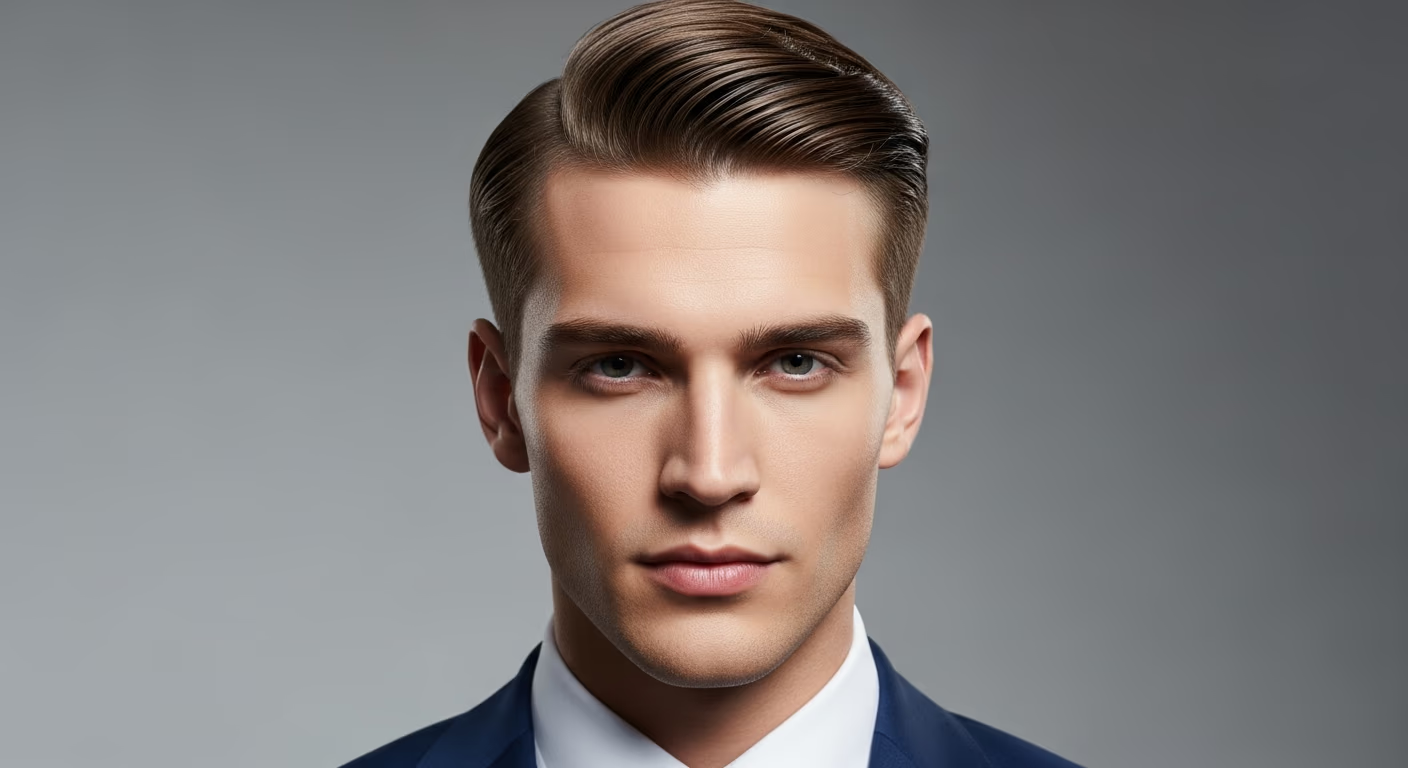
Style images are AI-generated illustrations.
📚 Part of our Haircuts by Face Shape guide hub; start there for the rest of the topic.
To choose a haircut that complements glasses, start from the fact that glasses and hair share the same real estate (the frame of your face), so they need to be considered together. The goal is balance and clean sightlines: matching the visual weight of your hair to your frames, and keeping the area around the temples tidy so the two don't clash. It's less about a specific cut and more about proportion.
How Do You Match a Haircut to Your Glasses Frames?
To choose a haircut for glasses, match the hair's visual weight to the frames and keep the temples short. Thick acetate frames suit structured cuts like a textured crop or side part; thin wire frames suit clean, short cuts. A taper at the temples stops the arms from tangling with hair.
Bold, heavy frames (thick acetate) pair best with hair that has some substance and structure, such as a textured crop, pompadour, or a defined side part, so the hair holds its own against the frames. Thin, subtle frames (wire, rimless) suit cleaner, more understated cuts. When one is bold, don't let the other fight it.
Should You Keep the Temples Short If You Wear Glasses?
The temples are where hair and glasses arms meet, so a tidy transition there matters most. A clean fade or taper at the temples keeps the area uncluttered so the glasses sit cleanly, while a mess of length right at the temple can tangle visually (and literally) with the arms. A taper is a cut where the hair gets gradually shorter toward the ears and neck. This is the single most practical rule for hair and glasses.
Which Haircuts Go With Which Glasses Frames?
| Frames | Hair that works |
|---|---|
| Bold thick acetate | Structured volume: pompadour, textured crop, defined part |
| Thin wire / rimless | Clean, understated cuts: short crop, subtle taper |
| Round frames | Add angles: a cut with structure and a defined part |
| Angular / square frames | Soften with texture: a tousled crop or fringe |
| Any frames | A clean fade/taper at the temples for tidy sightlines |
How Long Should Your Fringe Be With Glasses?
A fringe that falls onto the top of the frames creates a cluttered line right where your eyes draw the most attention, and it also means constantly pushing hair off the glasses throughout the day. Keeping the fringe short enough to sit above the frame line, or styled up and away from the forehead, avoids both problems at once. This matters most for frames that sit high on the nose, since there is less room between the top of the lens and the hairline to begin with.
If you wear your hair longer on top, brushing or combing it back and to the side rather than forward keeps the fringe out of the frame's territory entirely, which is usually a simpler fix than cutting it shorter if you like the length for other reasons.
How Do Face Shape, Frames and Haircut Work Together?
Frames and hair both interact with face shape, so it helps to think about all three together rather than choosing frames and a haircut separately. Round frames on a round face tend to echo the shape rather than balance it, so pairing round frames with hair that adds some angularity, a defined part or slightly more height on top, keeps the overall look from feeling too soft.
Angular frames on an already angular jaw can have the opposite problem, where softer, more textured hair helps balance out the sharp lines rather than doubling down on them.
The safest starting point if you're unsure is to pick frames first based on face shape, then choose a haircut that complements whichever frame you land on, since frames are usually the harder variable to adjust once purchased.
What Should You Tell Your Barber If You Wear Glasses?
Most barbers ask you to take glasses off during the cut, which means nobody checks the sideburns and temples with the frames on. Ask for that check at the end.
What to say in the chair
“I wear glasses every day, so keep the hair over my ears short with a #2 taper at the temples, and keep the fringe above my frame line. Can we check the sideburns with my glasses on before you finish?”
A guard is the plastic comb on the clippers that sets the length; see our clipper guard numbers chart. More phrasing tips are in how to talk to your barber, and if you are unsure of your face shape, start with how to figure out your face shape.
What Mistakes Should You Avoid With Glasses and Hair?
- Letting the fringe rest on the frames. It clutters the eye line and you will push it away all day.
- Bulky sides over the ears. Thick hair pushes the arms outward, so the glasses sit crooked.
- Uneven sideburns. Frames draw a straight line across the face, so a small difference in sideburn length shows more.
- Heavy product near the temples. It transfers to the arms and smears the lenses.
The temple area is the first place a cut looks grown out with glasses, because hair curls over the arms. Plan a trim every 3 to 4 weeks for short styles, as covered in how often you should get a haircut. Most shops charge $25 to $45 for a standard cut, per our haircut cost guide, and some will tidy the sideburns and temples alone for less.
Frequently Asked Questions
Q1: How do I choose a haircut that works with glasses?+
Q2: What haircut goes best with thick glasses?+
Q3: Should I fade the sides if I wear glasses?+
Q4: Do round glasses need a different haircut than square ones?+
Q5: What's the most important thing for pairing hair and glasses?+
Q6: Should I take my glasses off during a haircut?+
Related Haircut Guides
Make us a Preferred Source on Google
See our latest articles first in your Google Search & AI Overviews.