
Best Haircuts for
Men with Big Ears
Prominent ears are all about balance: the right length and coverage make them a non-issue. Here's what works and what draws the eye.
By Jessica Hamilton, Editor · Updated
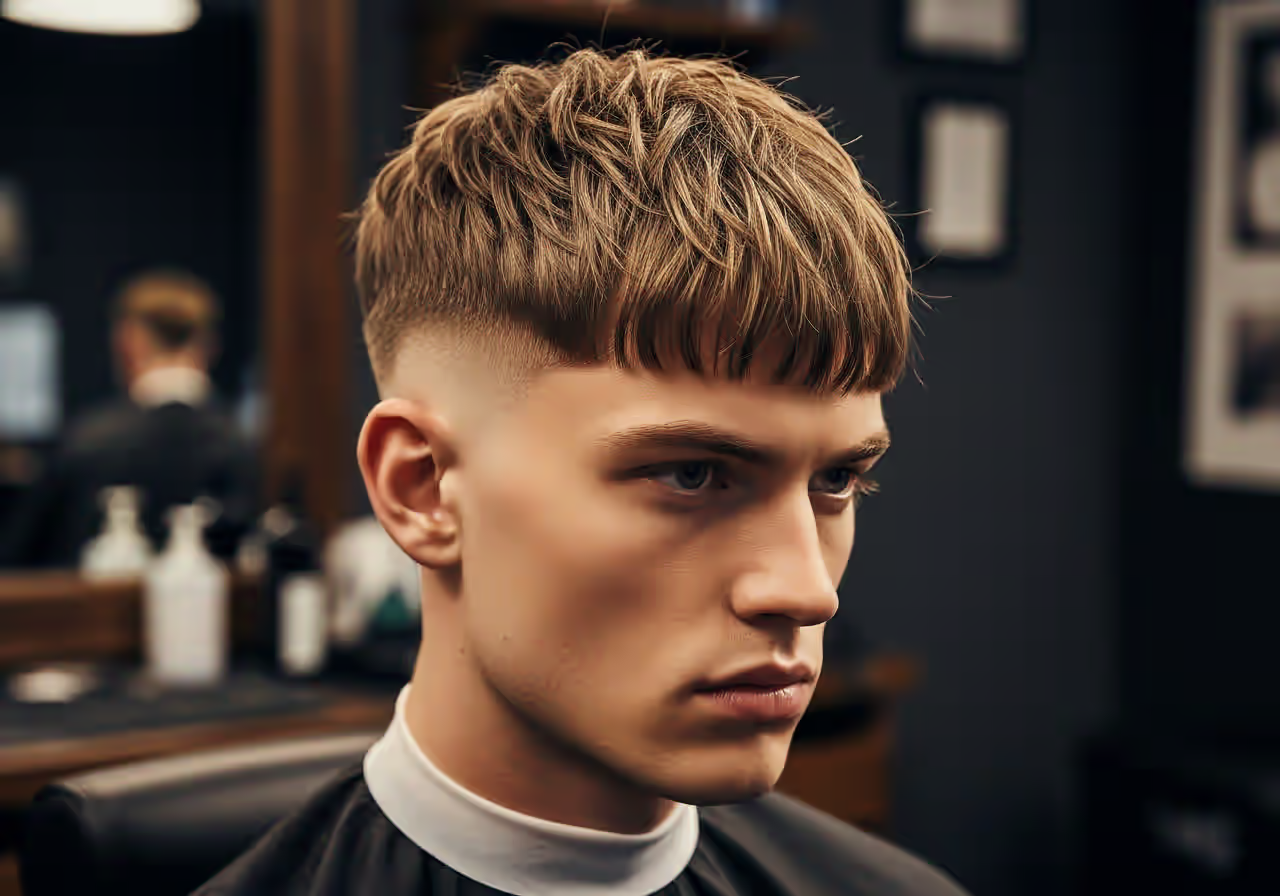
Quick answer: The best haircuts for men with big ears keep a little length and coverage around the ears, such as a French crop, a textured crop or a medium-length style. Volume on top, as in a pompadour, also draws the eye upward. Buzzed or high skin-faded sides expose the ears fully, so ask for a low taper instead.
Style images are AI-generated illustrations.
📚 Part of our Haircuts by Face Shape guide hub, where the related guides are listed together.
The best haircuts for men with big ears address one of the most common things men feel self-conscious about at the barbershop, and one of the easiest to balance. The principle is simple: a little length and coverage around the ears softens them, while very short sides that expose them fully draw the eye. You don't need to hide your ears, just avoid framing them.
How Do You Choose a Haircut for Big Ears?
Choose a haircut for big ears by keeping some length beside them: a #3 or #4 guard around the ears, about 10 to 13 mm, instead of a skin fade. Add 2 to 3 inches of texture or volume on top so the eye goes up. A French crop or textured low taper suits most men.
Buzzed or skin-faded sides leave the ears fully exposed and, by contrast, looking larger. A bit of length over and around the ears, or volume elsewhere to balance the proportions, settles them into the overall shape. Textured, medium-short cuts tend to work best.
What Are the Best Haircuts for Men With Big Ears?
- French crop or textured crop: a little length and a forward fringe balance the face without fully baring the ears.
- Medium-length styles: hair that reaches or covers the tops of the ears is the most direct fix.
- Pompadour or volume on top: height up top balances the proportions and pulls focus upward.
- A low taper rather than a high skin fade keeps a little length near the ears.
| Cut | Around the ears | Top | Effect |
|---|---|---|---|
| French or textured crop | #3 to #4, low taper | 1 1/2 to 2 1/2 inches | Forward weight balances the face |
| Medium-length cut | Scissors, over the ear tops | 3 inches or more | Covers the upper ear |
| Pompadour or quiff | #3 or longer | 3 to 4 inches, lifted | Height pulls focus up |
| Low taper with textured top | #2 at the bottom, #4 above | 2 to 3 inches | Neat but not bare |
A taper is a cut where hair gets shorter only near the ears and neckline, while a fade runs higher up the sides, often to skin. A guard is the clip-on comb that sets clipper length; the clipper guard numbers chart converts each one. Browse the low taper fade gallery for examples.
Which Haircuts Make Big Ears Look Bigger?
- Skin fades and buzzed sides that expose the ears completely.
- Slicked-back styles with tight sides that frame the ears.
- Very high, tight cuts with no length near the ear line.
- Note: if you like short sides, adding volume and length on top still balances things out.
How Do You Ask Your Barber for a Haircut That Balances Big Ears?
- Say it plainly: tell the barber you want to keep some coverage around the ears. They can adjust where the fade or taper starts.
- Ask for a low taper or scissor-cut sides instead of a high fade that takes the sides to skin above the ear.
- Request that the hair over the ears be cut slightly longer and blended rather than cleared, so it sits on or just touches the top of the ear.
- Keep the top and sides in proportion. A very tight side with a tall top can look balanced; a very tight side with a flat top usually exposes the ears.
- Leave the ear outline natural rather than cleaned sharply around the ear, which frames it with a hard line.
What to say in the chair
"I'd like to keep some coverage around my ears. Low taper with a #2 only at the very bottom, #4 around the ears, and no sharp outline cleaned around them. About two and a half inches on top with texture."
For more phrasing, see how to talk to your barber. A standard cut runs $25 to $45 at most neighborhood shops, per our 2026 haircut cost guide.
How Does Hair Type Change the Best Haircut for Big Ears?
- Straight, fine hair: it lies flat against the head, so length over the ears reads well but the top needs texture to avoid a helmet look. A textured crop or medium length with a side sweep works.
- Thick or coarse hair: it naturally sits out from the head, which adds width at the sides and balances the ears. Ask for weight removal so the sides do not puff out too much.
- Wavy hair: medium length lets the waves fall over the ear line. A messy, grown-in style suits it better than a short, tight one.
- Curly or coily hair: volume on top and around the sides gives an overall rounder shape that makes ears less prominent. A taper that keeps some length at the temple works better than a high skin fade.
What Else Helps Balance Prominent Ears?
Hair is not the only tool. A short, full beard adds width low on the face and draws attention down to the jaw, which balances ears that stick out. Keep sideburns full rather than trimming them thin. If you prefer very short sides for practical reasons, add volume and height on top so the eye is drawn to the overall shape rather than the sides.
How long does it take to grow out buzzed sides?
Hair grows about half an inch a month. If your sides are at skin or a #1 now, here is roughly how they fill in:
| Time | Side length | What it looks like |
|---|---|---|
| Week 2 | About #2 | Shadow, ears still exposed |
| Week 4 | About #4 | Sides soften around the ears |
| Week 8 | About 1 inch | Hair starts to lie over the ear tops |
| 3 months | About 1 1/2 inches | Enough for scissor-cut sides |
Ask for the neckline and sideburns to be tidied while the rest grows; how often you should get a haircut covers spacing. For styling, matte clay adds height on top and a light cream keeps longer sides lying flat; pomade vs clay vs wax compares them.
Frequently Asked Questions
Q1: What haircut is best for big ears?+
Q2: Do short haircuts make ears look bigger?+
Q3: How do I hide big ears with my hair?+
Q4: Should I avoid a skin fade if I have big ears?+
Q5: What styles make prominent ears less noticeable?+
Q6: What guard number should you use on the sides with big ears?+
Related Haircut Guides
Make us a Preferred Source on Google
See our latest articles first in your Google Search & AI Overviews.