
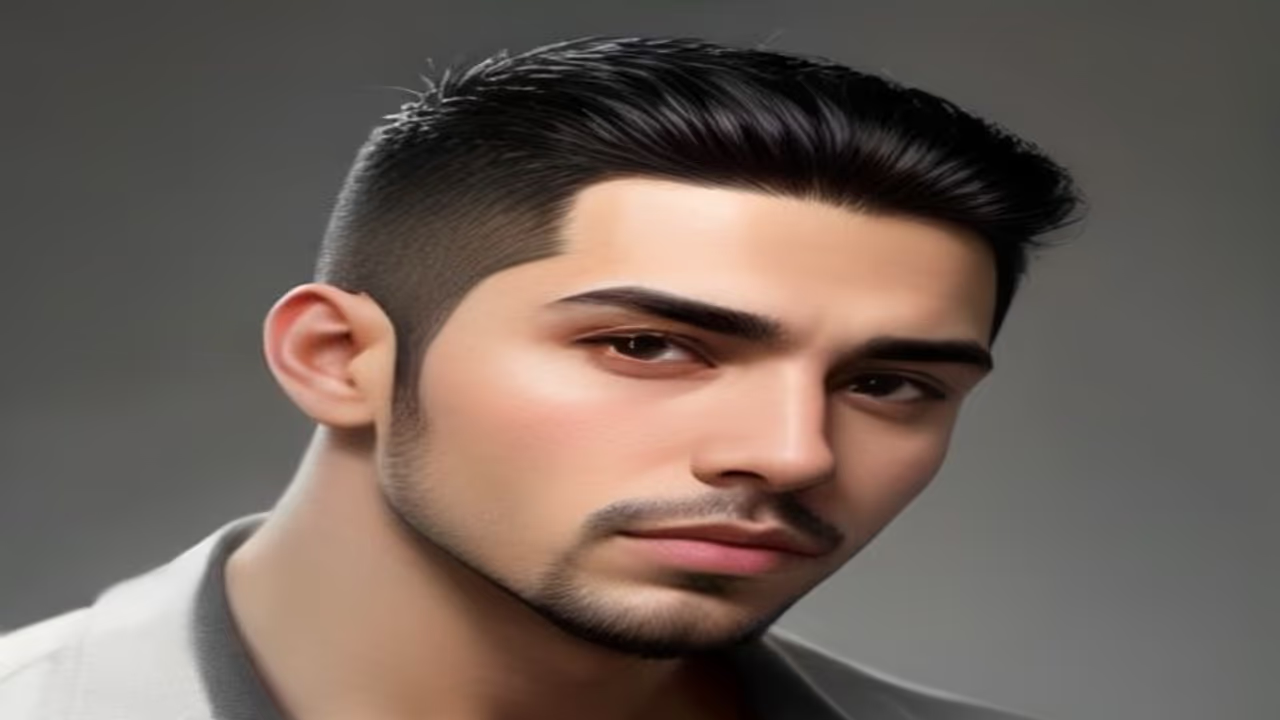
Best Haircuts for
Mexican & Latino Men
From the Edgar to classic fades and slick backs — the cuts that dominate Latino barbershop culture and who they suit.
By Jessica Hamilton — Master Stylist & Creative Director
Latino barbershop culture has produced some of the most influential men's cuts of the last decade — the Edgar above all. Hair types across Latino communities vary enormously (straight, wavy, curly, coily), so this is less about one texture and more about the styles that define the culture and which hair each one suits.
The Signature Cuts
- The Edgar: the blunt, straight-across fringe with faded sides — the defining Latino cut. Best on straight to wavy hair.
- Taper fade or skin fade: the universal base; sharp, clean, works with everything.
- Slick back: classic and sharp, especially on thicker straight hair.
- Textured crop: a softer alternative to the Edgar with the same short-and-forward energy.
- Pompadour: the retro option, still popular and suits thick hair.
Matching the Cut to Your Hair
| Your hair | Best options |
|---|---|
| Straight, thick | Edgar, slick back, pompadour |
| Wavy | Edgar, textured crop, taper fade + textured top |
| Curly | Textured crop, curly top with a fade, drop fade |
| Coily | Taper fade with a short natural top, line-up focus |
| Fine or thinning | Textured crop with a taper — texture adds fullness |
The Line-Up Is Non-Negotiable
Across Latino barbershop style, the sharp line-up is what finishes the cut — a crisp, square hairline is as important as the cut itself. That means a shape-up every 1–2 weeks. If you're growing your hairline out or it's receding, ask for a softer, natural line rather than a hard square one.
Asking for the Edgar Without It Looking Dated Fast
The Edgar lives or dies on the fringe line, and that line grows out within two to three weeks on straight or wavy hair. Ask specifically for the fringe to be cut with shears rather than a razor for a slightly softer edge that grows out less awkwardly, and request the fade blended a half guard higher than you think so the whole cut does not look worn out at the same time as the fringe.
- Bring a photo of the exact fringe angle you want: straight across, slightly rounded, or angled toward one brow all read differently.
- Ask for a light texturizing on top if your hair is thick, so the fringe sits rather than pushes forward stiffly.
- Plan a touch-up at the two-week mark just on the fringe and neckline rather than a full re-cut.
Matching the Cut to Curl Pattern
Because hair texture varies so widely across Latino communities, the same named style can need real adjustments depending on curl pattern.
- Straight or wavy hair holds a crisp Edgar fringe and slick back cleanly with just a pomade or gel.
- Curly hair usually needs the fringe cut slightly longer than it will look once dry, since curls shrink upward as they set.
- Coily hair often suits a textured crop or high-top variation better than a flat fringe, since a tight curl pattern will not lie in a straight line without heavy product.
Keeping the Fade and Fringe in Sync
A common complaint with Edgar-style cuts is the fade outgrowing the fringe or vice versa, which makes the whole head look unbalanced rather than intentionally grown out. A skin fade typically needs a refresh every two to three weeks to stay sharp, while the fringe can usually stretch to three or four weeks before it starts covering the eyebrows. Booking a fade-only touch-up between full cuts keeps the proportions matched without paying for a complete redo every time.
Frequently Asked Questions
Q1: What is the most popular haircut for Latino men?+
Q2: Does the Edgar cut suit all hair types?+
Q3: What haircut suits thick straight Latino hair?+
Q4: Why is the line-up so important?+
Q5: How often should I get my fade touched up?+
Make us a Preferred Source on Google
See our latest articles first in your Google Search & AI Overviews.