
Best Haircuts for Athletes
(Sweat-Proof & Low Maintenance)
Training hard, showering twice a day, and living in a cap: here are the cuts that survive all of it.
By Jessica Hamilton, Editor · Updated
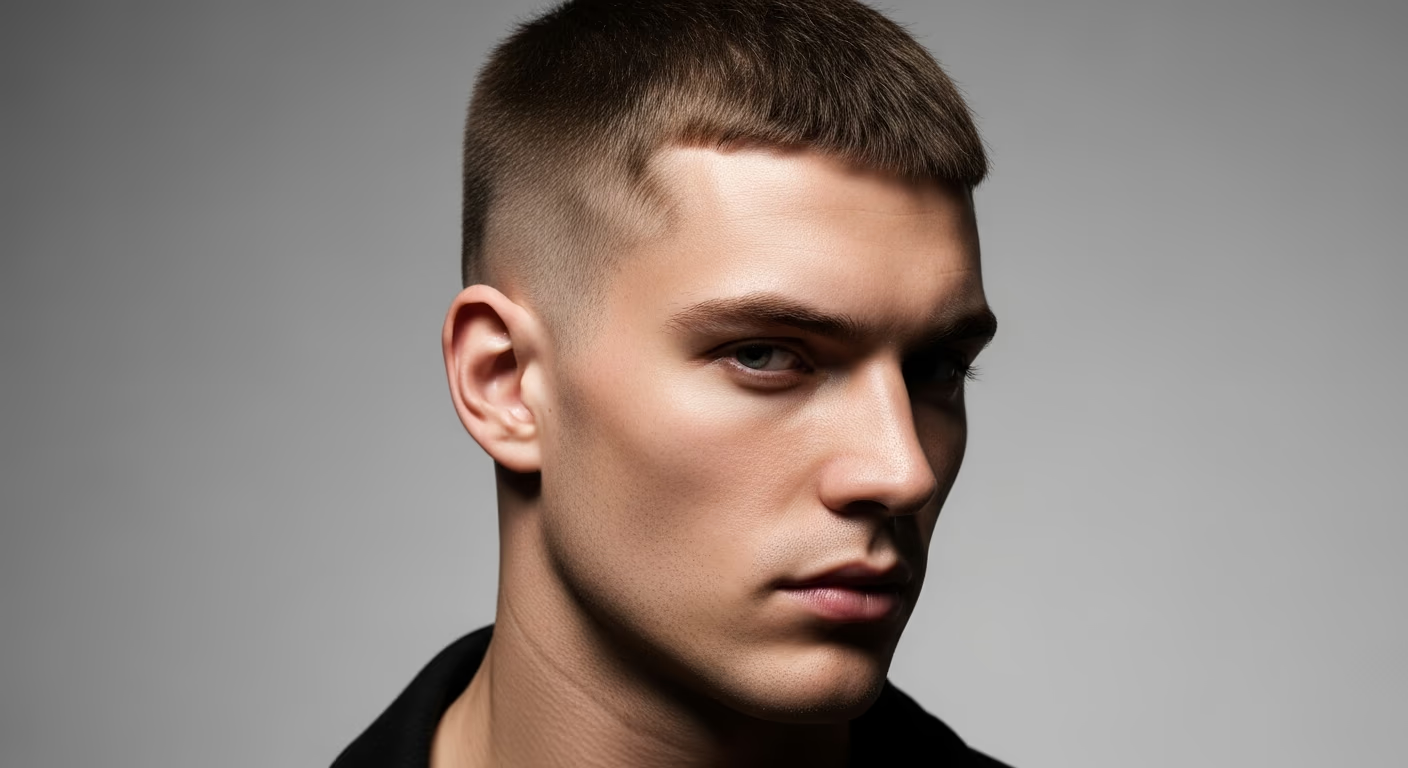
Quick answer: The best haircuts for athletes are short: a buzz cut, a crew cut, a short textured crop, or a taper fade with a short top. These survive heavy sweat and twice-daily showers, dry almost instantly, and don't collapse under helmets or caps. On heavy training days, rinse and condition instead of shampooing every time.
Style images are AI-generated illustrations.
An athlete's haircut has a specific brief: it has to survive heavy sweat, frequent washing, and headgear, look presentable straight out of the shower, and take almost no time to style. That rules out most product-dependent looks and points squarely at short, structured cuts.
What Makes a Haircut Sweat-Proof for Athletes?
A haircut is sweat-proof for athletes when it is short enough that nothing collapses or sticks: usually under 1 inch on top and a #1 to #3 on the sides. Buzz cuts, crew cuts and short tapers dry in minutes, need no product and look the same after training, with a trim every 2 to 4 weeks.
Footballers have set many hair trends, and our gallery of soccer player haircuts covers famous looks and short, match-ready cuts.
Baseball has its own hair culture, and our page on baseball haircuts covers flow, lettuce and cap-friendly fades in detail.
Sweat ruins styling in two ways: it flattens product-held shapes and it makes longer hair stringy. Short cuts sidestep both. There's nothing to collapse. The other factor is drying time: the shorter the hair, the faster you're presentable after a shower, which matters when you're showering twice a day.
What Are the Best Haircuts for Athletes?
- Buzz cut: zero styling, dries instantly, unbeatable for heavy training.
- Crew cut: a little more length and shape, still near-zero maintenance.
- Short textured crop: looks styled with minimal effort; handles sweat well.
- Taper fade with a short top: sharp and clean, easy to maintain.
- If you want length: keep it long enough to tie back rather than mid-length, which gets stringy.
| Cut | Length | Dry time | Trim every |
|---|---|---|---|
| Buzz cut | #1 to #4 all over | A few minutes | 2 to 3 weeks |
| Crew cut | #2 sides, about 1 inch top | Under 5 minutes | 3 to 4 weeks |
| Short textured crop | #1 to #2 sides, 1 to 1 1/2 inches top | About 5 minutes | 3 to 4 weeks |
| Taper with short top | Taper at ears and neck, under 1 inch top | Under 5 minutes | 2 to 3 weeks |
A taper is a cut where the hair gets shorter only around the ears and neckline, so it grows out more gently than a fade. A guard is the clip-on comb that sets clipper length; the clipper guard numbers chart converts each number to millimeters.
How Do You Keep an Athletic Haircut Working Under a Helmet or Cap?
- Helmets and caps flatten anything with height: short cuts avoid the problem entirely.
- Rinse after heavy sweat even if you don't full-wash; sweat left in hair irritates the scalp.
- Don't over-shampoo: twice-daily shampooing dries hair; rinse and condition instead.
- Short cuts need more frequent barber visits to stay sharp, so factor that in.
- Swimmers: see our guide to the best haircuts for swimmers for chlorine care, and helmet-friendly haircuts for headgear.
What Haircut Mistakes Do Athletes Make?
- Leaving too much length on top: anything long enough to fall into the eyes under sweat will get pushed back with a hand mid-play, which looks worse than a shorter length that never moves.
- Choosing a design or hard part right before a season: intricate line work or a shaved part grows out fast under a helmet or cap and needs a touch-up every one to two weeks, which most training schedules don't allow for.
- Skipping the mid-length trim: waiting for hair to get noticeably long before booking a cut means a few uncomfortable weeks of hair sticking to a sweaty forehead. A trim every three to four weeks avoids that stretch entirely.
- Using heavy styling product before training: waxes and pomades mix with sweat and can run into the eyes or clog the skin. Save styling product for after a session, not before.
How Do You Ask Your Barber for an Athletic Haircut?
Tell the barber up front what sport you play and how often you train, since that changes the advice more than almost anything else. Someone training five days a week in a helmet needs a different top length than someone playing a weekly recreational match. Mention if you wear headgear regularly, because tight elastic bands can rub a longer top out of shape and make a shorter, denser top more practical.
Ask specifically for a length that will still look tidy without any product, since you will not always have time to restyle between a game and whatever comes after it. If you compete, ask the barber to keep the sides slightly longer than a typical fade so regrowth over a few weeks does not need constant upkeep during a busy season.
What to say in the chair
"I train five days a week in a helmet, so I need something that looks fine with no product. Number 2 on the sides with a low taper, and about an inch on top cut so it lies flat."
More scripts are in how to talk to your barber.
How Often Should Athletes Get a Haircut?
Rinse and shampoo as soon as possible after training, since sweat left on the scalp overnight contributes to irritation and can make short hair look dull and matted the next day. A light, clarifying shampoo two or three times a week is usually enough for anyone training regularly; washing after every single session with a heavy shampoo can dry out the scalp.
Book the next trim before the current one grows out past the point of being manageable rather than waiting until it becomes a problem. For most fades and crops this means every three to four weeks; for very short buzz cuts, every two to three weeks keeps the length even and comfortable under any headgear.
Short cuts cost more over a year because they need more visits. At $25 to $45 a cut, a 3-week schedule is about 17 visits, roughly $425 to $765 before tips. Our 2026 haircut cost guide has the price tiers, and how often you should get a haircut compares schedules by style.
Which products survive training?
- Clarifying shampoo: clears sweat and salt two or three times a week.
- Light conditioner: for the rinse-only days, so hair does not dry out.
- Texture powder or light matte paste: only after training, never before.
If you do style, pomade vs clay vs wax explains why water-based or matte products wash out easiest. The crew cut gallery shows short options that need none.
Frequently Asked Questions
Q1: What is the best haircut for athletes?+
Q2: What haircut is best for sweating a lot?+
Q3: How do I keep my hair healthy training twice a day?+
Q4: What haircut works under a helmet?+
Q5: Can athletes have longer hair?+
Q6: What guard number is best for an athlete's buzz cut?+
Related Haircut Guides
Make us a Preferred Source on Google
See our latest articles first in your Google Search & AI Overviews.